ADAD
ADAD
Updating your news feed...
NEWS EXPRESS is Nigeria’s leading online newspaper. Published by Africa’s international award-winning journalist, Mr. Isaac Umunna, NEWS EXPRESS is Nigeria’s first truly professional online daily newspaper. It is published from Lagos, Nigeria’s economic and media hub, and has a provision for occasional special print editions. Thanks to our vast network of sources and dedicated team of professional journalists and contributors spread across Nigeria and overseas, NEWS EXPRESS has become synonymous with newsbreaks and exclusive stories from around the world.


Loading banners
Loading banners...

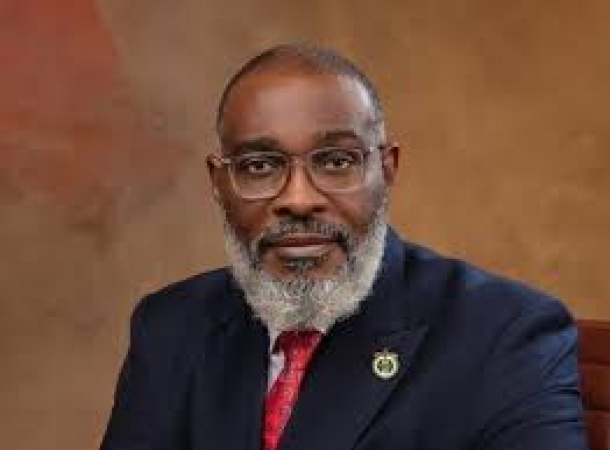
Famadewa
For more than a decade, Major General Adeyinka Famadewa (rtd) watched Nigeria’s national security conversations with growing frustration.
In 2023, he captured that frustration in an unusual comparison that quickly drew attention. He likened Nigeria’s endless security debates to the 1990s Salt-N-Pepa hit “Let’s Talk About Sex”,a situation where everyone talks endlessly, yet little of real value is achieved.
Today, the retired intelligence officer has moved from being a critic to a key player. His recent appointment as Special Adviser to the President on Homeland Security, announced by the Office of the Secretary to the Government of the Federation, introduces not only a new office within Nigeria’s security structure but also a fresh approach to tackling internal threats.
For many security analysts and former military colleagues, the appointment signals a strategic shift toward strengthening Nigeria’s internal security coordination at a time when terrorism, kidnapping, cybercrime, and organised violence continue to challenge the country.
A strategic appointment
Among those who welcomed the appointment was retired Brigadier General Sani Usman, who described Famadewa as a highly respected intelligence officer with extensive experience in military operations, strategic planning, and administration.
Usman said the retired Major General built a reputation during his years in service for calm leadership, operational competence, and unwavering commitment to national security objectives.
“He is consistently described by colleagues as firm, intelligent, focused, and capable of handling sensitive assignments with maturity and professionalism,” Usman said.
According to him, Famadewa’s appointment was well deserved and timely, given the country’s persistent internal security challenges.
Usman also explained that the new office differs significantly from that of the National Security Adviser (NSA).
While the NSA oversees broader national security policy, intelligence coordination, defence strategy, and high-level advisory responsibilities, the Homeland Security office is expected to concentrate more directly on domestic security coordination.
He said the office would likely focus on protecting critical infrastructure, strengthening border security, managing emergency response systems, addressing cyber threats, combating domestic terrorism, and improving inter-agency cooperation.
“In essence, while the NSA oversees the broader national security architecture, Homeland Security concentrates on internal threats and the protection of citizens and national assets,” he explained.
Usman, who currently serves as Consultant Director of Corporate Affairs and Information Services at the Nigerian Army Resource Centre, added that modern Homeland Security practice extends beyond conventional military operations.
According to him, it now involves technology deployment, intelligence gathering, public awareness campaigns, community engagement, and strategic communication aimed at strengthening public confidence and national resilience.
Also, a Security & Strategic Studies Expert who is also a Fellow of the Nigerian Army Resource Centre, Dr Steve Ubochi Okwori has described the appointment of the retired general as a strategic move aimed at ending the ruthless attack of innocent citizens of the country by invaders.
The consultant, who recalled first meeting the retired officer during the maiden Fellows and Members Summit of the centre in 2022, said Famadewa demonstrated exceptional intellect, composure, and strategic insight during the engagement.
According to him, Famadewa served as moderator during the summit session where he participated as one of the speakers, adding that his interaction with the retired general revealed a disciplined and highly professional intelligence officer with deep administrative and strategic competence.
He described Famadewa as a “thoroughbred intelligence military officer” with a strong understanding of contemporary security challenges, particularly in national security management, inter-agency coordination, and strategic leadership.
The security expert noted that the retired general’s years of service and professional record within the Nigerian military establishment reflected his commitment to national service and positioned him to contribute meaningfully to the country’s evolving security framework.
Speaking on the distinction between the office of the National Security Adviser and that of the Special Adviser on Homeland Security, the consultant explained that both positions differ in operational focus and strategic responsibilities.
Okwori said while the National Security Adviser coordinates Nigeria’s broader national security framework, including defence, intelligence, counterterrorism operations, foreign security relations, and military strategy, the Special Adviser on Homeland Security focuses more on domestic security concerns.
According to him, homeland security involves the protection of critical infrastructure, institutions, borders, and citizens against both traditional and emerging threats such as terrorism, cybercrime, organised crime, kidnapping, and border insecurity.
The Intelligence Officer behind the strategy
To the average Nigerian, Famadewa may still be relatively unknown. However, within military intelligence circles, he is regarded as one of the country’s most experienced strategic security minds.
A member of the 37 Regular Course of the Nigerian Defence Academy, he was commissioned into the Nigerian Army Intelligence Corps in 1990.
Over the years, he built an academic and professional profile that combines science, management, and advanced security studies.
He graduated with a degree in Chemistry, and later earned an MBA, and a Master’s degree in Strategic Studies. His professional development also took him through several globally recognised institutions, including the Harvard Kennedy School, the Canadian Forces College, the George C. Marshall European Center for Security Studies, and the Galilee International Management Institute.
Throughout his military career, he held several critical intelligence positions, including Commander of the Counter-Intelligence Command and Director of the Intelligence Production Centre for the Nigerian Army.
Perhaps one of his most significant contributions to Nigeria’s security system came during his service as Principal General Staff Officer to the National Security Adviser between 2015 and 2021.
During that period, Famadewa played a major role in establishing the Intelligence Fusion Centre (IFC), an initiative designed to improve intelligence sharing among Nigeria’s key security agencies, including the DSS, NIA, DIA, and the Police.
The Initiative sought to eliminate long-standing institutional rivalries and improve coordination among agencies responsible for national security.
Analysts say the fusion model was intended to reduce intelligence gaps that have often allowed terrorist groups and criminal networks to operate undetected.
A different security philosophy
Unlike many traditional military strategists who prioritise purely force-based responses, Famadewa has consistently argued for what he describes as a “multidimensional approach” to national security.
As a Senior Fellow at the Nigerian Army Resource Centre, he repeatedly advocated reforms that go beyond conventional military deployments. One of his longstanding arguments is that military personnel operating in different parts of Nigeria should possess strong linguistic and cultural understanding of local communities.
According to him, fluency in major Nigerian languages such as Hausa, Igbo, and Yoruba can significantly improve trust-building and intelligence gathering at the grassroots level.
He has also advocated stronger civil-security cooperation, insisting that the military should not be viewed as an all-encompassing solution to every security problem. Instead, he believes effective Homeland Security requires stronger policing systems, community participation, proactive intelligence operations, and preventive risk management.
For Famadewa, the real challenge is not merely responding to attacks after they occur but identifying and neutralising threats before they materialise.
Expectations and scepticism
Despite widespread praise for the appointment, the creation of the Homeland Security portfolio has also generated debate among observers.
Some critics argue that Nigeria’s security structure already contains multiple overlapping offices, including the National Security Adviser, the Minister of Defence, and the Minister of Police Affairs. To them, the new office risks becoming another bureaucratic layer within an already complex system.
On the other hand, supporters of his appointment insist the office fills a major gap in Nigeria’s security architecture by focusing specifically on internal threat coordination and domestic resilience.
From theory to action
As he transitions from the research halls of Abuja to the centre of government decision-making at Aso Rock Presidential Villa, expectations surrounding Famadewa’s new role remain high.
For a man who once criticised Nigeria’s security conversations as repetitive and unproductive, the challenge ahead is now deeply personal.
His task is no longer to analyse the country’s security failures from the sidelines, but to help design solutions that are capable of delivering measurable results.
Whether the new Homeland Security office becomes a transformative institution or simply another bureaucratic layer may depend largely on how effectively Famadewa translates his long-held theories into practical outcomes.
For now, one thing is certain: the retired General who once complained that “so much was said and yet so little was achieved” has officially entered the arena where words must give way to action. (Sunday Sun)