ADVERTISEMENT

ADVERTISEMENT
Updating your news feed...

NEWS EXPRESS is Nigeria’s leading online newspaper. Published by Africa’s international award-winning journalist, Mr. Isaac Umunna, NEWS EXPRESS is Nigeria’s first truly professional online daily newspaper. It is published from Lagos, Nigeria’s economic and media hub, and has a provision for occasional special print editions. Thanks to our vast network of sources and dedicated team of professional journalists and contributors spread across Nigeria and overseas, NEWS EXPRESS has become synonymous with newsbreaks and exclusive stories from around the world.
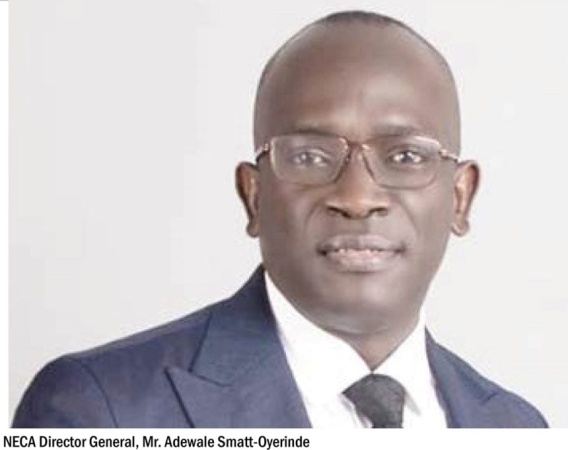
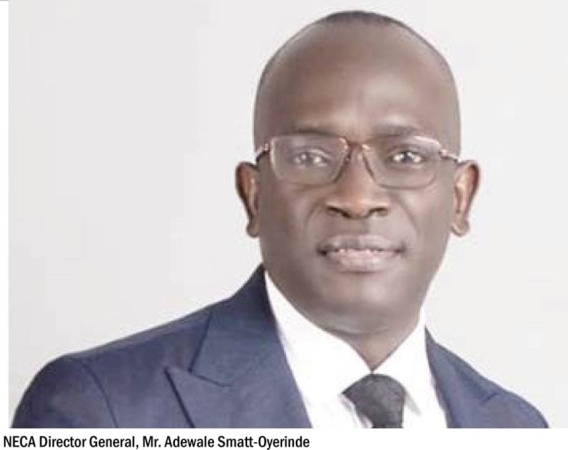
On the sidelines of the 114th International Labour Conference (ILC) of the International Labour Organisation (ILO) in Geneva, Switzerland, CHRISTIAN APPOLOS, spoke with the Director-General of the Nigeria Employers’ Consultative Association (NECA), Mr. Adewale-Smatt Oyerinde, on the future of work, artificial intelligence, skills development, social dialogue, and the key lessons Nigeria must take home from the global labour gathering. Excerpts:
You have repeatedly said that knowledge is the new oil. Why do you believe this is the defining issue for Nigeria today?
It is obvious from what we have learnt here, what we learnt last year and even what we learnt three years ago that we are deficient in knowledge. We cannot pretend otherwise.
Knowledge-wise, in terms of how things should be done, we are not there yet. The world of work is changing rapidly and the countries making progress are those investing heavily in knowledge, skills and innovation.
If labour, employers and government are not updating their knowledge on workplace issues, productivity and fundamental principles and rights at work, we will continue doing things the same way while expecting different results.
We cannot keep saying Europe is achieving certain outcomes or America is achieving certain outcomes while refusing to do the things they are doing to achieve those outcomes.
That is why I say knowledge is the next oil. Our capacity determines our ability to influence outcomes, improve productivity and remain competitive in a changing world.
Is Nigeria prepared for the future of work?
The honest answer is that we still have a lot of work to do.
One of the major lessons from this year’s International Labour Conference is that the world is moving and it is not waiting for anybody.
We have followed discussions at the Committee on the Application of Standards, the Platform Economy Committee, the Social Dialogue and Tripartism Committee and conversations around gender equality. In many cases, governments, employers and workers stayed in meetings until 9 p.m. and sometimes beyond midnight discussing these issues.
If these issues were not important, the world would not devote so much time and attention to them. The reality is that countries are preparing for the future of work. Nigeria must do the same. We have no option but to continue catching up and ensuring we remain aligned with global developments.
What practical steps should the government, employers and labour take to close the knowledge gap?
The first step is to acknowledge that none of us knows everything.
Labour should identify where it is deficient. Employers should do the same. The government also needs to recognise areas where improvement is required.
In fact, it is even more important for the Ministry of Labour because the ministry is expected to guide, coordinate and provide leadership within the industrial relations system. The International Labour Organisation is open to supporting member states. There are departments here dedicated to research, statistics, training and capacity building. Last year, I facilitated a meeting between Nigeria’s Minister of Labour and senior officials in the ILO’s research and statistics department. From that discussion, we secured a capacity-building programme that will take place in Abuja.
The opportunities exist. What is required is the willingness to continuously learn and improve.
What role is NECA playing in preparing Nigerians for the future workplace?
For us, with all modesty, capacity building has become one of our major priorities.
Beyond policy advocacy, we invest significantly in training and competence development, not only for NECA staff but also for our sectoral affiliates and stakeholders. There is hardly any skills office within the ILO system that I have not visited. I obtain training opportunities from the ILO, the International Organisation of Employers (IOE), the International Trade Union Confederation (ITUC) and the International Training Centre of the ILO in Turin.
Where I can pay for training, I do. Where fellowships are available, I pursue them because I understand that capacity changes the dynamics of engagement. Competence reduces unnecessary struggles, improves productivity and helps people perform their responsibilities more effectively.
Artificial intelligence is increasingly reshaping workplaces globally. What should Nigerians expect?
AI is no longer a future conversation; it is already transforming workplaces around the world. Recognising this reality, through a partnership involving the IOE and Microsoft, we secured an opportunity last year to train 100,000 Nigerian youths in AI fluency. As of this morning, according to the programme coordinator, Nigeria is leading all participating countries in terms of registrations and course completion rates. The nearest country to us is Indonesia, but there is still a significant gap. Beyond that, we have established two ICT academies—one in Lagos and another in Abuja. Together, they provide training facilities for dozens of participants at a time.
The programmes are free of charge. Through our collaboration with the ITF-NECA Technical Skills Development Project, participants are trained in AI-related courses while also receiving transportation and feeding support.
In Lagos, we are partnering with VFS Global to train 100 youths in artificial intelligence, data analytics, cybersecurity and 3D animation.
We are doing this because the workplace is evolving. If young Nigerians are to remain employable and competitive, they must acquire the skills that employers increasingly require.
Beyond skills and AI, what are the biggest lessons Nigeria should take home from this year’s ILC?
The first lesson is that industrial harmony remains fundamental to national development. Without industrial peace, productivity suffers in both the public and private sectors. Labour is therefore much more important than many people assume. The second lesson is that social dialogue matters. Around the world, governments, employers and workers are increasingly using dialogue to address workplace challenges and develop practical solutions.
The third lesson is that global standards matter. The world has become a global village. Whatever happens in one country is no longer hidden from the rest of the world.
Why is social dialogue receiving so much attention globally?
It is because it works. Many of the challenges confronting the world of work today are too complex for any one group to solve alone.
Governments need employers. Employers need workers. Workers need governments. That is why social dialogue and tripartism are receiving significant attention at the ILO. The objective is to build consensus, reduce conflict and create sustainable solutions. When people engage constructively, the chances of industrial disputes and workplace tensions are significantly reduced.
You have proposed a post-ILC dialogue for Nigeria. What exactly do you have in mind?
When we return home, I believe the Ministry of Labour should convene a tripartite post-ILC review meeting. We have never really institutionalised such a process, but I think the time has come. Employers should share their perspectives. Workers should present theirs. Government should provide its own assessment. Whether it is social dialogue, platform work, decent work deficits or emerging workplace trends, we should collectively examine what was discussed in Geneva and determine how those lessons can be applied in Nigeria. Rather than waiting until the next ILC before revisiting these issues, we should begin implementing the lessons immediately.
Nigeria’s case came up before the committee on the application of standards, what lessons should the country learn from that experience?
The most important lesson is that the world is watching. There were 21 cases before the Committee on the Application of Standards, and Nigeria’s case was among those reviewed following allegations relating to Convention 98.
The reality is that governments can no longer assume that violations of international labour standards will go unnoticed.
Whatever we do, people are aware.
The lesson is not about blame. The lesson is that we must continue strengthening our institutions, improving compliance and ensuring that social dialogue remains the preferred mechanism for resolving disagreements.
The government, employers and workers all have responsibilities in that regard.
What is NECA’s position on the International Court of Justice advisory opinion on the right to strike?
First, it is important to clarify the facts. There is a narrative that employers pushed for the matter to be referred to the International Court of Justice. That is not correct. The employers’ group preferred continued dialogue within the ILO framework. The referral eventually happened following deliberations and voting at the Governing Body. The key issue was never whether workers have a right to strike. The issue was whether Convention 87 protects that right.
The ICJ eventually issued an advisory opinion affirming that Convention 87 protects the right to strike. However, the Court did not define the exact scope, limits or conditions under which the right may be exercised.
What does that mean in practical terms?
It means the right exists, but it is not absolute.
Even some of the judges who supported the advisory opinion emphasized that point. Countries still retain responsibility for defining the framework within which industrial action can take place. In Nigeria, the Trade Disputes Act already outlines procedures and processes relating to strike action.
The objective of such frameworks is to provide sufficient opportunities for disputes to be resolved before industrial action becomes necessary.
What is the way forward?
The way forward remains dialogue. The Committee of Experts has expressed its views. The ICJ has issued its advisory opinion. But countries must still determine practical implementation within their respective legal systems.
For Nigeria, the social partners should sit together and continue discussing the issues in a constructive manner. The goal should not be confrontation. The goal should be industrial harmony, productivity and national development.
Ultimately, employers, workers and government all want the same thing: a stable economy, decent jobs, sustainable enterprises and a better future for Nigerians. Achieving that requires continuous dialogue, mutual respect and a commitment to learning from global best practices. (TRIBUNE)