ADAD
ADAD
Updating your news feed...
NEWS EXPRESS is Nigeria’s leading online newspaper. Published by Africa’s international award-winning journalist, Mr. Isaac Umunna, NEWS EXPRESS is Nigeria’s first truly professional online daily newspaper. It is published from Lagos, Nigeria’s economic and media hub, and has a provision for occasional special print editions. Thanks to our vast network of sources and dedicated team of professional journalists and contributors spread across Nigeria and overseas, NEWS EXPRESS has become synonymous with newsbreaks and exclusive stories from around the world.



















Loading banners
Loading banners...

The European Union Support to Democratic Governance in Nigeria Election Observation Hub, EU-SDGN EOH, has identified vote buying, political violence, insecurity and weaknesses in the electronic transmission of results as major threats to Saturday’s Osun State governorship election.
The Hub disclosed this in a pre-election press briefing in Osogbo on Friday afternoon.
It comprises the Centre for Media and Society (CEMESO), International Press Centre (IPC), the National Women Trust Fund (NWTF), The African Freedom Centre for Africa (TAF Africa), The Kukah Centre and Yiaga Africa, and said it has deployed 843 observers across the state’s 30 Local Government Areas.
According to the Hub, 15 candidates will contest in 3,763 polling units across 332 Registration Areas and 30 LGAs, with 2,339,233 registered voters. It said 1,906,390 voters, representing 81.50 per cent, have collected their Permanent Voter Cards.
The observers said the poll, coming five months before the 2027 general election and two months after the Ekiti governorship poll, will test Nigeria’s new electoral legal framework, the Independent National Electoral Commission’s (INEC) operational readiness, and the ability of security agencies to protect the process.
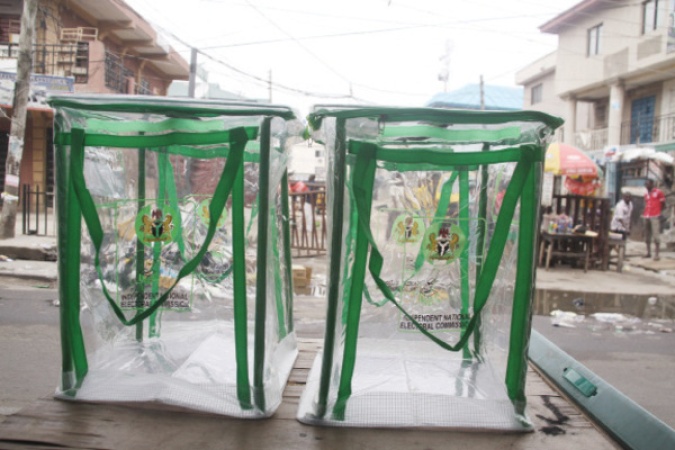
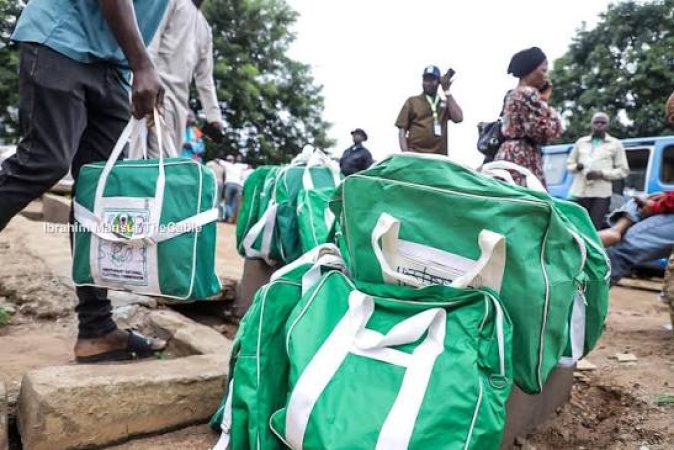
On INEC’s preparedness, the Hub said the commission had confirmed the configuration and charging of Bimodal Voter Accreditation System (BVAS) devices, distribution of non-sensitive materials, and deployment of reprinted ballot papers following the inclusion of Social Democratic Party candidate, Francis Ajala, in compliance with a Federal High Court judgment.
It said INEC had recruited and deployed an estimated 17,500 ad-hoc personnel, with 97 Super Registration Area Centres (RACs) and 105 RACs activated for deployment of personnel and materials.
However, Hub raised concern over technical challenges recorded during INEC’s August 1 mock accreditation, particularly cases where BVAS devices failed to recognise voters’ biometrics. It urged the commission to maintain adequate backup capacity, even though INEC said the issues had been resolved.
A major concern raised was the electronic transmission and collation of results. The Hub said the Electoral Act 2026 requires presiding officers to transmit polling-unit results electronically to the INEC Result Viewing Portal (IReV), but questioned the existence of an unexplained backend validation process before results appear on the portal.
It said there was insufficient public information on what is checked during the validation process, who conducts the review, and how long it takes, warning that the coexistence of physical EC8A forms, scanned IReV results, BVAS copies and electronically transmitted results could create uncertainty where discrepancies occur.
The observers also faulted INEC for publishing polling-unit results on IReV without publishing ward-level EC8B and LGA-level EC8C collation results, saying this makes independent verification difficult.
They urged INEC to publish a clear end-to-end results transmission protocol and make ward and LGA collation results available on the portal.
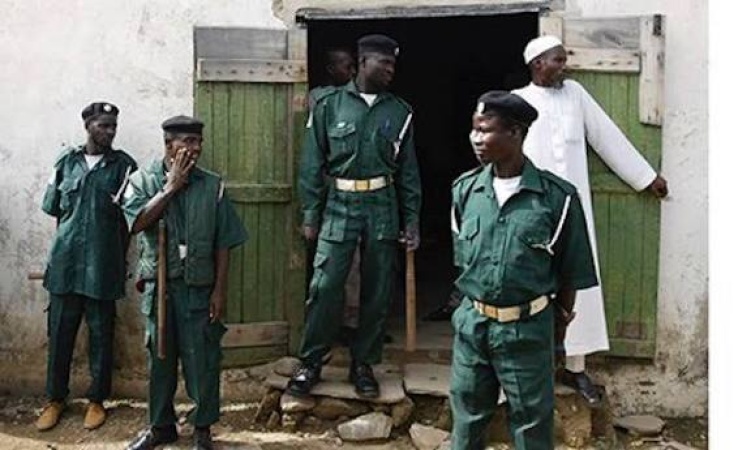
On security, the Hub classified Osogbo and Irewole as critical-risk LGAs, with Boripe, Obokun, Ilesa West, Ife Central, Ife North, Iwo, Ede North, Ifedayo, Ilesa East, Isokan and Irepodun listed as high-risk. It attributed the risk to political violence involving party-aligned thugs, disputes over LGA secretariats, criminal activities and disinformation.
It said up to 30,000 security personnel had been proposed for deployment under the Inter-Agency Consultative Committee on Election Security, involving the police, military, the Department of State Services (DSS), the Nigeria Security and Civil Defence Corps (NSCDC) and others, while raising concern over allegations of police brutality, illegal arrests and extrajudicial killings.
The observers described vote buying and voter inducement as the highest threat to the credibility of the election and welcomed plans by INEC to deploy plain-clothes financial intelligence officers alongside the Economic and Financial Crimes Commission (EFCC) and the Independent Corrupt Practices and Other Related Offences Commission (ICPC) around polling units. They urged authorities to arrest and prosecute persons involved in vote trading, and warned against fake news and inflammatory content on Facebook, WhatsApp, TikTok and X.
The Hub called for measures to guarantee the participation of women, youths and persons with disabilities, including transportation, assistive devices, gender-sensitive security and priority voting. It urged political parties and candidates to respect the July 30, 2026 Peace Accord, accept the outcome as declared by INEC, and seek redress through lawful channels, while urging voters to turn out early, vote freely, reject inducements and report malpractice.
It said the credibility of the election will depend on a free, fair, peaceful and transparent voting, collation and declaration process, adding that it will issue a preliminary election day statement on Saturday, followed by a post-election report.