ADAD
ADADUpdating your news feed...

NEWS EXPRESS is Nigeria’s leading online newspaper. Published by Africa’s international award-winning journalist, Mr. Isaac Umunna, NEWS EXPRESS is Nigeria’s first truly professional online daily newspaper. It is published from Lagos, Nigeria’s economic and media hub, and has a provision for occasional special print editions. Thanks to our vast network of sources and dedicated team of professional journalists and contributors spread across Nigeria and overseas, NEWS EXPRESS has become synonymous with newsbreaks and exclusive stories from around the world.








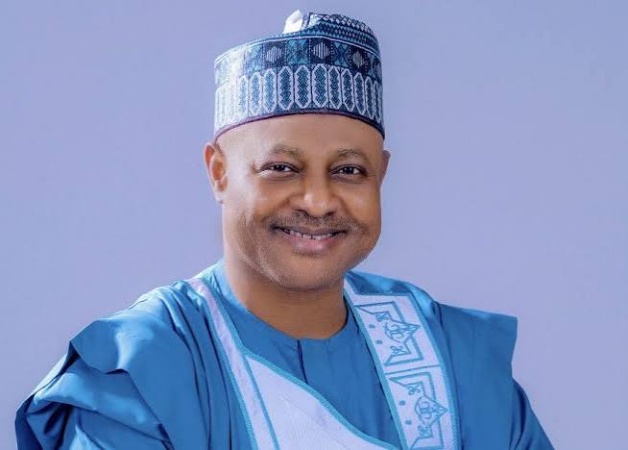

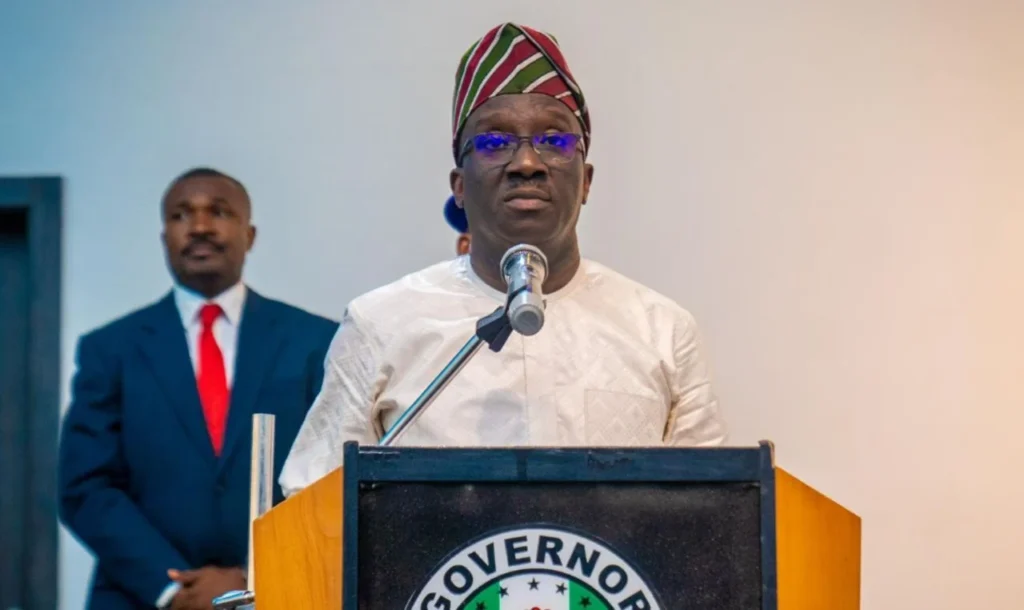


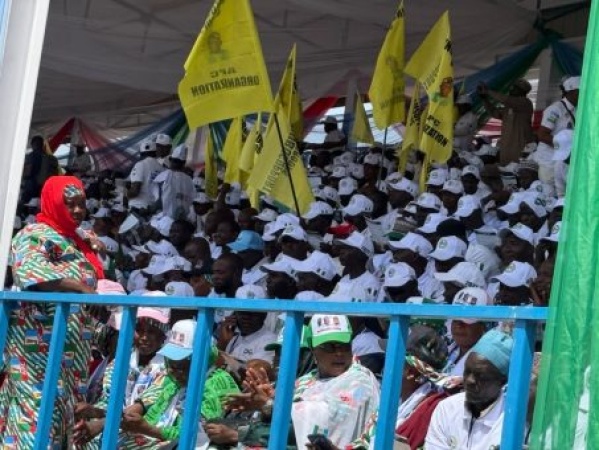








Ademola Adeleke, Bola Oyebamiji, Najeem Salaam
Despite economic challenges, a large majority of registered voters in Osun State say they will reject money offered by candidates or political parties in Saturday’s governorship election, a new survey has found.
The 2026 Osun Elections Survey, conducted by Iterative Learning for Development in partnership with the Kimpact Development Initiative (KDI), found that 84.39 per cent of registered voters surveyed would not vote for a candidate or political party that offers them money.
The finding is particularly significant against the backdrop of economic hardship in the state, with the survey reporting that 62.53 per cent of registered voters came from households that had not had sufficient food to eat in the past month.
According to the organisations, the figures suggest that economic hardship may not necessarily translate into voters surrendering their electoral choices to inducement.
“This demonstrates strong resilience and a commitment to voting for the right candidates,” the organisations said.
The findings were contained in a statement on the Osun governorship election signed by the Director of Research and Programmes, Iterative Learning for Development, Dr. Timipanipre Uge.
The survey consequently projected that Osun was likely to record a lower incidence of vote buying compared with the recent Ekiti governorship election.
The survey also found strong willingness among voters to participate in Saturday’s election.
It said 93.22 per cent of registered voters who had collected their Permanent Voter Cards (PVCs) were willing to come out to vote, translating to an estimated 581 voters per polling unit.
However, the organisations raised concerns over the capacity of the Biometric Voters Accreditation System (BVAS) to handle the expected turnout.
According to the survey, INEC is deploying 6,458 BVAS machines across 3,763 polling units, an average of about 1.7 machines per polling unit.
The organisations warned that the machines could come under pressure, potentially resulting in long queues and late-night voting.
They therefore called on the Independent National Electoral Commission (INEC) to deploy more than one BVAS machine to large polling units as planned.
The survey estimated that 10 per cent of registered voters had not received their PVCs as of July 31, 2026, based on self-reported data.
It said this was unlikely to significantly affect the election outcome, as the voter-to-polling-unit ratio would only decline from 621.64 to 620.64 registered voters per polling unit.
The survey also found that 27.56 per cent of registered voters were fearful or worried about Saturday’s election.
It attributed the concerns to uncertainties surrounding the pre-election period, including the existence of parallel local government council executives, the deregistration of some political parties with candidates listed for the election, and the recent freezing and subsequent unfreezing of government revenue by federal authorities.
It further reported a decline in trust in INEC, the police and democracy compared with findings from the Ekiti election.
Trust in INEC to conduct a non-partisan election declined from 80.69 per cent in Ekiti to 71.08 per cent in Osun, while trust in the police fell from 80.52 per cent to 61.37 per cent.
Belief in democracy also declined from 73.85 per cent in Ekiti to 53.81 per cent among registered voters in Osun.
The organisations urged INEC and security agencies to ensure a credible and non-partisan election, saying the poll presented an opportunity to rebuild public confidence ahead of the January 2027 presidential election.
Meanwhile, the election model used by the organisations projected a wide-margin victory for the eventual winner of Saturday’s poll.
It projected that the winner would secure at least 55 per cent of the votes, while the runner-up would obtain not more than 35 per cent.
The second runner-up is projected to secure less than six per cent, while no other party is expected to obtain up to one per cent.
The 2026 Osun Elections Survey was conducted by Iterative Learning for Development in partnership with the Kimpact Development Initiative, a social enterprise focused on advancing democracy and development through evidence-based research and citizen empowerment. (The Nation)