ADAD
ADAD
Updating your news feed...
NEWS EXPRESS is Nigeria’s leading online newspaper. Published by Africa’s international award-winning journalist, Mr. Isaac Umunna, NEWS EXPRESS is Nigeria’s first truly professional online daily newspaper. It is published from Lagos, Nigeria’s economic and media hub, and has a provision for occasional special print editions. Thanks to our vast network of sources and dedicated team of professional journalists and contributors spread across Nigeria and overseas, NEWS EXPRESS has become synonymous with newsbreaks and exclusive stories from around the world.
















Loading banners
Loading banners...


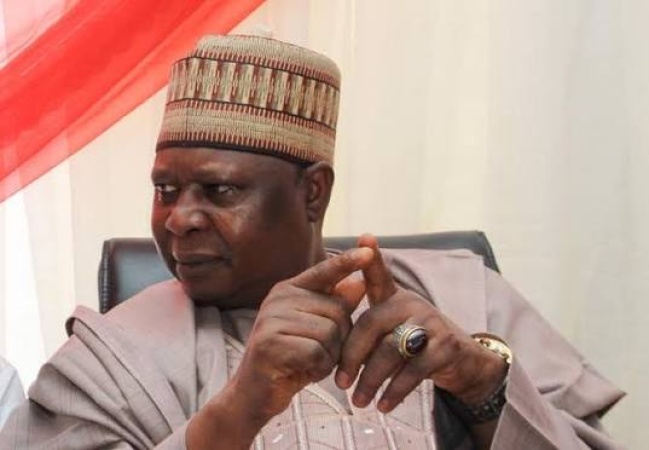
CDS, Rtd Gen Musa
Since the beginning of April 2026, Nigeria has been bleeding. Communities have been sacked, worshippers gunned down, travellers abducted and soldiers felled in battle.
From the forests of the North-West to the highways of the North-Central, South-East, South-South, and South-West, as well as the insurgency zones of the North-East, death moved freely, and fear followed closely behind.
The statistics, between April 1 and April 21, 2026, told the story of a nation in a race against its own geography. Hundreds of people have either been killed or abducted into the vast ungoverned spaces.
Calendar of carnage
On April 2 in Kaduna, gunmen stormed Unguwar Sabon-Titi and abducted 10 persons. Families were dragged out under cover of darkness. As reported, there was no resistance, and no rescue.
By April 3, Nasarawa State was in flames as 12 persons were killed, 52 houses burnt and over 2,500 people displaced. The attack took place at Udege Kasa and Akyawa. It was reported that an entire community was reduced to rubble in hours. Those who escaped fled with nothing; no food, no shelter, no certainty.
Plateau State also bled quietly on April 3 as three persons were killed. It was an attack on Nyamgo Gyel in a late-night raid.
Bandits struck Kachia in Kaduna again on April 4, and abducted five siblings, including a toddler.
The following day, which was April 5, and the Easter Sunday, 15 persons were reportedly massacred in Kujuru in Kaduna, apart from 31 persons believed to have been abducted. Gunmen reportedly moved from house to house, while church services were on-going.
On the same Easter Sunday, gunmen also invaded Mbalom in Gwer East of Benue State. Seventeen worshippers were killed inside a church. The altar was turned into a killing ground. Witnesses recalled gunfire echoing through the sanctuary as worshippers were trapped, and prayers turned to screams.
Investigation revealed that the death toll during the Easter week was between 60 and 80, while more than 70 persons were abducted, and thousands were displaced.
Niger State was also attacked on April 7. The Erena village in Shiroro came under heavy attack. At least 50 villagers were reportedly killed.
On the same April 7, civil society data suggested that at least 1,402 Nigerians had been killed nationwide between January and April, 2026, while 1,800 people were abducted during the same period.
April 10 came with the killing of 12 persons in Sokoto. The specific number of people that were abducted was not given. As gathered, villagers were also forced to pay levies or face annihilation or death.
Insecurity was also well pronounced on April 11 in Zamfara State as 21 persons were dispatched to their early graves by bandits for their refusal to pay bandits, paying with their lives.
Then, April 11 was the day the sky rained death at Jilli Market in Yobe State. It was a day the military launched airstrike against bandits, who have been using the market as their safe haven. Scores of people were killed during the airstrike and dozens were injured. Some media houses reported that 56 persons lost their lives, while some sections of the media put the casualty figures around 100.
Authorities said most of the casualties were insurgents and their sympathisers. But some civil society groups insisted the victims were civilians.
In Kwara State, between April 4 and 6, bandits raided Oro-Ago and Babanla forests in Ifelodun Local Government Area. It was a three-day clearance. They attacked several farming settlements on the fringes of the Oro-Ago forest. Six people were killed, including two local hunters, while 11 persons were marched into the deep forest.
Also on the Eiyenkorin–Afon–Ogele Axis of Kwara Central, gunmen intercepted a commercial bus on April 12, along the Eiyenkorin-Afon Road in the Asa Local Government Area. Five passengers were kidnapped.
This incident caused a massive protest by local residents, who blocked the road on April 13.
Also on April 19, bandits invaded a residence in Oke-Ode in Ifelodun LGA at night. A prominent local businessman and two members of his family were abducted.
On Monday, April 13, 2026 at approximately 8:30 p.m., near Lokoja, Kogi State, a Toyota Hiace bus belonging to Chisco Transport Company, travelling from Lagos to Abuja, was ambushed by armed men.
The Federal Capital Territory (FCT), Abuja was also under threat of attacks by bandits and insurgents between April 14 and 16. The uncovered plots were said to have targeted the airport, correctional custodian centres, and military facilities.
The trauma of April was also compounded by official denial. On April 15, a Benue Links bus was ambushed on the Makurdi–Otukpo Road. While families wept for eight UTME candidates missing in the bush, JAMB and the police initially dismissed the reports as misinformation.
It took four days in captivity and a coordinated rescue operation in the Amla Forest for the truth to emerge.
When Governor Hyacinth Alia of Benue State received the 15 rescued victims on April 19, he confirmed that eight of the rescued victims were indeed UTME candidates.
On Saturday April 18, a GUO driver was murdered on the Ore-Benin Road while his passengers were dragged into the bush. The incident occurred at about 6:00 p.m. on the Iguobazuwa axis, along the Lagos–Benin Express Road, near the Edo/Ondo boundary. One female passenger was rescued with gunshot injuries, while three other passengers were forcefully marched into the forest.
On the same April 18, 2026 at about 6:30 p.m at Onigambari village, near the Cocoa Research Institute of Nigeria (CRIN), along the Mamu-Ijebu Ode axis of Ibadan-Ijebu Ode Road, Dasola Sanusi, a female officer of the Man O’ War, was killed. She was silenced in an attack by gunmen, who emerged from the forest and opened fire indiscriminately on vehicles conveying passengers returning from a social event in Ibadan.
Two other officers sustained gunshot wounds and were rushed to hospitals in Ago-Iwoye and Ibadan.
It was further gathered that between April 1 and 21, between 300 and 500 persons were killed, more than 200 abducted, while thousands were displaced. The figures were only for the reported cases.
Below-the-belt blow for Nigerian military
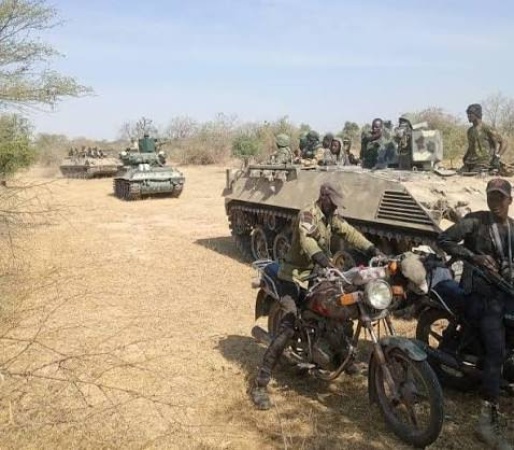
Even in April, soldiers were not safe. Military bases were raided, patrols were ambushed, and weapons were seized.
The overnight hours of April 8 leading into April 9, 2026, marked one of the most coordinated and devastating insurgent strikes against the Nigerian military in recent history. It wasn’t just a single raid; it was a multi-pronged assault that overran key tactical headquarters.
The headquarters, 29 Task Force Brigade at Benisheikh in Borno was attacked, where Brigadier-General Oseni Omoh Braimah was killed. Hundreds of insurgents, linked to both Boko Haram and ISWAP, launched a swarm attack on the base. They used heavy machine guns and RPGs to breach the perimeter.
Reports from the ground and military sources confirmed that the insurgents set fire to multiple buildings and destroyed several military vehicles, including armoured personnel carriers (APCs).
In addition to the General, Captain Ismail and at least 18 other soldiers were confirmed dead in the location.
The military base in Monguno, Borno, was also attacked while the nation was reeling from the Benisheikh news, with major reports emerging by April 13.
The base commander, Col. I.A. Muhammed, along with four other soldiers, were killed in the separate but equally brazen assault.
Similar to the Benisheikh raid, the insurgents used hit-and-fade tactics but with enough firepower to temporarily displace troops from their defensive positions.
During the same period of heightened activity, military outposts along the Kirawa-Pulka axis, near the Cameroon border, were hit. Troops of the 153 Task Battalion had to fight a desperate battle to prevent their formation from being completely overrun.
Within the past five months, two generals; Brig-Gen Uba in November 2025, and Brig-Gen Braimah in April 2026, as well as Col Muhammed have been killed by bandits and insurgents, which probably showed that military command and control are being targeted.
Query on forest guards
One of the narratives that have been constant from survivors is that the attackers have been coming out from forests to strike, and would return to the forests after every attack.
As gathered, forests have become hideouts for bandits, kidnap camps, arms routes, and training camps for insurgents and bandits.
Security forces, according to media reports, have raided the forests on many occasions. But they don’t stay in the forest, which probably keep criminals in control of the ungoverned areas.
The current trends of insecurity have, however, made Nigerians to ask questions about the establishment of forest guards mooted by the office of the National Security Adviser sometime ago.
Investigation revealed that the proposal for a revitalised Forest Guard system, spearheaded by the Office of the National Security Adviser (ONSA) under Mallam Nuhu Ribadu, marks a shift in Nigeria’s internal security strategy.
It was officially launched as the Presidential Forest Guards Initiative (PFGI) in May 2025. The programme moved into full operational status in early 2026.
The core objective is to reclaim Nigeria’s ungoverned spaces, which are vast forest reserves that have historically served as sanctuaries for bandits, kidnappers, and insurgents.
In late December 2025 and early 2026, the first batch of over 7,000 forest guards graduated and were deployed across seven frontline pilot states of Borno, Sokoto, Yobe, Adamawa, Niger, Kwara, and Kebbi.
A critical component of the proposal is that guards are recruited from their own local government areas. This ensures they have intimate knowledge of the terrain and local community networks, which conventional military forces often lack.
While it is being overseen by the NSA, the initiative is a collaborative effort. Instructors are drawn from the Nigerian Army, Navy, DSS, Police, and the National Park Service. Also, it is coordinated by the Department of State Services (DSS) and the National Park Service.
The guards undergo a rigorous three-month programme, including endurance drills, long-range patrol simulations, ambush response, tactical fieldcraft, and rescue operations.
The primary goal is to make the forests uncomfortable for criminal elements by establishing a permanent, armed security presence where it was previously absent. They are also to function as first responders. The guards act as a human intelligence layer, providing real-time data to the military and police for more effective kinetic operations.
Beyond counter-insurgency, the mandate includes curbing illegal logging and the illicit exploitation of natural resources within the forest reserves.
Despite the rollout, the initiative faces on-going debate. There have been calls for robust mechanisms to prevent the force from becoming a politicised militia or being compromised by local criminal networks.
Also media reports stated that the NSA has expressed intent to expand the force nationwide, with some security analysts suggesting a target strength of up to 300,000 personnel to effectively cover Nigeria’s extensive forest belts.
As of April 2026, the Nigeria Hunters and Forest Security Service (NHFSS) Bill, which provides the permanent legal framework for the guards, has been passed by both the Senate and the House of Representatives. However, it is still awaiting presidential assent.
It was also gathered that without the bill being signed into an Act, the guards technically operate as a volunteer-based or interim force under the coordination of the ONSA and the Ministry of Environment, rather than a permanent, pensionable federal service like the Nigeria Security and Civil Defence Corps (NSCDC).
Despite the bill not being fully signed into law, President Bola Tinubu recently approved the recruitment of an additional 1,000 forest guards for Plateau State, following security breaches in Jos North, and another 2,000 for Bauchi State.
Investigation also showed that Kajuru or Shiroro forest axes are so vast that a few hundred guards could only monitor specific corridors, leaving other areas vulnerable.
How Kwara forests became haven for criminals
The Chairman of Ifelodun Local Government Area of Kwara State, Femi Yusuf, shed new light on the deep-rooted security challenges plaguing the region. He revealed that criminal elements have occupied the local forests for over 15 years.
In a video clip recently circulating on Facebook, Yusuf noted that previous administrations were well aware of the presence of these groups, who had long ago established sophisticated operational systems within the forests in districts like Oro-Ago, Babanla, and Oke-Ode.
According to him, the nature of the threat has evolved. For over a decade, the groups primarily focused their criminal activities on cattle rustling and other criminal activities against herders, rather than direct attacks on local communities.
“The previous government in the state knew about it. They had established their systems, but they only engaged in cattle rustling and other atrocities. They would not attack our communities or the Yoruba people,” Yusuf said.
Addressing the ethnic dynamics of the region, the council boss was careful to distinguish between long-term residents and the criminal elements infiltrating the area. He emphasised that many herders have lived peacefully within the Ifelodun community for generations.
“There are some herders that have been living with us for many years and they have become parts of us. They are not criminals. They go about doing their legitimate businesses. But they are the targets of the cattle rustlers and robbers among them,” he clarified.
Yusuf added that one of the primary hurdles in securing the area remains its daunting geography. He described the sheer scale of the forest reserves, which provide a natural shield for illicit activities.
To illustrate the difficulty of patrolling the area, he provided a breakdown of the travel times required to navigate the terrain. He said to move from Point A to Point B could take three hours by motorcycle. He stated further that to transit from Point B to Point C could take additional two hours also by motorbike.
Yusuf identified the logistical nightmare facing security agencies as part of challenges that have been militating against attempts by security agents to reclaim territory that has been under the shadow of rustlers for nearly two decades.
In the first quarter of 2026, investigation showed that the deployment of forest guards across the seven pilot states, including Kwara, focused on frontline councils. Ifelodun was prioritised, being the largest council in Kwara by landmass. It received an initial contingent of roughly 50 to 75 fully trained personnel to act as the core leadership for the local unit.
State police stagnation
Recent developments might have suggested that the overarching conversation regarding State Police has hit a bureaucratic wall.
In March 2026, Inspector-General of Police, Tunji Disu, submitted a 75-page framework to the National Assembly, proposing a 60-month transition period for the establishment of state-level policing.
The IGP’s roadmap argued for a phased implementation to ensure stability and institutional memory. He suggested that 60 per cent of current federal personnel be moved to state services over half a decade.
However, the slow-walk approach has sparked intense agitation.
Leading ethnic nationalities and regional groups, including Afenifere and Ohanaeze Ndigbo, have slammed the 60-month proposal. They argued that with the current rate of kidnappings and killings, Nigeria does not have five years to wait. Many expected a constitutional amendment and rollout before the end of 2026, not 2031.
Critics argued the 60-month window is a stalling tactic to preserve the centralised power of the federal police, while the country’s rural communities remain vulnerable.
The agro-rangers
The Forest Guards are not the first attempt at a specialised rural force. Several years ago, the Nigeria Security and Civil Defence Corps (NSCDC) floated the Agro-Rangers, a specialised unit designed to protect farmers and mediate the very herder-farmer conflicts.
As of March 2026, the NSCDC has reportedly deployed 11,000 Agro-Rangers nationwide to protect farmers for the farming season.
It was further gathered that while they guard specific large-scale agro-allied investments and some farm clusters, they lack the forest-dwelling mandate of the new Forest Guards.
Nigerians have also asked questions on inter-agency overlap on the emergence of the Forest Guards under the ONSA, alongside the Agro-Rangers under the Interior Ministry.
New security calculus
But the Minister of Defence, Gen. Christopher Musa (rtd), in his remarks, during the Antalya Diplomacy Forum (ADF) 2026 in Türkiye, which took place from April 17 to 19, called for a trust-based global cooperation to tackle the Sahelian terror networks.
“No country can confront this alone, but Nigeria is taking the lead. Our focus is on trust-based intelligence sharing and a comprehensive strategy that combines military force with community development,” Musa stated.
Also, the Chief of Defence Staff, General Olufemi Oluyede, during a high-profile operational visit to the Operation FANSAN YAMMA headquarters in Gusau, Zamfara State, on April 21, issued a blunt mandate to his troops: “Go after these criminals until they are eliminated.”
The Inspector General of Police, Tunji Disu, at the same time maintained that the force is entering a new era of intelligence-led policing. He stressed that security must be a shared responsibility, rooted in community trust rather than force alone.
Gap between policy, reality
As April 2026 comes to an end, many security analysts and local stakeholders described the events of this month as a tough reality check for the nation’s security architecture.
The consensus among those tracking the crisis is that a significant gap remains between federal policy and the day-to-day reality on the ground.
Forest guards key to bridging Nigeria’s rural security gap – Security expert
The recent surge in insecurity in Nigeria, reflects the growing adaptability of armed groups and persistent gaps in the country’s security architecture and addressing this requires a decisive shift from reactive deployments to a coordinated, intelligence-driven approach, a security expert has said.
Speaking to Saturday Sun on a social media chat, Dr. Steve Okwori, a Security Consultant and Lecturer at the Nigerian Army University, Biu, and a Fellow of the Nigerian Army Resource Centre Abuja said government must strengthen grassroots intelligence by integrating community-based information with formal security systems.
He said: “Many attacks are preceded by warning signs that go unutilised. Technology, such as drones and geospatial tracking should support this process, particularly in monitoring forests and remote corridors.
“Security deployment must be rebalanced. The current urban-focused model leaves rural areas exposed. Establishing forward operating bases, mobile patrols, and rapid response units in vulnerable communities will reduce the operational space of bandits and improve response time.”
He explained that the introduction of forest guards into Nigeria’s internal security framework is a pragmatic and strategic response to the country’s worsening insecurity, particularly in rural and semi-rural communities.
Dr Okwori said insecurity in Nigeria is largely territorial, with criminal activities thriving in areas where the presence of formal security agencies such as the police and military remains limited or delayed.
According to the security expert, any meaningful intervention must begin by addressing the absence of localised security presence, noting that the establishment of forest guards could fill this critical gap if properly implemented.
He explained that forest guards, when adequately structured, trained, and equipped, would serve as a vital layer of community-based security, leveraging their deep understanding of local terrain, social networks, and movement patterns.
He said that the familiarity enhances intelligence gathering, early threat detection, and rapid response, adding that such personnel could act as first responders in communities where attacks often succeed due to lack of immediate resistance.
He further noted that beyond deterrence, the presence of trained and armed local security operatives would buy time for reinforcements from conventional forces, thereby reducing the effectiveness of criminal groups.
While cautioning that the success of the initiative would depend on careful implementation, Okwori stressed the need for a recruitment process free from political interference and grounded in merit.
He also called for comprehensive training programmes that go beyond weapons handling to include intelligence gathering, rules of engagement, human rights compliance, and coordination with existing security agencies.
In addition, he emphasised the importance of providing adequate equipment, communication tools, and logistical support, as well as establishing a clear legal and institutional framework to define the roles, limits, and accountability of forest guards.
“Without proper regulation, the initiative risks degenerating into loosely controlled armed groups, which could worsen the security situation,” he warned.
The expert reiterated his support for the creation of a national forest guard system, describing it as a necessary step towards decentralising Nigeria’s security architecture and adopting a more intelligence-driven approach.
On broader security reforms, he identified the need for a shift from reactive deployments to proactive and coordinated strategies, driven by credible intelligence.
He urged the government to strengthen grassroots intelligence by integrating community-based information into formal security systems, noting that many attacks are often preceded by warning signs that go unutilised.
He also recommended the deployment of technology, including drones and geospatial tracking tools, to enhance surveillance of forests and remote areas.
The expert further called for a rebalancing of security deployment to address the current urban bias, advocating the establishment of forward operating bases, mobile patrols, and rapid response units in vulnerable rural communities.
He, however, warned that achieving meaningful results would require strong political will, sincerity, and a commitment to tackling corruption, which he described as a major obstacle to effective security delivery.
“Corruption undermines the fundamental responsibility of government to protect lives and property. It must be decisively addressed,” he said.
Lawyers speak
Speaking on forest guards, a former Chairman of the Nigerian Bar Association (NBA), Ikeja Branch, Dave Ajetomobi noted that their primary role is to complement existing military and paramilitary agencies.
According to him, their deployment in forested areas could serve as a proactive measure to curb the activities of bandits and kidnappers who often operate from such terrains.
He argued that a visible security presence in forests could deter criminal elements and significantly reduce their operations.
While acknowledging the noble intent behind the initiative, Ajetomobi expressed concerns about implementation.
He pointed out that poor execution has historically undermined well-conceived programmes in Nigeria.
Using Lagos as an example, he warned against misplacing operational priorities such as situating command structures in urban highbrow areas like Ikoyi or Victoria Island rather than forest-prone locations like Ikorodu, Imota, or Epe where such services are most needed.
He also raised concerns about political interference and lack of professionalism. Referencing the establishment of Western Nigeria Security Network, he suggested that political considerations often shape security decisions.
Ajetomobi questioned whether forest guards would receive adequate training and whether recruitment processes would be free from nepotism, noting that such issues could render the initiative ineffective.
Ajetomobi added that state policing could also enhance accountability, as governors would be directly responsible for security within their domains.
Failure to address insecurity under such a system, he suggested, would raise serious questions about leadership commitment.
Further noted that resistance from some regions has slowed progress on the proposal, urging the president to transmit a well-drafted bill to the National Assembly to amend the Constitution and provide a legal framework for state police.
As an alternative, Ajetomobi proposed the creation of regional police structures, which he said could reduce the risk of abuse by individual state governments. He explained that personnel drawn from across a region such as the South-West could be effectively deployed within neighbouring states due to shared cultural and geographical familiarity.
He also argued that regional policing would ease funding challenges, as states within a zone could jointly finance operations, making the system more sustainable.
Ajetomobi warned that without sincerity, proper planning, and strict adherence to legal frameworks, both forest guard initiatives and state policing risk becoming mere symbolic gestures rather than effective solutions to Nigeria’s insecurity challenges.
In his intervention, human rights activist and lawyer, Mr. Nnaemeka Amaechina, criticized the Federal Government’s approach to tackling insecurity, describing the proposed deployment of forest guards as ineffective and insincere.
Amaechina argued that forest guards, as currently conceived, lack the capacity to confront heavily armed criminal groups terrorising rural communities and farmlands.
According to him, deploying such personnel without adequate weaponry and strategic support falls short of addressing the scale of the security crisis.
He questioned the government’s reluctance to embrace modern technology in tracking and neutralising criminal elements, insisting that a more sophisticated, intelligence-driven approach is needed. He further alleged that the government’s spending priorities are misplaced, claiming that resources allocated to maintaining the presidential air fleet reportedly exceed funding for the military.
The lawyer also raised concerns about internal sabotage within security agencies, noting that there appears to be little effort to identify and address individuals undermining military operations. This, he said, reflects a lack of genuine commitment to resolving the country’s security challenges.
On the issue of state policing, Amaechina expressed scepticism about its potential impact, stating that it is unlikely to serve as a “magic wand” in curbing crime and insecurity.
He also faulted the proposed 60-month timeline for its implementation, describing it as an indication that the government may not be serious about actualising the initiative.
He maintained that establishing state police requires constitutional amendment and the enactment of enabling laws at both federal and state levels.
Citing past constitutional amendments carried out within shorter timeframes, Amaechina argued that the prolonged timeline signals a lack of political will.
In his view, the government’s current posture suggests an unwillingness to take decisive action in addressing Nigeria’s security challenges. (The Sun)