ADVERTISEMENT

ADVERTISEMENT

ADVERTISEMENT

ADVERTISEMENT


Loading banners
Loading banners...


NEWS EXPRESS is Nigeria’s leading online newspaper. Published by Africa’s international award-winning journalist, Mr. Isaac Umunna, NEWS EXPRESS is Nigeria’s first truly professional online daily newspaper. It is published from Lagos, Nigeria’s economic and media hub, and has a provision for occasional special print editions. Thanks to our vast network of sources and dedicated team of professional journalists and contributors spread across Nigeria and overseas, NEWS EXPRESS has become synonymous with newsbreaks and exclusive stories from around the world.
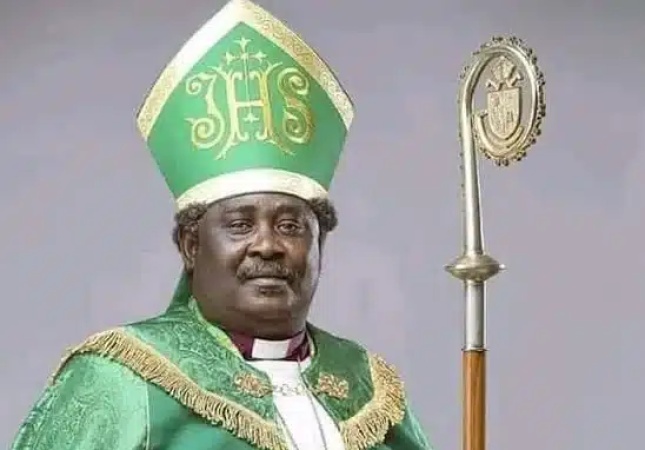
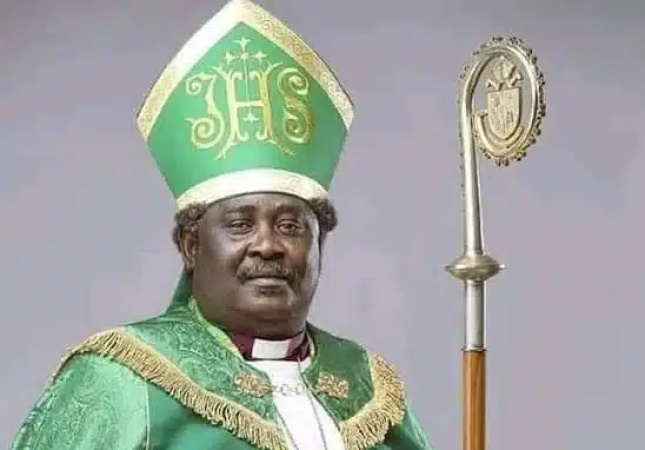
His Grace, Archbishop Joseph Olatunji Akinfenwa
His Grace, Archbishop Joseph Olatunji Akinfenwa, is retiring as the Bishop of Ibadan Diocese (Anglican Communion) soon. In this interview by SAM NWAOKO, he speaks on his experiences, his ministry and his concern for Nigeria as the country dangles between insecurity and political instability.
How was growing up like?
I grew up in Kaduna State. I listened to stories, including prophetic stories of how I was born. So much I got to know from my parents. Sabon Gari at that time was not quite the modern settlement. Sabon Gari was for visitors, strangers and non-indigenes. It was for strangers and growing among siblings, about 11 of us in a polygamous family of three wives, was not easy. There was a lot of pressure brought upon my mother by her co-wives because of jealousy of the fact that she had more children than her co-wives. There was so much pressure brought upon her and her children and it was within that context that we grew up in Daddy Akinfenwa’s house. You must work hard to eat and serve your parents and then school became secondary. It was such that if you don’t go to farm, you will not eat; it was even better that you go to farm than go to school. You must work hard, serve your parents and school thus became secondary. So much I was told, so much I learnt and so much of a challenge my personality brought to my parents was I informed.
My father was a very strong farmer and a Christian. My mother was a Muslim till her death. But they lived together very happily. Being a farmer, being the first wife was an advantage to my father because she came from the royal family in the emirate. Because of her being his first wife, my father was given a large expanse of land as much as he could handle. That helped greatly and boosted his financial capability later in life. In addition to that, he was a member of St. George’s Anglican Church Zaria. He rose to be a prominent member who performed some vital roles in the church. He was from a great Ogbomoso family called the Aare Ago – they are the king makers in the town. He came from such background but he was such a humble man that he did not carry the titles or the position into searching for fortunes in the North. I think God saw that and compensated him with a wife whose family would eventually bless him with a great expanse of land. All of us, the 11 children grew in that farm, and the farm fed us and maintained us for a long time. He never joked with church and that was the pressure he brought upon us; we must attend church and choir practice. If you didn’t, you must be ready for 12 strokes of the cane in school on Monday.
My mother was a seasonal petty trader. In the season of corn, she would sell corn, in the yam season, she would sell yam and so on. She was a full-time housewife. She exhibited her toughness more than my dad. My dad tried to contain his emotions and talked less, but my mum was a no-nonsense woman. You either play ball or you are off the pitch. That was the kind of woman that gave birth to me. We had a lot of struggles with her, particularly me. We look back and give thanks to God because some of the struggles eventually helped to shape our life.
Your growing up story will not be complete without how you met your wife. How did you meet her?
I actually met her while playing football. So I can say I met her on the soccer pitch. Sports is one factor that brings students together and so was it in our days. Football and sports generally were a binding factor that brought students from different institutions and backgrounds. Growing up, I loved playing football, especially goalkeeping and I grew so well in that department. I was my primary school goalkeeper for many years in Zaria, I had the stature even as a child so I was good to go. I became one of the outstanding figures in city football competitions in Zaria at that time. Our mates at that time would certainly remember me. At secondary school at St Enda’s Teachers’ College, Zaria, I became the school goalkeeper. My priority then was games and I devoted plenty of time to it to the extent that after my first two years in the college, I wrote an aptitude test to see if I should continue or drop out. In those days, going to teachers’ college was like going to nowhere. So the North Central State introduced an aptitude test and everybody in Secondary II must sit for the examination and be reassessed to see where they would fit into academically. I was one of those who, by the grace of God, passed the examination and I was sent back to a secondary school. In fact, my father decided that I should go to teachers’ college because my academics did not measure up. We had a small covenant with him on education: Would you do well? Will you not waste my money? So going to secondary school was like another achievement for the family.
At the secondary school, I quickly adjusted and became popular again through football. There were a number of secondary schools there in Zonkwa, Kagoro, Kafanchan and Jos and there was usually this inter-secondary school competition. Incidentally, my own school, Balewa Memorial College – a boys’ only school, played against a school in Kagoro, the Kagoro Teachers College – a co-educational school. That was where I met my wife. We usually went for football competitions in their school, on their ground many times but they were never able to defeat my school on their own ground. Fate just happened that I sighted her on that day in company with other ladies, especially those of them I knew from Zaria. That was where the whole thing clicked. We became familiar and she thought I was joking, I didn’t chase to love, I chased to marry. That was my statement. She laughed and thought I was not serious but eventually it happened and since then I have come to know her as a great person. She is always ready to learn more, t do more and to sacrifice to the glory of God.
Looking back, I think God had a hand in what one would become in the future and those things one would need, he would prepare for one. He knew I was going to become a minister of the Gospel and that I would need somebody who would be able to complement this call and do the needful. In my secondary school I was told some prophecies and one of them was that my coming was to become a great priest. Why would one have to believe this? The person who revealed the prophecy was a Muslim and not a Christian. Take it or leave it, here we are today to the glory of God.
How were you able to weather the challenges of marriage because there must have been challenges?
God who sees the end even before the beginning, knows how to arrange things and that is our own case. I say this because we had series of challenges before entering ministry and the challenges were the loss of children. After marriage, we lost three children. Every test carried out in the North, and in the West and everywhere, they didn’t see anything. They summary would always be “bad luck”. They didn’t see anything as the cause of losing the children. That led us to make a covenant with God. We asked that if He could give us just one child, we would serve Him all the days of our life. We didn’t wait for that one and we threw ourselves into the work of ministry. At that time, I was a staff member of the Ahmadu Bello University (ABU) Zaria. I got a job in ABU Zaria, miraculously also through football. I was keeping the goal for the Nigerian Railways and I was doing so well that the ABU people came and enticed me. I was advised to see the ABU offer as progress.
It was at my place of service at ABU that the call to ministry came. I couldn’t explain it but something just clicked. We suddenly just decided to work for God and instantaneously we knelt to pray and agree and promise God: Just give us one and we will serve you all the days of our life. We didn’t bother ourselves anymore about loss of children; we had sought peace not to worry whether the child stayed or not. The child stayed. People who were coming to congratulate us were actually coming to see if it was true or not. They came as usual with all the dirty talk because during the period of challenges of losing three children, it got to a point that I was advised to divorce my wife. She was almost convinced that there was no way forward in our relationship but, like a miracle, I said “when I met you in your school ground many years ago, what did I say? I said I wanted to marry you, I didn’t say I wanted children so let’s continue.” God did it and we continued and, apart from the first child staying, God again showed us that He was in agreement with us. She was teaching at Sabon Gari, roughly eight kilometers to Wusasa in Zaria where the theological college is, but somehow she was offered appointment as a matron of a secondary school in that vicinity. It became a case of go to lectures, if you like sleep in school or just cross over to where your wife and children are. When I was ordained, we also received the miracle of being posted to the Cathedral where we spent unprecedented 15 years at one spot. I was there as a deacon, priest, canon, and archdeacon before being elevated to the Diocese of Sokoto at that time. In all of these, Mama Ibadan as my wife is popularly known, has proven to be a great woman in conduct, in character, in manners, in management. Name it. I can proudly say that she has complemented my ministry to a great extent so much that she too has given birth to so many non-biological children who are now doing so well and can have her as a reference point. So, we see the hand of God in every situation. One couldn’t have asked for better.
What significant event made you to say ‘okay, God has called me into ministry’?
There were times that one gets to a crossroads, when you think deeply and analyse with your little faith in God, you will realise that the power of the unseen can direct you if you are bale to recognise, understand and throw yourself into it. I was part of the staff of information and communication of the ABU at that time and I had an office to myself at that time. I had also risen to somebody who could be called to give exhortation during evening service. Evening services are usually poorly attended, so a member of the choir could be chosen to do this or that. That day I was thinking about what my family was going through – no child and medical tests said there was no reason why our children should be dying; and with the little knowledge I had in the Bible, that was what made something click. I beckoned on my wife, I said people had abused, people had suggested this or that, they had even suggested that I should send you back to your parents, but there is something we had not done: Have we really challenged God? We had not, and maybe that is why we were still in the dark. We agreed and we went on our knees. We knelt, joined hands and prayed and made a covenant with God that if He could give us just one child, we would serve Him for the rest of our lives. There was no looking back since that time. That night was the beginning of change because even before I went to the theological college, God had begun to keep His words. That week, she fell in church and the medical personnel in church were the ones who discovered that my wife was pregnant. I laughed to myself and said, ‘again?’ Interestingly, our focus was not on that in any way; we were concentrating on how to go for the theological college interview called selection conference. We were focused on how to deal with her household items, and on where my wife would stay when I went to school. I had three scholarships, miraculously – the church was ready to sponsor; my father, who was about the happiest at that time because he was so in love with the church, and one of my brothers too was ready to sponsor. However, while had that, another miracle was that she got a job at the vicinity of the theological college, as a matron of a co-educational institution also owned by the Anglican Church. We saw and knew that God has a hand in this journey because He blessed us with more than we asked for.
God proved that He is a covenant-keeping God and that when any of His children covenants with Him, He goes beyond their expectation. We only asked to serve but the exposure we have received is unprecedented, along with the training. The people God has placed on our way as destiny helpers are too numerous to mention. These are people who had risen for us when we fell into trouble, including Baba Abiodun Adetiloye, who consecrated me, to baba Peter Jasper Akinola, who did quite a lot even from the North, and my Bishop that ordained me, Baba Ogbonyomi. In fact, that was the foundation because he was in it all from the beginning.
You have delivered so many powerful sermons and speeches, some of them very significant. Where did this gift of oratory come from?
Again, one must appreciate God. In the journeys of benedictory services, I have persistently said that it is the people themselves who do most of the work. He would always raise people who, many able men and women who took up the challenges of doing what was required. At St. Enda’s Teachers’ College, I had one wonderful English teacher called Mrs Beckett. Her influence upon me was so great that I passed every pronunciation test. Apart from football, I devoted more time to her and made sure I passed all her assignments. It was when I became Archdeacon that I straightened my secondary school exam results. In other words, I had to go back and sat for GCE to, at least, make my five credits correct so as to be able to further my studies. So, I was combining work and private studies. I also met another academic woman in our church who discovered that I had made my paper correct. She was furious and said “…upon all the work that you are doing? Do you think you will remain at this level?” She started giving me extra lessons and before the exams, she brought past question papers and I practiced with them. Those two people did a lot to polish me from the beginning. Then, Baba Ogbonyomi, the Bishop who ordained me, was an officer and a gentleman. He was a trained soldier, Lieutenant Colonel in the Nigerian Army and he was the Bishop of the church in the whole North – Kaduna to Maiduguri to Potiskum, to Sokoto, name it… everywhere in the North before they were divided. He was never tired. Baba was so disciplined that he would never be late, and he would do his homework thoroughly and would never tolerate any nonsense from any of us under him. All of that I learnt for 15 years. He put a lot into me because he was a balanced church leader. Is it ecumenism? By the time I became the Bishop of Sokoto, Baba had retired. God used Akinola of blessed memory to give guide, to develop and expose us. The exposure I got under Peter Jasper Akinola did a lot. Under him, I attended conferences even abroad from Sokoto. One of the best ways of learning is by observation. We learnt a lot from baba Adetiloye. I had the privilege to chaplain him when he paid official visit to Kaduna Diocese. He eventually was the one who consecrated me before his passage. One thing I have enjoyed under God is to see good examples of great men, how they led the church; how they ministered and how they preached. I learnt a lot from observation, and I have been telling my priests to open their eyes as they open their eyes to learn how leadership must present itself, the courage that a minister should have at all times.
Your Grace, when you look back at the Zaria you knew back then and the Zaria, Kaduna and the North which we have today, you will agree that a lot has changed. How does that make you feel, considering all the news that come from that side of the country nowadays?
It can only make one sad… really very sad! Sad because it has changed dramatically. In those days, you could live anywhere in this country. You could even travel any time of the day to anywhere. I am a night traveller, I travel from Ogbomoso to Kaduna – Zaria, even to Kano. I would travel to Potiskum and so on and you were assured of safety. But today, all of that have been wrecked, unfortunately. I think governments have not been fair to us. They have not only cheated us, they have not been fair to us. The reason is that for years even while preaching in the North, with my experience in Sokoto, I have always emphasised that our boarders are porous. They are very porous. From Sokoto to Ilela to Niger Republic, you can walk in the forest footpaths and nobody would challenge you. This is what all these marauders are now using to disorganise us. Five to ten years ago, we might have said that the South is safe or that the East is safe or that the West is safe, but today nowhere is safe in this country, unfortunately. And this is all due to the recklessness of our leaders.
Some have said it was because the military had left governance, while some say it is because democracy has not served us well. During the military, Nigerians rose to challenge their incursion into power, including church leaders but now, it looks like democracy has not served us well. Where do you think we got it wrong? What can we do?
Firstly, we got it wrong when we started laying emphasis on things of the world instead of God. Look at religion today compared to those days, there is a lot of difference. Today, almost every third person on the street claims to be a pastor, but where is the spirituality? In fact, those who claim to be pastors you must really look at them because it is covering their face with something else. It is a way of doing something evil. That apart, yes the military tried, and now civilians. I think it is a case of abracadabra – the more you look, the less you see. If we are to properly assess, in terms of rulership, I would want to say that the military are fairer because the expenditure we are running on civilian government is so bad compared to that of the military.
But again, good evolves, evil too evolves. When we have a country that the rule of law cannot stand firm, then evil will continue to multiply. How many of these leaders who did evil have we not brought back to limelight, to begin to sing their praises? Give them jail sentences, after two months they are out of the place. Arrest them because they did A, B, C, D and before you knew it after two to three weeks, they are released on bail as long as they can drop pat of the money they had stolen. The rule of law is like nothing again in this land, everybody just does whatever they like.
On the part of ministers, how many of today’s ministers can challenge government? How many of them can research and come out with the truth and solution? Only but few. If all of these do not tally, one thing that is important that people must think seriously and look at seriously is that this country is too large for one rulership.
So, what do you suggest?
Let us have a break up. It is too big. Let us go back to what we were supposed to be doing before the amalgamation. You think those who amalgamated us didn’t know what they were doing? They had seen the potential of this nation, they had seen where this nation is going so it is like putting a delaying tactics of bringing confusion amongst them. The amalgamation did us evil. Where is history today? It is no longer being taught. It is a lot of mess-up. Even if it is five countries… I have said it on the pulpit, even if it is five countries, let us have it. There is no improvement, look at what is happening in the North and the Benue Region and so on, this still continues. This committee will come and say they will handle it, the president will go and visit, and so on. What is the essence of the visit when people have lost members of their families? It could be a constituent assembly or something, but let us have eggheads sit down and plan this country. The resources in everybody’s area, let them go and use it.
You don’t think the government would say you are supporting what IPOB is doing because they have been in the one agitating for a separate country; that they want out from Nigeria. Won’t the government say you are advocating for the break-up of Nigeria?
That would be an excuse. There are times that government too uses money for information of disorganisation. We have seen what is happening around the country, and especially in the North, there is no improvement. See the number of senior military officers who have died now, and we are still not having any improvement, and our boarders are still porous. If they don’t have a hidden agenda, let us split this country into four or five. It is too large for one person to rule. And, maybe the resources are not enough again to use to rule and maybe the monitoring ability is no longer there.
You have spent 40 years in the ministry. When would you say are the most transformative years of your journey?
We thank God for our founding fathers and for our forefathers who took Christianity to another level. And one thing I have imbibed, and for which I want to thank God is the radicalism of our forefathers, people like Abiodun Adetiloye, people like Akinola Peter, their radicalism to present the gospel. I give them kudos. And we have taken part of that, because there are things you don’t just handle with kid’s gloves. You must hit hard, and this is what Akinola did and became one of the most influential people in the world. He became influential through this agenda of the homosexuals that he fought, and we thank God I was privileged to be part of the people who went to the last Lambeth Conference before the whole thing crumbled. That is one thing which the church gained, the question is: where are we today? Is that fire still there? I doubt it. Is that discipline still there? I doubt it; is that radicalism still there? We must go back to the days of our forefathers. What did Adetiloye do? He stood firm against all forms of cultism and that was the turning point for the Anglican Church in this land. Akinola came and added his own. But today, many people enter ministry because of food, not because of preaching the gospel. How many priests or leaders emphasise on mission and evangelism, on church planting, on transformation and redemption and so on? How many? There is still a long way to go to have a reset of what our founding fathers stood for right from the days of Ajayi-Crowther himself who was a brilliant radical minister of God, and the like.
From your ordination to becoming a bishop in 1988, what lessons would you say came with each level of elevation?
I think with every elevation came the thoughts of how to really perform at that new level. Elevation comes with a cost and a lot of expectations. Even when you are made a canon, people will always expect to see how one is going to perform that role. So, I am always determined to throw myself into that role. When I was posted to Sokoto as a fresh Bishop, I saw it as a big challenge and God helped me to make use of my mother tongue, which is the Hausa language, and people were surprised and asked if I was truly a Yoruba when they heard me speak or preach or lead in Hausa. These are the kind of things people expected of those who have been given the grace by God to lead.
In 2000, you were translated to Ibadan Diocese. What did that translation – and the shift in base – do you personally and spiritually?
The first thing was that the translation brought fear. Look at it this way: A man born in the North, almost all his youthful life in the North; all the culture of the North imbibed; friends and everybody – in the North. That of Sokoto is understandable; to now say leave the entire North and come to Ibadan is a total shift, a completely different ball game altogether. When I say it first gave me fear, it is because most of the priests in this location at that time were either PhDs or Professors, me I didn’t even have a Master’s. To now come and lead them was something. It was a university city, full of enlightened people and much more than that, you only need to lift up your head to see that skyscrapers are all over the place. It brought fear of what am I going to say, how am I going to lead? But as God would have it, He only did one thing. He made us to remember that we had practical experiences. When we preached at the enthronement service, we said something and everybody laughed. We said from now, everybody would follow the Bishop to rural evangelism. We would go to the forest and to the rural communities and so on. Everybody laughed. Later I asked them what the meaning of that laughter was. They said it was because bishops don’t go out, they stay indoors. I laughed, but it spurred me to action. I called the first archdeacon and said get ready, tomorrow I want to see every single church in this Diocese before I map out my strategy. He thought it was a joke. The understanding changed by the time they were hearing news that he is all over the place in the bush. I wouldn’t know if that laughter of theirs became something else, but that is what God used my coming here to do. Apart from the fear I had, determination followed to prove people wrong. One of my fellow bishops once came here to see me and he was told that I had gone to a village somewhere near Shaki. I learnt that he complained bitterly, asking, ‘Who sent him? Is that the work he is supposed to be doing? He is supposed to be in his office not outside, and so on. I laughed and said he would soon understand. Later, he joined the bandwagon to the glory of God. (Saturday Tribune)