
ADVERTISEMENT

ADVERTISEMENT
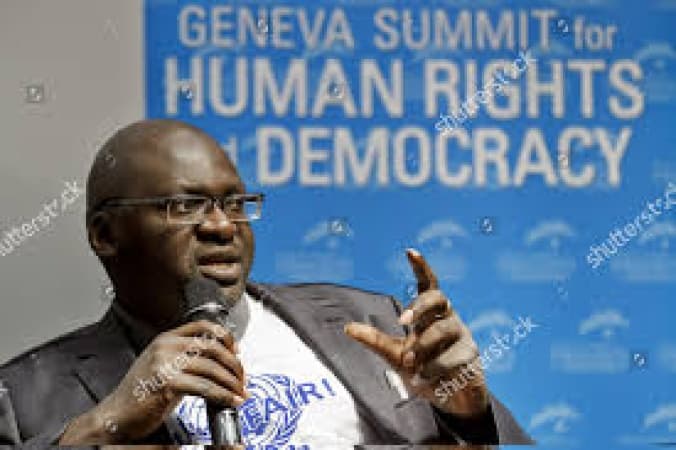
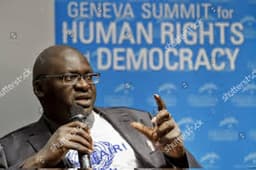
International human rights lawyer Ogebe
International human rights lawyer Emmanuel Ogebe recently gave an explosive interview to Channels Television’s Inside Sources anchored by Laolu Akande. Commenting on the recent ambassadorial list, Ogebe noted that President Tinubu appointed fugitive with case file in America for attacking congressional witnesses as ambassador who will be blocked. He also made wide-ranging revelations regarding Nigeria’s security challenges and USA’s intervention. Transcript:
Laolu Akande: Welcome back to Inside Sources. Today we are having a conversation on the state of security in Nigeria. Looking specifically at two important developments. The first is what seems to be the move in the United States for a compilation of Nigerians to be targeted as regards the issue of insecurity in the country and of course the recent declaration by Mr. president that indeed now we have entered the phase of a national emergency
And to join me in that very critical and timely conversation I have guest virtually and in the studio let’s start from the studio on my immediate right I have Malam Baba Yusuf - strategist policy advisor and chief executive officer of GITC. Malam welcome back to Inside sources
Baba Yusuf: Always a pleasure to be here bro
Laolu Akande: Excellent. Thank you thank you thank you and to his immediate right, I have the Deputy Editor of The Sun and also a former Chief Press Secretary to governor of Osun State Mr. Ismail Omipidan. My brother welcome back to Inside Sources.
Ismail Omipidan: The pleasure is mine.
Laolu Akande: All right. Thank you. Thank you. Now virtually from New York I have a Professor of Political Science and Women’s Studies from the City University of New York. Professor Mujubaolu Olufunke Okome. Prof, welcome back to Inside Sources.
Professor Mujubaolu Olufunke Okome: Thank you very much.
Laolu Akande: Thank you. And in DC, Washington DC, the Capital of the United States, we have Mr. Emmanuel Ogebe. Mr. Emmanuel Ogebe is a US-based lawyer and human rights advocate who recently won the Federal Government’s Diaspora Merit Award. Emmanuel, welcome back to Inside Sources.
Mr. Emmanuel Ogebe: Thank you very much, Laolu, and welcome back to Nigeria.
Laolu Akande: All right. Thank you. So I’m going to start from you, Malam Baba Yusuf just to give us your take about what the president has now said. On Wednesday the president said he is now declaring a national emergency on the issue of security. How do you interpret that?
Baba Yusuf: Thank you very much. Well, I am constrained not to give it much of interpretation. One, because in my opinion, this is a statement that should have come long time ago, years ago. Secondly, it would have been followed with an action plan and for us to see clear, demonstrable actions with outcomes that wouldn’t have brought us to where we are today. But having said that, it’s a step in the right direction will be my comment at this moment. I will wait to see what are the follow-up actions to this declaration. Indeed, such a declaration should not change the narrative but change the attitude, disposition, attitude and actions with regards to this very serious issue uh that we are facing. What is important for me is the action. We have different narratives and as far as I’m concerned, declarations of such nature at this point in time will only mean something to me as a Nigerian and I’m sure for a lot of other Nigerians when we see the following followup action plans and actions to that effect.
Laolu Akande: Okay. Excellent. Ismail, your take?
Ismail Omipidan: Well, for me uh I will not be too far from uh my colleague here that it ought to have come years before now. But we must take into cognizance that the government in power is just about 2 years old. With regards to the national emergency, my only push back is that rather than talking about recruitment into police, army and DSS they should have activated the move to institutionalize whether you call it state police, whether you call it local police or decentralization, whatever name you want to call it. For me, the declaration of emergency will make a lot of meaning if we activate state policing system in the country.
Laolu Akande: All right. Thank you. So let let’s keep it going. Let’s start with Professor Okome. What is your take on what the president has said on Wednesday that he’s now declaring a national emergency on security? Prof.
Professor Okome: It’s unfortunate that the president is doing this now because he has been part of the Nigerian political elite and masterminding and being the chief strategist of everything and insecurity is not a new thing in our country. You know I’m saying it’s unfortunate even though it is a step in the right direction although inadequate if you ask me I mean are Nigerian elites just waking up to the fact that there has been rampant and just banal insecurity in our country you know and for me I kind of decided to get off the sidelines and get involved with the kidnapping of the Chibok girls. But that was preceded by Buni Yadi. You know the fact that predators of any sort, whatever you call them, can go into places that are supposed to be safe and secure like schools and church and you know places where people do their everyday business expecting that the state will protect them and they are kidnapped. These people are asking for ransom. They torment the people. They have beheaded people and now we are saying the president. So, and I think the reason I’m disappointed is that if America had not gotten involved, we would just have politics as usual in Nigeria. So, the Nigerian state has been treating the lives of Nigerians as if they disposable people, as if they are irrelevant, as if anything can happen. And then they decide whether they are going to even listen to the pain and complaints of those people. The way they’ve been acting including this president is like it is only their lives that are valuable. The purpose of the state is to provide security in any place where it says that it has control. It is even a constitutional guaranteed right of people. And you know it is we are acting like we’re a banana republic because America is now breathing hellfire. We’re jumping. (Laolu) Okay. So yeah, Mr. President, you are doing the right thing. But you know what? Until Nigerians feel safe and secure. It is just words.
Laolu Akande: Thank thank you for those opening comments. Let’s take it to Emmanuel so that we have a rounded conversation. Emmanuel, what’s your take about what the president has said regarding national security emergency?
Emmanuel Ogebe: Well, as they say here in the US, “too little too late”. It took more than 2 weeks after the execution of a general. I mean, this should have happened within 24 hours of the release of the video of the execution of General Uba. But you know, as it has been pointed out, it looks like it’s only foreign pressure that works.
We remember that President Yar’Adua said he was going to declare a state of emergency on electricity and that never happened and so we want to see what kind of actions will follow this declaration.
But as someone has pointed out in an incisive article, it’s amazing how swiftly they moved to arrest officers who they claimed were attempting a coup. But when atrocities were happening to regular citizens and their power, their hold on power was not threatened, they didn’t respond as fast. And so this is of course a concern for us all. How will this translate into safety for everyday Nigerians on the streets?
Laolu Akande: Okay. So, I want to then leverage to the other issue which I also want us to spend some time about which is the move by the Americans to designate Nigeria as a country of particular concern. Now I gathered you know attending the hearing last week that this is a package that once the designation is made there are other policy decisions that follow including as the US Congress made clear last week the use of sanctions that are targeting individuals you know and entities a collaboration between the state department and the US treasury to target particular individuals in Nigeria who have a role or two to play or who haven’t done what they’re supposed to do. So I want to ask you I want to start with you Emmanuel and then we just take the reverse order. How effective do you think this kind of an approach targeting individuals in Nigeria how effective can it be to actually ending the killings in this country?
Emmanuel Ogebe: Well, you know, first of all, this is not the first time that the US has imposed sanctions on political actors in Nigeria. In the past, they had revoked the visa of a governor who had been impeached and was indicted of corruption. Similarly, they did the same thing to an attorney general of Nigeria and so on and so forth.
Now this will probably be the first time that they are imposing visa restrictions for example pursuant to the CPC because the last time the CPC designation occurred, they waived sanctions but this time around as told us in congress where I saw you last week they are going to evaluate their toolkits: there are some sanctions that they will waive but there are some sanctions that they will impose.
I am aware for instance from my sources in the US embassy that even visa restrictions were imposed on justices who were believed to have been involved in corruption. So it’s clear to us, and I will be very candid with you before the brouhaha about CPC began, we had been requested to provide individuals for sanctions and unfortunately I got too busy I didn’t make my own input but I will say this very candidly - I understand that President Tinubu has nominated a number of individuals for ambassadorship which you have complained about for a long time on your show that he should have done that - again “too little too late”. And one of the individuals that has just been nominated as ambassador already has a case file here in America because the agency that he headed attempted to attack and retaliate against people who testified in Congress and that is on record.
So they’re literally trying to nominate somebody who is a violator as ambassador and he will be blocked if he comes here to the US. So they seem to be worsening their situation instead of improving it.
Laolu Akande: So let’s take it to Professor Ok. What’s your take on the effort by the Americans specifically to target particular Nigerians as a means of curbing the killings in their own way, Prof?
Professor Mujúbàolú Olúfúnké Okome: It just shows you that America has power, right? Nigeria has none. So in the scheme of things, America is the hegemon in this world system that we are in. Nigeria, it is embarrassing for me to admit this, is acting like a banana republic because like I said, the essence of saying you are the state is that you should be able to guarantee the security and safety of your people. What has been happening with insecurity should not happen. And time and again powerful states have to exert sanctions on the Nigerian state to make them do what they are supposed to do.
The sanctions are not new. During Abacha’s time there were sanctions. There have been individuals, as we heard, who have been sanctioned — government officials. I think this is the only language the Nigerian state officials understand. Somebody from the outside has to come and tell you how to do your job and then you’ll start jumping as though you are sitting on a hot stove.
This is something that if they are worth the name “state” and “government,” nobody should come and tell you that your people’s security is important, that genocide should not be happening, that hate, the way it is casually deployed in Nigeria, should not be part of our modus operandi. So look, this is not new. I remember Abacha. I remember under Babangida. I remember under all administrations in Nigeria. Even our president himself has gotten into trouble in America before.
If we say we are independent, we have a responsibility to take seriously the fact that when we run for office and we make promises to the people, we deliver. We should have enough self-respect and show that we are autonomous, we are independent, and we will take care of our responsibilities without being constrained from the outside.
But look, the reason why people drag the Nigerian government before America and before the United Nations and other international actors is that the Nigerian state does not listen to its people. And it’s disgraceful. It is not supposed to happen. But this is the only way that Nigerians have always gotten their government to take action on egregious problems that we have. Thank you.
Laolu Akande: So I’m bringing it to the studio right here with my two guests, but I wanted to read — just to deepen the issue — the language of the US Congress on this particular issue of targeting specific Nigerians.
I have here a copy of a statement from the office of the US Congressional Committee on Africa, and I’m going to read from this statement that I got last week. It says that Resolution 860, while commending the Trump administration for designating Nigeria as a Country of Particular Concern, is calling to enact sanctions against individuals and entities in Nigeria who are supporting this horrific violence. Additionally, this measure calls for certain verifiable conditions on any aid going to Nigeria.
But I jump to more details. It says that the State Department should collaborate with the US Department of Treasury to impose targeted sanctions, visa bans, asset freezes, and other restrictive measures under the Global Magnitsky framework on individuals and entities responsible for egregious religious freedom violations in Nigeria. As a matter of fact, that statement goes ahead to name some entities that I’m not going to read here, you know, just so that we don’t cause unnecessary division. But this is how clear the Americans are about what they want to do.
Ismail, what’s your take?
Ismail Omipidan: Well, first and foremost, we all know that Nigeria is a sovereign state or a sovereign nation. But I do also know that the US has always been behaving like the police of the world, not in matters concerning Nigeria alone. I mean, there are experiences to show that they have done that in several other countries.
For me, I will support anything and everything that will help to stem the tide of banditry, insurgency, and attacks on Nigerians. But what I will never support is their attempt to make it look as if a particular religion or a particular ethnic group is being targeted for these attacks. I want to also appeal that because when I read the story they also said that those who express views that tended to support — I don’t know how you define that, I don’t know how you classify that — but Nigerian elites, I think they are the ones that will suffer most as far as this is concerned because they are the ones who are always quick to rush to the US at the slightest provocation and keep their assets there.
In fact, I can say with all sense of modesty that during that period of “scare,” a lot of them ran away. So they are the ones who should be careful, you know, in defining those supporting. If there are credible evidence, why not? In fact, I appeal to the Nigerian government not to wait for the US government to do that. They themselves should start it.
For instance, I don’t know why up till now they have yet to inform us who were responsible for the withdrawal of soldiers from Bassa, which was what the Governor of Kebbi said. And if you recall that was exactly what happened during the Chibok attack. There was intelligence that there was going to be an attack. Security operatives were mobilized, especially police, and when it eventually happened the man who led the police had to call the governor that look, these people have overpowered them and he was taking cover.
And in that same Borno I think that should be about 6–7 years ago, there was a particular general that was nicknamed Ebola. He was nicknamed Ebola because of the way he was treating his troops. Each time he asked his men to go on raiki they get ambushed by Haram and there would be no rescue operation for them. And so there was a particular day when they returned to the barracks they opened fire on the army general. I can’t remember his name immediately, but the only thing the authority did was to take him away from Borno. Till this moment I didn’t know what happened to him. In fact, I can’t say whether he’s still in the army.
And if he’s not in the army, there was no report anywhere to show whether he was m***ed or disciplined for that because these people, they are human beings. When you send them on an errand, they know when you are real with the message you are sending them, and they know when they suspect foul play. Most of them told me at the time they suspected that the man was in collusion because how come each time you ask them to go out, they get ambushed, not once, not twice?
So Nigerian government should not wait for the US government to take action. The moment they identify some of these bad eggs — whether within the army or within the community — they should take necessary action against them.
Laolu Akande: Thank you. Thank you. Baba, you know. Yeah.
Baba Yusuf: Very, very good development I must say. Like I was saying before we started the session, I made my position very clear on the 7th of November on my Friday back page weekly column on The Nation newspapers of Nigeria with regards to the initial narrative by President Trump. I took exception to it. First of all, as a human being and as a Nigerian, I always speak true to power. But what I will not accept is this misguided connotation of what we are going through in Nigeria.
For the record, people that know me, I am a victim of Boko Haram attack. I lost a family member by Boko Haram. We are Muslims from long line of Muslims and our residence in Kano. There’s a particular residence in Kano that people knew if there is an attack or there is an uprising or misunderstanding, people knew that when they come to one of my father’s residences that person is secure whether you are Muslim or Christian and this is the principle and ideal that we have been promoting.
So it is very unfortunate when I see some members of the elites that are maybe non-Muslims that are supporting this toga. I have in my scholarship today in Nigeria people from southeast, people from southwest that I have trained from primary school to university. I have not even seen them and they are not Muslims. So if we want to be serious about Nigeria, much as I will come to the issue of the failure of leadership in this country that has brought us to where we are, we should also be circumspective in addressing this issue.
Having said that, I’m very happy with the development. The narrative is changing to the tune I want it to be. This which you have read, I totally align with. If leaders have failed and interventions are coming that way and like I said in my write up, I don’t mind an intervention by the United States of America even though also for them a little bit too late because we know there were times we sought for interventions we didn’t get. And also we should also not forget as Nigerians that I have always told us to remember the objective of the deep state about the resource that is the focal point of any leader that is trying to come and give us quote unquote intervention. It is only Nigerians that can actually salvage themselves. Nobody would come and salvage you free of charge talkless of President Donald Trump.
However, dropping the ball means opening vistas of opportunities for state capture from the outside and we cannot blame them. They are playing their game. What is our own game? This which I see I hope will be enacted and actioned immediately because it will wake up the leaders to either do the needful or the reality will remove them out of play.
In fairness to all, how do we arrive at a situation whereby we accept repentant bandits into our armed forces to be part of our security architecture and intelligence and we expect things to go better? How do we come to a situation 15 years into the onslaught of Boko Haram Islamic fundamentalist, banditry and economic saboteurs, we are yet to fully prosecute and set examples by arresting at least one or two of the principal actors and bring them to book 15 years after the fact?
People are calling for special courts. I think it is an insult on the intelligence of Nigerians by the leaders. Over and beyond these sanctions, I expect the United States also to take other actions with the allied countries of Europe and other countries so that because if I will remind us during the times of President Muhammadu Buhari when some sanctions were enacted by the United States, I remember one of the topline leaders of the country was waving it off and saying, “I have nothing to do with America, I don’t have to go there.” Such an irresponsible statement. When a sanction is meted on somebody, first of all fundamentally it is naming and shaming and for anybody that has an iota of self-respect that tells you that something is wrong and for you to reflect on that whether you go to America or not, to take action.
But it appears our leaders need this decisive action to step up. But over and beyond that, like I keep on saying, we talk about elite consensus. Donald Trump and other people will try to help us but it is only the elites of this country, some of us, that should go beyond talking and take actions in our various positions and foras us to do the needful to see how we can change. The problem we have is we having the wrong people at the top of the leadership, period. Whether it is at the presidency level, whether it is at the governorship level. You saw yesterday at the National Assembly when Mr. President said they are withdrawing the police and they are saying no. You know these are the kind of characters you are expecting to change Nigeria for the better. That is not going to happen.
Unless some of us that are part and parcel of this, whatever is happening… we only take a different position when it doesn’t suit us. Move away from that, what I call hypocrisy of our expectations that things will change. But it’s a good step in the right direction. Like Professor Okome said, America has acted. Maybe that is what will make them to work, if for nothing, so that they don’t lose their position.
Laolu Akande: Excellent, excellent point and I wanted to follow up, taking it back to our virtual guest. I’m going to start with Ogebe – one of the things that has been discussed — I think Baba also said it — it is the failure of the leadership to bring some prosecution, and he quoted 15 years. I recall that, in my interview with Congressman Smith last week in Washington DC, he said specifically that that is one of the questions that they put to the Nuhu Ribadu delegation: that do you have any data whether anybody has been convicted, has there been justice to the victims in any way, shape or form? And I guess there were no sufficient responses.
So Ogebe I want to ask you: who are the people that should be troubled by the fact that a sanctions list is coming in Nigeria, in your estimation?
Emmanuel Ogebe: Well, I wouldn’t disclose the identities of the people who will be on my sanctions list. After the rally on Monday, we have a meeting with the State Department and we’re going to submit some of those names by hand. But yes, the issue of impunity is really very frustrating.
In Chad, Boko Haram suspects have been tried and executed. Nigeria has not executed any Boko Haram terrorist since Boko Haram launched its violent attacks 22 years ago next month. And so it is actually very profitable and lucrative to be a Boko Haram terrorist operating in Nigeria than in Chad.
Of course we’re all familiar with the case of Sunday Jackson whose error was to survive an attack by Fulani herdsman on his farm and to fight back. He has now been sentenced to death and is awaiting execution. So it is very clear the systematic injustice that is occurring.
And I want to maybe quickly point out here that there’s no doubt that Christians are singularly marked for persecution in Nigeria. That is undeniable. In the past three weeks, five pastors have been attacked, four churches have been attacked, including in my state of Benue, in Taraba, in Kwara, you know. So when our brothers try to say, “No, that’s not true,” it’s actually insulting to us and to yourselves because these are governments and systems that have data. The amount of intelligence they have over Nigeria, over the globe, you can’t even imagine. So it makes no sense to deny it.
But I do want to commend the gentleman in Kano who mentioned that his home is a haven and a refuge for people regardless of faith. I grew up in the Middle Belt with Muslim members of my family. We lived at peace, but that’s not the case in Nigeria now. So let’s be honest about it. It is true that Muslims are impacted as well. The moderates, those who are tolerant of others. It is extremists who are behind this problem.
And let’s be very clear, it is ethno-religious in two senses. The Boko Haram terrorists are from the Kanem Bornu Caliphate - they’re Kanuri. The Fulani ethnic militias are Fulani. So it is two particular tribes who are Muslims and who are extremists that are doing this, not everyone else. The Hausas are not doing this terrorism. The Igala Muslims are not doing this terrorism. The Southwest Muslims are not doing terrorism. So let’s agree on the facts and let’s not distort it if we are to have a solution.
But I will say that there are certain people — obviously military actors — who failed to act, like this saboteur who was mentioned who sent his troops to be ambushed. If we have records of such people like that, they can be recommended for sanctions.
Laolu Akande: Okay. All right. Do you want any response before I go to Prof?
Ismail Omipidan: Yes. I tried to find out the name of the general: Major General Mohammed. It was in 2014. You know Boko Haram killed the community in Kala/Balge. They attacked some members, killed some of them after they had attacked them. And so the troops gave them support and after the troops gave them support, the troops were also able to kill some members of Boko Haram.
Laolu Akande: Who did the troops give support to?
Ismail Omipidan: The members of the community.
Laolu Akande: Oh OK.
Ismail Omipidan: So GoC now asked them to return to Maiduguri that night. And they were like they will prefer to return in the morning … meanwhile it was late, but (he) insisted that they should travel by night and so in the process those soldiers, they were ambushed. So those who were at home got angry and the moment they saw the general’s vehicle they opened fire on him. (Laolu: But he survived it) he survived. But eventually, from the story I’m reading now, those soldiers were tried for mutiny and they were accordingly sentenced. But there was no report of what happened to the general.
Now, talking about Boko Haram convicts, if my memory serves me right, to the best of my knowledge, if I don’t know anyone, I know of Mustapha who led the attack on my office in 2012 in Kaduna.
Laolu Akande: That’s your bureau.
Ismail Omipidan: Yes. You know there was a terrorist attack. There was a twin attack on this office here in Abuja and our office in Kaduna. Fortunately the office in Kaduna also housed ThisDay. So we had The Sun, we had ThisDay, I think The Moment newspaper.
Now, I was the one who handed over the suspect to the police. Now, several years later, the police got in touch with my office to say they needed me to come and testify in court. At first I was reluctant but because I have been at the vanguard of ending that madness, I remember in my memo to my office I stated clearly that if after giving the testimony I don’t live to tell the story, I would have gone down in history as one of those who contributed to ending Boko Haram. That probably will be my own contribution. I thank God that I am alive today and that this story I just told is contained in my latest book.
Now, the point I’m trying to drive is that that man was sentenced.
Laolu Akande: Okay, the person that…
Ismail Omipidan: Yeah, he was… I think he was given life imprisonment. Now, from the experience — was it Boko Haram? — lesson. The lesson I learned from that trial was that most of these high-profile cases are lost because people don’t come forward to testify in court. Because I realized that without my testimony, there was no way the Federal Government would have gone ahead with that case.
So when there are issues and there is nobody to come forward to testify, you just hear that, “Okay, why did they release him?” So I think our appeal to Nigerians who are privy to some of these things, who know how some of these things operate, is to be willing to come forward to help the society. Because if it has not happened to you today, if you don’t contribute to ending this menace, it may be your turn tomorrow.
Laolu Akande: Okay, before I take it to Prof, Baba, do you want to make any comment or just…
Baba Yusuf: Yeah, I initially wanted to but I don’t want us to belabour this issue of Christian genocide. What is important to me is the Americans have changed the narrative and I’ve seen Americans that have taken a more moderate narrative and I will still align to that because that is the way for us to go as a diverse society so that we can give Professor the opportunity to speak.
Laolu Akande: Okay. Excellent. So Prof, let me bring it to you. I’m familiar, Professor Mojubaolu Okome, with your views, but I want you to share a bit of it with us. What is your reading of the entire intervention of the American government? You are a political scientist. As a matter of fact, you are the only political scientist on this panel. The rest are lawyers and journalists and strategists. So, you as a political scientist, how do you read the intervention of the Americans?
Professor Mujúbàolú Olúfúnké Okome: Okay. So, the Americans, like I said, are hegemonic. They are actually responsible for forming this current international order after the Second World War because the Europeans had their own problems and America both helped them and shaped the world that we are living in now.
So this is why America acts like the policeman of the world because it’s a world that it created, a world system that it created. And it feels it has responsibilities. So the Americans are doing what they are supposed to do.
You know, the realists in international relations say that the powerful countries do what they do because they can. The US has the power to do what it’s doing. Why do weak nations like Nigeria take it? Because they have no other options. So Nigeria is weak. If you want to be kind, you’ll say Nigeria has a weak state. If you really want to be incisive, you will say, “Where is the state in Nigeria?” Because these individuals are not mindful of their responsibilities to the people of Nigeria. They don’t understand what it means to be government.
Because if they do, they wouldn’t be waiting for an external actor to come and tell them that the lives of their people are valuable. That their people need to live in security. That school children should not be taken like this. People should not be in either church, mosque or anywhere on their farms and be captured and tormented and people are extracting ransom. It has become a political economy. So the Nigerian government has lost control. And it is unfortunate. It makes me very sad.
Now the other part of the equation is that the Nigerian governments historically do not want to listen to the Nigerian people. People have to drag them to international fora and name, shame and embarrass them in order for them to take action that they should have taken if they knew their job. So this is very embarrassing for me as a Nigerian.
But look, people have been killed in such numbers and with such casual abandonment that I sympathize with the people who are calling on the external actors to come and help them. However, I also know international politics. I know that America is very mindful of its own interest in a way that Nigeria is not. If America comes in, they will not only do what you want them to do. They will do what suits America.
Many people say, “What does America want from Nigeria?” They want rare earth minerals. They want to capture back the terrain that the Chinese have taken because of their own carelessness. And so if America comes and helps, it will sit there and control what is happening in Nigeria. Plus, it might actually get more bloody and more violent because I’m looking at Libya. They went and helped them. I’m looking at some of the Latin American states that they’ve been helping since forever and how much chaos and violence continues and escalates in those places.
So, Nigerians should be careful what they are asking for because they will get it and we will regret it. Look, what will solve this problem? Nobody’s coming to save us. We have to act like we are independent. We have brilliant people in Nigeria that can come together and solve these problems. Nobody takes them seriously. Nigerians should act sensibly. Save ourselves. We can do it. Peace building is not going to be brought to you, just like democracy, from outside. You have to work on it yourself. We have to save ourselves.
Thank you.
Laolu Akande: Thank you. I’m going to take it to Ogebe, but I’m going to give Baba the first shot to respond to that same question — your perspective about the overall American intervention.
Baba Yusuf: Thank you very much, Professor Okome. She actually reechoed my opening remarks. If you recall my position with regards to this move by the superpowers, particularly America, she dimensioned it succinctly, adding value to what I said.
And having said that, also I mentioned we always talk about the elite consensus and the fact that we are the people that should actually save this country. We have spoken off camera, Prof, you’ve been advocate of this, spoken about this time without number. Nobody from outside will come and help us. They are only coming when — even in that my write up I talked about even the slavery time — it’s not just the Western world, even the Arab nations, they were only coming for the resources, the religion was a facade.
Now if the elites — you, myself, Prof and Mr. Ogebe — agree and collectively we move in the right direction to ensure that this change that we desire is done, over and beyond the talk shops, over and beyond the narrative, we’ve seen people that are on this side of the divide, like I said earlier, and when they get government appointments or whatever and everything changes or it has to do with their religion or their tribe you see them change their position. And that is why I talked about that hypocrisy of our expectation.
What is important for us and clear here is that much as we agree that we are having this intervention, we should have the strategic mindset to see how we manage that intervention. First of all, on one side as advocates, as activists, as interested parties; on the other hand also to ensure that we apply the same pressure consistently.
It has costed some of us in this country — for some of us, it has costed us for being consistent — but that is the price we will pay for us to have a better Nigeria. There’s no shortcut, like Professor Okome said, to this. Some of us have to pay the ultimate price. Unless we do that, if you like, you know, sometimes people will say the young people should go on the street. We don’t want to go on the street. We don’t want to suffer the consequences of going on the street to legitimately protest. And then we continue having this kind of leadership that will never take us where we should go.
Things will continue to go worse. As we are today with the situation we have today, I don’t see still in the disposition of the people in power — whether they are governors or whatever — that they are really serious to change this thing because it has not sunk into their heads that we Nigerians, especially the elites, are not going to continue supporting them to do this. And the people, the masses, are helpless and that is why they have to go to the international community to seek for intervention. You know, a man that is down fears no fall; a man that is sinking will hold onto a sword for rescue.
So it behooves the elites to do the needful. We are smaller in number, we have large impact, we are partaking either as ministers, as CEOs or whatever with what is going on. It is a cumulative effect. We should recognize that and play our roles in any way we can. But having that in mind, to land with what Professor said, we are the people to solve our problems and we are the people to drive that change.
Laolu Akande: Interesting, interesting. Thank you so much. Before I now come to Mr. Ogebe, I want you to respond to the position of Prof and Baba regarding the overall perspective of the American intervention.
Emmanuel Ogebe: Okay. So it has previously been mentioned that the US is acting like the police of the world. But let me make something very clear. The US has conducted multiple covert operations in Nigeria, rescuing their own citizens, not once, not twice.
There was a time where Fulani militia abducted Canadian and American citizens. The US came in, they eliminated the captors, rescued their citizens and gave the Nigerian police credit for the operation. So they’ve been doing that. What is happening is that they’re getting frustrated that Nigeria is not containing the threat and it is having a collateral impact on their own citizens in the region.
The only incident I’m aware of where the Nigerian police helped rescue an American was in 2022. In that case, a partner of mine contributed the ransom and the police DSP accompanied to go and pay and recover the American woman back. But a few weeks after that successful recovery, Boko Haram planted a bomb in an American diplomatic compound in Abuja and guess what? Nigeria did not have the ability to determine the viability of the bomb. So FBI agents had to be flown from New York to Nigeria to go and determine that it was a live bomb before they evacuated the whole embassy from Nigeria.
So a lot of the state failure is impacting America. So America has an interest in protecting its own people as well.
I do not agree that America is interested in our minerals. Remember that at this time Nigeria is importing oil from America. That is how bad things are. Elon Musk alone is worth more than twice Nigeria’s GDP. Elon Musk can buy Nigeria and he will still be the world’s richest man. So let us not overrate ourselves.
America is involved in Ukraine, in Gaza, in other global spots, and the only reason that they’re now paying attention to us is because of the sensitivity of this situation.
Let me add, as I wrap up, that remember that America 12 years ago designated Boko Haram as a Foreign Terrorist Organization. So it has been a partner of Nigeria in the global war of terror. America offered 7 million dollars for the capture of Boko Haram’s leaders. So all of a sudden we’re now claiming that America is interfering when they have been our partner for so long. So it doesn’t make sense.
And the last thing I will say is this. In the hearing on Thursday, I heard for the first time that Lakurawa terrorists are Al-Qaeda affiliated. And they were invited by northerners in the northwest to come into Nigeria — a terrorist group — to protect them and they are now killing them. So what are we talking about foreign interference when people are inviting terrorists into Nigeria?
Laolu Akande: Okay. Thank you very much. I’m going to give Mr. Ismail the last word, and in making the last contribution I want you to also answer the question: do you think that the president has the courage to go after the financiers of this terror?
Ismail Omipidan: If the antecedents of the president is anything to go by, I want to believe that he has the courage because don’t forget there are certain decisions he has taken that any politician desirous of a second term should not dare and he has done it. So for me I see him as a leader who is courageous because courage is leadership. Leadership is about courage.
Now, having said that, I’m happy Mr. Ogebe mentioned some of the countries that US Army or Americans has intervened and the question I will ask is: has there been peace in those countries? And so, to that extent, I want to align myself with the submission of Professor Okome and that of my brother here that look, in as much as Trump’s declaration appears to be the wake-up call that we need to act, I don’t think that they will help in solving our problem. If anything, it will be worse if they come in.
Because I ask: you mean they’re coming militarily?
Laolu Akande: Yeah, if they come in militarily, yeah, as an invasion?
Ismail Omipidan: But the sanctions to individuals or persons that they know one way or the other is fueling it, I’m in support of it. But asking that they come in militarily to help us, it won’t solve our problem. If anything, it will escalate. Because unless we want to deceive ourselves, I know that some persons, for whatever reason, want to stretch this idea of Christian genocide, but for crying out loud, I was born in Benue State, I grew up in Benue State, I know Benue State very well, I grew up in…
It is not correct to say that only particular tribes are in Boko Haram. In order not to stir up another set of controversy, I would say with all sense of modesty that there are other tribes apart from Kanuri that are members of Boko Haram. So let us identify these people as criminals without profiling them and then we come together to fight them as criminals. But the moment we begin to profile them, we will not get to the end of the matter.
Laolu Akande: Seems a very good point to stop, to conclude, because of our time. A place where all of us can agree that these are criminals. Nigerians are being killed. And we should just find a way to build some kind of unanimity on how to solve the problem.
Thank you so much. I’ve had a very eminent panel today — all the way from Washington DC, Mr. Emmanuel Ogebe; from New York, Professor Mujúbàolú Olúfúnké Okome; and right there in the studio, Mr. Ismail Omipidan and Malam Baba Yusuf. Thank you all for coming to Inside Sources.
Baba Yusuf: Pleasure to be here anytime.
Ismail Omipidan: All right. The pleasure is mine.
Professor Mujúbàolú Olúfúnké Okome (virtually): Thank you very much.
Emmanuel Ogebe: Thank you.
Laolu Akande: We are very thankful and thank you for coming to Inside Sources. Thank you also, Mr. Emmanuel. And there you have it, another edition of Inside Sources. Like we always say, Nigeria will prevail. It means Nigeria will win because we will keep at the issues. And by the grace of God, we will get a break.
Thank you for watching. My name is Laolu Akande and by the grace of God, I will see you at next edition.
.webp&w=640&q=75)

.webp&w=256&q=75)

NEWS EXPRESS is Nigeria’s leading online newspaper. Published by Africa’s international award-winning journalist, Mr. Isaac Umunna, NEWS EXPRESS is Nigeria’s first truly professional online daily newspaper. It is published from Lagos, Nigeria’s economic and media hub, and has a provision for occasional special print editions. Thanks to our vast network of sources and dedicated team of professional journalists and contributors spread across Nigeria and overseas, NEWS EXPRESS has become synonymous with newsbreaks and exclusive stories from around the world.



