Updating your news feed...
NEWS EXPRESS is Nigeria’s leading online newspaper. Published by Africa’s international award-winning journalist, Mr. Isaac Umunna, NEWS EXPRESS is Nigeria’s first truly professional online daily newspaper. It is published from Lagos, Nigeria’s economic and media hub, and has a provision for occasional special print editions. Thanks to our vast network of sources and dedicated team of professional journalists and contributors spread across Nigeria and overseas, NEWS EXPRESS has become synonymous with newsbreaks and exclusive stories from around the world.






Loading banners
Loading banners...

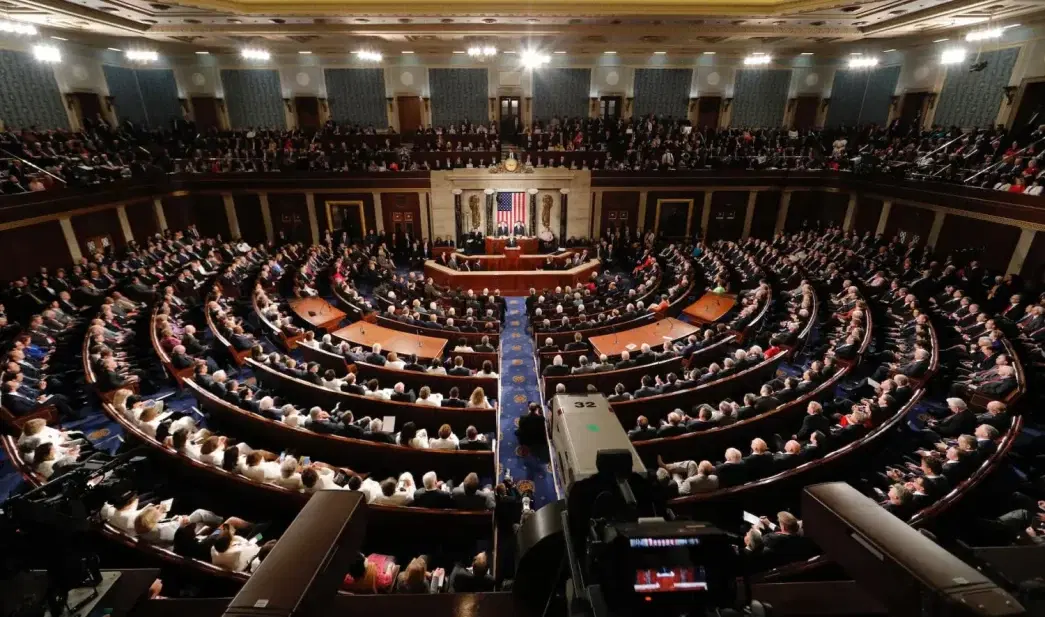
United States lawmakers and foreign relations experts convened on Tuesday, December 2, 2025, for a joint congressional briefing in Washington, D.C., to discuss the escalating violence and alleged targeted persecution of Christians in Nigeria.
The session, led by House Appropriations Vice Chair and National Security Subcommittee Chairman Rep. Mario Díaz-Balart (R-FL), sought expert testimony following President Donald J. Trump’s directive to investigate the “slaughter of Christians” in Nigeria and report back findings.
Lawmakers and experts universally rejected the argument that the violence is merely “inter-communal violence” or a “resource conflict,” labeling the crisis as a targeted campaign of religious cleansing where perpetrators operate with complete impunity.
They laid out several concrete steps the U.S. government and Congress must take to address the insecurity.
Here are even key submissions and proposals from Congress members.
Rep. Díaz-Balart, Chairman of the National Security, Department of State, and Related Programs Subcommittee, affirmed that defending religious liberty worldwide is both a moral duty and a vital American interest.
He stated his commitment to advancing policies that protect the freedom to live according to one’s faith without fear of violence and retribution.
He intends to address the issue in his FY26 funding bill and plans to strengthen these efforts by passing a full-year funding measure.
2. Demand Justice and Disarmament — Rep. Brian Mast (R-FL)
As Chairman of the House Foreign Affairs Committee, Rep. Mast insisted that the objective of groups like Boko Haram, Islamic State West Africa Province (ISWAP), and radicalized nomadic Fulani militants is to drive Christians out of their ancestral lands in the Middle Belt and impose a radical Islamist ideology.
Mast demanded that the Nigerian government take three specific actions:
a. Disarm these militias.
b. Return displaced families to their homes.
c. Bring the perpetrators to justice.
3. Accountability and Decisive Action — Rep. Chris Smith (R-NJ)
Rep. Smith, Chairman of the House Foreign Affairs Africa Subcommittee, described Nigeria as the “ground zero of religious violence” and emphasized that the Nigerian government has a fundamental, constitutional obligation to protect its citizens.
He expressed confidence that, under President Trump’s leadership, the United States will “hold the Nigerian government accountable for its complicity in the rampant religious persecution”.
Smith stressed that the U.S. must act quickly and decisively to save more lives.
4. Standing with the Persecuted — Rep. Robert Aderholt (R-AL)
Rep. Aderholt stressed that the rising violence and targeted persecution of Christians in Nigeria is a crisis that cannot be ignored.
He emphasized that the U.S. “must stand firmly with Nigeria’s Christian communities and all persecuted believers worldwide.”
5. Ending the Blind Eye — Rep. Riley Moore (R-WV)
Rep. Moore stated that President Trump had asked him and the House Committee on Appropriations to look into the horrific persecution of Christians in Nigeria.
He was grateful for the critical discussion held to receive expert testimony. Moore declared that the world “will no longer turn a blind eye” to the persecution of Christians in Nigeria.
6. Degrading Terror and Constitutional Reform — Dr. Ebenezer Obadare
Dr. Ebenezer Obadare, the Douglas Dillon Senior Fellow for Africa Studies at the Council on Foreign Relations, identified jihadist terror, perpetrated chiefly by the Islamist group Boko Haram, as the deadliest and most serious threat confronting the Nigerian state.
He asserted that any proposal to solve the Nigerian crisis that does not take seriously the need to radically degrade and ultimately eliminate Boko Haram is a non-starter.
Obadare laid out a two-fold policy goal for the U.S. government:
a. Work with the Nigerian military to neutralize Boko Haram.
b. Put pressure on President Tinubu to (a) make Sharia law unconstitutional in the twelve northern states where it has been adopted since 2000, and (b) disband the various Hisbah groups across northern states seeking to impose Islamic law on all citizens regardless of religious identity.
Obadare noted that Washington must keep up the pressure, citing recent moves by President Tinubu — such as ordering air strikes against Boko Haram and recruiting 30,000 additional policemen — as evidence that Nigerian authorities are “not impervious to incentives” following Nigeria’s designation as a Country of Particular Concern (CPC).
7. Improving Accountability and Leveraging Aid — Honorable Vicky Hartzler
Honorable Vicky Hartzler, Chair of the U.S. Commission on International Religious Freedom (USCIRF), detailed the urgency of the threat to religious freedom in Nigeria.
She recommended several steps the U.S. government can take to encourage solutions in the region, including:
• Working directly with the Nigerian government to vastly improve its accountability and transparency.
• Better leveraging relevant U.S. security assistance such as police training and reform, and conflict mediation.
• Investing resources in using early warning systems to reduce community violence and insisting Nigerian government officials respond when an early warning is given.
• Continuing to work with the Nigerian government to provide technical expertise and assistance to train, support, and counter violent insurgent groups. (VANGUARD)