ADAD

Updating your news feed...
NEWS EXPRESS is Nigeria’s leading online newspaper. Published by Africa’s international award-winning journalist, Mr. Isaac Umunna, NEWS EXPRESS is Nigeria’s first truly professional online daily newspaper. It is published from Lagos, Nigeria’s economic and media hub, and has a provision for occasional special print editions. Thanks to our vast network of sources and dedicated team of professional journalists and contributors spread across Nigeria and overseas, NEWS EXPRESS has become synonymous with newsbreaks and exclusive stories from around the world.





.webp)















Loading banners
Loading banners...

Nigerian Police Officers as endangered species
•Bereaved families face uncertainties
•Manpower shortage raises fresh concerns
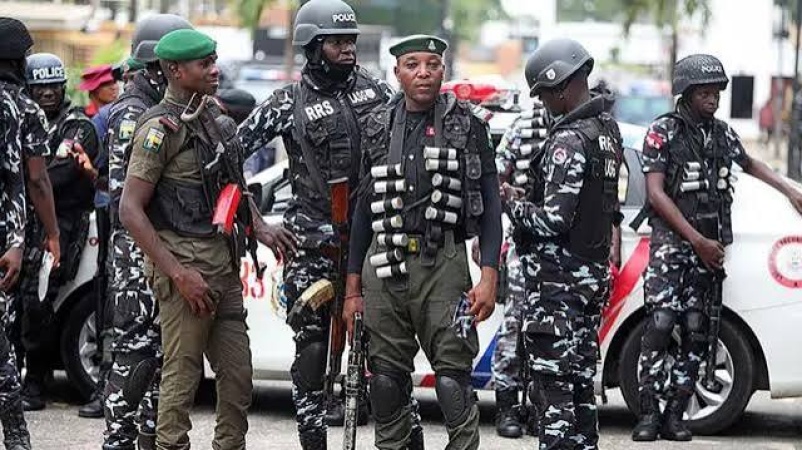
The growing insecurity across Nigeria is taking a heavy toll on the nation’s security personnel, with at least 98 police officers losing their lives in different incidents across 21 states between January and October 2026.
The deaths, largely attributed to bandits, gunmen and terrorists, have raised fresh concerns about the safety of police personnel, the welfare of their dependants and the capacity of the Nigeria Police Force (NPF) to sustain effective policing amid persistent security threats.
Beyond the statistics are families whose lives have been dramatically altered by the loss of husbands, fathers, sons and brothers who left home to protect the lives and property of other Nigerians but never returned.
Some of the officers were killed in direct confrontations with heavily armed criminal groups, while others died in coordinated attacks on security formations and during operations against terrorists and bandits.
Figures compiled by Daily Trust confirmed by police authorities showed that bandits accounted for 35 deaths, gunmen 29, Boko Haram insurgents 22 and Lakurawa terrorists two.
Other casualties involved shootings by fellow policemen, road accidents, kidnappers, hoodlums and other incidents.
Yobe State recorded the highest number of deaths, with 17 officers killed, followed by Zamfara and Kebbi States with 14 each.
Katsina recorded five deaths, while Borno and Taraba had four each. Rivers, Sokoto, Plateau, Enugu, Lagos and Imo recorded three deaths apiece.
The figures also showed that Oyo, Anambra, Abia, Kaduna and Kogi recorded two deaths each, while Adamawa, Kano and Niger recorded one each.
One of the deadliest incidents occurred on May 8, when terrorists attacked the Nigerian Army Special Forces School in Buni Yadi, Gujba Local Government Area of Yobe State.
Seventeen police officers undergoing specialised operational training were killed in the attack.
The Force Public Relations Officer at the time, DCP Anthony Okon Placid, said the terrorists launched a coordinated attack on the facility from multiple directions.
The Inspector-General of Police, (IGP) Olatunji Disu, described the deceased officers as courageous and dedicated personnel who demonstrated exceptional patriotism and commitment to national security.
Another deadly incident occurred on August 10 in Kebbi State, where 10 police personnel were killed during a confrontation with suspected bandits along the Rafin Makuku axis of Sakaba Local Government Area.
According to the police, the officers intercepted heavily armed suspected bandits moving between Zamfara and Kebbi states.
Seventeen suspected bandits were reportedly neutralised during the encounter, while two other officers sustained injuries.
The police subsequently deployed additional personnel to the area and launched operations to pursue fleeing members of the armed group.
In Benue State, four police officers were also killed during a gun battle with armed men in Ayilamo community, Logo Local Government Area, on September 10.
The officers were identified as Paul Ina, Mohammed Yusuf, Oge Ikechukwu and Edeh Andrew.
The Benue State Police Command said the officers stood their ground in defence of the community and repelled the attackers.
While official statements often focus on operational losses, the consequences of these deaths are also felt in the homes and communities of the deceased officers.
For their wives and children, the loss is not simply the absence of a uniformed breadwinner. It can mean the sudden disappearance of the person responsible for school fees, rent, healthcare, food and other basic family needs.
For elderly parents, it may mean losing the child who supported them financially.
For young children, it may mean growing up without the presence of a father.
Mr Samuel Obi, who lost his brother, John Obi, a police officer killed in a bandit attack in Benue State last year, said the family had found it difficult to come to terms with the loss.
He said the late officer’s wife and children had particularly felt his absence, adding that the family was relying on God for strength and sustenance.
“It has not been easy for us. We miss him so much. His wife and children also miss him dearly. His death has left a big vacuum in the family, but we thank God, who has continued to take care of us,” he said.
Similarly, Mr Ibrahim Jimoh, whose wife, Hannah Jimoh, a female police officer, died in the line of duty in February this year, has had to contend with the pain of losing his partner.
The death of Hannah, who died while serving the country, has left her husband and family to face life without her companionship and support.
For the families, the loss goes beyond the death of a loved one, as they are left to deal with the emotional burden and the challenges that come with the sudden absence of a family breadwinner and caregiver.
The situation raises questions about how quickly families receive insurance payments, death benefits, pensions and other entitlements, and whether the support provided is sufficient to sustain them.
The Nigeria Police Force has, however, made efforts to address the welfare of families of deceased personnel.
On September 3, 2026, the Force presented insurance and welfare benefits totalling N2.317 billion to 2,971 beneficiaries and next-of-kin of deceased officers.
The payments covered the Group Life Assurance, Group Personal Accident and IGP Family Welfare Schemes for several policy years.
Speaking during the presentation, Disu said the exercise was not merely about distributing cheques but about honouring officers who gave their lives in service to the country.
He said the Force would not abandon the families of personnel who paid the supreme price.
He also urged insurance partners to ensure prompt settlement of claims, describing the benefits as a vital lifeline for families who had lost their breadwinners.
The deaths have also brought the issue of police manpower into sharper focus.
An assessment by the European Union Agency for Asylum estimated Nigeria’s police strength at approximately 371,800 officers, serving a population estimated at 236.7 million in 2024.
This translates to approximately one police officer for every 637 citizens.
The assessment also noted that more than 100,000 officers were assigned to VIP protection, further raising questions about the availability of personnel for conventional policing and crime prevention.
Although the 98 deaths recorded within 10 months represent a relatively small proportion of the estimated total police strength, the operational consequences cannot be measured by numbers alone.
The loss of experienced officers, specialised personnel, tactical teams and personnel familiar with difficult security environments can affect the capacity of commands to respond to threats.
The impact may be more pronounced in communities already experiencing security challenges, where police formations operate with limited personnel and equipment.
When officers are killed in an operational area, their replacements may require deployment, training and familiarisation with the terrain before they can perform effectively.
There is also the question of morale. Officers who repeatedly face attacks from heavily armed criminal groups may become increasingly concerned about the adequacy of their weapons, protective equipment, intelligence support, transportation and emergency medical response.
The issue therefore goes beyond recruitment. It concerns the quality of operational preparation, the availability of modern equipment and the ability of police commands to protect personnel deployed to high-risk locations.
Experts decry ugly development
Reacting to the issues, a retired Assistant Inspector-General of Police (AIG), Wilson Inalegwu, has called for improved security measures to protect police officers from deadly ambushes by bandits, terrorists and other criminal groups while travelling for special assignments.
Inalegwu advised that police officers deployed for special duties should travel in mufti and only wear their uniforms upon arrival at their designated locations to reduce their exposure to attacks.
He said where officers must travel in uniform, adequate security escorts and backup should be provided to protect them against possible attacks along the routes.
The retired police chief, who described the needless killing of officers as extremely sad, said the Nigeria Police Force must adopt more proactive measures to safeguard personnel, particularly those undertaking special operations.
He stressed the need for more tactical training to equip officers with the skills required to detect, withstand and overcome ambushes by bandits and other terrorist groups.
Inalegwu also called for the mapping of security flashpoints along major road corridors frequently used by police personnel, saying such locations should attract additional security deployment whenever officers embark on official journeys.
According to him, community engagement, intelligence gathering and functional early warning systems are critical to preventing attacks and ensuring the safety of security personnel.
He urged the government and police authorities to strengthen intelligence networks within communities and ensure that credible information about the movement and activities of criminal elements is promptly acted upon.
The retired AIG further advocated the provision of adequate protective equipment, particularly bulletproof vests and body armour, for officers deployed on operational duties.
He also recommended sustained tactical operations and raids on criminal hideouts and settlements along major road corridors to dislodge criminal gangs terrorising motorists and other travellers.
Inalegwu said protecting police officers should go beyond operational strategies, urging the government to improve their welfare and provide stronger social protection for their families.
He specifically called for scholarships and other welfare packages for the children of officers killed in the line of duty, stressing that their families should not be abandoned to bear the consequences of their sacrifices.
He said improved welfare support would demonstrate the government’s appreciation of the sacrifices made by police personnel and boost the morale of serving officers.
The retired police chief maintained that a combination of intelligence-led operations, adequate protective equipment, specialised training, improved welfare and effective security planning would help reduce casualties among police officers and strengthen the fight against insecurity.
Also, a former Commissioner of Police in the Federal Capital Territory (FCT), Lawrence Alobi, called on the Federal Government and Nigerians to prioritise policing and the welfare of officers and men of the Nigeria Police Force.
He lamented what he described as the persistent neglect of the Nigeria Police Force, despite its critical role in maintaining security and protecting lives and property across the country.
According to him, the sacrifices made by police officers in the discharge of their duties have not received the appreciation and support they deserve from the government and the Nigerian public.
He said: “It is unfortunate that the Federal Government and Nigerians have not prioritised policing and the important role officers and men of the Nigeria Police play in promoting the security of the country. Hence, the sacrifices of the Police are never appreciated by both the government and Nigerians.”
The former FCT police chief described the Nigeria Police Force as the lead agency in the country’s security architecture, expressing concern that the institution had been neglected and denied the resources required to perform its statutory responsibilities effectively.
“Today, the Nigeria Police Force has deliberately been neglected and starved of all the Force needs to effectively and efficiently carry out its statutory functions for the benefit of all law-abiding citizens and the country at large,” he said.
Alobi urged the Federal Government and Nigerians to give greater attention to the operational needs of the Force, as well as the welfare of serving officers, men and their families.
He said improved welfare and adequate institutional support would boost officers’ morale, encourage greater commitment and enhance their performance in the discharge of their responsibilities.
According to him, investing in the welfare and operational capacity of the Police would benefit not only the government but also the entire Nigerian population.
He stressed that the government must demonstrate greater commitment to policing in line with Section 14(2)(b) of the 1999 Constitution of the Federal Republic of Nigeria, as amended, which provides that the security and welfare of the people shall be the primary purpose of government. (The Nation)