ADAD

Updating your news feed...
NEWS EXPRESS is Nigeria’s leading online newspaper. Published by Africa’s international award-winning journalist, Mr. Isaac Umunna, NEWS EXPRESS is Nigeria’s first truly professional online daily newspaper. It is published from Lagos, Nigeria’s economic and media hub, and has a provision for occasional special print editions. Thanks to our vast network of sources and dedicated team of professional journalists and contributors spread across Nigeria and overseas, NEWS EXPRESS has become synonymous with newsbreaks and exclusive stories from around the world.


.webp)
Loading banners
Loading banners...

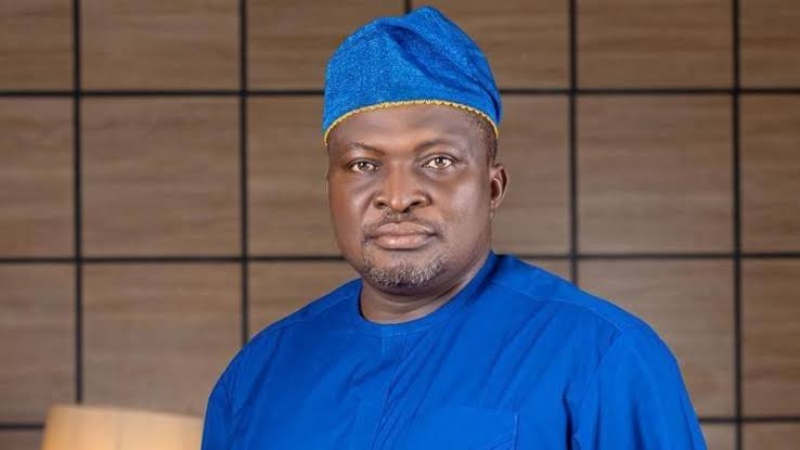
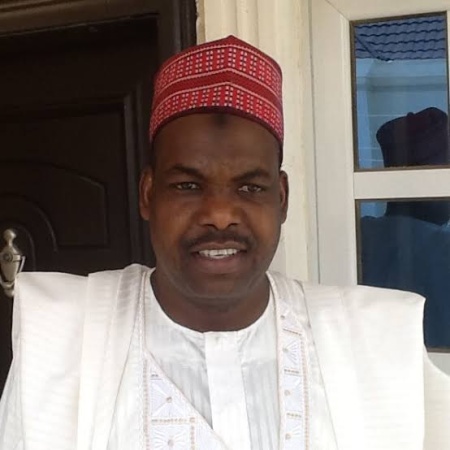
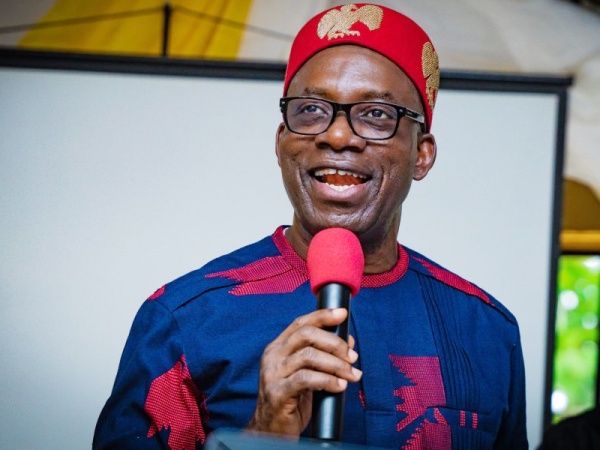
Oyo South NDC Senatorial District candidate, Dr Paul Oche Adoyi
Dr. Paul Oche Adoyi, a veterinarian, farmer, entrepreneur and the Nigeria Democratic Congress (NDC) candidate for the Oyo South Senatorial District, says the party’s presidential candidate, Peter Obi, has the capacity to win the 2027 presidential election by a landslide. Adoyi, who has interests in agriculture, agricultural equipment manufacturing and enterprise development, describes Obi as a “demon killer” for what he considers his willingness to confront entrenched problems in governance. In this interview with ROTIMI AGBOLUAJE, he explains his decision to seek the Senate seat, his support for Obi and his plans for agriculture, youth and women empowerment, workers’ welfare, food production and reduction of the cost of governance.
As a chieftain of the Nigeria Democratic Congress (NDC), some people argue that the experience gathered by your presidential candidate, Peter Obi, as governor of Anambra State is not enough to qualify him to govern Nigeria. How would you react to this?
Every level of government has its own challenges, but leadership principles remain important. If a person demonstrates prudence, accountability, discipline and commitment to development at the state level, those qualities are relevant at the national level. Peter Obi has experience as a governor. He understands the workings of government and has had to deal with political opposition, administrative challenges, economic constraints and security issues. What matters is how a leader responds to those challenges. Nigeria does not lack resources. We have land, human resources, mineral resources and enormous agricultural potential.
The challenge is converting these resources into prosperity for ordinary Nigerians. That requires leadership capable of making difficult decisions.
You stated that Mr. Obi is capable of making difficult decisions. Are there any aspects of his record as Anambra State governor that impressed you?
One of the things that attracted me was his approach to the cost of governance. Government shouldn’t spend excessive amounts of money maintaining itself while the people are struggling. He demonstrated an approach in which government expenditure could be controlled and resources redirected to areas such as education and infrastructure.
Education is important. If you educate people, you give them the opportunity to participate meaningfully in the economy. Education is not simply about obtaining certificates; it is about developing human capacity.
He also worked on security and revenue generation. There were efforts to improve the state’s internally generated revenue and ensure that the government had the resources to provide services. Those are some of the things I consider important.
Do you believe the same approach can be applied at the Federal Government level?
Yes. Nigeria is much larger than Anambra State, but the principles of prudent governance remain the same.
Government must be accountable for every naira it spends. We can’t continue to have a situation where government officials enjoy expensive privileges while ordinary citizens struggle to afford food. We need to examine the cost of governance. There are too many vehicles, convoys, offices and other expenses that can be reduced without compromising the effectiveness of government. If we reduce government overheads and redirect those resources to productive sectors, the impact can be significant.
Why should Nigerians believe in Peter Obi and the NDC?
Nigerians are ready for a change in how the government is managed. Peter Obi represents a different approach to governance, especially in terms of reducing waste, investing in human capital and promoting production. He is a “demon killer” as he is prepared to confront the problems that have held Nigeria down. The country has enormous potential. We have the land, the people and the resources. Nigeria only needs leadership that will put those resources to work. Peter Obi will provide that leadership, and the NDC will provide the platform for that change.
Do you think that Nigeria would vote for Obi?
Nigerians will vote for Peter Obi and he will win by a landslide because of the growing political consciousness among Nigerians. People are becoming more aware of the relationship between government policies and their daily lives. They are asking questions about the cost of food, transportation, education, healthcare, unemployment, and insecurity. They are also asking why a country with enormous human and natural resources can’t provide a decent standard of living for its citizens.
There are people who supported the ruling party in previous elections but are now disappointed with the situation in the country. Some of them are looking for alternatives.
We are also building political structures at the grassroots and across different parts of the country. When Nigerians are given the opportunity to make their choice, Peter Obi will receive substantial support. The election is still ahead, but I am confident in the strength of the movement we are building.
Do you think he has what it takes to confront the ruling All Progressives Congress (APC) and the African Democratic Congress (ADC)?
Peter Obi a “demon killer” as he is prepared to confront problems that have become entrenched in our system. Nigeria has many demons. We have corruption, waste, insecurity, unemployment, poverty and a high cost of governance. These problems have existed for years and people have almost become accustomed to them.
What I see in Peter Obi is a willingness to confront those problems. When he was governor of Anambra State, he demonstrated that the government could reduce unnecessary expenditure and redirect resources to areas that directly affect the people. He paid attention to education, infrastructure, security and revenue generation. He also challenged practices that he considered wasteful. That is what I mean by “demon killer.” He is someone who is not afraid to confront difficult problems. Nigeria does not need a leader who will simply manage our problems. We need leadership that will confront them and seek practical solutions.
Let’s talk about your ambition. Why have you decided to contest for the Senate?
I am a farmer, veterinarian, entrepreneur and philanthropist. My background is largely in agriculture and business. I am involved in poultry, piggery, yam and cassava production, farm development and the manufacture of agricultural equipment, especially incubators.
Over the years, my involvement in production has exposed me to the challenges facing ordinary Nigerians, especially farmers, young people and small business owners. I decided to participate in politics because people with practical experience in production and enterprise should have a voice in governance. For too long, Nigeria has remained a consuming economy. We import many things that we have the capacity to produce locally. We need to move from consumption to production. That is one of the major reasons I decided to seek elective office.
It is easy to remain outside the government and complain about what is wrong. But if you genuinely want to influence policies and contribute to solutions, you have to participate in the political process. That is what informed my decision to seek the Senate seat for Oyo South.
Why did you choose the NDC platform?
I examined the political environment and what different platforms were proposing. I became convinced that the NDC provides a platform through which we can pursue the kind of change Nigeria requires. My support is also closely connected with my belief in Peter Obi and the ideas he represents. Nigeria needs a fundamental change in the way government is managed. We need to reduce waste, invest in production, empower young people, support agriculture and create an environment where businesses can thrive.
Politics shouldn’t simply be about taking over government offices. It should be about what we intend to do differently when we get there.
What would be your priorities if elected to represent Oyo South?
Agriculture will be one of my major priorities. Oyo South has enormous agricultural potential. The Ibarapa area, in particular, has land and people who are already involved in farming.
The challenge is that many farmers still depend on traditional methods, while access to mechanisation remains limited. I want to advocate affordable mechanisation. A farmer should be able to access equipment without being forced to take a loan at an interest rate that makes the business unviable.
We need financing schemes with low or zero interest for genuine agricultural production.
I also want to promote agro-processing. It isn’t enough for farmers to produce cassava, yam or other crops and sell them as raw materials. We need industries that will process these products locally. That will create jobs, add value and increase the income of farmers.
Why is mechanisation so important to you?
Agriculture can’t remain at the subsistence level if we want to feed Nigeria’s growing population and develop a competitive agricultural economy. A farmer using traditional tools can’t compete effectively with a farmer using modern machinery. Mechanisation can increase productivity and reduce the amount of time and labour required to cultivate large areas.
As someone involved in agricultural equipment manufacturing, I understand the importance of appropriate technology.
We manufacture agricultural equipment, including incubators, and I have seen how technology can improve production. Nigeria should manufacture more agricultural equipment locally rather than importing everything. That will also create another layer of employment and industrial activity.
What about women empowerment?
Women are critical to the economy, especially at the grassroots. There are many women who have businesses but can’t expand because they lack access to affordable capital. We need financing schemes that will allow women to start or expand businesses without trapping them in high-interest debt.
Sometimes, a relatively modest amount of money can transform a woman’s business if the money is available at the right time and on reasonable terms.
As a legislator, I’ll use my position to attract programmes and partnerships that can support women in Oyo South. I am not saying a senator should personally distribute money to everybody. That isn’t the legislature’s primary role. A senator can, however, influence policy, attract government programmes, facilitate partnerships and advocate for institutions and interventions that benefit constituents.
What is your plan for the youth?
outh empowerment is another major priority. Nigeria has a very young population, and that should be an advantage. But when young people graduate from universities and can’t find employment or opportunities to use their skills, frustration grows. We need training and retraining programmes. Not everybody must become a university graduate before becoming productive. We need vocational education, technical training, entrepreneurship programmes and skills acquisition.
Young people should be trained in areas where there is demand. I am already involved in training through my business, and I understand the importance of making people employable. We shouldn’t only produce graduates. We should produce people who can solve problems and create opportunities for themselves and others.
What is your message to voters in Oyo South?
My message is that voters should look beyond political slogans. They should examine the people seeking their votes and ask what experience they have, what they have done before and what they intend to do differently.
As an entrepreneur, let’s talk about socio-economy. What is your position on the minimum wage?
Workers deserve better wages. I believe the minimum wage should start at around N350,000 and gradually move toward N600,000. Even N600,000 may not be enough to solve all the problems workers face today because the cost of housing, food and transportation has increased considerably. But workers need wages that allow them to live with dignity. At the same time, wages can’t be considered in isolation. If businesses are paying high energy costs, high transportation costs and expensive prices for raw materials, it becomes difficult for them to pay better wages.
Therefore, we must also reduce the cost of production. When production costs come down, businesses become more competitive, can expand and are better positioned to employ more people and pay better wages.
How can Nigeria reduce the cost of food?
We have to reduce the cost of production from the farm to the market. Fertiliser is expensive. Agricultural chemicals are expensive. Transportation is expensive. Machinery is expensive. All these costs eventually find their way into the prices consumers pay for food. Government needs to support farmers with affordable inputs and mechanisation.
We must also address the cost of petroleum products because transportation is a major component of food prices. I support targeted support for local refineries and measures that will increase domestic refining capacity. The objective should be to reduce the cost of fuel and transportation while addressing the structural problems that make production and distribution expensive. If farmers can produce at a lower cost and transport their goods more cheaply, consumers will eventually benefit.
You have spoken about reducing the cost of governance. What exactly should the government do?
Government must reduce unnecessary expenditure. There are too many areas where money is spent simply because that is the way things have always been done. We need to examine the number of vehicles, convoys, offices and privileges attached to political positions. I am not saying that government officials shouldn’t have security or necessary facilities. There should be moderation. If we save money from unnecessary expenditure, those resources can be redirected to education, healthcare, agriculture, infrastructure and social protection. Government shouldn’t be expensive for the sake of being government.
Vulnerable Nigerians are part of the country. What should the government do for them?
Government must have a human face. There are Nigerians who have been completely forgotten. Look at people living with mental illness on the streets. Look at elderly people who have nobody to care for them. Look at children from extremely poor families. These people are part of society and deserve protection. We must develop stronger social intervention programmes. Government shouldn’t focus only on people who are economically active. A society should also be concerned about people who can’t fend for themselves.
We need policies that protect the elderly, vulnerable children, indigent families and other disadvantaged members of society. What we need is to connect these resources. If we bring agro-processing industries into the district, farmers will have markets for their produce. If we provide training and skills development, young people can find employment. We need to provide affordable financing so that women and small businesses can expand. We must improve infrastructure to restore investors’ confidence and establish businesses. (The Guardian)