ADAD

Updating your news feed...
NEWS EXPRESS is Nigeria’s leading online newspaper. Published by Africa’s international award-winning journalist, Mr. Isaac Umunna, NEWS EXPRESS is Nigeria’s first truly professional online daily newspaper. It is published from Lagos, Nigeria’s economic and media hub, and has a provision for occasional special print editions. Thanks to our vast network of sources and dedicated team of professional journalists and contributors spread across Nigeria and overseas, NEWS EXPRESS has become synonymous with newsbreaks and exclusive stories from around the world.




.webp)





Loading banners
Loading banners...

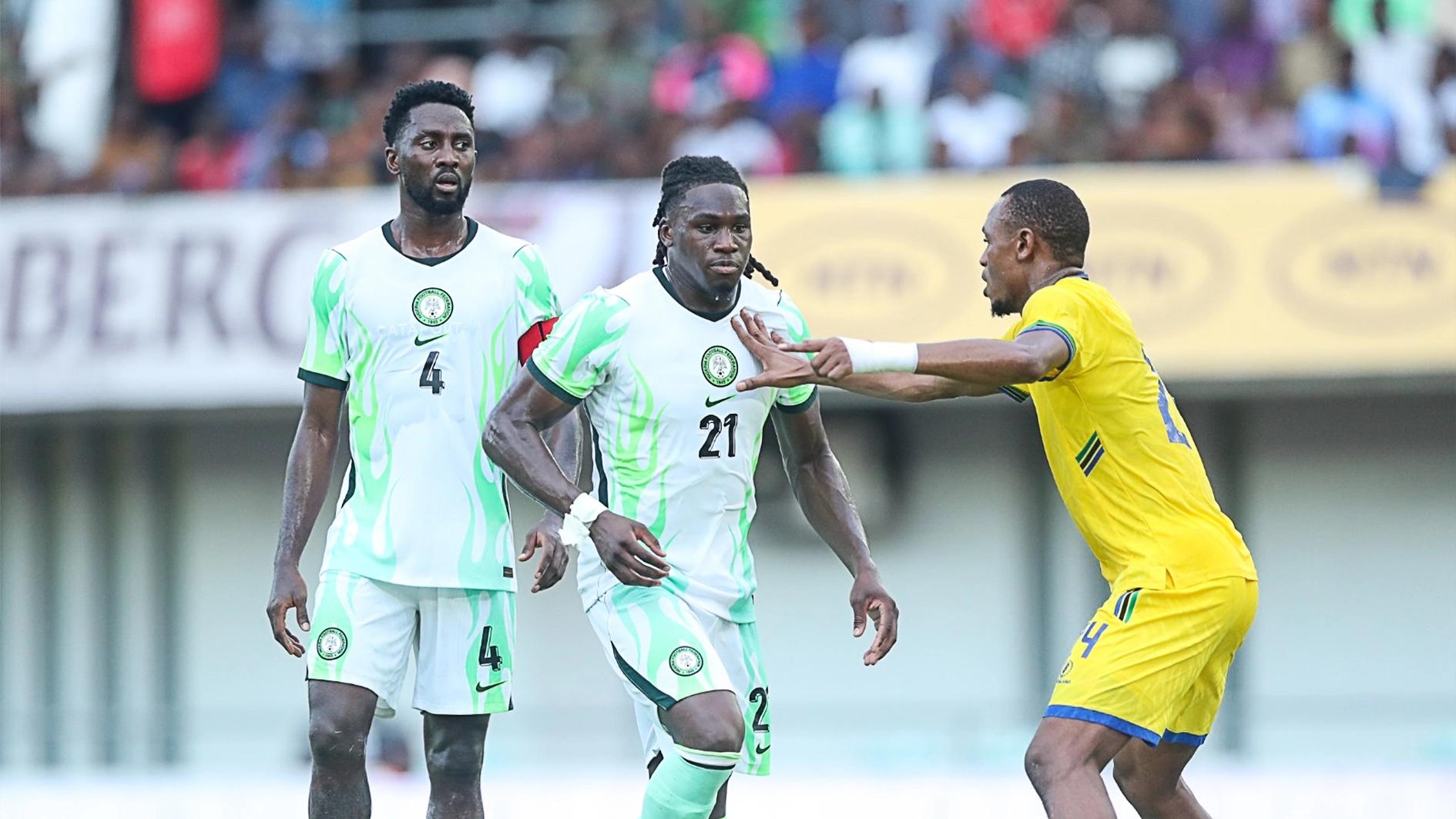
Even as it has not lived up to its full potential, the Nigeria Premier Football League (NPFL) has made notable strides in recent seasons – from improved broadcast visibility to heightened competitiveness among clubs. Yet, like a stubborn stain on a freshly pressed jersey, the recurring menace of poor officiating continues to undermine the league’s credibility.
The recent indefinite suspension handed to a centre referee, Abdulrasheed Jimoh from the Bauchi State Referees Council, and an assistant referee, Adamu Zakari from Jigawa, by the Nigeria Football Federation (NFF) Refereeing Development Committee following their controversial decision to disallow a valid goal by Kwara United against Rangers International, has once again thrust match officials into the spotlight for all the wrong reasons. The unprofessional behaviour of the suspended referees has reinforced the opinion of some observers that the majority of arbiters are determined to remain the black sheep of the beautiful game.
While the swiftness of the NFF’s disciplinary action deserves commendation, the incident serves as a stark reminder that officiating errors remain one of the greatest existential threats to domestic football in Nigeria. When a referee blows the whistle wrongly, the consequences ripple far beyond the 90 minutes on the pitch.
Truth be told, in the NPFL, poor officiating inflicts damage across multiple fronts. Since football thrives on fairness, poor officiating erodes sporting integrity. When outcomes are decided by fabricated off-sides, dubious penalties or wrongly disallowed goals, the entire competitive balance of the league is distorted.
Clubs invest millions of naira in player recruitment, travel and logistics, only to see their efforts undone by a single lapse in judgement, or worse, compromised officiating. For no fault of theirs, Kwara United lost three points against Enugu Rangers, and no amount of punishment for the offending match officials will reverse the final result.
Poor officiating also breeds fan apathy and stadium violence. Nigerian football fans are deeply passionate, and perceived injustice on the pitch is often the spark that ignites stadium unrest. When supporters feel that their team has been robbed, frustration can quickly boil over into crowd trouble, leading to heavy fines and stadium bans for clubs. Conversely, repeated controversies drive genuine fans away from match venues, leaving stadiums empty and robbing the league of its vibrant atmosphere.
Apart from driving fans away from match venues, referees who make dubious calls scare away corporate sponsors. Corporate Nigeria wants to associate with credible, well-managed brands. Continuous headlines about suspended referees and disputed match results create a toxic perception around the NPFL. Potential sponsors and broadcast partners become hesitant to commit funds to a product plagued by integrity questions.
Furthermore, the endless embarrassment of Nigerian clubs in competitions like the CAF Champions League and Confederation Cup can be traced to compromised referees who are often “recruited” by clubs desperate to secure continental tickets. This is perhaps the most telling impact of sheltered officiating. It is now an open secret that teams accustomed to winning home matches through questionable officiating often struggle in continental tournaments, where neutral referees enforce the laws of the game strictly.
In addition, referees indulging in dubious officiating also dig their own graves. They may fail to realise the full extent of the reputational damage they inflict upon themselves, but the persistent absence of Nigerian referees at major international tournaments like the FIFA World Cup and the Africa Cup of Nations (AFCON) speaks volumes about how global bodies view the standard of domestic officiating.
Suspending erring officials after the damage has been done is merely treating the symptom rather than the disease. To permanently tame the menace of poor officiating in the NPFL, football authorities must adopt a holistic and structural approach in line with modern trends. Therefore, football authorities in Nigeria should immediately consider the introduction of Video Assistant Referee (VAR) technology. While full-scale VAR may currently be capital-intensive for all league venues, the NPFL and NFF can begin with a phased rollout. Introducing VAR-lite or goal-line technology for high-stakes matches and televised fixtures would immediately eliminate glaring errors like the disallowed goal in Awka.
There is also an urgent need for improved welfare and prompt remuneration for match officials. It is unfortunate that referees in the NPFL are often left at the mercy of clubs that exploit their financial vulnerabilities, creating a major breeding ground for corruption. Referees must be paid competitive indemnities, and their allowances—including travel and accommodation—must be settled promptly before matches. When officials are financially secure and independent of host clubs for logistics, their susceptibility to external inducements drops drastically.
Nevertheless, even as some referees deliberately set out to carry out hatchet jobs, we must acknowledge that some mistakes are unintentional. Because modern football is faster and more tactical than ever, referees should be supported with regular workshops on the evolving Laws of the Game, fitness drills, and psychological training to handle the intense pressure of hostile away grounds without buckling.
Meanwhile, reforms alone will fail if there is no deterrence. For far too long, a culture of impunity has allowed compromised or grossly incompetent officials to return to the pitch after brief, quiet stints on the sidelines. The NFF must draw a firm line in the sand. Suspensions must be accompanied by total delisting for repeat offenders or those found culpable of match-fixing. Stepping a referee down indefinitely, as seen in the cases of Jimoh, Zakari and earlier this season with Yakubu Aliyu, is a step in the right direction—provided “indefinite” truly means permanent removal from the top flight for egregious errors.
The NFF Refereeing Development Committee is also encouraged to publicly publish the findings of its investigations into controversial matches. Naming and shaming compromised officials—and any club administrators found guilty of attempting to bribe or intimidate referees—will serve as a powerful deterrent.
In conclusion, criminal prosecution should be pursued where clear evidence of match manipulation exists. Match-fixing is economic sabotage against clubs, players and sponsors. Treating it as a criminal offence rather than a mere internal sports infraction will send an unmistakable message that the era of business as usual is finally over. (Daily Trust)