Updating your news feed...

NEWS EXPRESS is Nigeria’s leading online newspaper. Published by Africa’s international award-winning journalist, Mr. Isaac Umunna, NEWS EXPRESS is Nigeria’s first truly professional online daily newspaper. It is published from Lagos, Nigeria’s economic and media hub, and has a provision for occasional special print editions. Thanks to our vast network of sources and dedicated team of professional journalists and contributors spread across Nigeria and overseas, NEWS EXPRESS has become synonymous with newsbreaks and exclusive stories from around the world.






















.webp)



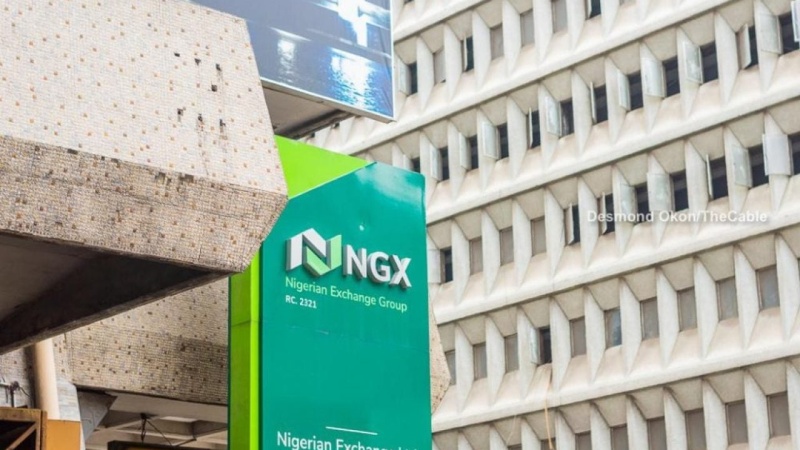
Nigeria’s capital market on Monday entered a new era of post-trade efficiency, becoming one of the few markets globally and the first in Africa to implement a T+1 settlement cycle, a landmark reform that places the country within a group of exchanges accounting for a majority of global market capitalisation.
The transition, which shortens the period between trade execution and settlement from two business days to one, positions Nigeria alongside major markets such as the United States, Canada, Mexico and India that have already adopted the faster settlement framework, while moving ahead of several European markets, including the United Kingdom, Switzerland and the European Union.
At the milestone, formally unveiled at a transition ceremony held at NGX Group in Lagos, Director-General of the Securities and Exchange Commission (SEC), Dr Emomotimi Agama, described the transition as a watershed moment that signals Nigeria’s readiness to compete at the highest levels of global finance.
“The T+1 settlement cycle is now live. And with it, a new era has begun,” Agama declared.
According to him, capital markets operating under T+1 settlement already represent about 60 per cent of global market capitalisation, making the framework the new benchmark for markets seeking international relevance and competitiveness.
“Nigeria has now joined that company. We have not waited for external pressure or a crisis to force our hand. We have moved proactively, deliberately, and ahead of several markets that are still planning their transitions,” he said.
The SEC DG noted that the reform would significantly reduce counterparty risk, improve liquidity, lower collateral requirements and accelerate investors’ access to funds, while enhancing Nigeria’s attractiveness to global institutional investors.
The transition comes amid a period of unprecedented growth in the Nigerian capital market. Agama disclosed that total market capitalization reached N149.88 trillion at the close of 2025, with equities accounting for N98.89 trillion. The NGX All-Share Index rose by 49.17 per cent during the year to close at 153,539.8 points, ranking among Africa’s best-performing exchanges.
He further revealed that market capitalisation expanded by a record N17.6 trillion in February 2026 alone, the largest single-month gain in the history of the Nigerian capital market.
Foreign and domestic portfolio transactions on the Nigerian Exchange climbed to N1.803 trillion in April 2026, representing a year-on-year increase of 274 per cent, while total transactions for the first four months of the year surged to N5.95 trillion, more than double the N2.71 trillion recorded during the corresponding period of 2025.
Managing Director and Chief Executive Officer of the Central Securities Clearing System (CSCS), Shehu Yahaya Shantali, said the successful migration to T+1 marked the culmination of more than three decades of market modernisation and infrastructure development.
Tracing the evolution of Nigeria’s post-trade system, Shantali recalled that investors once waited between three and six months to receive physical share certificates following transactions.
The establishment of CSCS in 1992 and commencement of operations in 1997 transformed the market, reducing settlement timelines from several months to T+5. Nigeria later migrated to T+3 in 2000 before moving to T+2 in November 2025.
“Today’s transition to T+1 therefore represents not a single event, but the latest chapter in a modernization journey that has been underway for more than three decades,” he said.
ALSO READ: Fewer people have died under Tinubu than previous govts — APC Chieftain
He disclosed that the journey towards T+1 formally began in 2023 following the inauguration of an industry-wide Settlement Cycle Review Committee by the SEC. Over the next three years, stakeholders undertook extensive consultations, technology assessments, market simulations and readiness evaluations to prepare the market for the compressed settlement cycle.
To support the transition, CSCS invested heavily in infrastructure upgrades, including API-enabled integrations, enhanced straight-through processing, digital self-service platforms, custodian connectivity solutions, automated share detachment systems, strengthened cybersecurity architecture and expanded business continuity capabilities.
According to Shantali, the benefits of T+1 extend beyond faster settlement. The framework improves liquidity by enabling investors to redeploy capital more quickly, enhances operational efficiency, reduces counterparty risk and strengthens confidence in the financial system.
Chairman of CSCS and Group Chief Executive Officer of NGX Group, Mr Temi Popoola, described the development as another demonstration of the Nigerian market’s tradition of innovation and technological advancement.
He noted that Nigeria was among the first exchanges in Africa to migrate from the traditional call-over trading system to an automated trading platform and has continued to pursue reforms aimed at improving market efficiency.
“What this means for investors and market practitioners is faster turnaround, increased liquidity and more efficiency in our market,” Popoola said.
“The move reinforces the Nigerian market as one of the most efficient markets globally.”
Popoola also pointed to the success of NGX Invest, the digital platform introduced for public offer subscriptions, which played a critical role in the banking sector recapitalisation exercise, as evidence of the market’s growing digital sophistication.
In his remarks, NGX Group Chief Executive Officer, Mr Jude Chiemeka, said the T+1 migration should be viewed as part of a broader strategy to deepen liquidity, strengthen market infrastructure and prepare Nigeria for future growth.
He noted that ongoing investments in technology, data centres and processing capacity were designed to support larger trading volumes and anticipated mega listings expected in the coming months.
NextBenue varsity ASUU begins indefinite strike action »
Previous« Wike mocks opposition parties over post-primary crisis
(Nigerian Tribune)