Updating your news feed...

NEWS EXPRESS is Nigeria’s leading online newspaper. Published by Africa’s international award-winning journalist, Mr. Isaac Umunna, NEWS EXPRESS is Nigeria’s first truly professional online daily newspaper. It is published from Lagos, Nigeria’s economic and media hub, and has a provision for occasional special print editions. Thanks to our vast network of sources and dedicated team of professional journalists and contributors spread across Nigeria and overseas, NEWS EXPRESS has become synonymous with newsbreaks and exclusive stories from around the world.






Loading banners
Loading banners...

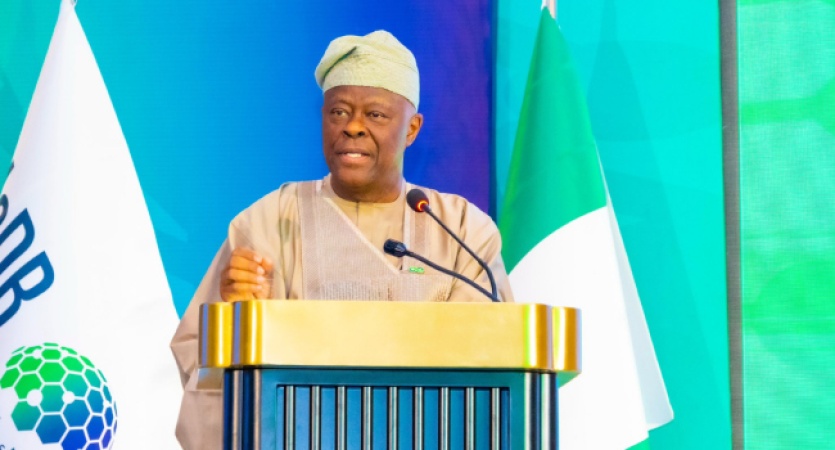
Minister of Finance and Coordinating Minister of the Economy, Wale Edun
Minister of Finance and Coordinating Minister of the Economy, Wale Edun, has said that Nigeria’s economy is in shock, as global countries swim in the fallouts of ongoing crisis in the Middle East.
A Monday statement by Special Adviser on Media and Communications to the Minister, Dr. Ogho Okiti, noted that the shock comes on the back of recent economic reforms aimed at building the right economic foundations for lifting millions out of poverty.
The International Monetary Fund (IMF), in a statement ahead of the 2026 Spring Meetings starting from Monday, April 13, said it anticipates up to $50 billion in emergency financing may be needed for countries hit by balance-of-payments shocks.
More than 1,000 delegates from 190 countries will be arriving in Washington for the World Bank and IMF Spring Meetings.
This year’s spring meeting is themed “Anchoring Stability and Promoting Balanced Growth”, coming amidst new headwind: the economic fallout from the Middle East war.
US President Donald Trump ordered the US Navy on Sunday to block key Gulf sea lane, the Strait of Hormuz, furious with Iran’s refusal to surrender its nuclear ambitions after peace talks broke down without agreement.
In response, Iran’s Revolutionary Guards warned they have traffic in the strategic waterway under full control and would trap any enemy who try to challenge it “in a deadly vortex in the Strait if it makes the wrong move”.
The Managing Director of the IMF, Kristalina Georgieva, had warned that the Fund would cut global growth projections when the meetings commence from April 13th.
The IMF boss cited “scarring effects from spiralling energy costs, supply disruptions, and damaged infrastructure” as a result of the war.
The 2026 IMF/World Bank Spring Meetings take place at a moment of heightened global uncertainty.
According to Edun, also head of Nigeria’s delegation to the Spring Meetings, noted that at a critical time of economic transition, “the shock compounds high fuel prices, increasing food costs, and broader inflationary pressures, and places further strain on households and businesses.”
The US–Israel–Iran conflict has triggered a major external shock, disrupting energy markets, tightening global financial conditions, and introducing renewed inflationary pressures across advanced and emerging economies.
In Nigeria, Edun says that the government is trying to accelerate economic growth in a difficult environment shaped by external shocks and domestic price and inflation pressures.
Nonetheless, he says the government is determined to grow the country’s macroeconomic stability and attract and scale investments required to lift millions out of poverty.
Transmission channels to Nigeria’s crude oil prices have experienced significant volatility since the start of the conflict, rising between 35% to over 50%, driven primarily by disruption in the Strait of Hormuz.
Bonny Light jumped from around $70 – $73 a barrel to highs exceeding $110 – $120.
“As an oil producer, the government recognises that a longer duration of the conflict means improvements in foreign earnings and fiscal revenues. However, the shock comes as Nigeria seeks to strengthen its macroeconomic stability and resilience”, he said.
The Minister identified three key channels through which the crisis poses risks to the Nigerian economy.
Volatility in global energy markets is already influencing domestic energy-related commodities, with direct implications for prices and the standard of living of Nigerians.
Petrol prices rose by over 50%, from about N890 – N900 to N1260 – N1330. b. Diesel prices have surged by over 70%, from N1,100 per litre to about N1,550 at the peak.
Heightened geopolitical risks often trigger shifts in global investment patterns, with investors moving toward safe-haven assets. These dynamics may affect capital flows into emerging markets, including Nigeria, as well as broader financial market conditions.
Disruptions to major shipping and energy supply routes could raise international freight and logistics costs, which may translate into higher import costs and increased pressures on domestic prices.
Edun, however, noted that early and decisively, the Federal Government emphasises that Nigeria enters this period of global uncertainty from a position of strengthened economic fundamentals, compared to recent economic shocks such as the Covid – 19 and the Russian / Ukraine war shocks, following a combination of macroeconomic reforms since May 2023.
“In the last few weeks, the government has strengthened the country’s economic position in response to the crisis by continuously looking for ways to improve oil production, now 1.86 mbpd”, the Minister noted, quoting latest data.
This, he noted, is to maximise Nigeria’s crude oil revenues, foreign exchange earnings, and fiscal revenues.
He listed other economic strengthening measures, such as the Naira for Crude policy to safeguard domestic fuel production and supply to ensure no further strain to households and businesses due to fuel and diesel shortages.
“Continue to maintain a liberalised foreign exchange market to ensure continuous smooth capital flows. The policy has been validated by Nigeria’s reclassification as a Frontier Market by FTSE Russell, effective from September 2026.
“Improved and continuous close coordination across fiscal, monetary, and trade policies resulting in the recent tariff changes that reduce tariffs on critical industrial inputs to support production and expand international trade.
“These actions reflect a government focused on stabilisation, resilience, and growth continuity”, he said.
In the context of the current global crisis, Edun emphasised that Nigeria is not insulated — but it is significantly more resilient.
“The reforms have better positioned Nigeria to navigate the challenges posed by the current geopolitical crisis”, he added, noting that the next phase of Nigeria’s economic strategy focuses on scaling private investment, unlocking domestic capital markets, driving job-rich growth, and leveraging regional integration (AfCFTA).
The government remains resolute and working harder to maintain macroeconomic stability, attract investments to drive inclusive growth, and invest in human capital and social protection, he added. (Channels)