
ADVERTISEMENT

ADVERTISEMENT

ADVERTISEMENT

ADVERTISEMENT









Loading banners


NEWS EXPRESS is Nigeria’s leading online newspaper. Published by Africa’s international award-winning journalist, Mr. Isaac Umunna, NEWS EXPRESS is Nigeria’s first truly professional online daily newspaper. It is published from Lagos, Nigeria’s economic and media hub, and has a provision for occasional special print editions. Thanks to our vast network of sources and dedicated team of professional journalists and contributors spread across Nigeria and overseas, NEWS EXPRESS has become synonymous with newsbreaks and exclusive stories from around the world.
By EMMANUEL NNADOZIE ONWUBIKO
A psychologist affirmed thus in a publication I ran into on the internet that: “What you need to know about willpower: The psychological science of self-control” and gave an everyday example saying that with more self-control would we all eat right, exercise regularly, avoid drugs and alcohol, save for retirement, stop procrastinating, and achieve all sorts of noble goals?
The scientist then continued by asserting that many people believe they could improve their lives if only they had more of that mysterious thing called willpower. With more self-control we would all eat right, exercise regularly, avoid drugs and alcohol, save for retirement, stop procrastinating, and achieve all sorts of noble goals.
Determined to provide charity, this our beloved scientist said and I quote: “Take, for example, the results of the American Psychological Association’s annual Stress in America Survey. The survey asks, among other things, about participants’ abilities to make healthy lifestyle changes. Survey participants regularly cite lack of willpower as the No. 1 reason for not following through with such changes.”
Hear the author: “Determined woman In 2011, 27% of Stress in America survey respondents reported that lack of willpower was the most significant barrier to change. Yet although many people blame faulty willpower for their imperfect choices, it’s clear they haven’t given up hope. A majority of respondents believe that willpower is something that can be learned. Those respondents are on to something. Recent research suggests some ways in which willpower can in fact be strengthened with practice.”
Besides, the author emphasized that on the other hand, many survey participants reported that having more time for themselves would help them overcome their lack of willpower. Yet willpower doesn’t automatically grow when you have extra time on your hands.
The author proceeded to raise a question thus: “So how can individuals resist in the face of temptation? In recent years, scientists have made some compelling discoveries about the ways that willpower works. This report will explore our current understanding of self-control.
Lack of willpower isn’t the only reason you might fail to reach your goals. Willpower researcher Roy Baumeister, PhD, a psychologist at Florida State University, describes three necessary components for achieving objectives: First, he says, you need to establish the motivation for change and set a clear goal. Second, you need to monitor your behavior toward that goal. The third component is willpower. Whether your goal is to lose weight, kick a smoking habit, study more, or spend less time on Facebook, willpower is a critical step to achieving that outcome,” (apa.org).
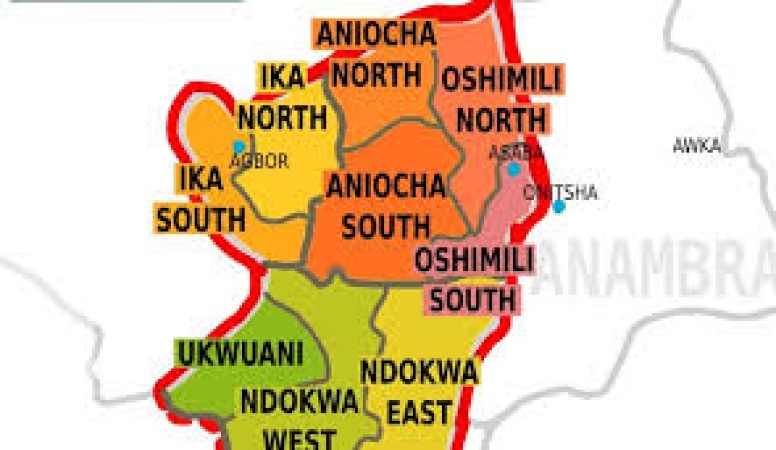
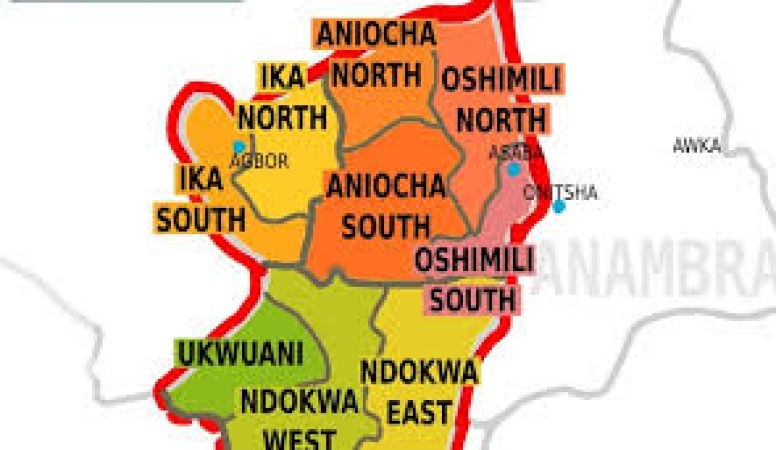
There are moments in the life of a nation when a single political pronouncement carries the weight of history, justice, and long-suppressed identity. The recent remark by the Senate President, Godswill Akpabio, during a public function in Asaba, that the long-awaited creation of a new state for the South East will culminate in Anioma State (with Asaba as its capital) represents one of such defining moments. It is not merely a political development; it is a profound statement of recognition, restitution, and national recalibration.
For decades, the agitation for Anioma State has endured as one of Nigeria’s most consistent yet underappreciated demands for state creation. Now, with the indication that deliberations have reached a conclusive stage and only await formal proclamation, the movement has received its most significant boost yet. It signals not just administrative restructuring but a moral response to history and a strategic rebalancing of Nigeria’s federal character.
At the heart of this development lies the relentless advocacy of Ned Nwoko, whose persistence, clarity of thought, and principled engagement have elevated the Anioma question from regional agitation to national discourse. While it is historically accurate to state that the demand for Anioma State did not begin with him, it is equally undeniable that he has emerged as the most coherent and influential contemporary voice driving its realization. His ability to align historical justice with political pragmatism has proven decisive.
To fully appreciate the significance of this moment, one must return to the deep historical roots of the Anioma identity and the painful episodes that have shaped it. The Anioma people, largely of Igbo extraction, occupy a unique geographical and political space within Delta State. Despite their linguistic, cultural, and historical affinity with the South East, they have remained administratively located in the South South geopolitical zone, a situation that has, over time, fostered a lingering identity dilemma.
This identity crisis is not a trivial matter of nomenclature or regional alignment; it is a profound question of belonging. For a people whose historical experience is intertwined with that of the broader Igbo nation, the absence of formal recognition within the South East framework has created a sense of political and cultural displacement. The creation of Anioma State, therefore, is not merely about drawing new boundaries; it is about restoring coherence to a people’s identity.
The urgency of this restoration is underscored by one of the darkest chapters in Nigeria’s history; the Asaba Massacre during the Nigerian Civil War. In October 1967, in the early phase of the war, federal troops entered Asaba and carried out a brutal massacre of unarmed civilians. Eyewitness accounts and historical records recount how young men and boys were assembled and systematically executed in what remains one of the most harrowing instances of mass killing in Nigeria’s history.
This atrocity was not only a loss of lives but a deep psychological scar that has endured across generations. It symbolized the vulnerability of a people caught in the crosscurrents of war, their identity both a marker of belonging and a trigger for victimization. Yet, decades after the war, the wounds of that tragedy remain insufficiently acknowledged within Nigeria’s national narrative.
It is within this context that the call for Anioma State acquires a deeper moral dimension. The creation of the state becomes an act of historical recognition; a way of affirming that the lives lost were not forgotten and that the survivors and their descendants are not condemned to perpetual marginality. It is a means of giving back a sense of belonging to a people whose history has been marked by both resilience and neglect.
The argument for Anioma State is further strengthened by considerations of equity within Nigeria’s federal structure. The South East geopolitical zone currently comprises five states, unlike other zones that have six or more. This imbalance has long been a source of political disadvantage, particularly in the distribution of federal resources and representation. By integrating Anioma State into the South East, Nigeria would be taking a concrete step toward correcting this structural inequity.
What makes this approach particularly compelling is that it does not involve fragmenting existing South Eastern states, which could trigger fresh tensions and rivalries. Instead, it represents an additive solution; expanding the region in a manner that strengthens its collective voice without undermining internal cohesion. It is, in essence, a win-win proposition that enhances both regional balance and national stability.
This strategic clarity has been a hallmark of Ned Nwoko’s advocacy. His articulation of the Anioma cause has consistently emphasized that the creation of the state is not a parochial demand but a national imperative. By framing Anioma as both a historical necessity and a pragmatic solution to existing imbalances, he has succeeded in building a broad coalition of support that transcends ethnic and regional divides.
Moreover, his political positioning within the ruling establishment has provided the advocacy with a level of access and influence that previous efforts lacked. In Nigeria’s complex political landscape, where state creation is as much a matter of negotiation as it is of principle, such proximity to the levers of power has proven invaluable. It has enabled the Anioma question to move from the margins of policy discussions to the center of legislative consideration.
Yet, it would be reductive to attribute the current momentum solely to individual effort. The Anioma movement is the culmination of decades of collective struggle by community leaders, intellectuals, and grassroots organizations who have kept the vision alive through successive administrations. From early memoranda to constitutional conferences, the demand for Anioma State has been consistently articulated, even when it seemed politically unattainable.
This historical continuity is important because it underscores the legitimacy of the demand. Anioma State is not a sudden invention or a politically expedient idea; it is the product of sustained advocacy rooted in a clear understanding of identity, history, and governance. What has changed is not the validity of the argument but the political will to act on it.
An often-overlooked dimension of the Anioma project is its potential to unify Igbo communities beyond the current boundaries of the South East. Notably, Igbo-speaking populations in Edo State have also expressed interest in being part of the proposed Anioma State. During public hearings in places such as Enugu and Akwa Ibom, representatives from these communities presented memoranda advocating their inclusion, citing shared cultural heritage and historical ties.
The communities, which are Igbanke, Iru, Ogbagie, Igbo-Giri, Owa Ri Uzo, Otobaye, Oghada, Ute-Oha-Eze, Ekpon and other neighbouring Ika Igbo aboriginal communities within Edo State, said their position reflects years of accumulated frustration, neglect, and marginalisation they experienced.
Speaking on the platform of The Voice of the Indigenous Ika Igbo Initiative in Edo State, the people lamented that despite their cultural, linguistic, and historical affinity with Anioma communities in Delta State and the wider Igbo nation in the South-East, they have remained politically stranded and administratively neglected within Edo State.
This broader vision transforms Anioma from a state creation exercise into a unifying project for dispersed Igbo populations. It offers a platform for reintegration, enabling communities that have long existed on the periphery of regional politics to find a common administrative and cultural home. In doing so, it strengthens the fabric of Igbo identity while contributing to Nigeria’s diversity.
The significance of the Senate President’s statement, therefore, cannot be overstated. As the third-ranking official in the country, his words carry both symbolic and practical weight. They signal that the Anioma proposal has moved beyond speculation into the realm of actionable policy. For advocates who have long battled skepticism and political inertia, this is a moment of validation.
It Is also a moment that calls for unity and strategic engagement. The realization of Anioma State will require not only formal proclamation but also careful implementation, including boundary delineation, resource allocation, and administrative setup. Stakeholders must therefore approach this phase with the same clarity and commitment that have characterized the advocacy thus far.
For the broader Igbo nation, this development represents a significant gain. It is an expansion of political space, an enhancement of representation, and a reaffirmation of identity. It demonstrates that constructive engagement within the Nigerian framework can yield tangible results, even for demands that have long been considered difficult.
At a time when national cohesion is often tested by competing interests and historical grievances, the Anioma initiative offers a model of how such challenges can be addressed. It shows that recognition, fairness, and inclusion are not abstract ideals but practical tools for building a more stable and equitable federation.
Ultimately, the creation of Anioma State is about more than geography. It is about dignity, memory, and belonging. It is about acknowledging the past while shaping a more inclusive future. It is about ensuring that people who have long stood at the crossroads of identity can finally find clarity and recognition within the Nigerian union.
As the nation awaits the formal pronouncement, one thing is clear: the journey of Anioma has entered its decisive phase. And in that journey, the convergence of historical justice, political will, and principled advocacy has created a moment that may well redefine the contours of Nigeria’s federal landscape.
•Onwubiko is the founder of Human Rights Writers Association of Nigeria (HURIWA) and was a National Commissioner of the National Human Rights Commission of Nigeria (NHRC).


