Updating your news feed...
NEWS EXPRESS is Nigeria’s leading online newspaper. Published by Africa’s international award-winning journalist, Mr. Isaac Umunna, NEWS EXPRESS is Nigeria’s first truly professional online daily newspaper. It is published from Lagos, Nigeria’s economic and media hub, and has a provision for occasional special print editions. Thanks to our vast network of sources and dedicated team of professional journalists and contributors spread across Nigeria and overseas, NEWS EXPRESS has become synonymous with newsbreaks and exclusive stories from around the world.


.webp)




Loading banners
Loading banners...

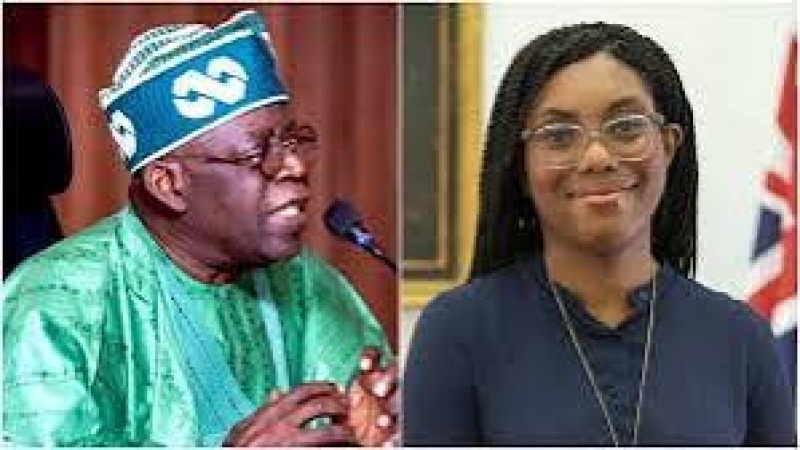
President Bola Tinubu’s two-day state visit to the UK, which began on Wednesday, does not include a meeting with Kemi Badenoch, the leader of the Conservative Party.
On the first day, Tinubu met with King Charles and Queen Camilla, engaged with interfaith organizations, and attended a banquet where he and the monarch delivered speeches. He is set to meet Prime Minister Keir Starmer on Thursday. Typically, it is customary for heads of state on official visits to meet the opposition leader, but Badenoch was not formally introduced to him during the dinner.
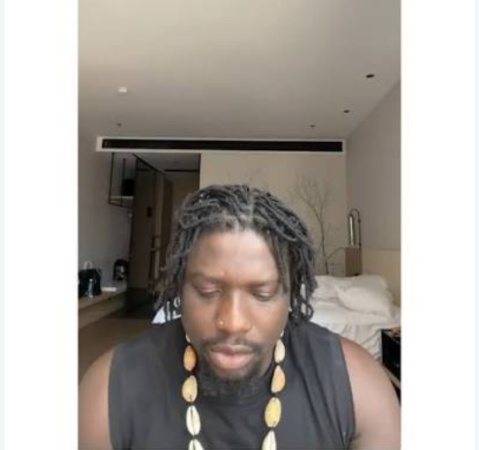
Badenoch, who has publicly criticized Nigeria despite her Nigerian heritage, suggested that she no longer identifies with her ancestral roots. She referred to Nigeria as a nation with corrupt politicians and has accused the Nigerian police of robbing her. Her comments have drawn rebukes from Nigerian leaders, including Vice-President Kashim Shettima.
Previously, Badenoch shared a photo with former U.S. President Donald Trump during his state visit to the UK, but she did not share a photo with Tinubu, even though she attended the same banquet in his honor.
Following the controversy surrounding the allegation of Christian genocide in Nigeria, which has attracted global attention, King Charles III and President Bola Ahmed Tinubu yesterday had conversations with national and international interfaith organisations in Vicars’ Hall, Windsor, London, with a view to finding a solution to the crisis.
According to the royal family, His Majesty and the President, joined by Nigerian
First Lady, Oluremi Tinubu, participated in the dialogue during the President’s state visit to Britain.
President Tinubu, while speaking at the State banquet, said the Nigerian community in the United Kingdom has become one of the most dynamic diaspora communities worldwide, contributing enormously to UK’s vitality.
Within the National Health Service, He cited the roles Nigerian doctors and nurses play in delivering healthcare, saying “Nigerian-trained doctors are among the largest groups of international medical professionals serving the NHS.”
Tinubu acknowledged the complex terrorism challenges with roots in the Sahel, noting Nigeria’s enormous responsibility to help safeguard regional stability.
“In confronting these threats, partnership with the United Kingdom remains essential and I look forward to my meeting with Prime Minister Kier Starmer tomorrow (today). Despite these challenges, Nigeria approaches the future with hope and confidence. We are a nation of diverse and vibrant people, of young people dreaming big, of entrepreneurs with a global outlook, and of a hopeful people determined to realise their full potential”, he added.
King Charles equally acknowledged Nigeria’s role in the United Kingdom, noting the increasing economic ties between the two countries.
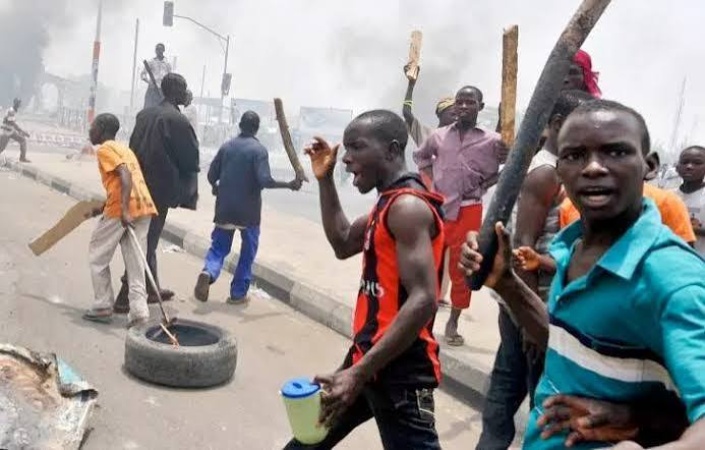
Christian communities in Nigeria, particularly in the Middle Belt and Northern regions, are facing intense violence characterised by attacks, kidnappings, and killings attributed to Islamic terrorists.
Various international organisations and human rights groups have raised concerns, calling for increased action to protect religious minorities and address the root causes of the violence.
While some observers label this targeted persecution, the government insists that these are terrorist acts that cut across all faiths.
The state visit, the first of its kind in 37 years, is aimed at strengthening bilateral ties and “building partnerships that are economically beneficial to both countries.”
According to Nigeria’s government spokesman, Mohammed Idris, the trip is focused on transforming a long-standing relationship into a modern economic alliance.
Ahead of the visit, the British Commission in Lagos announced that both countries had finalised a series of major investment agreements expected to generate hundreds of new jobs.
The report also listed a number of fintechs, banks, and creative industries that intend to expand their service operations across Britain.
Also, during the visit, President Tinubu will witness the signing of a £746 million deal between Britain and Nigeria to revamp the Lagos port in Apapa and Tincan Island.
Nigeria and the UK are expected to maintain stronger bilateral relations in the areas of immigration, security, education, healthcare and cultural exchanges.
Meanwhile, the Socio-Economic Rights and Accountability Project (SERAP) has urged King Charles III to raise concerns during the state visit about the “serious and continuing violations of human rights and the shrinking civic space in Nigeria.”
It also urged the King to encourage President Tinubu and the Nigerian authorities to immediately withdraw the Strategic Lawsuits Against Public Participation (SLAPP) suits brought against journalists, activists, bloggers and civil society organisations, including SERAP.
According to the body, the visit also provides a timely opportunity to place human rights, accountability and the rule of law at the centre of bilateral and Commonwealth engagement.
In the open letter yesterday, signed by SERAP deputy director Kolawole Oluwadare, the organisation said the state visit presents an important opportunity for His Majesty to press for respect for the rule of law and the protection of human rights in Nigeria.
SERAP expressed concern over the growing use of repressive laws and strategic lawsuits to harass and silence journalists, activists and critics.
“The continuing use of the Cybercrimes Act and criminal defamation laws to target peaceful expression is incompatible with Nigeria’s international human rights obligations,” it said.
SERAP also raised concerns about the situation of internally displaced persons in parts of northern Nigeria, including Benue, Borno and Plateau states, where many are reportedly denied basic rights such as freedom of movement, access to healthcare and legal protections.
SERAP said: “Nigeria, as a member of the Commonwealth, has committed to uphold the values set out in the Commonwealth Charter, including respect for human rights, democracy and the rule of law. Respect for Commonwealth values must be reflected in practice, not only in commitments.”
The body urges King Charles III to use his unique moral authority to encourage human rights reforms in Nigeria, noting that the credibility of the Commonwealth depends on its members’ willingness to uphold shared values, including respect for human rights, democracy, and the rule of law.
The president was accompanied by several high-ranking officials, including governors from Lagos, Katsina, Zamfara, Enugu, Akwa Ibom, and Plateau states, as well as top federal officials, including the Senate President and ministers overseeing finance, defence, trade and investment, tourism, among others.
Their presence, however, has drawn criticism from some citizens who view the large delegation as an unnecessary drain on public resources. Others, however, argue that the trip could yield long-term economic benefits for Nigeria.
Concerns have also been raised about governance at home during the visit. Some citizens questioned whether the country could function effectively with multiple governors and ministers abroad. Criticism intensified following reports that bandits attacked villages in Katsina State, Falale and Kadobe in the Jibia area, killing at least 15 people, while the state governor was in the UK.
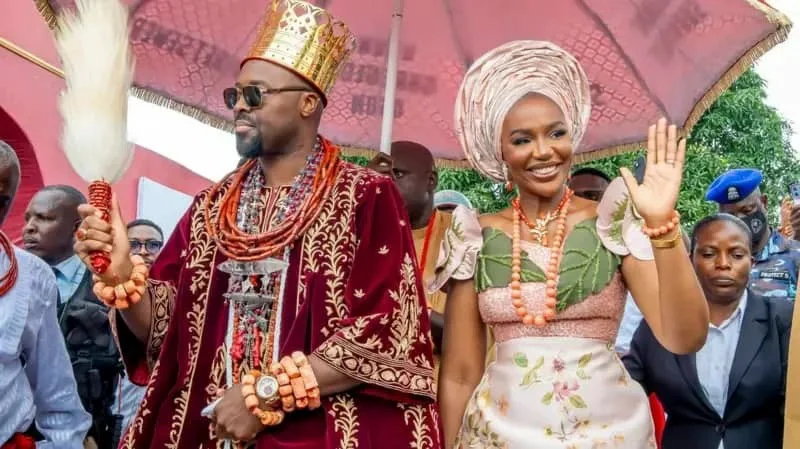
Despite the backlash, the visit has been marked by a significant diplomatic ceremony. Tinubu and First Lady Remi Tinubu were received by senior members of the British royal family, including Queen Camilla and the Prince and Princess of Wales.
They later met with the King and Queen, with a state banquet scheduled to feature speeches from both leaders.
During their time at the castle, the Nigerian delegation viewed items from the Royal Collection, including a Yoruba throne, sculptures, paintings, and a manuscript by Nigerian writer Sir Ben Okri. Gifts were also exchanged, symbolising cultural ties between both nations.
In a notable gesture, the King adjusted the traditional state visit schedule by dropping the formal lunch in respect of Ramadan, allowing the President Tinubu, who is a Muslim, to observe fasting, with a state banquet held later in the evening.
The last Nigerian state visit to the UK was in 1989, when Elizabeth II welcomed Gen Ibrahim Babangida, the military ruler, to London.
The two-day visit falls at the end of the holy month of Ramadan, during which many Muslims fast. This makes it the first time a Muslim president has visited the royals in almost a century.
In 1928, George V, the King’s great-grandfather, hosted King Amanullah Khan of Afghanistan for a three-day state visit from March 13-15, when Ramadan fell between February 22 and March 22 that year.
However, there are no known records indicating whether King Amanullah observed Ramadan.
Nigeria’s Minister of Education, Tunji Alausa, disclosed ongoing progress toward a major academic partnership with Coventry University to establish a Nigerian campus.
According to him, the initiative will allow students to earn fully accredited UK degrees at significantly lower cost without leaving the country, easing the burden on families who traditionally send children abroad for quality education.
He noted that the proposed campus, expected to be located in Alaro City in Lagos, will offer Bachelor’s and Master’s programmes across STEMM, Business and Technical and Vocational Education and Training (TVET), with admissions projected between the third and fourth quarters of 2026, subject to regulatory approvals.
The initiative, he said, is aimed at strengthening Nigeria’s human capital by developing skills, talent and a workforce capable of driving innovation, productivity and long-term national growth, while bringing global educational opportunities closer to home. (The Guardian)