Updating your news feed...

NEWS EXPRESS is Nigeria’s leading online newspaper. Published by Africa’s international award-winning journalist, Mr. Isaac Umunna, NEWS EXPRESS is Nigeria’s first truly professional online daily newspaper. It is published from Lagos, Nigeria’s economic and media hub, and has a provision for occasional special print editions. Thanks to our vast network of sources and dedicated team of professional journalists and contributors spread across Nigeria and overseas, NEWS EXPRESS has become synonymous with newsbreaks and exclusive stories from around the world.

























Loading banners
Loading banners...

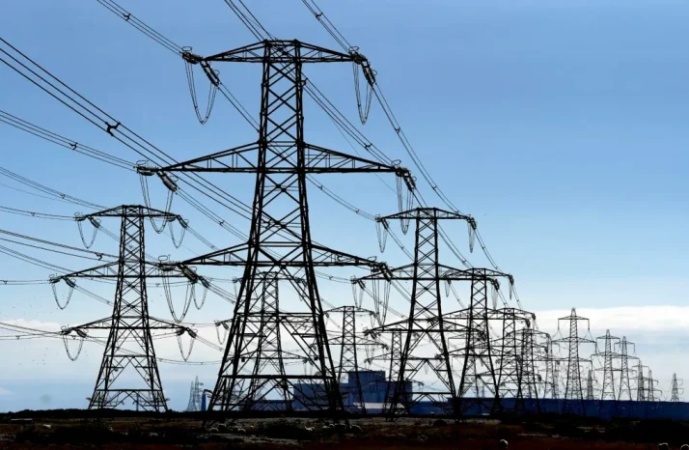
national grid
The Association of Power Generation Companies (APGC) has raised an alarm that a growing number of Nigeria’s power generation companies (GenCos) have shut down operations amid a mounting N6.8 trillion debt burden.
Speaking in a report on Bloomberg, the CEO of APGC, Dr. Joy Ogaji, said the situation is crippling their ability to maintain equipment, secure gas supplies, and meet basic operational expenses.
She warned that prolonged fluctuations in frequency, voltage, and generation output are also putting critical generating equipment at risk.
This is sequel to the data obtained from NISO website showing grid code requirements for February and March 2026.
According to data from March 13 and 14, 2026, the grid has experienced wide swings in both frequency and voltage, as well as significant changes in power output.
On March 13, the highest frequency recorded was 51.67 Hz and the lowest 49.03 Hz, while peak generation reached 4,123.30 MW and the lowest output was 3,480.67 MW. Voltage levels similarly fluctuated, with a high of 348 kV and a low of 304 kV.
The following day, March 14, the trend persisted. Frequency ranged between 50.77 Hz and 49.08 Hz, peak generation hit 4,130.70 MW, and the lowest output was 3,591.22 MW.
Voltage also experienced wider variation, spanning 346 kV to 293 kV, highlighting the ongoing strain on the system, warning that turbines, generators, and other sensitive equipment are under heightened stress due to prolonged exposure to these deviations.
Ogaji stressed that the consequences of grid instability go far beyond technical disruptions, extending into significant financial and operational losses for generation companies.
According to her, “GenCos suffer immensely from the volatility of the national grid, as they lose money in the frequent start-ups and shutdowns, loss of gas, and increased maintenance costs.”
She explained that power generation systems are designed to operate within strict technical limits, warning that persistent deviations from these conditions undermine efficiency and reliability.
“It is international best practice that electrical equipment operates within set conditions for optimal performance. Any fluctuation outside these limits forces the machines to run at lower efficiency.”
Ogaji noted that thermal plants, particularly gas-fired turbines widely used in Nigeria, are most affected by unstable grid conditions.
“Gas turbines are designed to operate optimally at base load. When forced to operate far from these levels due to grid instability, efficiency drops significantly.”
She revealed that such inefficiencies come with measurable financial implications:
“Operating turbines away from their baseload can increase gas consumption by as much as 15 to 20 per cent—costs that are neither recognised by NBET nor captured under the current MYTO framework.”
Beyond efficiency losses, she warned of deeper mechanical consequences arising from persistent frequency and voltage fluctuations.
“Any frequency deviation beyond acceptable tolerance levels can lead to gradual or sudden damage to generating equipment, increasing maintenance requirements and shortening the lifespan of these machines.”
The APGC CEO further linked the issue directly to grid management challenges, stating that: “The inability of the system operator to maintain grid stability within acceptable technical limits has exposed generator units to operate beyond their factory-rated capacity.” (Daily Trust)