ADAD
ADADUpdating your news feed...

NEWS EXPRESS is Nigeria’s leading online newspaper. Published by Africa’s international award-winning journalist, Mr. Isaac Umunna, NEWS EXPRESS is Nigeria’s first truly professional online daily newspaper. It is published from Lagos, Nigeria’s economic and media hub, and has a provision for occasional special print editions. Thanks to our vast network of sources and dedicated team of professional journalists and contributors spread across Nigeria and overseas, NEWS EXPRESS has become synonymous with newsbreaks and exclusive stories from around the world.

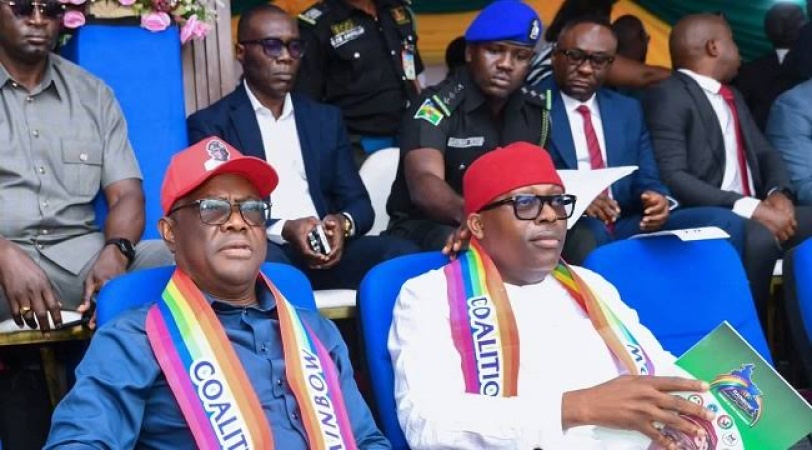









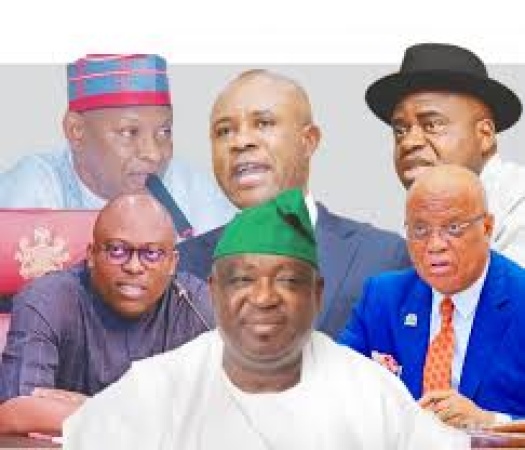
Newly defected APC governors
The wave of defections of state governors to the ruling All Progressives Congress (APC) and the realignment of coalition forces, including the African Democratic Congress (ADC) positioning itself for the 2027 general elections, are currently dominating political discussions.
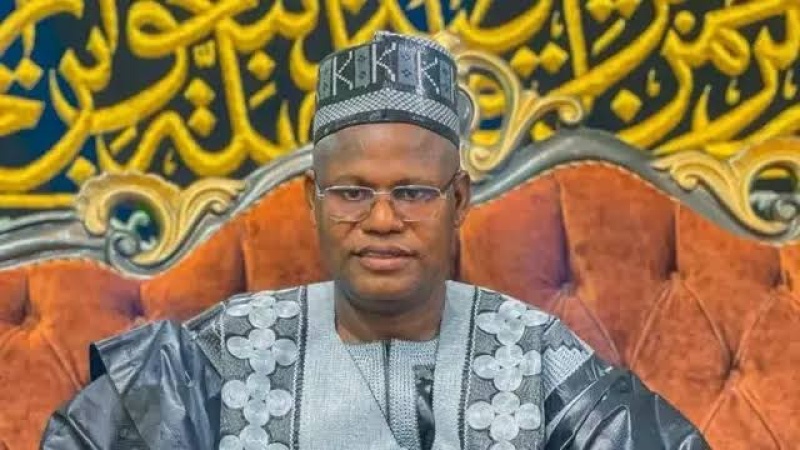
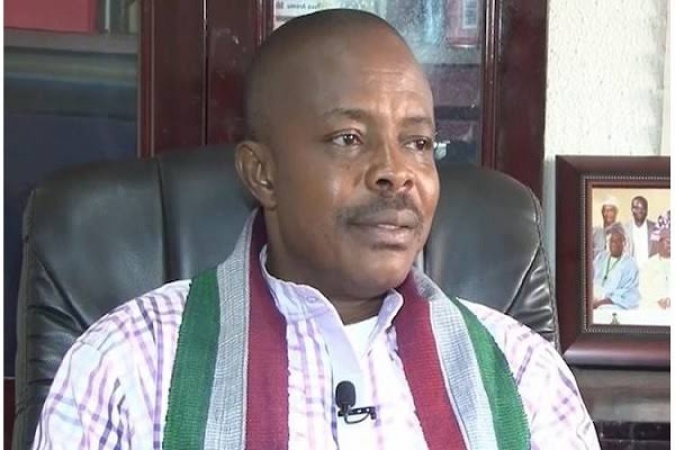
The latest In the series of defections leading to a significant shift in the political balance is Governor Abba Yusuf of Kano State joining the APC following his resignation from the New Nigeria Peoples Party (NNPP). Prior to this event, five Peoples Democratic Party (PDP) governors had serially defected to APC, citing internal party crises. These are Umo Eno (Akwa Ibom), Sheriff Oborevwori (Delta), Douye Diri (Bayelsa), Peter Mbah (Enugu), Siminalayi Fubara (Rivers). Caleb Mutfwang (Plateau) and Agbu kefas (Taraba State).
These defections have strengthened the APC’s grip on Nigerian politics, with the party now controlling 29 out of 36 states, raising concern about the gradual drift towards a one-party state.
The APC’s growing strength is attributed to factors like access to political patronage, pre-election positioning, and perceived stability. However, analysts warn that mass defections could weaken opposition parties and potentially lead to a one-party state, undermining democratic checks and balances.
Debate is now raging whether the APC can translate these defections to victory in the 2027 general elections. While the APC is optimistic, with some leaders predicting a sweep in the 2027 elections, opposition coalition forces argue these defections won’t guarantee victory for the ruling party.
National Secretary of the Africa Democratic Congress (ADC), Rauf Aregbesola, at a book launch in Abuja on Monday, said voters, not governors, would decide the fate of candidates in the 2027 general election. Aregbesola’s scepticism is rooted in the Lagos paradox of 2023. Despite the APC’s absolute control over Lagos State’s machinery, the party lost the presidential vote in that state.
“In the South West, the APC controlled all the states except one. Despite this, the maximum performance of the party in that election was 55 per cent, with the other parties sharing the rest.
“The same applied in Lagos. The APC candidate lost his ward, local government, and state.
“In the South East, the result is even more striking. The APC had only 5.8 per cent of the total vote from that zone. The results of these two zones clearly show that governors do not win elections—the people do,” he posited.
Often times, defections bring structure- money, logistics, and security, but they don’t always bring sentiment: the actual will of the people. The reality is that every region has a peculiar way of reacting to political trends.
South East
In South East, mixed reactions have continued to trail the defections to APC as 2027 looms. Political actors and ordinary citizens reflect on what the development means for the region ahead of the next general elections. While leaders of the APC across the zone described the defections as a strategic realignment capable of strengthening the region’s relevance at the centre, several former members of the Peoples Democratic Party (PDP) who moved along with their governors admitted that the development had left many party loyalists deeply uncomfortable.
A former PDP chieftain In Enugu, who spoke on condition of anonymity, said the defection of Governor Peter Mbah to the APC was driven more by political survival than popular support. “Let me say it the way it is: many of us are not happy, but politics in Nigeria has reached a point where if you are not with those in power, you are completely cut off.
“PDP is the party we laboured for, the party that gave many of us a voice. But today, following the governor is about staying relevant, not about ideology or what the people actually want,” he said.
He maintains that the mood at the grassroots is the exact opposite of the picture the governors are presenting to the public.
“Go to the villages, go to the markets, people are angry and confused. They are asking what all these defections mean for their daily suffering. Nobody is defecting with food, jobs or security,” he added.
Also, a former PDP youth leader in Ebonyi State described the defections as elite-driven politics. “At the grassroots level, people don’t sit down discussing APC or PDP or Labour Party; they talk about hunger, school fees and insecurity. Some of us are in APC today because of convenience. But that does not mean the people have suddenly changed their political beliefs,” he stated.
However, APC leaders across the region welcomed the defections, insisting they represented a long-overdue political recalibration. A chieftain of the party in Enugu State, Chidi Nnamani, said the movement of governors and lawmakers into the party would strengthen the region’s bargaining power at the federal level.
“For a long time, the South East complained of marginalisation, yet our leaders stayed outside the centre of power. Now, by aligning with the ruling party, we are positioning ourselves to negotiate better for federal projects, appointments and inclusion. Politics is about strategy, not sentiments,” he said.
He argued that the defections would give the APC an edge going into 2027 but admitted that performance would determine electoral outcomes.
“Defection alone will not win elections. If governance does not improve, the people will speak with their votes,” he added.
The Coalition of South East Youth Leaders (COSEYL), in its reaction, insists that the defections do not reflect the true aspirations of young people in the region.
In a statement signed by its President General, Goodluck Ibem, the group said: “While politicians may be celebrating, the average South East youth is worried about unemployment, insecurity and economic hardship. Political realignments that do not address these issues cannot speak for our collective aspirations.”
COSEYL further warned that the APC’s growing dominance in the region might not be sustainable without visible improvements in governance. “You cannot build lasting political loyalty in the South East without trust, fairness and development. Without these, today’s defections may become tomorrow’s reversals,” the statement said.
Before now, the South East had remained an impregnable fortress for the APC, underscoring the complexity of the Igbo political culture. Traditionally, the South East has a unique political psychology. Unlike some other regions where a governor’s endorsement can lead to a block vote, the South East often practises what analysts call splintered loyalty. However, there is currently a growing sentiment about the possibility of a shift toward the politics of the centre, especially following the collective resolution of five governors of the South East to support the re-election of President Tinubu in 2027.
The meeting of the governors in Enugu in December 2025 was the moment the mainstreaming theory became a formal reality. While individual governors had hinted at cooperation before, the collective appearance underscores a new thinking among the stakeholders in the region. The pledge of support from all five governors—Hope Uzodinma (Imo), Francis Nwifuru (Ebonyi), Peter Mbah (Enugu), Charles Soludo (Anambra) and Alex Otti (Abia)—is particularly significant because it crossed party lines (APC, APGA, and LP). The governors framed their support not as a partisan move, but as a strategic necessity for the South East. The communiqué emphasised that the region could no longer afford to be in permanent opposition.
The South East’s republican tradition suggests voters will make their own decisions, regardless of influence from governors or parties. This implies that APC’s growth might not automatically translate to votes. As Aregbesola noted, the APC’s 5.8 per cent performance in the South East in 2023 happened even while they held two governorships (Imo and Ebonyi). This suggests that in the South East, voters often ignore their governors’ marching orders in favour of regional or reformist candidates. For the current scenario, a governor can be wildly popular and still fail to deliver his state for the APC at the federal level.
Unlike previous experience, in 2027, the South East’s reaction won’t be a single wave. It will be a clash of two realities: the governors’ pragmatism and the street’s sentiments. If the APC through the governors can show tangible results—like the completion of the Enugu-Port Harcourt expressway or a presidential pardon for the detained leader of the Indigenous Peoples of Biafra (IPOB), Nnamdi Kanu, they might finally break the 10 per cent ceiling. If not, the governors’ pledge will be just a gentleman’s agreement that the voters ignore on Election Day.
Akwa Ibom
The people of Akwa Ibom State remain divided over the defection of Governor Umo Eno. Following his defection to APC last year, there was widespread condemnation by political associates, while APC gained popularity in the state.
However, for ordinary Akwa Ibom persons, PDP remains in their hearts even when Governor Eno has defected to APC. A trader at Itam market, Mrs Arit Edem, from Ikot Ebom Itam, who spoke with Sunday Sun in Uyo, explained that the PDP was the only party known to her.
“From 1999 to 2023 general elections, my family and I have been voting PDP in all the elections. Next elections would not be different. Whether our governor dumped the PDP or not, my vote and that of my family is for PDP.”
Investigations revealed that Governor Eno, after appointing 368 Personal Assistants from PDP across all wards in the state prior to his defection to APC, later appointed another 368 from his new party, making a total of 736 Personal Assistants across the wards just to prepare for 2027.
The state commissioner for Information, Hon Aniekan Umanah, while reacting to the impact of the defection of the governor, said the state was concentrating on development and that the 2027 election remained a sure win for Governor Eno and President Bola Ahmed Tinubu.
“The defection has brought unprecedented togetherness and connectivity with the centre by deepening the developmental trajectory of Akwa Ibom State from all fronts .
“This defection totally reflects the true aspirations of Akwa Ibom people. You can see the people are coming from different sides celebrating the governor, Senate President Godswill Akpabio and President Bola Tinubu.
“This togetherness is advancing the cause of developments in Akwa Ibom State .
“The people are happy. You can see the flurry of endorsements from every side. Only a few days ago, all the traditional institutions in Ikot Ekpene senatorial district endorsed the trio of Umo Eno, Akpabio and Tinubu for second term”, he stated.
The Information Commissioner explained that the endorsements translate to peace and conviviality that lead to deepening developmental progress and programmes of the state.
“This defection has guaranteed the victory of APC in the state in 2027 in the sense that everybody is working together for the good of the state.
“There is no opposition in Akwa Ibom as the state is on the path of development. And even if there are pockets of opposition, they are very insignificant,” Umanah declared.
In his counter argument, the Chairman of PDP, Dr Tom Fredfish, disagreed, saying there is nothing tangible to deserve a second term
Fredfish, in a telephone interview, described the defection of Governor Eno as fear of his second term because of the perceived power at the centre .
“The defection of Umo Eno presented a new opportunity for PDP to select credible leaders that will represent them in the 2027 general elections, he argued.
Bayelsa
When Bayelsa State Governor, Senator Douye Diri, resigned his membership of the People’s Democratic Party (PDP) and subsequently defected to the All P’ogressive Congress (APC) on November 4, 2025, he declared the move was in the interest of Bayelsans.
However, several questions have been raised about the popularity of his defection. While his rating may not be badly affected within the populace, some people view the shift in political alliance as a betrayal. For them, they cannot understand why a second-term governor who is doing well would defect to the ruling party.
Evidence that his defection remains awkward with the people is the fact that his late deputy, Senator Lawrence Ewhrudjakpo, refused to defect along with him. Also, his political benefactor, Senator Henry Seriake Dickson, did not give his blessings to his defection. Three members of the House of Assembly also did not defect.
The decision by those who refused to defect has been applauded by ordinary Bayelsans, which is a pointer to the popular perspective of the issue.
Regardless of how his defection is perceived among the people, political pundits believe Diri’s defection would boost the electoral strength of the APC in the state, especially ahead of the 2027 election. In 2019, the APC gave the PDP a run for its money by winning three National Assembly seats, 25 per cent votes for the late President Muhammadu Buhari, and four House of Assembly seats. However, the PDP recorded a sweeping victory in the governorship election later in the year. The outcome of the 2023 general elections ultimately reversed the electoral strength of the APC.
Now with Diri, a sitting governor as a member of the APC, the fierce electoral contest between the PDP and the ruling party might be a thing of the past.
The combined influence of Governor Diri, the Minister of Petroleum Resources, Senator Heineken Lokpobiri, and the Managing Director of the Niger Delta Development Commission (NDDC), Dr Samuel Ogbuku, all in one boat, will likely provide formidable war chest to confront any opposition in the coming election.
No matter how It is viewed, Diri’s defection into the APC is bad news for the opposition in the state. Before his sudden demise, the late deputy governor, Lawrence Ewhrudajkpo, who was a political protégé of Senator Dickson, had been primed to lead the opposition in the state, whether in the PDP or the new African Democratic Party. However, his sudden demise has changed the political dynamics. Now, the opposition would need to re-strategize to take on the APC in the 2027 elections.
Diri’s political benefactor, Senator Dickson, is now expected to assume the role of the opposition leader in the state and confront the APC. In 2015, Dickson rallied Bayelsans against the APC to defeat it in the governorship election. Though he was unable to secure victory for the PDP in 2019 at the polls, the victory was handed to it at the court.
Dickson is a political long-distance runner who is well-versed in opposition politics. Undoubtedly, the death of the resourceful Ewrhudjakpo is a major setback, but Dickson’s tank of opposition strategies cannot remain empty for long.
Plateau
In Plateau State, Sunday Sun findings revealed that defection of Governor Caleb Mutfwang was not a product of genuine consultation, as it sparked public anger and disappointment among prominent political figures, including former Senator Jonah Jang.
A political commentator and activist, Pwakim Choji, stated that Mutfwang’s entry into APC had fractured the party from the start. He said: “Many feel the governor has not only betrayed their trust but has also disrespected them by aligning with the same party Plateau people largely see as the root of their political challenges.
“In a situation like this, voters may retain a president while voting out a governor. In plain terms, your (Mutfwang) movement to the APC is what I call political suicide”, Choji declared.
An ardent supporter of the governor also shared the same view, describing the scenario as very dicey.
According to him, the first mistake Mutfwang made was the neglect of his support base while taking the decision to join the APC. He stressed that the process should have started from the grassroots upward, rather than being dictated from the top.
This, he said, had led to a discontent among the people, noting that many of them were not genuinely happy with the shift, especially those who lost their means of livelihoods or positions due to defections.
He stated that Mutfwang and the national leadership of the party did not adequately consult with the people before making the political shift. “Many politicians are outwardly supporting the new alignment by wearing the insignia of APC and dancing, but privately expressing unhappiness. They are doing so out of fear or for personal gain, stomach infrastructure, to get food to eat,” he noted.
He believes that the current leadership needs to address the grievances of disgruntled individuals who had been removed from office, denied contracts, or otherwise negatively impacted. “The political atmosphere in 2023 was toxic, and simply bringing people back without apologies or reconciliation is problematic.
“The current political realignment in Plateau State is fragile and lacks genuine popular support. The top-down approach and lack of consultation have created significant discontent and a disconnect between the leadership and the grassroots.
“The ruling party (APC) is internally divided and faces a serious challenge from a potentially unified PDP. Many within the APC are not committed and may engage in anti-party activities, while the PDP appears to be in a stronger position to capitalize on the existing grievances.
” The leadership needs to urgently address the issues of reconciliation, consultation, and inclusivity. Failure to do so, particularly by ignoring key figures like former Governor Jonah Jang, a significant political factor in Plateau State, particularly for the large chunk of Berom votes may elude APC. His interests were not factored into the current political calculations, which is a mistake, and the widespread discontent, will likely lead to political instability and electoral setbacks,” he predicted.
However, Bitrus Kaze, a former parliamentarian, who defected from PDP to APC, said: “Mutfwang is a lawyer and he has foreseen what some of us have been saying for a long time ago. It has dawned on him that that’s the reality and he has to move.”
Kaze also addressed Jang’s position in the new political equations, stating that despite public insinuation that Jang was angry with Mutfwang for leaving the PDP, the contrary might be the case.
Kano
While the political climate in Kano is currently unpredictable, occupants of elective and appointive offices in the state are happy with the defection of Governor Abba Kabir Yusuf to the APC. They see it as a guarantee for their own survival in 2027 and beyond.
However, at the moment, Senator Rabiu Musa Kwankwaso enjoys more sympathy in the streets of Kano State than the popularity of the defection. Those who sympathise with Kwankwaso do so because they feel, rightly or wrongly, that he has been betrayed by his trusted political godson. They may not love Kwankwaso as a person, but on this specific ground, their hearts are totally with him. If there is an election today, many sympathy votes will go to Kwankwaso and not to Abba.
From every indication, the defection of Governor Yusuf is not exactly a reflection of the political aspiration of the people of the state or the region. APC, as a party, is not hugely popular in the North-West. Majority of the region faults President Tinubu on the grounds of his favouritism to his Yoruba people in policies, allocation of resources and recruitment into political positions. They also fault him for his failure to address the insecurity in the region.
A lot will depend on how the opposition elements can organise and strategize ahead of 2027.
At the state level, Governor Yusuf is likely to return to power partly because of his impressive programmes – many of which are touch -down policies. President Tinubu may see a different response from Kano people, especially if the ADC or any other political party decides to field a core Northern/ Muslim candidate for the presidential polls.
The full Impacts of these defections will depend on a number of factors that are yet to mature. But going by precedents, Kano is oftentimes on the side of the opposition. (The Sun)