Updating your news feed...
NEWS EXPRESS is Nigeria’s leading online newspaper. Published by Africa’s international award-winning journalist, Mr. Isaac Umunna, NEWS EXPRESS is Nigeria’s first truly professional online daily newspaper. It is published from Lagos, Nigeria’s economic and media hub, and has a provision for occasional special print editions. Thanks to our vast network of sources and dedicated team of professional journalists and contributors spread across Nigeria and overseas, NEWS EXPRESS has become synonymous with newsbreaks and exclusive stories from around the world.
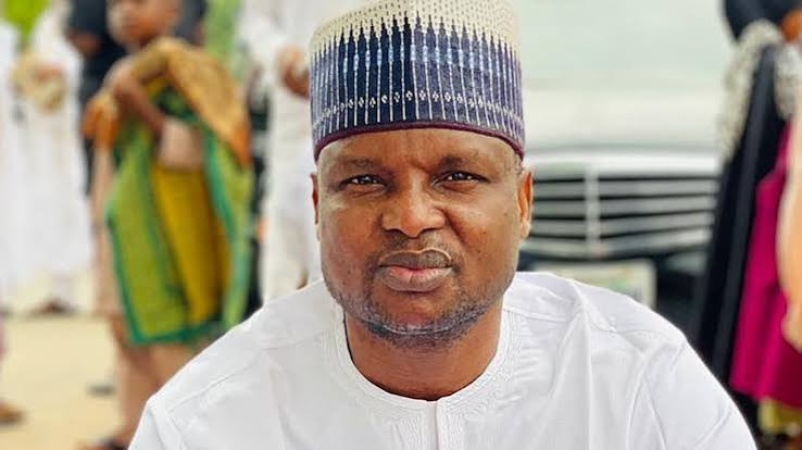


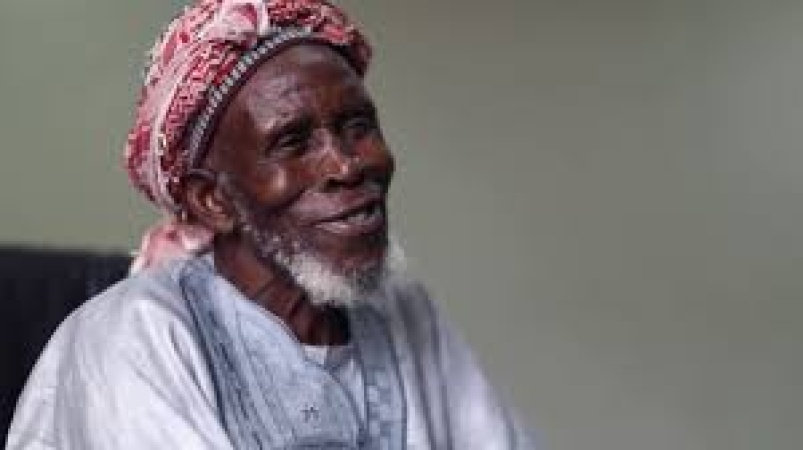
Late Abdullahi Abubakar
In a conversation with BIODUN BUSARI, Masa-Udu Abdullahi-Abubakar reveals the life and times of his late father, Abdullahi Abubakar, who was the Chief Imam of Akwati Mosque in Nghar community, Barkin Ladi Local Government Area of Plateau State
What was your relationship with your father like?
I had a very good relationship with my father, just like the other children. My father had 21 children. I have elder siblings and younger siblings. My father was a revered scholar not only in our community and state but also in the country. So, all his children enjoyed a cordial relationship with him when he was alive.
How many wives did your father marry?
He had three wives. But two of them left. One stayed with him even before his death, and that happened to be my mother.
Can you recall how your father became the Chief Imam of his community?
He was born and raised in Yelwa near Gindin Akwati. He had primary, secondary and Quranic education in our community. He became the chief imam after his father died. My grandfather was also a chief imam before he passed on. I can’t remember the actual year he became the imam. But he spent more than 50 years as an imam in this place. He died at the age of 93.
How would you describe your father during his time?
If I tell you my father was indescribable, it is true. He was a kind-hearted person. He was a trusted husband, loving father and dependable neighbour.
My father worked hand in hand with everybody in his area, the local government and the state. He was widely loved and respected by the surrounding villages as well. All the tribes we have in our village loved him for his generous and simple lifestyle.
They took my father as their father. My father did not discriminate against religions or tribes. The Christians who are living here grew up with my brothers as age mates. We lived together as one community. Everyone practised their religion because it was the foundation we met with our late father.
What other things did he do apart from being an imam?
He practised farming and rearing. He farmed and reared goats and cattle.
How did your father save more than 200 Christians from bandits in 2018?
Fortunately, I was among his children who were with him when the incident happened. A crisis broke out, and some attackers decided to kill Christians living in our community at that time. It was a broad daylight pandemonium that happened between 3.30 pm and 3.40 pm.
We were about to observe Asr prayer in the mosque when we saw these Christian folks running in trepidation towards our house. We started hearing gunshots all over the village. The people were running for their dear lives. They were running away from their village in Nghar for safety.
They were running to Yelwa. My father saw how terrified they were and opened the mosque for them to come in. Our house and mosque were at the end of the village. Some people were hidden in our house.
As the attackers approached the mosque, my father and his assistant met them and stopped them. He spoke to them calmly and dissuaded them from attacking the Christian villagers hiding in the mosque and the house.
He was practically begging them to stop killing the villagers. At that time, the worshippers gathered around my father and his assistant, trying to guard the mosque.
Some of them detected that we had people in the house, and my father quickly went to block them again. God was so kind that those herdsmen reluctantly left. When they left, we started entering the bush, and we observed that they had killed a lot of people.
How many were the bandits?
The assailants were more than a hundred people, armed to the teeth.
When did the Christians hiding in the mosque leave?
They spent four days before they left our domain. Of course, the crisis had subsided, and the government came to convey them to a safer place. It was my father, with the help of the Muslim community, who fed them for those four days. We took care of about 300 people, if I’m not mistaken.
Where did Muslims have their prayers for those four days?
It was in the same mosque. Muslims were observing their prayers, and the Christians were there watching them. They were afraid to go out. We thought the bandits might be lurking around. There was apprehension in the community. We gathered together, both Muslims and Christians. The people in that town were bringing food.
How big was the mosque?
It was neither a big nor a small mosque, but everybody was there because of safety. I remember that about 20 people were outside observing their prayers. I think this was done for safety purposes.
Were there criticisms from some Muslims that your father harboured Christians in the mosque?
No, there was nothing like criticism from anybody. People in the community and neighbouring villages were hailing him, both Christians and Muslims. I was just thanking God for his life because of what he did.
As a result of his heroic deed, we, the children, have received help from many people since that time. Not all his children lived in the village, but wherever we went, people talked about the incident and honoured us because of our father. He was regarded as a father and a leader.
Did he have any community leadership titles?
No, he didn’t have any title. He was known as an imam all his life. By God’s grace, he trained us through his farming and rearing vocations.
Was there anything your father told you that you cherish?
The most cherished advice from my father that I hold dear was that I should be kind to people. He would tell all of us, his children, to be kind-hearted towards all people who come our way. He was not just telling us this, he demonstrated it himself, being an exemplary figure.
He would preach kindness gently for us to practise it. Not only me, but all of us have also been trying to emulate him. He would tell us to treat everyone fairly, irrespective of religion, ethnicity or tribe. He would always preach kindness, forgiveness and fairness.
There was a time he told me that even if people behaved badly towards me, it was humane that I responded with kindness for the benefit of humanity. I cherish and practise these virtues from him because he demonstrated them.
This was the reason why he endeared himself to many people, if not all the people he met in his lifetime. He wanted us to accommodate everyone around us.
He would say, ‘Treat everyone with kindness, even if they don’t repay it with kindness. Just know that one day, your good deeds will be rewarded.’ Another thing is endurance; he preached endurance almost every time, and this is another virtue I cherish.
Were you there when he passed away?
Not really. I was with him on December 25, 2025, when I heard about his sickness. I was told about it and quickly rushed down. I got permission from my place of work, and I stayed with him for a week.
After that, we still had a video call together after I left the hospital, where he was receiving treatment. All those times, what he kept preaching to me was endurance.
He told me to be a kind person to people at all times. My elder sister told me that he said the same thing to her. So, it was after I left that I was called on the phone to hear that he had passed away.
What was the nature of the ailment?
The initial sickness was a prostate issue, which took me home to see him in the hospital. But when I received the call about his death, I was told it was a heart problem.
Was there anything that your father wished he could have achieved before he passed away?
Yes, he wanted a better place for his people. This is a message I want to pass across to Nigeria and the Plateau State Government. Before my father died, he received different awards for his heroic action of protecting nearly 300 Christians from the claws of bloodsucking herdsmen.
We really appreciate all the people and entities that gave him those awards. However, there were promises that came with some of these awards which were yet to be fulfilled. My father wished that those promises would be fulfilled in his lifetime.
These promises were made by the Federal Government and others. They promised to develop our community in Plateau State, but nothing has happened. Anytime my father was invited to talk, he would speak about these promises, but they never came to pass in his lifetime.
The promises were not for him or his children, but for his community. He desired that his people enjoyed the benefits of the resources they had, but instead, they languished in poverty and underdevelopment.
Can you share some of those promises?
They were for governments to provide amenities for the people to enjoy. For instance, we don’t have good roads. The roads in our community are in poor condition. It is just for the government to do the necessary things like culverts.
I think some of these are the obligations of the state government. Likewise, the Federal Government has some projects that it should deliver to the people. We don’t have electricity, but there are poles erected everywhere in my community. Many of these poles were there when the community had mining companies operating in it.
This was the time I was still a child. Again, there are no hospitals. We suffer a lot when our children are sick and need medical attention. The same thing happens when our women want to give birth. There are no maternity centres for our pregnant women.
During the administration of former President Muhammadu Buhari, the Office of the Vice President sent officials to inspect our community, but till now, there is nothing to show for it.
There are mineral resources like iron ore in our community, but no investor would come if the whole place is not developed.
These are the pains that my father endured because these promises never became realities before he died.
That is why I’m using this opportunity to urge governments at all levels to rise to the occasion and do the needful. Our people in Yelwa and other communities will be proud of all these good things given to us as citizens of this great country.
Are there lessons from the death of your father?
His death shows that people loved him. It also reveals that our people are united regardless of religion, tribe and ethnicity. People talked about his kindness.
The peaceful coexistence of Christians and Muslims in our community is more reflected after his passing because people came together from different villages to sympathise with members of his family. All I can say, on behalf of the family, is to thank them.
Do you have any message for Nigerians?
This country has great, loving, kind and diligent people, and the government should encourage us to live in unity and peace. That has always been the message of my father until his death.
If the government provides all the good things for the people, there will be peace everywhere. I enjoin people to always embrace peace and unity for our country to progress. (Sunday PUNCH)