ADAD
ADADUpdating your news feed...

NEWS EXPRESS is Nigeria’s leading online newspaper. Published by Africa’s international award-winning journalist, Mr. Isaac Umunna, NEWS EXPRESS is Nigeria’s first truly professional online daily newspaper. It is published from Lagos, Nigeria’s economic and media hub, and has a provision for occasional special print editions. Thanks to our vast network of sources and dedicated team of professional journalists and contributors spread across Nigeria and overseas, NEWS EXPRESS has become synonymous with newsbreaks and exclusive stories from around the world.




Loading banners
Loading banners...

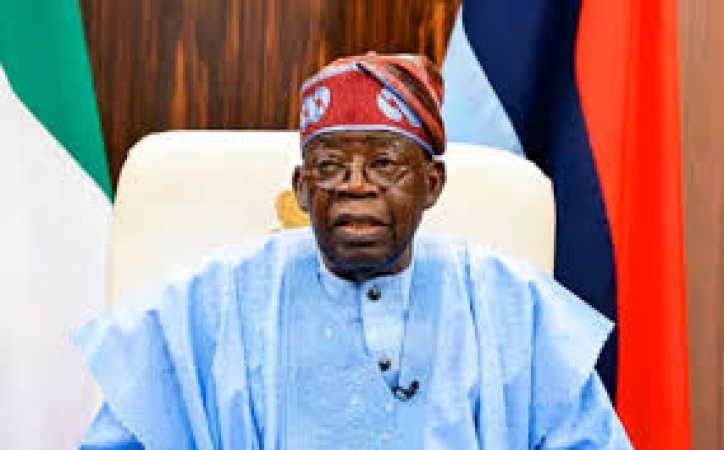
President Tinubu
As the countdown to the 2027 general election gathers momentum, President Bola Ahmed Tinubu appears to have placed the politics of Northern Nigeria at the centre of his re-election calculations.
The region, whichh accounts for the largest voting population in the country and historically determines the outcome of presidential contests, is once again shaping the strategic thinking inside Aso Rock.
Analysts are of the view that Tinubu’s recent political moves, from high-profile federal appointments to aggressive courtship of influential northern politicians and governors, reflect a conscious attempt to consolidate, repair and expand his support base across the North.
This recalibration is coming against the backdrop of mounting criticisms that his administration has allegedly sidelined the region in appointments, budgetary allocations and major infrastructure projects.
Recall that more than half of Tinubu’s nationwide votes in the 2023 poll, came from northern states, buoyed largely by support from the APC political machinery, traditional institutions, and strategic alliances with governors and power brokers.
Yet, more than two years into his administration, dissatisfaction has grown among sections of the northern elite and grassroots, who argue that the region has not benefited proportionately from the Tinubu government.
The perception, whether accurate or exaggerated, has become a potent political narrative, and Tinubu’s camp appears keenly aware of its potential consequences.
Rising allegations of marginalisation
In July last year, the Arewa Consultative Forum (ACF) raised alarm over what it described as the marginalisation of Northern Nigeria in federal budget allocations and infrastructure development.
Speaking at a two-day citizens’ engagement forum organised by the Sir Ahmadu Bello Memorial Foundation in Kaduna, Chairman of the ACF Board of Trustees, Alhaji Bashir M. Dalhatu, claimed the North had been sidelined in key policy decisions despite its electoral contribution to Tinubu’s victory.
Dalhatu argued that the North delivered over 64 per cent of Tinubu’s total votes but had little to show for it in terms of major federal projects. He cited budget figures to back his claims, noting that of the N1.013 trillion allocated to federal roads, only N24 billion was earmarked for the North-East.
The forum, attended by senior federal officials, governors, service chiefs, ministers and traditional rulers, became a platform for airing long-simmering grievances about infrastructure deficits, insecurity, poverty and youth unemployment across the region.
The ACF’s position echoed earlier concerns by northern politicians who accused Tinubu of favouring the South, particularly the South-West, in appointments and project siting.
Recall that Senator Rabiu Musa Kwankwaso, presidential candidate of the New Nigeria Peoples Party (NNPP) in 2023, had accused the Tinubu administration of pursuing a lopsided development agenda that channels national resources predominantly to one part of the country.
Babachir Lawal, former Secretary to the Government of the Federation (SGF), had also alleged that federal projects were either non-existent or invisible in most of the Northern states.
Similarly, Hakeem Baba-Ahmed, former Special Adviser on Political Matters to the President, had publicly criticised northern political elites for supporting Tinubu, accusing them of ignoring the suffering of their people. His resignation from the presidency lent additional weight to the perception of internal dissatisfaction.
Hajiya Naja’atu Mohammed, a former member of Tinubu’s campaign team, had equally accused the president of presiding over a government “by Yorubas, for Yorubas,” a statement that resonated widely on social media.
Senator Ali Ndume of Borno South also invoked Section 14(3) of the Constitution, which enshrines the federal character principle, to criticise what he described as lopsided appointments, in one of his press statements.
He warned that failure to correct perceived imbalances could have serious political consequences.
Counter-narratives from government
But the Tinubu administration and several APC governors from the North have pushed back against these allegations.
Governors Uba Sani of Kaduna and Muhammad Inuwa Yahaya of Gombe, speaking at the Kaduna forum, insisted that the administration remains committed to the North’s development.
Secretary to the Government of the Federation (SGF), Senator George Akume, also assured stakeholders that Tinubu is determined to pursue equitable development across all regions.
The political recalibration
This counter-narrative gained momentum in May 2025, when the president announced a wave of appointments that included at least 12 northerners into strategic federal positions. The move was widely interpreted as an attempt to address complaints about imbalance.
Senator Ndume subsequently praised Tinubu as a “listening leader,” acknowledging that the appointments went some way towards correcting earlier perceived disparities.
Beyond appointments, Tinubu appears to be pursuing a broader political strategy centred on rebuilding elite consensus in the North.
One of the most significant developments in this regard is the defection of Kano State Governor Abba Kabir Yusuf to the APC, a political earthquake, given Kano’s status as Nigeria’s most populous state and a traditional opposition stronghold.
Sources within the APC told BusinessDay that Yusuf’s defection followed extensive negotiations, with assurances of support for his second-term bid in exchange for delivering Kano to Tinubu in 2027.
Pundits are of the view that if consolidated, such an alliance could substantially boost Tinubu’s northern vote tally, arguing that Kano’s political value cannot be overstated.
Analysts have argued that any presidential candidate who wins Kano stands a strong chance of winning nationally. Securing the loyalty of its governor therefore represents a strategic masterstroke.
Tinubu’s camp is also encouraged by the defection of other governors, including Agbu Kefas of Taraba State, as well as several senators and House of Representatives members from opposition parties.
These defections have helped the APC secured a dominant position in the National Assembly, further strengthening Tinubu’s grip on the party ahead of 2027. While focusing on the North, Tinubu is also working to keep his southern base intact.
The South-West remains firmly under APC control, while strategic alliances in the South-South and South-East are being cultivated through appointments, infrastructure promises and political bargaining.
Observers say this dual approach, consolidation in the South and expansion in the North, reflects a classic incumbency strategy for re-election in 2027.
Dr. Abdullahi Umar Ganduje, former Kano State governor and ex-APC National Chairman, on Friday dismissed claims that Tinubu will struggle to secure northern support in 2027.
Speaking in Abuja while receiving a delegation of Northern Nigeria youth leaders, Ganduje described Tinubu as a seasoned politician with unmatched experience and commitment to national unity.
“Those who think the North will vote for another candidate are making a big mistake. There is no better person to be elected in 2027 than Bola Ahmed Tinubu,” he said.
Ganduje’s intervention is significant, not only because of his political stature but also because of his deep roots in Kano politics, a state central to Tinubu’s northern strategy.
The real test
Despite these manoeuvres, analysts caution that elite-level deals may not automatically translate into mass support, saying Northern voters are grappling with severe economic hardship, persistent insecurity, poverty, hunger and unemployment.
Pundits say how these issues are addressed between now and 2027 will likely shape voting behaviour more than political endorsements.
A political analyst, Aminu Yakudima, told BusinessDay in a telephone chat that insecurity, in particular, remains Tinubu’s biggest vulnerability in the North. He said banditry, kidnapping and insurgency continue to ravage communities, undermining livelihoods and trust in government.
“If President Tinubu can demonstrate tangible improvements in security, agriculture, infrastructure and social welfare, his political repositioning in the North may yield dividends. If not, opposition forces, whether within the PDP, NNPP or a potential new coalition, could exploit popular frustration.
“Ultimately, Tinubu’s 2027 battle for northern votes is shaping up as a high-stakes chess game involving patronage, persuasion, performance and perception. The president has clearly recognised that he cannot afford to alienate the region that historically decides Nigeria’s presidential elections. His recent actions suggest a leader determined to repair cracks, rebuild alliances and neutralise threats,” he said.
But a few weeks ago, Prof. Nentawe Yilwatda, National Chairman of the APC, expressed optimism that the party would secure a landslide victory in the 2027 general elections following what he described as the growing nationwide acceptance of President Tinubu’s administration.
Yilwatda spoke in Abuja while receiving the leadership of Women Leaders Support Advancement, a political advocacy group canvassing greater inclusion of women in governance.
“Our party is fully prepared for the future, and by the grace of God, the APC will win convincingly in 2027. The Renewed Hope Agenda of President Bola Tinubu is deliberately structured to address the concerns of women, youths and all Nigerians who desire good governance and inclusive leadership,” he said. (BusinessDay)