ADAD
Updating your news feed...

NEWS EXPRESS is Nigeria’s leading online newspaper. Published by Africa’s international award-winning journalist, Mr. Isaac Umunna, NEWS EXPRESS is Nigeria’s first truly professional online daily newspaper. It is published from Lagos, Nigeria’s economic and media hub, and has a provision for occasional special print editions. Thanks to our vast network of sources and dedicated team of professional journalists and contributors spread across Nigeria and overseas, NEWS EXPRESS has become synonymous with newsbreaks and exclusive stories from around the world.








I left Nigeria two weeks ago and within these past 14 days, there have been four consequential elections across South America, Europe, Asia and North America. In Serbia on 25 October, the students who started a nationwide protest two years ago to demand accountability, drew up a list of candidates, mobilised the electorate and defeated President Aleksandar Vucic who has been in power for the last 12 years. Two days later (27 October) in Israel, the much-awaited parliamentary election produced a cliffhanger result that leaves Prime Minister Benjamin Netanyahu utterly frustrated since there may be no government without a deal with the Arab parties whose membership in the Knesset has almost doubled. Then in an unprecedented political turn-around in Brazil on 30 October, the 81-year-old incumbent President Lula da Silva secured a fourth term with a margin of 4.43 million votes despite trailing in the first round by 2.2 million votes. Finally, in the United States on Tuesday, Democrats gained five governorship seats and won both the Senate and House, firmly taking control of Congress with surprise victories in several Republican strongholds that include Ohio, Texas, South Carolina and Kansas. Remarkably, Kansas last elected a Democrat 94 years ago!
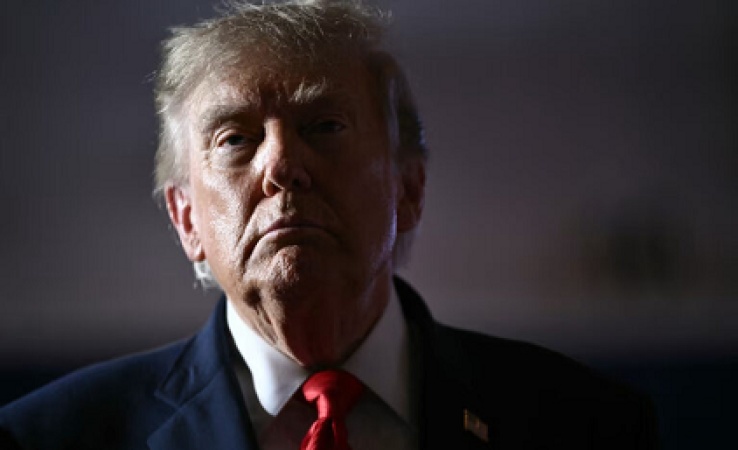
I am currently in the U.S. where pundits are still trying to come to terms with the political implications of the massive ‘Blue Tsunami’ of Tuesday night. Several gender and ethno-religious records were also broken by the Democrats such that House Minority Leader, Hakeem Jeffries, is poised to become the first Black Speaker in January. So overwhelming is the nature of the Democratic victory that President Donald Trump could not but concede to a defeat that many describe as a repudiation of his (foreign and domestic) policy choices and a referendum on his stewardship. Trump, of course, has attributed the results to the fact that he was not on the ballot saying with him, the Republicans “would have won in a landslide.” Not even his own deputy, Vice President J.D. Vance (who has attributed the loss largely to the war in Iran), takes his principal serious on that claim.
Serbia. Israel. Brazil. United States. There are lessons from these four countries that will serve us in Nigeria as we prepare for the 2027 general election. Let’s start with Brazil where no presidential candidate had ever come from behind to win a runoff poll since the country returned to direct elections in 1989. Instructively, Lula lost the first round with 45 percent to Senator Flavio Bolnosaro’s 47 percent, but he won the run-off with 51.79 percent of total votes. The defeated Bolsonaro has refused to concede, asking the courts to annul the result because voting was extended by two hours. He seems to be clutching at straws. Not only did Bolnosaro’s own party join the call for that extension at the time, but it has also been established that those two hours approved by the Supreme Court produced only about 34,000 ballots. Besides, Bolsonaro’s Liberal Party has recognised the outcome of the election and accepted Lula’s victory. Bolsonaro has taken refuge in the U.S.
Most political pundits have credited Lula’s victory to the power of social media. One of his supporters, André Janones, a 42-year-old congressman, started and ran a WhatsApp group called ‘Lula’s Army’. From 60,000 followers after the first round, the aggressive mobilization that followed ballooned the membership to nearly 11 million. Lula himself was persuaded to get a smartphone (reportedly he never had a mobile phone of his own until the election), and he began taking selfies at rallies. In his victory speech, Lula praised Janones whom he described as “our general” who was “raising the morale of our troops every day.” But we must read that story correctly. The real campaign work was done offline. Supporters were asked to list friends and relatives they could persuade or get to the polls, with special attention to teenagers and people above 70, for whom voting is optional. Lula also had the advantage of incumbency while Bolsonaro scored an own goal. In the final television debate on 23 October, he called the president ‘nine fingers’, a taunt about the finger Lula lost in a factory accident as a young metalworker. Although Bolsonaro apologised on air, many undecided voters reportedly did not take it well.
In Serbia, following the collapse of the roof of a popular train station in November 2024, killing no fewer than 15 people, students took to the street, accusing the government of President Vucic of nepotism, corruption and negligence. Calls for a transparent investigation led to months of sit-ins, blockades and marches led by students, and then a demand for snap elections. When that demand was met, apparently because some powerful people misread the room, the students drew up a list of 250 candidates to contest against the ruling party. Those candidates include academics, civil society activists, and other professionals with no prior involvement in politics (and none is a student). With a tacit endorsement of the students, several leading opposition parties chose not to run and urged their supporters to back them. At the end, the candidates on what became known as the ‘Student List’ took about 53% of the vote, and Vucic conceded on the election night even before all the votes were in.
Perhaps nobody has captured what happened in Serbia as succinctly as Giorgio Fruscione, a Research Fellow at the Italian Institute for International Political Studies (ISPI). “It is a historic achievement that highlights the value of democracy at a time when European streets are in turmoil, making the (Serbian) students a role model for the rest of the continent too,” says Fruscione. “I cannot think of anything similar anywhere in the world–a group of young people, unknown to most, with no party structures, no money and no leadership, managed effectively to bring down an autocrat who controlled all the media, the police and criminal networks, and had almost unlimited financial resources at his disposal. All this without a single act of violence, in a country whose reputation has often been associated with violence and political instability.”
Meanwhile, Israel is still reeling from the outcome of its election that Prime Minister Benjamin Netanyahu has been struggling to discredit. The ruling bloc–made up of his Likud party, ultra-Orthodox and a far-right supremacist faction–won 53 seats while the opposition bloc, led by a former military general, Gadi Eisenkot, won 48. Ordinarily, the majority required to form government in the 120-seat parliament is 61 but both leaders have pledged not to deal with the 19 members from the Arab parties. President Isaac Herzog begins consultations this week and must name a candidate to form the government. Failure could send Israelis back to the polls. About one in five Israeli citizens is Arab. They voted in numbers never seen before, and the system counted those votes. The difficulty is that the men who require those seats do not want to be seen as needing them.
Overall, these are four countries with four different systems, and none of them is perfect. But we can learn from them. The first lesson is about the efficacy of a strong opposition. I spent the 2010/2011 academic session as a Fellow at the Weatherhead Center for International Affairs at Harvard researching why ruling parties so rarely lose elections. I found that in the two preceding decades, they won 96 percent of competitive presidential elections across the world, and the main reason was a divided opposition. Serbia presents a textbook case for that point: several parties stepped aside to back the ‘Students List’ and, in the process, rewrote the democratic history of their country.
In Nigeria, those who want to unseat the incumbent president in the coming 2027 general election cannot keep negotiating into January and expect to be taken seriously. Especially when presenting a united front doesn’t even guarantee success. In Brazil, most of the eliminated right-wing candidates rallied behind Bolsonaro after the first round which he won, and the main opposition candidate still lost at the end. But there is also a lesson for those in power in Nigeria. To imagine invincibility is to ignore the lessons of contemporary history. Vucic had the advantages of office in Serbia, and he was upended by students; Netanyahu’s coalition lost its majority in Israel and Trump is now effectively a lame duck American president with Tuesday’s electoral clean sweep by the Democratic Party.
This brings me to another lesson. Serbian voter turn-out was nearly 69 percent. Young people, African Americans, Latinos exercised their franchise in large numbers across the U.S. on Tuesday. In Israel, Arab voters moved from about 53 percent to about 80 percent and upended the arithmetic of a nation. All these are in sharp contrast to what happens in Nigeria, where only about 27 percent of registered voters participated in 2023. Yet, an election can be lost by those who stay at home as surely as by those who are ‘rigged out’.
Then, the third lesson. Israel should remind us that voters can hand politicians a result nobody planned for. Under Section 134 of the Constitution, a presidential candidate needs the highest number of votes and at least 25 percent in at least 24 states. If nobody achieves that, there is a second election, something Nigeria has never had. But as we have seen in Brazil, Serbia and Israel, there is always a first time for everything. Another lesson, especially from the American election is that big money doesn’t always translate to electoral victories. Although both parties spent billions of dollars, the Republican candidates in highly competitive races had extraordinary support from wealthy donors, including from Elon Musk who reportedly dished out about $450 million! The point was made most eloquently by Ms Keisha Lance Bottoms. Addressing supporters after overcoming billionaire Rick Jackson to become Georgia’s first elected female governor and the first Black governor in the state’s history, Bottoms said: “In big and small ways, you’ve shown that no amount of money will ever, never ever, ever overcome the power of the people.”
Let me now make the point that goes to the heart of what I wrote last week. Serbian citizens who feared fraud were vigilant as observers without resorting to violence. All the threats from American politicians before Tuesday were about going to court. Section 60(3) of the Electoral Act 2026 now requires presiding officers to transmit polling unit results to the IReV portal, although the manual Form EC8A becomes the primary source where there is ‘communication failure’. Since tribunals must now receive IReV data in evidence, a party that is truly worried about rigging should be training agents for every polling unit and securing its copy of every result sheet. It should not be telling supporters to bring kerosene.
The final point: If there is anything that the elections in Serbia, Brazil, Israel and United States have taught us, it is that when the people are determined to make a change, nothing can stop them.
Belt and Road in the Age of AI
The 2026 edition of the Media Cooperation Forum on Belt and Road is currently being held in Fuzhou, Fujian Province of China with the theme, ‘Pursuing Common Understandings and Aspirations: A Decade of Belt and Road Media Cooperation’. The 4th Council Meeting of the Belt and Road News Network (BRNN) will also be convened at the sidelines to review the BRNN’s work report (2024-2026), promote the third Silk Road News Awards, and admit new Council members. Ordinarily, I should be in China attending both sessions as one of the 43 Council members. But because the invitation came after I had committed myself to this vacation, I had to politely explain my absence. Asked to send a video message, below is the text of my presentation for the 4th BRNN Council meeting.
In April 2019, I sat in the conference hall of People’s Daily in Beijing as one of the founding members of Belt and Road News Network (BRNN) Council. At the time, the network had 182 member organisations. Today BRNN has attracted 323 media outlets from 117 countries worldwide. What that growth reveals most eloquently is that in a noisy and divided world, serious media organisations want to talk to one another. That perhaps explains why dialogue among our media still matters. When our newsrooms speak directly, we can report on our different societies with context and nuance. Above all, we can report accurately, and accuracy remains the only currency of our profession.
In the age of disinformation, that is no small thing. THISDAY newspapers in Nigeria where I work and our sister organisation, ARISE Television, have given us a direct line to colleagues across Asia, Europe, Latin America and the rest of Africa. These media outlets have also given us access to content and contacts that have deepened our coverage of a relationship that now touches almost every sector of the Nigerian economy.
Looking ahead, I have three expectations. One, we need more exchange in both directions, of journalists, stories and perspectives, so that African voices are heard in Beijing as clearly as Chinese voices are heard in Nigeria and the rest of Africa. Two, we need practical cooperation on the tools reshaping our industry, including the responsible use of artificial intelligence in newsrooms. Three, we need the confidence to tell complete stories, in terms of the difficulties as well as the successes. At the end of the day, credibility is what will make the Belt and Road story believable to sceptical audiences.
What is remarkable about the growing rise of China, especially in Africa, is that development can be measured in critical infrastructure like roads, railways and ports. Nigerians see this in the Lagos–Ibadan railway and the Lekki Deep Sea Port. Since 1st May this year, China has granted zero-tariff access to all 53 African countries with which it has diplomatic relations, Nigeria included. At a time when many are raising barriers, that is a practical argument for openness, and the shared prosperity that openness makes possible.
This year marks the 70th anniversary of diplomatic relations between China and Africa. It is also the China–Africa Year of People-to-People Exchanges. No exchange between peoples lasts longer than the one carried out through honest journalism. That remains our common responsibility. Thank you very much for listening as I look forward to joining you next year.
•You can follow Segun Adeniyi on his X (formerly Twitter) handle, @Olusegunverdict and onwww.olusegunadeniyi.com