Updating your news feed...

NEWS EXPRESS is Nigeria’s leading online newspaper. Published by Africa’s international award-winning journalist, Mr. Isaac Umunna, NEWS EXPRESS is Nigeria’s first truly professional online daily newspaper. It is published from Lagos, Nigeria’s economic and media hub, and has a provision for occasional special print editions. Thanks to our vast network of sources and dedicated team of professional journalists and contributors spread across Nigeria and overseas, NEWS EXPRESS has become synonymous with newsbreaks and exclusive stories from around the world.






Loading banners
Loading banners...

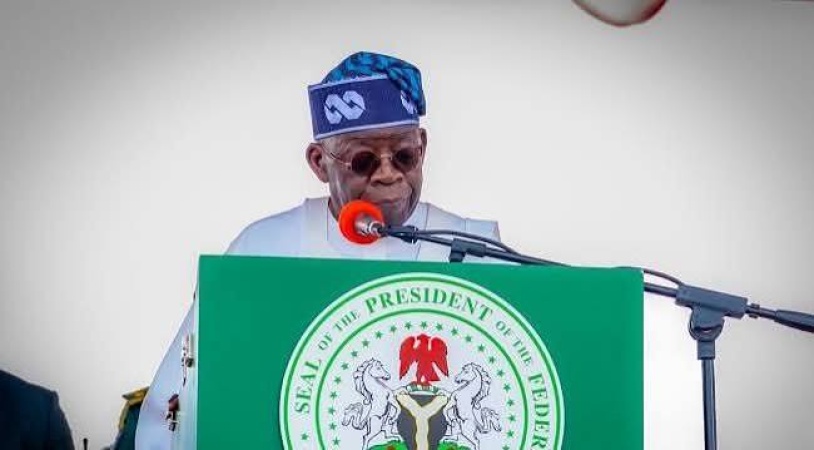
President Tinubu
Nigeria marked its 66th Independence Anniversary on Thursday, October 1, 2026.
President Bola Ahmed Tinubu, who returned to the country on Tuesday after a four-week vacation in Europe, delivered his address to Nigerians in commemoration of the important event.
Like last year, Tinubu’s administration had skipped the traditional Independence Day ceremonial military parade and opted for a low-key celebration which included nationwide Presidential broadcast, public lecture and religious services.
In his Independence Day broadcast, the President listed what he described as economic gains and other achievements recorded under his administration, saying the government’s central economic objective had now shifted from correcting the country’s economic course to achieving “shared and widespread prosperity.”
Daily Trust takes a look at some major issues that were either not discussed or were briefly mentioned in the President’s broadcast.
Insecurity
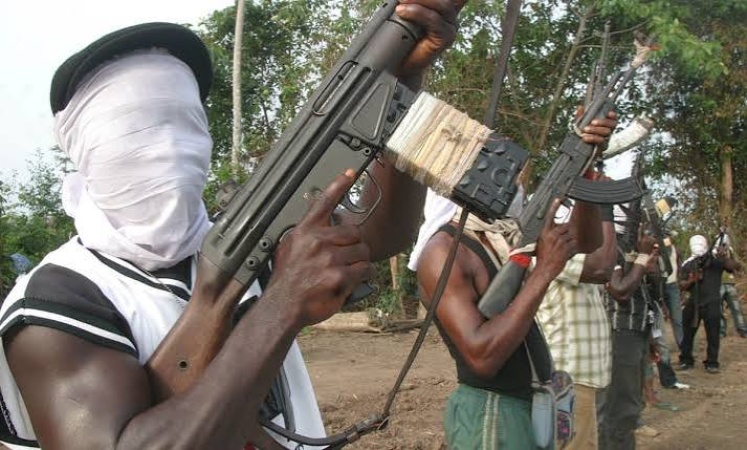
Although the President acknowledged the efforts of security forces in tackling insecurity in the country, he did not specifically speak about the rising wave of killings, kidnappings and attacks on communities across the country.
“We are grateful for the men and women of our Armed Forces and security services who place themselves in harm’s way so that the rest of us may live in peace.” Tinubu had said.
This is as several media reports indicated that more than 800 people were kidnapped in the last three months and several others killed in different attacks across the country.
According to Civil society organisations (CSOs) and the National Human Rights Commission (NHRC), more than 34,000 Nigerians have been killed in incidents linked to mass atrocities within the last five years.
The groups disclosed this during a Conflict-Specific Dialogue (CSD) held in Abuja on Thursday, May 28, 2026, where they called on authorities to stem the tide of rising insecurity in the country.
On Monday, just three days to the 66th Independence Day, parents and community members of Mussa and Lassa in Askira/Uba Local Government Area of Borno State threatened to storm the Presidential Villa in Abuja within six days if their abducted children were not rescued from Boko Haram captivity.
In August, scores of worshipers were killed after gunmen attacked four mosques in Borgu Local Government Area of Niger State.
The State Governor, Mohammed Umaru Bago, reportedly put the number of the abducted persons at 33, a figure the affected communities contradicted, releasing the names of 547 worshipers kidnapped during the attacks on Mosques in Dekara District.
Communities in Sokoto, Zamfara, Katsina, Benue, Borno, Plateau have continued to lament the rising spate of killings and abductions in their respective areas.
Cheaper transportation fares
President Tinubu had on August 27, after a meeting with governors, said the government would take steps that would crash transportation cost across the nation to cushion the effect of harsh economic conditions in the country.
Acknowledging the rising cost of intra-state transportation, the President said he had directed additional rollout of another 500 CNG refuelling stations across the country in addition to the 500 stations ordered earlier this year, bringing the number to 1,000 stations.
A few weeks after the promise, Tinubu, while giving an update on the promise for cheaper transportation from October 1, 2026, claimed that the initiative had already started yielding results, with Nigerians, according to him, now enjoying cheaper fares.
But many Nigerians have countered the President’s claims, saying the transportation fares have not reduced.
Although the President said in the broadcast that his administration’s priority was to bring down the cost of living by lowering the cost of production and transportation, he did not specifically provide evidence to back his claim that Nigerians have started enjoying cheaper transportation fares.
Subsidy savings
Since the removal of fuel subsidy by Tinubu during his inauguration, many Nigerians have continued to bear the brunt of the action, although the President has repeatedly defended the policy and warned that returning to the subsidy regime could take the country backwards.
In August 2026, the Federal Government said the removal of the petrol subsidy and the liberalisation of the naira had generated N15.8 trillion in savings for the federation between June 2023 and December 2025.
The Minister of Finance and Coordinating Minister of the Economy, Taiwo Oyedele, said the money saved from the reforms has created additional fiscal space for governments to fund critical programmes, pay workers and pensioners, invest in infrastructure, support vulnerable Nigerians and expand access to credit.
The President, in his broadcast, maintained that the reforms embarked upon by his administration (including subsidy removal on fuel) were necessary steps to strengthen the country’s economy.
“Our reforms did not create the weaknesses in our economy. They confronted them. Now, as certain influential but regressive voices would have us abandon the treatment and return ourselves to the abuse of addictive subsidies, we must resist their siren song. We must remember why we began this journey and how far we have already come.”
He, however, did not discuss the breakdown of the savings, where they had gone or how they had been invested to bring about improvement in the quality of life of Nigerians.
Electricity, Energy
During the 2023 presidential campaign, Tinubu had reportedly declared, “If I don’t give you constant electricity in four years, don’t vote for me for a second term.”
In March 2026, the Nigerian Independent System Operator (NISO) said the continued decline in electricity generation on the national grid as a result of persistent gas supply constraints was affecting several thermal power plants in the country.
In a statement, NISO said as at 05:00 hours of Thursday, 5th March 2026, total generation on the national grid stood at 3,940.53 MW, which was below the expected capacity, due to existing gas supply limitations impacting a number of generating stations.
According to the Nigerian Electricity Regulatory Commission (NERC), Nigeria’s 28 electricity power plants have a combined capacity to produce 13,625 megawatts (MW) of electricity but due to some challenges, an average of 5,395.72MW is produced per hour.
This means that more than 8,000MW of generation capacity lay idle across the 28 electricity generation companies connected to the national grid.
This is amid growing concerns among Nigerians over the rising cost of electricity and its stability.
The President, in his October 1, 2026 address, said gas would be used to power new industries
“We will use our gas to power new industries. We will support businesses that work to bring factories back to life in our great industrial centres.” Tinubu had said.
He, however, did not give detailed strategies or measures that the administration would adopt to ensure reduction in electricity costs and improving supply to households and businesses.
Borrowing, debt burden
The President also spoke about how, under his administration, the foreign reserves have been rebuilt and foreign exchange market stabilised, with the country recording, according to him, its highest revenue from non-oil exports in 2025.
“Oil theft is down. Inflation has fallen substantially from its peak. Our foreign reserves have been rebuilt, our foreign exchange market has stabilised, and in 2025, this country recorded its highest revenue from non-oil exports in its history, exceeding $6 billion. This is real money being made by real Nigerian businesses.” He had said.
However, the President did not explain how that could be used to service the country’s existing debts.
Daily Trust had reported that the Federal Government was seeking $1.5bn in fresh financing from the World Bank to enhance social protection, improve early childhood development and scale up climate-resilient interventions, amid concerns over Nigeria’s total public debt hitting N166.79tn.
What Nigerians say about the broadcast
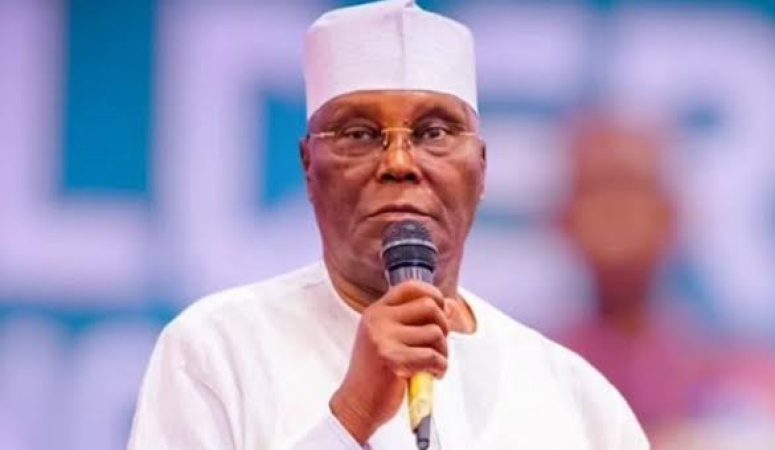
Presidential Candidate of the African Democratic Congress (ADC), Atiku Abubakar, on Thursday tackled Tinubu for declaring that Nigeria has entered an “age of prosperity”.
The former Vice President, in his Independence Day address delivered in Abuja on Thursday, said millions of Nigerians are still struggling with food, transport, healthcare, insecurity and other challenges.
“Today, Bola Tinubu told us that the ‘emergency treatment is over’ and the ‘age of prosperity’ has begun,” Atiku said.
“A President may announce a new chapter in a speech. He cannot announce food onto a family’s table or money into a worker’s pocket.
“Bola, where is this prosperity?”
Atiku said the President’s claim about drop in inflation did not reflect the realities on ground as prices of essential commodities continue to soar.
“Bola says inflation has fallen. A slower rise in prices does not restore what families have lost,” he said.
A former Minister of Youth and Sports, Solomon Dalung, described Tinubu’s Independence Day broadcast as disappointing, saying it failed to give clear account of the achievements recorded by the administration since its assumption of office in 2023.
Dalung, who spoke on Thursday during his appearance on Channels Television, said the President should have given Nigerians accountability.
He added that Tinubu should have used the opportunity to discuss, in broader perspective, issues such as insecurity, agriculture, economy, unemployment, hunger, poverty and Nigeria’s foreign policy.
“Because I think a speech by the president at our 66th anniversary—and he said three and a half years in office—should have concentrated more on giving Nigerians accountability; show concrete successes recorded so far by the reforms in the last three and a half years.
“But all that the president has done was to tell Nigeria the same stories: ‘Oh, be patient and expect our reforms will yield.”
Commenting on the President’s cancer metaphor, Dalung said, “The question is, when shall the cancer victim recover? Because it does appear that the surgery has put him in a coma.”
He added, “So if we have recorded 4% economic growth, how has that been able to affect an average Nigerian? Because it has to be translated into putting something before the ordinary Nigerians.”
Further picking holes in the speech as not having addressed the issue of insecurity, Lalung cited Plateau as one of the states already running what he called full-blown war.
“Plateau State, for example, we are already running a full-blown war, because every day there is one attack or the other. Every day there are mass burials, so we are at war,” he said.
A social media commentator, Muhammad Al-amin Usman, also faulted the broadcast, saying it failed to dwell on key challenges affecting Nigerians, especially insecurity. (Daily Trust)