ADAD
ADAD
Updating your news feed...
NEWS EXPRESS is Nigeria’s leading online newspaper. Published by Africa’s international award-winning journalist, Mr. Isaac Umunna, NEWS EXPRESS is Nigeria’s first truly professional online daily newspaper. It is published from Lagos, Nigeria’s economic and media hub, and has a provision for occasional special print editions. Thanks to our vast network of sources and dedicated team of professional journalists and contributors spread across Nigeria and overseas, NEWS EXPRESS has become synonymous with newsbreaks and exclusive stories from around the world.









.webp)












Loading banners
Loading banners...

The environmental organization Greenpeace reported Monday that the impact of the extreme heat and weeks of drought has cost the German economy at least €36 billion ($42 billion), amounting to 0.8 to 0.9% of the economic output.
Greenpeace calculated the economic damage resulting from crop failures, wildfires and healthcare costs, as well as productivity losses and education costs caused by the heat.
"This summer of heat and drought was a disaster—for millions of people and for the economy," said Greenpeace financial expert Mauricio Vargas in a statement.
“Even though this natural disaster hasn’t left behind mountains of rubble, the extent of the damage is staggering,” he added.
Vargas called on the federal government to respond “with the seriousness the climate crisis demands” at its cabinet retreat.
“The numbers are unmistakable: We can’t afford to keep going this way,” he said.
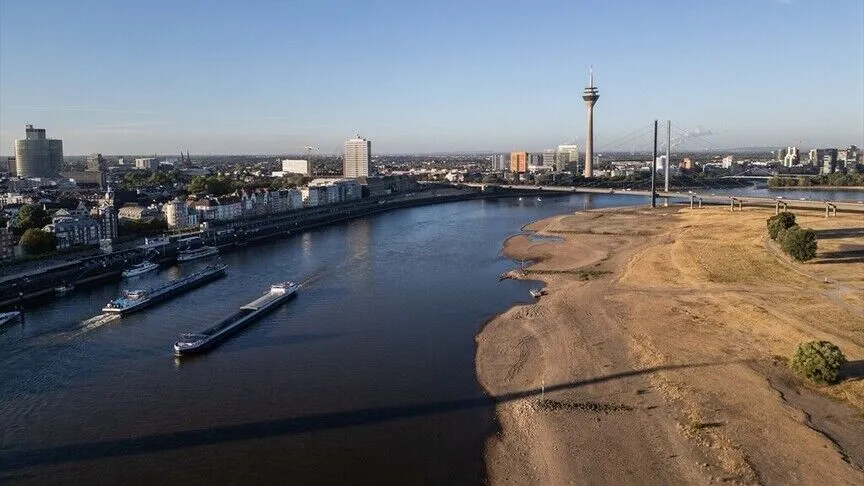
Due to weeks of drought, the harvest in some regions of Germany is expected to be significantly smaller. Inland waterway shipping had to be suspended in some areas as a result of extremely low water levels.
The sectors most affected were those that rely on large quantities of raw materials and intermediate products—such as the chemical, steel and petroleum industries. According to estimates, tens of millions of work hours were lost due to the heat.
Greenpeace identified this as the area with the highest total losses: “With an estimated 25 days of extreme heat, heat-related productivity losses and downtime amount to €10.8 billion euros ($12.60 billion),” the study stated.
This is followed by forest damage, estimated at €5 billion ($5.83 billion) to €7.5 billion ($8.75 billion), and economic losses due to health-related absences, estimated at €6.9 billion $8.05 billion. However, agriculture, inland waterway transport, and education are also significantly affected.
The organization emphasized that some of the serious consequences cannot yet be quantified, including the impact on the energy system due to a lack of cooling water or heat-induced increases in ozone and particulate matter levels.
“The real costs of extreme weather events like this hot summer far exceed our calculations,” said Greenpeace expert Vargas.
“By comparison, investments in ambitious climate protection shrink to a ridiculous level,” he added. (AA)