ADAD
ADAD
Updating your news feed...
NEWS EXPRESS is Nigeria’s leading online newspaper. Published by Africa’s international award-winning journalist, Mr. Isaac Umunna, NEWS EXPRESS is Nigeria’s first truly professional online daily newspaper. It is published from Lagos, Nigeria’s economic and media hub, and has a provision for occasional special print editions. Thanks to our vast network of sources and dedicated team of professional journalists and contributors spread across Nigeria and overseas, NEWS EXPRESS has become synonymous with newsbreaks and exclusive stories from around the world.






.webp)
.webp)



Loading banners
Loading banners...

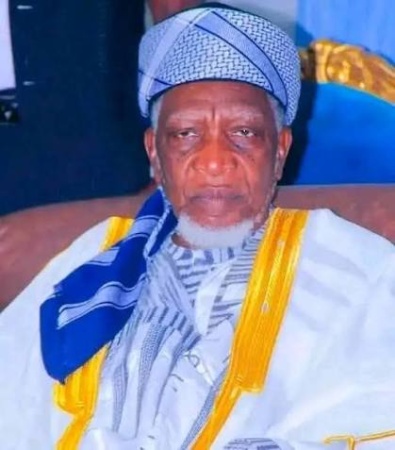
Prominent Islamic leader, Sheikh Yahaya Jingir
Outrage has continued to greet provocative comments by prominent Islamic leader, Sheikh Yahaya Jingir, urging Muslims to vote again for President Bola Ahmed Tinubu’s Muslim-Muslim ticket in 2027 to prove that Muslims are numerically superior to Christians in Nigeria.
Jingir made the call at an event attended by some All Progressives Congress (APC) governors, including Abba Yusuf of Kano State and Umar Namadi of Jigawa State, according to a video going viral yesterday, Sunday, August 9, 2026.
He stated that Muslims should continue supporting the Muslim-Muslim ticket because it demonstrates that they are more numerous than Christians in Nigeria. He was also reported to have urged Muslims to “show infidels their limit.”
Among the early set of people to condemn Jingir’s comments was a former Minister of Youth and Sports, Solomon Dalung, who described it as a distortion of democratic politics.
Warning that Nigeria risks sliding into what he called “a dangerous form of religious majoritarianism” if political leadership becomes a contest over which faith has more followers, Dalung, in a statement on his verified Facebook wall yesterday, questioned the wisdom of reducing Nigeria’s complex political and socioeconomic problems to a religious headcount.
The former minister declared that Nigeria is not a religious trophy to be claimed by whichever faith can establish a numerical advantage. He noted that a Muslim-Muslim ticket does not put food on a Muslim family’s table, secure communities from kidnappers, create jobs, or repair the country’s collapsing infrastructure.
He added that it does not rescue a kidnapped Muslim farmer, educate a Muslim child, or make fuel, food, or medicine affordable; it also does not fix bad roads, restore reliable electricity or provide functioning hospitals.
For Dalung, the more troubling issue is the language of religious domination. Questioning who Nigerians are expected to regard as “infidels,” he warned against turning fellow citizens into religious enemies.
He also pointed to Christians who have supported Muslim candidates, Muslims who reject religious politics and millions of Nigerians whose principal concern is competent leadership rather than the religious identity of those occupying political office.
Dalung warned that once political arguments become centred on who has the larger religious population, democracy risks being reduced to what he called “religious arithmetic.”
The former minister insisted that supporters of a Muslim-Muslim ticket should defend it on measurable issues such as competence, security, justice, economic growth and good governance.
He rejected the suggestion that religious identity should determine who deserves political power or who should be made to feel politically subordinate.
According to Dalung, Nigeria belongs to Muslims, Christians and citizens who subscribe to neither faith, stressing that no Nigerian should be told to “know their limit” because of their religion.
He further called for a political culture in which leaders compete over their ability to deliver security, jobs, affordable food, quality education, healthcare and justice, rather than“the majority in a mosque or in a church.”
Also reacting, Nigeria’s Ambassador-designate to South Africa, Femi Fani-Kayode, said they were “highly provocative” and warned against what he described as extremist rhetoric.
“I have immense respect for Sheikh Jingir, but I am constrained to point out that the extremist rhetoric he has indulged in here is most unhelpful, and neither is it true,” Fani-Kayode wrote on X yesterday.
“Worse is the fact that it is highly provocative. Kindly take note that it is a very slippery and dangerous slope to take and is best avoided.”
Fani-Kayode insisted that “Nigeria is not a Muslim country and neither is it a Christian country. She is a secular and multi-religious state comprising both Christians and Muslims in equal numbers and that is our strength.”
Fani-Kayode said his support for a Muslim-Muslim ticket in 2027 is based on the candidates’ qualities rather than their religion.
He added: “We are supporting a Muslim/Muslim ticket for 2027, as we did in 2023, only because of the calibre, ability, sincerity of purpose, character, utility and electoral strength of our presidential and vice-presidential candidates and their ability to deliver and not because they are Muslims.”
Weighing in on the controversy, lawyer and political activist Deji Adeyanju described Jingir’s rhetoric as divisive and warning that religious tension could further threaten Nigeria’s unity.
In a statement on Monday, Adeyanju said Nigeria’s religious and cultural diversity requires leaders, particularly influential religious figures, to promote tolerance and peaceful coexistence rather than deepen divisions between Christians and Muslims.
“Nigeria is a plural society, and our Constitution recognises and protects that plurality,” Adeyanju said.
He urged religious leaders to recognise the country’s diversity and use their influence to promote peace, unity and respect for different faiths.
Adeyanju also argued that Nigerians should assess political leadership based on its impact on citizens’ lives rather than religious identity.
“Has the Muslim-Muslim ticket put food on the tables of Nigerians, solved insecurity, unemployment, inflation, or strengthened the Nigerian passport and Nigeria’s standing in the world?” he asked.
He said the country’s political discourse should focus on issues affecting Nigerians, including economic hardship, insecurity, unemployment and the country’s international standing.
According to Adeyanju, rhetoric that pits one religious group against another risks aggravating existing divisions and encouraging further social tension.
“We must look beyond religion and judge leadership by its impact on our lives as Nigerians,” he said.
He called on religious leaders and politicians to refrain from rhetoric that could provoke citizens and urged Nigerians to respect the country’s religious, cultural and ethnic diversity.
“Clerics and politicians must stop provoking law-abiding citizens and learn to respect our different religions, cultures and ethnicities. Nigeria belongs to all of us,” Adeyanju said. (Based on reports y NAN and The Guardian)