ADAD
ADAD
Updating your news feed...
NEWS EXPRESS is Nigeria’s leading online newspaper. Published by Africa’s international award-winning journalist, Mr. Isaac Umunna, NEWS EXPRESS is Nigeria’s first truly professional online daily newspaper. It is published from Lagos, Nigeria’s economic and media hub, and has a provision for occasional special print editions. Thanks to our vast network of sources and dedicated team of professional journalists and contributors spread across Nigeria and overseas, NEWS EXPRESS has become synonymous with newsbreaks and exclusive stories from around the world.













Loading banners
Loading banners...

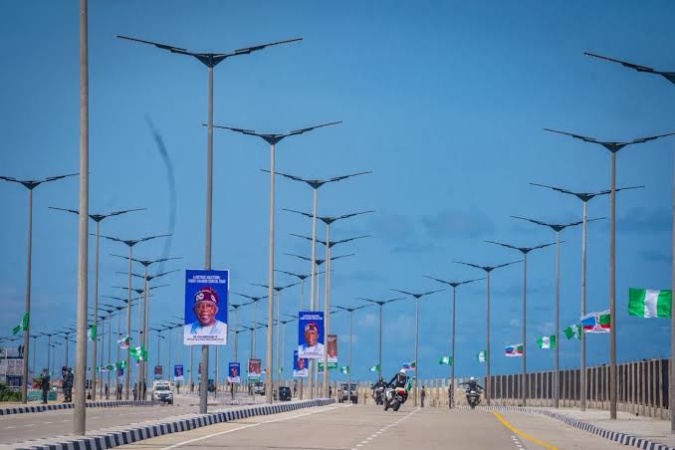
Lagos-Calabar Coastal Highway
The Federal Government’s decision to demolish buildings within a 15-metre setback from the Lagos-Calabar Coastal Highway to accommodate service lanes has sparked fresh anxiety and debate among property owners, professionals and investors over the design integrity, planning, and execution of one of Nigeria’s most ambitious road infrastructure projects.
The demolition, which will affect between 1700 and 2700 houses, is already a source of apprehension for residents and landlords on the extended corridor.
However, stakeholders welcome the update with mixed reactions. While transport planners acknowledge that properly designed service lanes would deliver substantial long-term benefits along the corridor, others suspect a faulty design that warrants service-lane redress, with attendant consequences for both the government and property owners.
Minister of Works, David Umahi, yesterday disclosed that structures within the newly identified setback would be removed to make way for service roads designed to improve accessibility and traffic safety along the corridor.
Umahi disclosed that some buildings would have to give way to accommodate service lanes and drainage channels, adding that affected property owners would be compensated in line with the law.
A conservative estimate from stakeholders indicated that there are at least 700 houses on the right-of-way and an additional 1,700 within the 15-metre setback.
An Estate Surveyor and valuer, Olusola Enitan, noted that the casualties could extend to 2700 houses, with affected households ranging between approximately 3,400 and 10,800. At five persons per household, Enitan noted that this brings the number of affected residents to between 17,000 and 54,000.
While the Federal Government maintains that the additional lanes are necessary to support efficient traffic movement and provide access to adjoining communities and developments, the announcement has raised questions on whether the service lanes formed part of the original highway design or were introduced after construction had commenced.
It reiterated that the project remains a transformational project expected to improve regional connectivity, stimulate tourism, facilitate trade and unlock new economic opportunities along Nigeria’s southern coastline.
Recall that the President Bola Tinubu-led administration began the project in 2023 as one of the government’s flagship infrastructure projects. Construction officially commenced in March 2024, with the first phase covering 47.47 kilometres from Ahmadu Bello Way in Victoria Island, Lagos, to Eleko Junction in Ibeju-Lekki. The project is being executed by Hitech Construction Company Limited under an Engineering, Procurement, Construction and Financing (EPC+F) arrangement.
The highway is planned to span about 700 kilometres, traversing nine coastal states: Lagos, Ogun, Ondo, Edo, Delta, Bayelsa, Rivers, Akwa Ibom, and Cross River.
When the project was announced, government projections suggested the entire highway could cost approximately $11 to $12 billion, equivalent to roughly N14 to N15 trillion.
The first 47.47km section was awarded at N1.068 trillion, translating to more than N22 billion per kilometre. However, the government said this figure includes compensation, bridges, interchanges, shoreline protection, utility relocation, drainage, lighting and other ancillary work.
Speaking on the new development, built environment experts stated that on major expressway projects, service roads are typically incorporated during the conceptual and detailed design stages. Their inclusion determines the overall right-of-way, influences environmental and social impact assessments, guides land acquisition and compensation, and shapes engineering drawings before construction begins.
If the service lanes were included in the original design, they argued that the affected right-of-way should have been identified and acquired before construction started. In that case, the latest demolition exercise would suggest that land acquisition is being implemented in phases rather than all at once.
However, if the service lanes represent a design revision introduced after construction began, they warned that the development could indicate shortcomings in the initial planning process, including possible deficiencies in traffic forecasting, stakeholder engagement, or engineering design. That such changes often increase project costs, extend construction timelines and create uncertainty for communities and investors.
They noted that the property owners stand to lose commercial frontage, rental income and redevelopment opportunities, while businesses along the corridor could experience prolonged disruption during demolition and reconstruction.
Although compensation may be provided where applicable, real estate experts argued that monetary payments rarely fully compensate for lost business opportunities or diminished property values.
The uncertainty could also affect investor confidence in major infrastructure corridors, particularly where project boundaries appear to evolve after construction has commenced. Developers and financial institutions generally rely on certainty regarding government infrastructure plans before committing to long-term investments.
However, transport planners acknowledge that properly designed service lanes can deliver substantial long-term benefits. By separating local traffic from high-speed through traffic, service roads improve road safety, reduce congestion, provide access to adjoining neighbourhoods and support future commercial development along the corridor.
Planning experts argued that greater public disclosure of approved engineering drawings, right-of-way plans and environmental assessments would help clarify whether the current demolition exercise reflects implementation of the original design or a significant modification introduced during construction.
A former President of the Association of Town Planning Consultants of Nigeria (ATOPCON), Mr Muyiwa Adelu, told The Guardian that service lanes are indispensable to the long-term functionality and safety of the Lagos-Calabar Coastal Highway, arguing that they should have formed part of the project’s original design.
According to him, incorporating service lanes after construction has commenced would result in avoidable social and economic disruption, including the demolition of existing properties. “In the real sense, what will make the coastal highway sustainable is the provision of service lanes. They ought to have been part of the original road design. If the government is only incorporating them now, it will cause social and economic hardship,” he said.
Adelu recalled that during the planning of the Oniru section, a 50-metre right-of-way was provided, including service lanes on both sides of the carriageway. “We worked on the Oniru section and had a 50-metre right-of-way that included service lanes on both sides. I am not sure whether the same provision was observed on the Lekki-Okun-Ajah route.
“It should have been part of the initial plan and implemented long ago, rather than allowing people to build within the corridor. At the same time, some people erect structures without obtaining the necessary development permits,” he said.
He warned that if service lanes were not included in the original design, the resulting demolition of properties would be counterproductive, particularly at a time when Nigeria faces a severe housing shortage.
“Without service lanes, you cannot safely exit an expressway to access adjoining communities or properties anywhere in the world. The critical question is whether the affected buildings received valid planning approvals.
“If the owners have valid permits, the government will have to pay substantial compensation. If they do not, they may have little legal basis for compensation. Nevertheless, for the road to function effectively and safely, service lanes are essential,” he added.
Adelu urged the government to adequately compensate affected property owners, provide alternative land where necessary, and allow sufficient time for relocation before demolition begins. “The government should ensure those affected receive adequate compensation, including land where appropriate, enough funds to rebuild, and sufficient time to relocate. That is the humane approach,” he said.
Also commenting, former President of the Nigerian Institution of Structural Engineers (NiStructE), Dr Victor Oyenuga, said federal highways are protected by statutory rights-of-way, which should remain free of development.
“By law, federal expressways have prescribed rights-of-way before adjoining plots can be allocated. Where people build within the designated corridor, the relevant authority may remove such structures. It is generally assumed that the setback on both sides of the highway belongs to the Federal Government,” he said.
Oyenuga, however, noted that where affected buildings were approved by the relevant planning authority, property owners may have a basis to seek compensation or legal redress.
The key question is whether the buildings were legally approved. If they received valid approvals from the Lagos State Government, the owners could be entitled to compensation and may seek judicial remedy,” he said.
On claims by the contractor, Hitech Construction Company Limited, that indiscriminate development on wetlands and indiscriminate refuse dumping contribute to flooding in Lagos, Oyenuga agreed that encroachment on natural flood plains has serious consequences. “There is what is known as a flood plain. Once people build on it, they obstruct the natural flow of water, which inevitably results in severe flooding,” he said.
Estate surveyor and valuer, Enitan, added that the proposed construction of service lanes goes beyond a policy adjustment, describing it as a serious test of planning integrity and public confidence.
According to him, “The proposed service lanes are not merely a policy shift; they represent a profound breach of planning integrity and public trust. Competent engineering does not discover its own right-of-way midway through construction. Infrastructure of this magnitude should not be built on improvisation.”
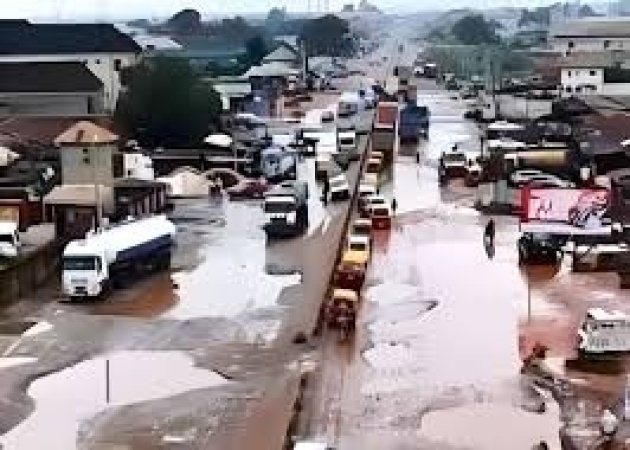
Enitan also faulted attempts to attribute the recent flooding in communities adjoining the highway solely to indiscriminate refuse dumping and poor environmental practices. “It is equally unacceptable to blame the devastating flooding in neighbouring communities on ‘indiscipline’ and ‘refuse dumping’. That is a deflection that ignores basic hydrology.
“These communities existed for decades without experiencing catastrophic flooding. Large-scale highway projects alter natural watercourses, change catchment behaviour and disrupt existing drainage patterns. When neighbourhoods that have never flooded suddenly become inundated, the explanation should begin with engineering, not excuses,” he said.
He called for an independent, multidisciplinary review of the highway’s engineering design, hydrology and environmental impact assessment, urging that the findings be made public.
“There should be an immediate independent review of the project’s engineering, hydrology and environmental impact. Any identified design deficiencies should be transparently corrected, while communities that have suffered demonstrable losses deserve fair compensation,” Enitan added.
Meanwhile, speaking in Lagos after inspecting flood-affected communities along the highway corridor with members of the Senate and House of Representatives Committees on Works, officials of the Lagos State Government and Environmental and Social Impact Assessment (ESIA) specialists, the Minister of Works, David Umahi, said the proposed service lanes and additional drainage infrastructure formed part of broader measures to tackle persistent flooding in the area.
said the Federal Government would implement critical drainage and flood-control projects in affected communities while ensuring strict compliance with ESIA requirements to protect lives, property and critical national infrastructure.
According to Umahi, investigations indicated that flooding in parts of Lagos resulted largely from blocked and ageing drainage channels, indiscriminate refuse dumping, poor urban planning and the construction of buildings on low-lying terrain without adequate drainage provisions.
He dismissed claims that the Lagos-Calabar Coastal Highway caused the recent flooding, insisting that the project’s Environmental Impact Assessment (EIA) underwent international scrutiny and complied with global engineering and construction standards.
The minister attributed the flooding to ageing drainage infrastructure, illegal refuse disposal and the failure to integrate ESIA requirements into the development of estates, beachfront properties and residential buildings.
He urged the Lagos State Government and relevant environmental agencies to expand flood-control infrastructure, particularly around Alpha Beach and other coastal communities where, he said, developments had been approved without adequate drainage and flood-mitigation measures.
Umahi added that President Bola Tinubu’s directive to address flooding nationwide had accelerated efforts to protect vulnerable communities and critical infrastructure. He maintained that the coastal highway itself had helped reduce flood risks by elevating the carriageway above sea level in line with engineering recommendations contained in the project’s ESIA.
minister reaffirmed the Federal Government’s commitment to delivering durable road infrastructure and announced plans for a joint technical assessment with the Lagos State Government to strengthen drainage systems along the highway corridor.
Also appealed to residents to stop dumping refuse into canals and drainage channels, stressing that public cooperation was essential to protecting both the highway and surrounding communities.
In addition, Umahi disclosed plans to install surveillance cameras, wind-monitoring stations, parking facilities, tourism infrastructure and other modern amenities along the corridor, while enforcing stricter development control measures to ensure the project meets international standards.
Earlier, the Minister of State for Works, Bello Muhammad, said the inspection followed President Tinubu’s directive to assess flood-affected areas along the coastal highway corridor and determine both the immediate and underlying causes of the flooding. According to him, the assessment established that the flooding was not caused by the highway project.
Also, the Federal Government and the Lagos State government jointly dismissed allegations that the ongoing Lagos-Calabar Coastal Highway was responsible for flooding in parts of Lagos, describing the claims as false and driven by misinformation circulating on social media.
The position was reiterated during a courtesy visit by Umahi and members of the National Assembly to Lagos State Governor, Babajide Sanwo-Olu, who commended President Tinubu for initiating what he described as a transformative infrastructure project capable of boosting Nigeria’s economy and improving citizens’ quality of life.
“Lagos is a coastal city. We will always experience some level of flooding, and we only pray that it does not become severe. These are natural occurrences associated with coastal environments across the world,” Sanwo-Olu said.
He explained that exceptionally heavy rainfall could temporarily overwhelm drainage systems but noted that floodwaters typically recede after some time.
The governor blamed indiscriminate refuse disposal for worsening urban flooding, saying blocked drainage channels remain one of the leading causes of flooding in the state. He disclosed that the government had commenced a major clean-up of the Lagos-Badagry Expressway corridor and would continue to enforce environmental regulations to protect road and drainage infrastructure.
Sanwo-Olu also revealed that the state had signed an agreement with a mechanised street-cleaning company to deploy specialised sweeping machines for the daily maintenance of the coastal highway.
He stressed the importance of constructing service roads along the corridor to improve accessibility and protect the integrity of the main carriageway, acknowledging that some structures might have to be removed to accommodate the additional infrastructure. (The Guardian)