

ADVERTISEMENT

ADVERTISEMENT
Updating your news feed...

NEWS EXPRESS is Nigeria’s leading online newspaper. Published by Africa’s international award-winning journalist, Mr. Isaac Umunna, NEWS EXPRESS is Nigeria’s first truly professional online daily newspaper. It is published from Lagos, Nigeria’s economic and media hub, and has a provision for occasional special print editions. Thanks to our vast network of sources and dedicated team of professional journalists and contributors spread across Nigeria and overseas, NEWS EXPRESS has become synonymous with newsbreaks and exclusive stories from around the world.
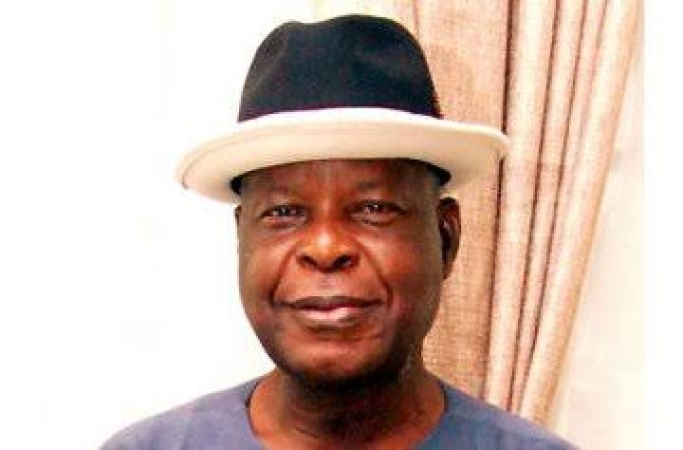
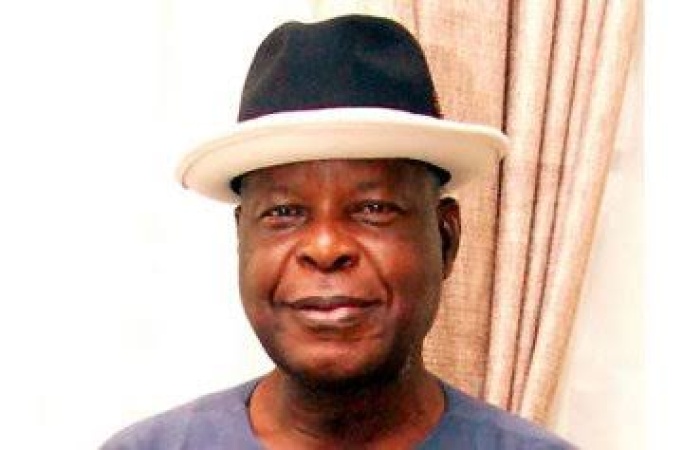
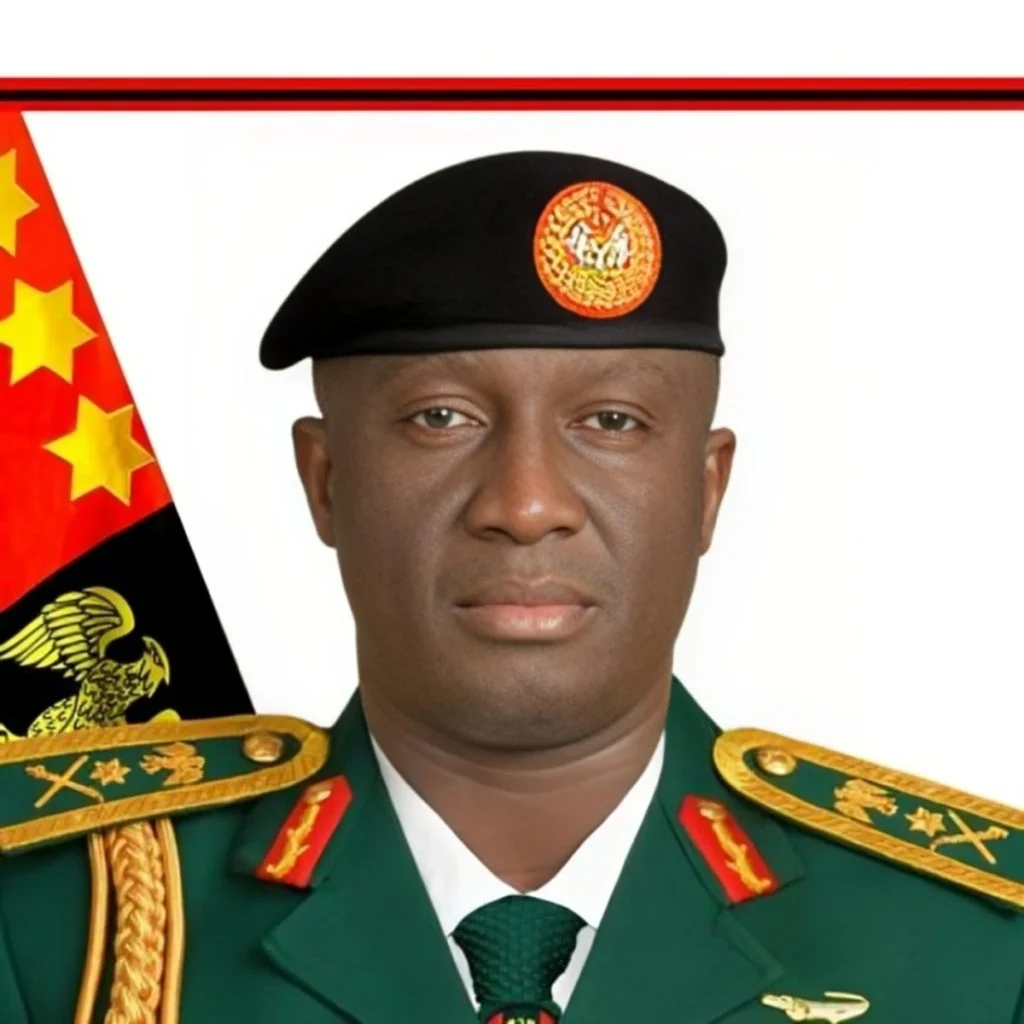
Ex-IGP, Sir Mike Okiro
By SUPREME IBITOMI
There is a timeless saying that "the best way to predict the future is to create it." Yet history also teaches that some rare individuals possess the gift of seeing tomorrow while others remain preoccupied with today. They are the watchmen on the nation's walls, sounding alarms long before danger appears on the horizon. Sir Mike Mbama Okiro belongs to this distinguished class of leaders.
Having carefully examined Sir Mike Okiro's prophetic stance and far-reaching proposal on school security in 2012, I feel compelled to contribute my voice to a conversation that has become increasingly relevant in present-day Nigeria.
In every generation, Providence raises men and women whose vision stretches beyond the immediate landscape. Such individuals recognize gathering storms while the skies still appear clear. Their ideas often seem ahead of their time, only to be vindicated by history. Sir Mike Okiro, former Inspector-General of Police, is one such statesman whose remarkable foresight continues to illuminate Nigeria's security discourse years after leaving office.
As Inspector-General of Police from 2007 to 2009, Sir Mike Okiro displayed uncommon strategic depth at a period when terrorism had not yet become the monstrous threat it is today. While many were focused on prevailing security concerns, he was already studying the shadows of future dangers. Understanding the changing dynamics of global security, he sponsored and deployed Nigerian police officers to Israel and other countries for specialized training in counter-terrorism and anti-terrorism operations. He equally established an Anti-Terrorism School in Nonwa, Rivers State, to strengthen institutional preparedness.
These were not actions taken in response to a crisis; they were preventive measures rooted in foresight. Long before terrorism became a household concern in Nigeria, Okiro was preparing officers for a battle many had not yet imagined. His approach echoed the wisdom of military strategist Sun Tzu, who observed that "victorious warriors win first and then go to war." Sir Mike Okiro understood that security is not merely about reacting to threats but anticipating them.
His visionary leadership was equally evident during the turbulent years of the Niger Delta crisis. At a time when militant activities threatened national stability and severely disrupted oil production—the lifeblood of Nigeria's economy—Sir Mike Okiro proposed what was then considered a bold and unconventional solution: amnesty for repentant militants.
Rather than relying solely on force, he advocated dialogue, rehabilitation and reintegration. He understood that sustainable peace is often built not on the battlefield but around the negotiating table. The eventual implementation of the Amnesty Programme helped restore relative peace to the region, revived investor confidence and significantly improved oil production. Today, the Niger Delta Amnesty Programme stands as one of Nigeria's most significant conflict-resolution initiatives, further validating the wisdom of his proposal.
Yet perhaps one of Sir Mike Okiro's most prophetic interventions came in 2012 through the Security Awareness and Justice Foundation (SAJF), where, alongside the highly respected administrator Mr. Sunny Irabor as Executive Secretary, he unveiled a comprehensive school security initiative.
The programme was designed to train teachers in security awareness, emergency preparedness and safety protocols. These trained teachers would in turn transfer the knowledge to students, creating a culture of vigilance within schools. The initiative also proposed the deployment of specially trained police officers to provide guidance and protection for educational institutions across the country.
At the time, the proposal may have appeared ambitious. Yet it was conceived years before the heartbreaking abduction of the Chibok schoolgirls and before the wave of attacks on schools that would later shock the conscience of the nation and attract global attention. Okiro saw vulnerabilities where others saw routine operations. He recognized the cracks in the wall before the structure began to crumble.
Sadly, this visionary initiative never saw the light of day.
Like many transformative ideas in Nigeria, the proposal became trapped in the web of bureaucracy. Reports indicate that resistance from certain officials within the Ministry of Education prevented its adoption and implementation. Consequently, a programme capable of transforming school security nationwide remained confined to paper.
Today, with the benefit of hindsight, one cannot help but ask a painful question: How many tragedies could have been prevented had this proposal been embraced when it was first introduced?
The years that followed brought recurring attacks on schools, mass kidnappings of students and increasing threats to educational institutions across the country. Each incident served as a grim reminder that Sir Mike Okiro's proposal was not merely a policy recommendation—it was an early warning signal. Unfortunately, the warning went unheeded.
As the American civil rights leader Martin Luther King Jr. once said, "We are now faced with the fact that tomorrow is today." The future Sir Mike Okiro anticipated has arrived, making his school security initiative more relevant than ever.
A careful examination of his public service record reveals a consistent pattern: strategic foresight. Whether in counter-terrorism preparedness, conflict resolution in the Niger Delta or school security awareness, Sir Mike Okiro repeatedly demonstrated an exceptional ability to identify emerging threats and develop practical solutions before they escalated into national crises.
Nigeria today stands at a difficult crossroads. Terrorism, banditry, kidnapping, communal conflicts and attacks on critical infrastructure continue to challenge national stability. In such times, nations must draw from the reservoir of wisdom possessed by experienced statesmen whose ideas have been tested by time.
Sir Mike Okiro's record speaks with remarkable clarity. His initiatives have consistently proven relevant, impactful and forward-looking. His career reminds us that visionary leadership is not measured merely by offices held but by solutions provided and legacies created.
More importantly, this may be the most appropriate time for the Federal Government to revisit Sir Mike Okiro's 2012 School Security Proposal. The realities confronting educational institutions today make the initiative not only relevant but urgently necessary. Dusting off the proposal, reviewing its recommendations and implementing its core objectives could significantly strengthen security consciousness, preparedness and resilience within Nigeria's educational system.
There is an African proverb which says, "When the roots of a tree begin to decay, it spreads death to the branches." Schools are the roots of any nation's future. Protecting them is not optional; it is a national imperative.
Nigeria stands to benefit immensely from the insights of a man whose vision has repeatedly anticipated future challenges and whose ideas have contributed meaningfully to shaping the country's security landscape. In a nation searching for durable solutions to complex security problems, Sir Mike Mbama Okiro remains a priceless national asset—a visionary whose wisdom should not be left on the shelf, but brought to the table where the future of Nigeria's security is being shaped.
History has a way of vindicating those who see beyond the horizon. Sir Mike Okiro's story is one such example. The question now is whether Nigeria will finally listen.
•Supreme Ibitomi, a security and public affairs analyst, can be reached via WhatsApp or SMS on +234 803 353 4321.










.webp&w=256&q=75)
.webp&w=256&q=75)