ADAD
ADAD
Updating your news feed...
NEWS EXPRESS is Nigeria’s leading online newspaper. Published by Africa’s international award-winning journalist, Mr. Isaac Umunna, NEWS EXPRESS is Nigeria’s first truly professional online daily newspaper. It is published from Lagos, Nigeria’s economic and media hub, and has a provision for occasional special print editions. Thanks to our vast network of sources and dedicated team of professional journalists and contributors spread across Nigeria and overseas, NEWS EXPRESS has become synonymous with newsbreaks and exclusive stories from around the world.














Loading banners
Loading banners...


Younger sister of former Power Minister, Adebayo Adelabu, Mrs Olaide Adegoke John-Paul and her twin
The abduction of Mrs Olaide Adegoke John-Paul, younger sister of former Power Minister Adebayo Adelabu and her twin sons, was linked to a sophisticated kidnapping syndicate that had planned a N100 million ransom. The plot, however, was foiled by a coordinated police operation that led to multiple arrests, exposing the gang’s surveillance network and operational strategy, reports YINKA ADENIRAN.
Save for the timely intervention of security operatives, the abductors of Mrs Olaide Adegoke John-Paul — the 42-year-old younger sister of former Minister of Power, Chief Adebayo Adelabu — and her 11-year-old twin sons, Peter and Paul — had concluded plans to demand a N100 million ransom for their release, The Nation has learnt. The suspects, currently under investigation at the Oyo State Police Command Headquarters, Eleyele, Ibadan, reportedly planned to delay contact with the family to heighten fear and psychological pressure before making their ransom demand.
That strategy was, however, disrupted following the arrest of Segun Balogun, popularly known as Alawaye, by operatives of the Anti-Kidnapping Squad (AKS) of the Oyo State Police Command. He was initially treated as a peripheral suspect, but later emerged as a central figure in the investigation. At the time of his arrest, investigators had not fully established the extent of his involvement. It took two additional days of intensive interrogation and digital analysis to confirm his key operational role in the kidnapping network.
Segun’s arrest followed growing concerns over a surge in kidnappings within the Ibadan metropolis and along the Ibadan–Ijebu Ode corridor. Intelligence reports had linked him to suspicious activities, particularly after he allegedly jumped bail in connection with a prior kidnapping-related case. This development prompted intelligence-led surveillance on his movements and associations. His arrest reportedly unsettled members of the gang, who feared they were being tracked. In response, they allegedly began making hurried plans to contact the victims’ family and initiate ransom negotiations. However, operatives of the Force Intelligence Department–Intelligence Response Team (FID-IRT), working with other tactical units of the Oyo State Police Command, moved swiftly to disrupt the plan before any contact was made. Sources said that shortly after Segun’s arrest became known within the group, the gang leader, Wale Abolalewa, popularly known as Oloro, went underground. He reportedly avoided conventional phone calls and internet-based communication, relying instead on WhatsApp messages to reduce traceability.
According to a security source, Oloro suspected that law enforcement agencies were closing in on him and deliberately restricted his communication channels. Following the initial breakthrough, investigators intensified intelligence gathering, which led to the arrest of a second suspect, Dare Oyedele, popularly known as Solution, an automobile electrician. Operatives reportedly traced him to a popular bar in the Podo area of Ibadan, where he was relaxing. Known to be a close associate of Oloro, he was questioned about the gang leader’s whereabouts, but claimed he had been unable to reach him.
Unbeknownst to him, events were already unfolding rapidly. While operatives were still engaging Solution, a voice note from Oloro arrived on his phone, stating that he would be at the same bar at a specified time and requesting a meeting there. Acting on this information, operatives laid an ambush at the location. Oloro arrived at the venue unsuspectingly and was immediately arrested.
Despite several rounds of interrogation following his arrest on Thursday, Segun reportedly remained silent on his role and refused to disclose details of other accomplices. It was only after subsequent arrests within the syndicate that key operational links began to emerge. Investigators also recovered additional voice notes allegedly exchanged between Oloro and Segun, including one in which Oloro complained about the non-delivery of a rifle he had paid for. The message, according to sources, further strengthened evidence of their operational connection. Security sources added that Oloro appeared unaware that Segun had already been arrested when the message was sent. However, Segun’s failure to respond reportedly heightened his suspicions that something had gone wrong within the network.
Recovered audio conversations between Segun and Oloro have revealed how the kidnappers arrived at the N100 million ransom demand for the release of Mrs Olaide Adegoke John-Paul and her 11-year-old twin sons. According to the recordings, both suspects agreed that N100 million was within what they believed the family could reasonably afford, based on their surveillance and profiling of the victims over several weeks. Investigators said the assessment was not arbitrary. It was the outcome of sustained intelligence gathering on the victim’s movements, household routines, and perceived financial capacity.
Segun, who functioned as the gang’s operational driver and field informant, reportedly monitored Olaide’s daily movements between her residence and the school attended by her twin sons. The surveillance, which lasted several consecutive days, was accompanied by daily situation reports sent to Oloro. He was also said to have physically taken the gang leader to the residence of members of the Adelabu extended family as part of preparatory reconnaissance ahead of the June 3 abduction.
To residents who knew him, Segun appeared to be a routine commercial driver operating from a motor park around the World Oil axis of Iwo Road, Ibadan, where he ran an interstate transport business. He was known for conveying passengers across Ibadan and neighbouring routes. However, investigators allege that beneath this public identity lay a more covert role. Segun was reportedly involved in providing logistical support to the kidnapping syndicate, including transporting gang members to surveillance and operational locations, and moving victims after abductions to designated holding points.
Sources further disclosed that in some previous operations, he had been responsible for transporting victims to agreed drop-off points after ransom payments were made, from where they would be released to find their way home. His extensive knowledge of routes across Ibadan and adjoining states, investigators said, made him a valuable asset to the syndicate. Within the Adelabu family operation, Segun allegedly acted as a critical insider informant, feeding the gang detailed intelligence on the target’s movements due to his proximity to the family environment.
The surveillance phase, however, was not without complications. On one occasion, Segun reportedly narrowly escaped exposure after Olaide became suspicious of an unmarked vehicle trailing her after she dropped her children at school. She allegedly altered her route abruptly, forcing the suspected surveillance vehicle to disengage. Segun later told investigators he accelerated past the area to avoid detection but could not clearly identify whether he had been observed due to tinted windows on both vehicles. On another occasion, he alleged that Olaide deliberately attempted to obscure her home address. According to his account, she slowed down on entering her street, stopped briefly at another compound, honked, and waited until the trailing vehicle had passed before proceeding further to her actual residence, where a domestic aide eventually opened the gate.
In one of the recovered audio recordings, Segun expressed concern that the family might be employing a highly alert and security-conscious driver, warning that such vigilance could compromise the surveillance operation. Faced with mounting difficulty in tracking the target consistently from school to residence, the gang altered its operational strategy. Instead of prolonged surveillance, they resolved to execute an ambush during the morning school run. That decision ultimately led to the abduction of Olaide and her twin sons while they were en route to school on June 3.
Investigators said the suspects had anticipated resistance from a professional driver but were instead met with an unexpected scenario, as Olaide herself was behind the wheel on the day of the attack. This, they reportedly admitted, made the operation easier than originally planned. Although uncertainty remains over whether the original target was exclusively Olaide or the entire family unit, security sources confirmed that the overarching objective was to extort funds from former Minister of Power, Chief Adelabu. The suspects further disclosed that planning intensified shortly after the conclusion of political party primaries, during which Adelabu contested as a governorship aspirant. They allegedly viewed this period as an opportunity to secure what they described as “quick money” from a high-profile political figure.
How the arrest was made
The breakthrough in the case reportedly occurred during a routine but closely monitored interrogation of one of the suspects, Dare Oyedele, popularly known as Solution. While operatives were questioning him, he was observed making repeated attempts to delete messages from his mobile phone. Sensing possible destruction of evidence, officers immediately seized the device for inspection. A security source involved in the operation, who requested anonymity, said the phone contained incriminating messages and voice notes exchanged between Oyedele and other members of the kidnapping syndicate.
Investigators said the recovered data provided direct insight into the planning, coordination, and logistics of the abduction. The discovery significantly expanded the investigation, shifting Oyedele from a peripheral suspect to a key operational figure within the network. With the digital evidence, operatives established clearer links between the suspects and the crime, confirming that earlier assumptions about the gang’s hierarchy were incomplete. The findings ultimately helped identify Oloro as the mastermind.
A suspect initially regarded as a “soft target” was later confirmed to be deeply involved in planning and execution. His role only became fully evident two days after arrest, following forensic analysis of recovered communications. Authorities said the messages and voice notes were critical in reconstructing the motive and structure of the operation, adding that all suspects would be prosecuted after investigations. A detailed review of the digital footprint also revealed a structured surveillance system used before the abduction. This included photographs of the victim’s vehicles, school environment, daily movements, and household routines used to profile the family. Intelligence gathered from multiple devices further enabled operatives to locate the gang’s hideout at Lakoun Community in Ayegun, Ibadan, where subsequent arrests were made.
A senior operative said the suspects had not contacted the victims’ family before arrest, as their usual method involved waiting several days before initiating ransom negotiations. “In most cases, they wait for tension to subside before making contact, sometimes up to a week,” he said. He added that although a ransom figure had been agreed internally, it was never communicated before the operation was disrupted.
Gang’s mode of operation
Another investigator said intelligence already gathered would have enabled interception even if negotiations had begun. He noted that early leads linked the suspects to a known criminal network, leading to the initial arrest of Alawaye. He added that the gang followed a pattern similar to a previous case around Bodija, Ibadan, and that surveillance on them predated the recent abduction. Ransom collections, he said, were often arranged along isolated sections of the Ibadan–Lagos Expressway beyond the old toll gate.
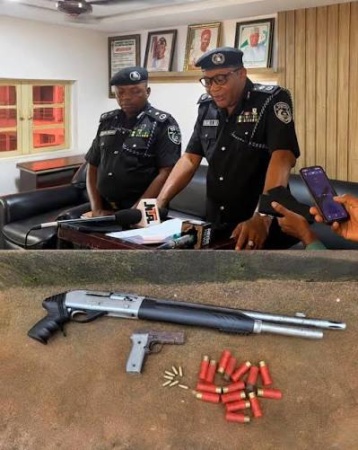
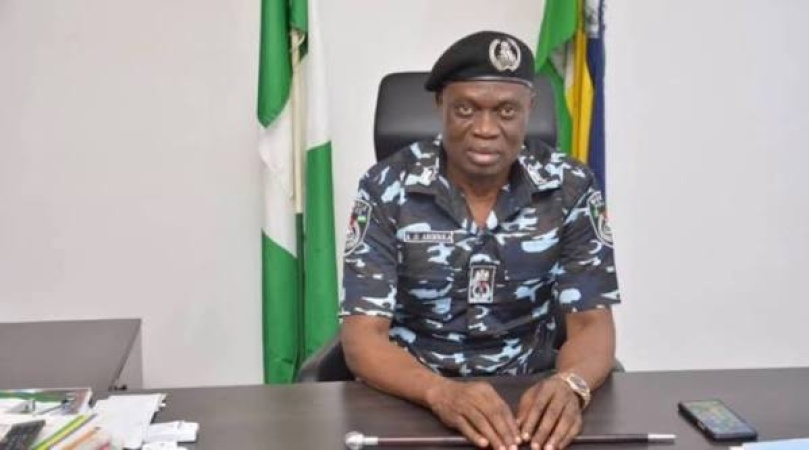
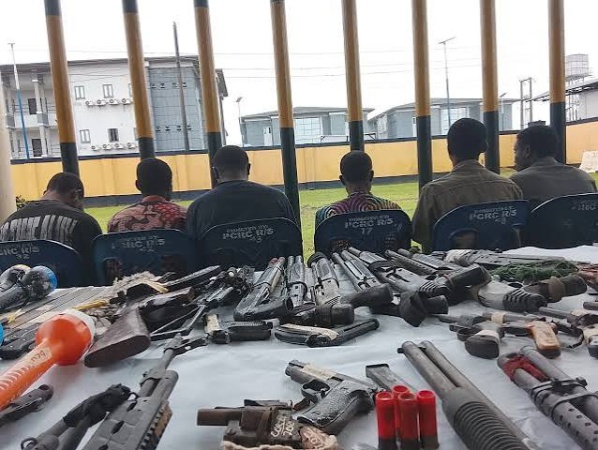
Oyo State Commissioner of Police, CP Abimbola Olugbenga, confirmed that two suspects were neutralised and four others arrested during a coordinated rescue operation. He said the exercise involved FID-IRT, the Oyo State Command, and other tactical units, leading to the recovery of firearms, ammunition, vehicles, and other exhibits. The victims were abducted on June 3, at about 7:30 a.m. along Elewura Street, Ibadan, while being taken to school. He described the operation as a major breakthrough that led to their rescue and the dismantling of the syndicate. (The Nation)