ADVERTISEMENT

ADVERTISEMENT

ADVERTISEMENT

ADVERTISEMENT

Updating your news feed...
NEWS EXPRESS is Nigeria’s leading online newspaper. Published by Africa’s international award-winning journalist, Mr. Isaac Umunna, NEWS EXPRESS is Nigeria’s first truly professional online daily newspaper. It is published from Lagos, Nigeria’s economic and media hub, and has a provision for occasional special print editions. Thanks to our vast network of sources and dedicated team of professional journalists and contributors spread across Nigeria and overseas, NEWS EXPRESS has become synonymous with newsbreaks and exclusive stories from around the world.
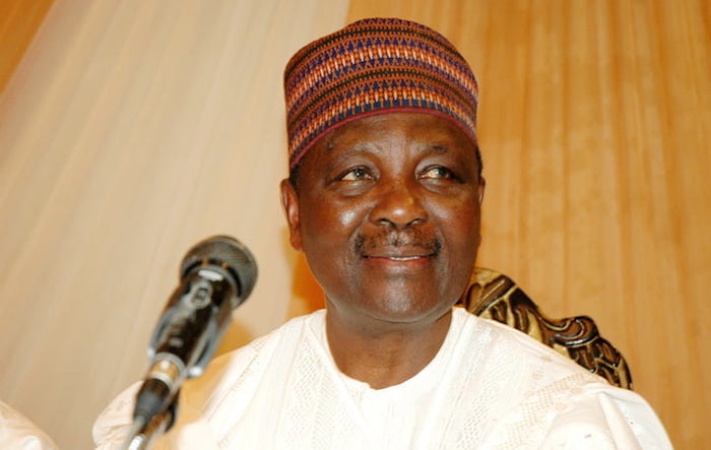
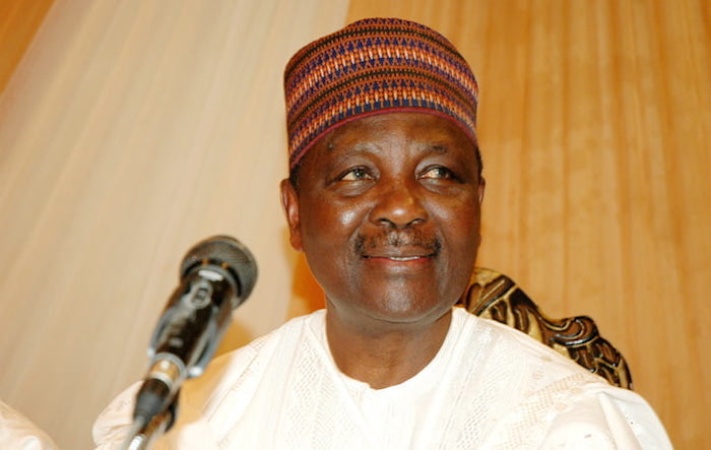
Former Head of State, Gen Yakubu Gowon rtd
Former Head of State, Gen. Yakubu Gowon (rtd), has reopened some of the deepest controversies of Nigeria’s Civil War, revealing how the late sage, Chief Olusegun Awolowo stepped in to save late military ruler, Gen. Murtala Mohammed.
Also, he revealed that he never wanted late Biafran leader, Chukwuemeka Odumegwu Ojukwu, captured or killed.
The revelations, contained in Gowon’s autobiography, ‘My Life of Duty & Allegiance’, offer rare personal insights into the rivalries, battlefield mistakes and political tensions that shaped the 1967–1970 war.
In the memoir, Gowon reflects on the wartime roles of Ojukwu, former President Olusegun Obasanjo, Chief Obafemi Awolowo, Colonel Benjamin Adekunle and other senior figures who directed the conflict on both sides.
‘Murtala’s plan was quite suicidal’
One of the sharpest revelations in the memoir concerns the failed federal attempt to cross the River Niger from Asaba into Onitsha, an operation long regarded as one of the war’s most controversial military decisions.
Gowon said Murtala ignored repeated warnings against the operation because of rivalry with another commander and his determination to claim battlefield glory.
“As the C-in-C, I considered his plan quite suicidal,” Gowon wrote.
According to him, Army Headquarters warned that rebel forces could destroy the Onitsha Bridge and trap federal troops during the crossing.
Gowon said he advised Murtala to approach Onitsha through alternative land routes already secured by federal forces, but the commander refused.
“His pride did not allow him to wish to pass through 1 Division area owing to his rivalry with Colonel Shuwa,” he stated.
The former Head of State said the operation ended in disaster after Murtala pressed ahead with the river crossing.
“Murtala did not accept my advice and did exactly as he had proposed, to cross the River Niger by boats and barges, but with catastrophic consequences of the loss of men and equipment during the failed river crossing,” he wrote.
Even so, Gowon acknowledged Murtala’s bravery under fire. “Despite the disaster, his audacious exploit showed his courage as the Field Commander,” he added.
Signal that nearly cost Murtala his command
The war also exposed deep fractures inside the federal command.
Gowon recounted how Murtala once sent him what he described as an insulting signal from the battlefield during intense fighting.
“In a fit of anger, he went beyond the bounds of reason or military decorum to send me, his Commander-in-Chief, an impertinent signal that I should get my fat butt off my chair to sort out things in the battlefield instead of giving orders from the comfort of my office in Dodan Barracks,” Gowon wrote.
The former wartime leader said the message angered him so much that he considered removing Murtala from command immediately.
“His unconscionably rude signal to me from the war front made me angry enough to consider removing him from command with immediate effect,” he stated.
But Gowon said Awolowo stepped in before he acted. “Chief Awolowo noticed the depth of my anger with Murtala after I received the signal. He promptly intervened on his behalf and pleaded that I should not respond the way I had intended,” he recalled.
According to Gowon, the shortage of experienced officers during the war forced him to overlook Murtala’s conduct despite believing it deserved punishment.
“Although Murtala’s behaviour and action deserved harsher reprimand and some punishment, I chose to overlook his infractions and allowed him to return to his base,” he wrote.
‘But to kill Ojukwu? Never’
Gowon also revisited the final collapse of Biafra and Ojukwu’s flight into exile in Ivory Coast during the closing days of the war.
The former military ruler said that despite the bitterness of the conflict, he never wanted Ojukwu hunted down or executed.
“I always thank God we did not capture him before or during the war. But to kill him? Never, except in the battlefield where whoever got the first lucky shot survives!” he wrote.
Gowon said many people wrongly assumed the Federal Government wanted Ojukwu eliminated personally, insisting the war was fought to preserve Nigeria rather than settle personal scores.
“There were people who wanted him crushed completely. But I believed there had to be a future after the war,” he noted.
According to him, that thinking later shaped the Federal Government’s ‘No Victor, No Vanquished’ declaration after the war ended in January 1970.
“We needed reconciliation, reconstruction and rehabilitation. That was the only way Nigeria could move forward,” he wrote.
How peace efforts collapsed
The autobiography also revisits the failed peace efforts that preceded the outbreak of full-scale war, especially the collapse of negotiations after the Aburi meeting in Ghana.
Gowon suggested that distrust and hardening political positions gradually destroyed opportunities for compromise between the Federal Government and the Biafran leadership.
“Ojukwu was a brilliant officer, no doubt about that. But he became convinced that secession was the only answer,” he stated.
The former Head of State acknowledged that the killings of Igbos in parts of Northern Nigeria after the coups of 1966 deepened fear and mistrust across the country.
Still, he maintained that efforts to avoid war continued even after tensions escalated sharply.
“We did everything possible to avoid war. But once secession was declared, the unity of Nigeria had to be defended,” he wrote.
Armistice dispute nearly disrupted surrender
Gowon said disagreements over a proposed armistice almost complicated the final surrender negotiations that ended the war.
He said he remained suspicious of temporary ceasefire proposals because earlier agreements with Ojukwu had repeatedly collapsed and he feared Biafran forces could use any pause in fighting to regroup.
“I was loathe to any suggestion that was intended to buy the rebels a bit more time to regroup and re-start a conflict we were all eager to end,” he stated.
According to him, disagreements over the issue nearly disrupted surrender discussions involving Obasanjo and the Biafran delegation in Lagos.
“Incidentally, the call for an armistice was also a sore point between Colonel Obasanjo and the Biafran delegation that he led to Lagos to sign the instrument of surrender. It almost scuttled the peace process,” Gowon wrote.
He also said the surrender broadcast delivered by Biafra’s acting leader, Gen. Philip Effiong (rtd), reinforced the Federal Government’s longstanding position that hardliners within the Biafran leadership frustrated peace efforts throughout the war.
Effiong had declared that the bloodshed caused by the war had to stop and admitted that elements within the old Biafran leadership who had made negotiations and reconciliation impossible had voluntarily removed themselves.
“These admissions confirmed all I had insisted on from the very beginning,” Gowon wrote.
Battle fatigue inside 3 Marine Commando
The memoir also details the internal crisis that later engulfed the once-feared 3 Marine Commando under Colonel Benjamin Adekunle.
Gowon praised Adekunle’s early battlefield successes, including operations that cut off Biafran access to strategic coastal routes and major towns.
“Col. Benjamin Adekunle, as Commander of 3 Marine Commando, did exceptionally well,” he wrote.
But he said battlefield exhaustion eventually destabilised the division. “It emerged that Adekunle had become battle fatigued. I began to get reports from some of his officers that he was really acting irrationally,” he stated.
According to Gowon, morale among soldiers deteriorated so badly that some deliberately wounded themselves to escape the frontlines.
“The morale of soldiers in the Division began to dip and it soon plummeted to the extent that they began to shoot themselves in the foot and the fingers so they could be medically evacuated from the war front,” he revealed.
He Identified the eventual loss of Owerri as one of the gravest setbacks suffered under Adekunle’s command.
“The earlier winning 3 Marine Division gradually and steadily became a battle losing Division, with the loss of Owerri being one of Adekunle’s most prominent disasters,” Gowon wrote.
Looking back, the former military ruler admitted he should have acted earlier.
“I honestly believe I should have relieved Adekunle of his command much earlier,” he stated.
Old wounds, fresh debate
Across the memoir, Gowon repeatedly tried to balance criticism of wartime commanders with acknowledgment of their bravery and battlefield contributions, particularly in Murtala’s case. (Vanguard)