ADAD
ADAD
Updating your news feed...
NEWS EXPRESS is Nigeria’s leading online newspaper. Published by Africa’s international award-winning journalist, Mr. Isaac Umunna, NEWS EXPRESS is Nigeria’s first truly professional online daily newspaper. It is published from Lagos, Nigeria’s economic and media hub, and has a provision for occasional special print editions. Thanks to our vast network of sources and dedicated team of professional journalists and contributors spread across Nigeria and overseas, NEWS EXPRESS has become synonymous with newsbreaks and exclusive stories from around the world.
Loading banners
Loading banners...

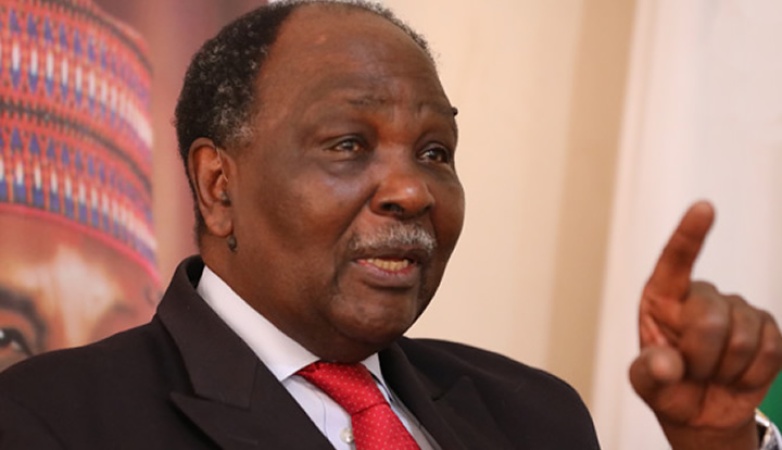
Former Head of State, Yakubu Gowon
Former Head of State, Yakubu Gowon, has disclosed that the refusal of the United States and Britain to supply arms to Nigeria during the civil war forced his administration to seek military assistance from the Soviet Union and a Lebanese black-market businessman.
Gowon said the intervention from both sources eventually helped Nigeria turn the tide during the three-year civil war, which lasted from July 1967 to January 1970.
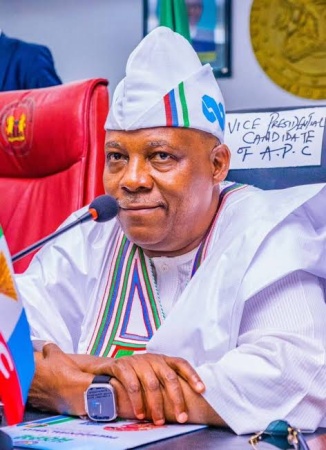
The revelations are contained in Chapter 15 of his 859-page autobiography published by the Havilah Group, Lagos, and titled “My Life of Duty and Allegiance,” unveiled in Abuja on Tuesday. President Bola Tinubu was represented at the launch by Vice President Kashim Shettima.
The autobiography, spanning 36 chapters, chronicles Gowon’s life from his upbringing in Plateau State to his military career, the Nigerian civil war, his removal from office in 1975 and his years in exile and academic pursuits.
Also, in the book, Gowon said late Chukwuemeka Ojukwu had been under serious threat because the young Northern officers believed he was complicit in the January 15, 1966 coup.
Ammunition shortage
In the chapter titled “If The Devil’s Ready To Help,” Gowon detailed the severe ammunition shortages faced by the Nigerian Army in late 1968, revealing that the military’s stockpile had dropped to about half a million rounds.
He explained that the dwindling supplies were worsened by restrictions placed on international arms sales to Nigeria by Western countries.
“As the weeks of fighting wore on, our stock of ammunition was steadily depleted by these wastes, and we could not replenish them because international sales restrictions prevented suppliers from selling military hardware to Nigeria.
“Left with no choice, I ordered the Federal troops to hold their position after the capture of Enugu up to Okigwe and Umuahia because I could not, in clear conscience, commit them to further advance knowing that the ammunition to sustain the effort was in short supply,” he wrote.
Gowon said he was disappointed by the attitude of the United States and Britain, especially as both countries were simultaneously intensifying military operations in Vietnam and Cambodia.
The former Head of State recalled summoning the British and American ambassadors for what he described as one of the most critical meetings of the war.
About the meeting, he said, “If I say I’m not disappointed, it will be an understatement.
“I, however, left them in no doubt that I had a duty and responsibility to keep Nigeria united and safe for all Nigerians and other nationals resident in Nigeria.
“As they were about to enter their cars, preparatory to leaving the State House, I said, if I say I’m not disappointed, it will be an understatement, so I will go to any devil to get what I need to deal with the problem, to do my duty to my country, and when that happens, I hope I will not be accused of doing something wrong.”
According to Gowon, the ambassadors left without making any commitments.
He subsequently directed his Principal Secretary, Hamza Ahmadu, to establish contact with the Soviet Ambassador, Aleksandr Romanov, at Dodan Barracks.
Gowon explained that he believed Soviet support could pressure Britain and the United States into reconsidering their stance.
A Nigerian delegation led by Anthony Enahoro, Edwin Ogbu, Emmanuel George Kurubo and Ambassador John Ukegbu was then dispatched to Moscow.
“The Soviet Union supplied us some MiG-15 trainers and MiG-17 bombers for the meeting, which was a huge success,” he wrote.
He added that Nigeria’s relationship with the Soviet Union became “special” after the war because of the support received during the conflict.
Beyond Soviet assistance, Gowon revealed that a Lebanese businessman identified as Ali Jamal also played a major role in helping Nigeria secure military supplies through black-market channels.
According to him, Jamal personally financed the procurement of arms and ammunition at a time the Nigerian government lacked the funds to make immediate payments.
“Jamal was not deterred even after I told him that I had no money with which to make immediate payments for the purchases.
“He told me not to worry and that he would use his own money to provide the ammunition we needed but would want to be reimbursed interest-free at the shortest possible time.
“With his support, we were able to get some of the hardware and the ammunition we needed to change the face of the war,” Gowon wrote.
The former military ruler also recounted opposition from then Finance Commissioner, Obafemi Awolowo, who reportedly refused to authorise payment to Jamal because due process had not been followed and that the expenditure was outside the approved budget.
“I was aghast because it suddenly appeared to me that the Finance Commissioner and others at the FEC did not understand the depth of the problem I was In to ensure the survival of the men in the field and that war was successfully prosecuted,” Gowon said.
He further recalled telling Awolowo: “I’m afraid I’ll want to use my powers and authority, which I think I can do as Head of State and Head of Government, to give any department the order to do what is required to be done.”
Reflecting on the disagreement, Gowon said, “Although I used anger and the power of my office to win the argument and retain the integrity of the nation with my friend, I felt proud of my team that always insisted on following due process to justify every action and every expenditure. Jamal subsequently was paid in full.”
His relationship with Ojukwu
On his relationship with the late Chukwuemeka Ojukwu, Gowon wrote that northern military officers believed Ojukwu was complicit in the January 1966 coup d’etat, executed by officers mostly of Igbo origin, which saw the killing of key northern leaders and military officers, and wanted to move against him.
Among those killed were Prime Minister Abubakar Tafawa Balewa, premier of the Northern region, Ahmadu Bello; premier of the Western region, Ladoke Akintola; Minister of Finance, Festus Okotie-Eboh; and Zakariya Maimalari, a brigadier and the most senior military officer from the north at the time.
Johnson Aguiyi-Ironsi, a major general and the army chief, became the head of state after the coup.
The reverberations from the coup led to the counter coup of July 1966 in which Aguiyi-Ironsi was killed.
Gowon, then a lieutenant colonel and army chief, was made the head of state after the countercoup led by northern officers.
Ojukwu, a colonel who was then the governor of the now-defunct Eastern region, refused to accept Gowon’s leadership, insisting that the most senior army officer, Babafemi Ogundipe, a brigadier, should have been appointed to the position.
Gowon was a lieutenant colonel — two ranks below Ogundipe — when he assumed office as head of state.
Joseph Wey, a commodore, and Adeyinka Adebayo, a colonel, were also senior to Gowon, and he was promoted to major-general and later full-star general within one year.
Why not Ogundipe?
“The case of Brigadier Babafemi Ogundipe was, however, not as straight forward because the course of the coup had made it obvious that he could no longer function effectively in the command-and-control structure of the Nigerian Army and the Armed Forces.
“With the concurrence of the UK government, he was appointed Nigeria’s High Commissioner to the UK,” Gowon wrote.
“Ojukwu refused my offer of friendship. By extension, he wilfully refused to recognise my leadership. He felt that the ‘normal’ protocol of seniority in service should have been upheld in selecting General Ironsi’s successor under the new administration, regardless of the circumstances by which I assumed power.
“Admiral Wey effectively persuaded former Supreme Military Council members to take cognisance of the situation and support my leadership, highlighting my ability to command respect from junior officers and my willingness to lead during a difficult time.”
He continued, “Left unsaid at the time was Ojukwu’s strong view that I was junior to him in the hierarchy. He failed to appreciate that he had been under serious threat because the young Northern officers believed he was complicit in the January 15, 1966 coup.
“I pre-empted any attempt to move against him, in part, because of my respect for all the Regional Governors and, more importantly, because I saw him primarily as a colleague and officer with whom I thought I had worked to restore normalcy in those early days of uncertainty. I believed that, together, we could rebuild the army and allow the country to continue its course in history.”
Despite his reservations, he went ahead and retained Ojukwu as the governor of the East.
“My decision to retain Ojukwu in office was altogether altruistic though subsequent events made it seem a huge mistake. But with the situation at hand, it did not matter whether he agreed or not with the fact that change had occurred. Even if he did not agree with my new role, the soldier in him never said he would leave the Army. I let him be,” Gowon wrote.
Ojukwu subsequently declared the secession of Biafra in May 1967 over the reprisal killing of Igbos in the north after the January 1966 putsch.
This led to a 30-month civil war which came to an end in January 1970 with the surrender of Biafra. (Vanguard)