ADAD
ADAD
Updating your news feed...
NEWS EXPRESS is Nigeria’s leading online newspaper. Published by Africa’s international award-winning journalist, Mr. Isaac Umunna, NEWS EXPRESS is Nigeria’s first truly professional online daily newspaper. It is published from Lagos, Nigeria’s economic and media hub, and has a provision for occasional special print editions. Thanks to our vast network of sources and dedicated team of professional journalists and contributors spread across Nigeria and overseas, NEWS EXPRESS has become synonymous with newsbreaks and exclusive stories from around the world.

















Loading banners
Loading banners...

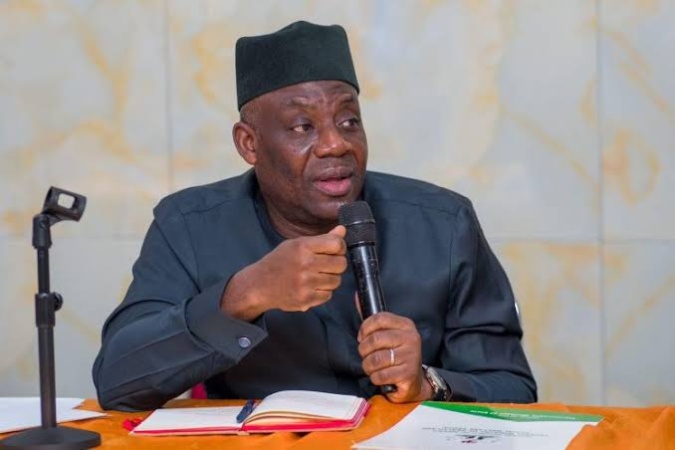
The Minister of Education, Dr Tunji Alausa
By KUDIRAT HABEEB
Mixed reactions have continued to trail the Federal Government’s exemption of National Certificate in Education (NCE) candidates from the Unified Tertiary Matriculation Examination (UTME).
Some Nigerians who spoke with the News Agency of Nigeria (NAN) on Monday in Lagos praised the policy, describing it as a step in the right direction.
The Minister of Education, Dr Tunji Alausa, announced the policy on May 11 at the 2026 Joint Admissions and Matriculation Board (JAMB) policy meeting in Abuja.
The decision exempts candidates seeking admission into colleges of education and polytechnics from sitting for the annual UTME.
Dr Lateefat Ligali, a lecturer at the Lagos State University (LASU), described the intervention as timely and forward-thinking for prospective students.
She noted that many candidates often missed out on higher education due to their inability to meet university cut-off marks.
Ligali told NAN that failing to secure university admission often left many youths idle and vulnerable to social vices.
She said that with the new policy, candidates who previously relied solely on university admission could now consider colleges of education.
She added that the policy would expand access to tertiary education and provide alternative pathways for skill acquisition.
Similarly, a teacher at Idimu Junior High School, Mr Idris Olalekan, said the policy would not lower teaching standards.
Olalekan stated that the UTME was not the foundation or skill needed to become a professional teacher.
He added, “The institutional curriculum, rather than an entrance examination, shapes a professional educator.”
An entrepreneur and parent, Mrs Omowunmi Adebayo, expressed relief, noting that the policy created broader academic opportunities.
She shared that her daughter would finally gain admission after writing the UTME three times, describing the development as a major relief for parents.
However, a legal practitioner, Mr Ogedi Ogu, suggested that post-UTME screening should be scrapped instead, while the main UTME should be strengthened.
Ogu warned that leaving the entire admission process to individual institutions might create confusion in the educational system.
He argued that a uniform standard remained necessary before students gained admission into tertiary institutions, cautioning that eliminating the UTME altogether could compromise Nigeria’s educational standards. (NAN)