Updating your news feed...

NEWS EXPRESS is Nigeria’s leading online newspaper. Published by Africa’s international award-winning journalist, Mr. Isaac Umunna, NEWS EXPRESS is Nigeria’s first truly professional online daily newspaper. It is published from Lagos, Nigeria’s economic and media hub, and has a provision for occasional special print editions. Thanks to our vast network of sources and dedicated team of professional journalists and contributors spread across Nigeria and overseas, NEWS EXPRESS has become synonymous with newsbreaks and exclusive stories from around the world.














Loading banners
Loading banners...

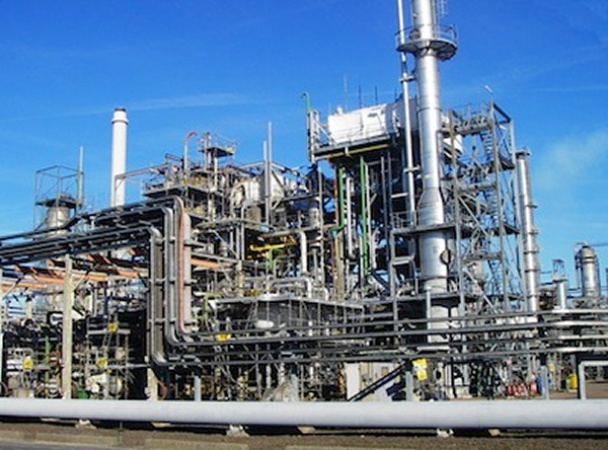
The moribund Port Harcourt Refinery
Few days after the Nigerian National Petroleum Company Limited (NNPCL) and two Chinese firms, Sanjiang Chemical Company Limited and Xingcheng (Fuzhou) Industrial Park Operation and Management Co. Ltd, signed deal for the rehabilitation of the Warri and Port Harcourt Refineries, questions have sprung about the competence of the Chinese firms and their capacity to handle the arduous task.
The questions stem from the repeated agreements on the refineries which had either been mismanaged or contributed little or nothing to revamping the national assets.
It is estimated that the sum of about $25 billion had been spent on the rehabilitation of the refineries, while Nigeria spent huge resources to import petroleum products outside the shores of the land until the advent of the Dangote Refinery.
Observers raised probing questions on the technical capacity and competence of the previous partners on the refineries and why it’s difficult for the government to audit the facilities and transparently publish same with a view to enabling Nigerians have first-hand view of the ruins that have dotted the country’s public refineries.
They said such should have preceded the fresh Chinese deal to enable Nigerians to monitor and massively support the initiatives to put the refineries in good shape, especially given the ongoing tensions in the Middle East amidst global rise in energy prices.
Besides, some stakeholders believe the revival and rebound of the country’s public refineries couldn’t have come at a better time than now when the country needed more competition in the downstream space in order to ensure cheaper products.
The deal in summary
The Nigerian National Petroleum Company Limited (NNPCL) signed a Memorandum of Understanding (MoU) with two Chinese companies, Sanjiang Chemical Company Limited and Xingcheng (Fuzhou) Industrial Park Operation and Management Co. Ltd, for partnership through a potential Technical Equity Partnership (TEP) in support of the completion and operation of the Port Harcourt and Warri Refineries.
The company explained that the potential framework would cover completion of outstanding work at the two refineries, together with operating and maintaining both facilities to achieve best-in-class, sustainable performance.
According to the company, the planned expansion and upgrades would elevate both facilities to cleaner, more profitable product standards.
It added that the potential collaboration also contemplates expanding the refineries’ petrochemical capacities and harnessing gas and downstream opportunities through the development of co-located, gas-based industrial hubs.
The helmsman of the NNPC Ltd, Engr. Bashir Bayo Ojulari, described the MoU execution as a significant milestone, following more than six months of concerted engagement between the technical and management teams of NNPC and the two Chinese partners, Sanjiang and Xinganchen.
“All parties recognise mutually beneficial opportunities for the development and long-term sustainable profitability of NNPC’s refining assets in Nigeria, and the collective weight required for success,” Ojulari noted.
He further stated that the MoU is an important step in the journey towards identifying potential technical equity partner(s) to restart and expand NNPC’s refineries, and to explore opportunities in co-located petrochemicals and gas-based industries.
He added that the MoU reflects the parties’ shared intent to progress discussions in good faith, with any definitive arrangements to follow in due course and subject to customary approvals.
The companies
Questions are being asked about the Sanjiang Chemical Company Limited and Xinganchen (Fuzhou) Industrial Park Operation and Management Co. Ltd, with some stakeholders lamenting that they do not posses visible track records in large-scale refinery rehabilitation.
Sanjiang Chemical Company Limited
The Sanjiang Chemical Company Limited is a petrochemical firm primarily focused on ethylene oxide, ethylene glycol and surfactants, rather than crude refining while Xingcheng (Fuzhou) Industrial Park is focused on industrial park management, investment facilitation and infrastructure development.
Sanjiang was established in December 2003, according to the firm’s website and it is described as the first private enterprise in China specializing in ethylene oxide.
The company went public in Hong Kong on September 16, 2010. It has since maintained a rapid pace of development and expansion, and is committed to the high-quality development of an integrated industrial chain layout.
The question on the mind of many remains whether the firm has the core competence in the running and operation of a refinery to warrant being selected as one of the technical partners.
However, the company on its website, said it has established an industrial chain of crude oil refining and high-end chemical industry with a core of annual output of 1000KT EO/EG unit and 1250KT light hydrocarbon comprehensive utilization unit. It stated that the main facilities is the world’s largest monomer unit, and the feedstock unit has the advantages of diversified and flexible switching, which has been included in the key construction project plan of Zhejiang Province, the “4+1” major project construction plan of Zhejiang Province, the “six hundred billion” investment project of Zhejiang Province, the major construction project of marine economy development in Zhejiang Province and the construction action plan of the Greater Bay Area of Zhejiang Province.
The other company, Xingcheng (Fuzhou) Industrial Park Operation and Management Co. Ltd, has no digital footprint apart from the visibility arising from the media reports of the deal.
Also deep searches and checks by our correspondent showed that the two firms are not linked to any of the major refineries in China.
For instance, China, with a population of 1.4 billion people, according to the 2024 estimate, has no fewer than 30 major oil refineries and hundreds of smaller independent refining facilities. The smaller facilities are called teapot refineries like Nigeria’s several modular refineries.
China’s total refining capacity exceeded 17 million barrels per day by 2025 with the state-owned China National Petroleum Corporation (CNPC) taking the lead.
In 2024, the CNPC processed 188.217 million tons of crude oil, and produced 120.607 million tons of refined products and 8.652 million tons of ethylene throughout the year.
In China, Sinopec operates the largest refining network in China, especially concentrated in eastern and southern regions. Major refineries and petrochemical complexes include: Yanshan Petrochemical; Qilu Petrochemical; Yangzi Petrochemical; Jinling Petrochemical; Yueyang Petrochemical; Mengxi Petrochemical.
Also, the PetroChina/CNPC dominates refining in northern and western China, particularly north of the Yellow River with key facilities including Daqing Petrochemical; Fushun Petrochemical; North China Petrochemical; Lanzhou Petrochemical and Dongying Petrochemical.
Among these various companies driving China’s refining ecosystem, none of them is aligned with the two firms which Nigeria has selected as the technical partners, Weekend Trust gathered. Besides, many view the deal as hurriedly put together.
The Volte Face
Weekend Trust reports that the decision to seek technical partnership for the revamp of the refineries was considered an afterthought by the current management. On assumption of office, the NNPC GMD has hinted about plans to sell those refineries which he described as a waste.
However, it was learnt that the decision to sell off the refineries which some stakeholders including former President Olusegun Obasanjo had advocated, was put off following pressure from some quarters.
“But what is worrisome is that there is no detail on this partnership other than the federal government telling us the country is not going to spend anything on it,” a stakeholder said, pleading not to be named.
The Nigeria Employers’ Consultative Association implored the NNPC to publicly disclose the full terms of the technical equity partnership, procurement processes, technology transfer arrangements, safeguards against cost overruns and project delays as well as audit outcomes of previous N11trn/$25bn spent between 2010-2023
It also warned against repeating past waste, noting that between 2010-2023, Nigeria spent over N11 trillion ($25bn) on refinery rehabilitation with “zero sustained refining output”.
It specifically cited the $1.5bn Port Harcourt rehabilitation approved in 2021, which has not produced sustainable output.
It added that Nigerian businesses have suffered 30+ years of energy insecurity through high production costs, forex spent on fuel imports, and job losses.
The group described the MoU as “troubling” and “unpatriotic” given Nigeria’s history of failed rehabilitation.
The Director General, Adewale-Smatt Oyerinde, said: “It will be unpatriotic to endorse another opaque deal while questions on past spending remain unanswered.”
Besides, a civil society advocate, Edward Abakpa, advocated the need for the resignation and prosecution of NNPC Group CEO, Bayo Ojulari, over the MoU signed with Chinese firms; Sanjiang Chemical Company Ltd and Xinganchen for the Port Harcourt and Warri refineries.
Nigerians, he said, deserve a full audit of past spending before any new deal, adding that the NNPC has spent over *$3.5bn* on refinery rehabilitation across several phases, yet the refineries remain largely non-functional.
He described the new MoU as “another arrangement involving foreign partners without first resolving the accountability gap of the past”.
The group also asked the National Assembly and EFCC to probe all refinery rehab contracts since 2015, contractor performance, disbursements and possible procurement breaches.
Oil and gas analyst, Dr. Marcel Okeke, said the technical partnership arrangement would not work as the government cannot expect miracles to happen with this kind of intervention.
He said the best approach is to sell off the refineries while the government completely hands off the business of refining. Okeke also questioned the technical competence of the new partners, saying from what he knew about the two firms they are not solely in the business of refining.
“They are saying that the MoU does not include Nigeria paying any money. But otherwise, the whole thing looks like doing what has been done all over before and expecting a new result. You bring this company to come and revitalize or revamp the place.
“It’s like repeating what has been done before and expecting a different result. That’s what we see from outside. And left, for me, all I would have said is let those refineries be fully privatised and sold. Yes, and let the government get out of running refineries. Yes, you need our ugly past. Government should not be in business because what it means is that when those refineries come on stream again, if they ever will, they will be competing with a behemoth like Dangote. How can they do that? Can they compete?
“There’s no person that has been in charge of NNPC that’s not a multi-billionaire in dollar terms. Nobody. That’s why every president of Nigeria now is the petroleum minister. So, not having the details of the MOU, my position is that let those refineries, Kaduna, Warri, Port Harcourt; let them be privatised and sold. Let the government just get out of it so that refineries would be run purely as a business, commercial concern. Do you know that some people are already saying that those companies are not in the refinery business?
A public affairs analyst, Hassan Husaini, in an opinion article published on Daily Trust also expressed reservations over the MoU with the Chinese firms, insisting that the arrangement lacks the technical and financial credibility required to revive the troubled facilities.
Husaini described the agreement as “another cycle of opaque contracting” that fails to address the structural and operational failures that have plagued Nigeria’s refineries for decades.
According to him, the Chinese companies do not possess proven records in managing or rehabilitating large-scale crude oil refineries.
“Sanjiang is fundamentally a petrochemical producer focused on ethylene glycol and related products, not a globally recognised refinery engineering company,” he said, adding, “There is no public evidence that the company has successfully rehabilitated or operated aging refineries of the scale and complexity of Port Harcourt or Warri.”
He also questioned the role of Xingcheng Industrial Park, describing it as primarily an infrastructure and industrial park management company with no verifiable expertise in refinery operations or hydrocarbon processing.
Husaini argued that the absence of a clearly identified Engineering, Procurement and Construction (EPC) contractor in the MoU raises serious concerns about who would ultimately execute the technical work.
“If there is a credible refinery operator behind the project, Nigerians deserve to know from the outset. Otherwise, what we are seeing is the introduction of middlemen that could increase costs and reduce accountability,” he stated.
The analyst maintained that Nigeria’s refinery rehabilitation history has already demonstrated the limitations of repeated government-led interventions, noting that billions of dollars have been spent over the years with little to show in terms of sustainable output.
He further warned against entering agreements that may expose the country to unfavourable financing arrangements or foreign control through hidden contractual clauses.
Drawing parallels with experiences in countries such as Uganda and Zambia, Husaini said Nigeria must avoid any deal that could compromise sovereign financial independence through escrow arrangements, sovereign guarantees or external legal jurisdictions.
“What must be done? First, no binding agreement with Sanjiang or Xingcheng shall be signed unless the full unredacted MoU is transmitted to the National Assembly within seven days, followed by a public hearing within 30 days, and approved by a two-thirds majority of both houses.
“Second, no sovereign guarantee, revenue escrow arrangement, budget approval right ceded to any foreign entity, waiver of sovereign immunity, or agreement to foreign jurisdiction shall be included unless every such provision is individually and explicitly approved by the same supermajority after public testimony from the Minister of Finance and independent experts.
“Third, the Bureau of Public Procurement must certify compliance with the Public Procurement Act. Fourth, NEITI must audit the transaction at every stage,” he wrote.
According to him, the most sustainable option remains the transparent divestment or privatisation of the refineries through a competitive bidding process.
“The Dangote refinery has already shown that private capital can deliver where state spending repeatedly failed,” he said. “If these Chinese firms are truly qualified, they should compete openly with other global players.”
Husaini stressed that continuing with rehabilitation efforts without accountability would amount to “prolonging a failed model at enormous public cost.”
“The issue is no longer whether Nigeria can keep trying,” he added. “The issue is whether the country is prepared to stop repeating the same mistakes under different names.”
However, Energy expert, Dr. Joseph Obele, described opposition to the proposed refinery partnership with Chinese firms as politically motivated. He posited that many critics are opponents of President Tinubu’s reforms and beneficiaries of monopoly in the downstream sector.
According to him, constructive criticism is welcome but outright opposition to new refinery investments risks scaring off foreign investors and slowing industrial growth.
Obele, a lecturer in Energy Marketing at Ignatius Ajuru University of Education and a member of the refinery host community, explained that the deal aims to expand refining capacity, create jobs, attract foreign direct investment, boost technology transfer, and strengthen energy security.
“Countries seeking industrial growth cannot afford to reject foreign investments capable of reviving critical sectors like refining, petrochemicals, and energy infrastructure,” he said.
He argued that some groups attacking the agreement are uncomfortable with broader participation because they have benefited for years from monopoly, import dependency, and limited competition in the petroleum industry. He urged NNPC Ltd. and the Chinese investors to ensure host communities get adequate equity consideration in the MoU.
Obele said President Tinubu’s administration is opening the sector to international partnerships and private investment to end decades of inefficiency in oil and gas. He added that more refinery investors would stabilise fuel supply, reduce pressure on foreign exchange, encourage competition, and lower consumer prices.
He spoke on concerns about technical competence and transparency, he said such issues should be handled through regulatory processes, negotiations, performance benchmarks, and monitoring, not public campaigns that undermine investor confidence.
The National President, Petroleum Products Retail Outlets Owners Association of Nigeria (PETROAN),Dr Billy Gillis-Harry, advised the partner firms: Sanjiang Chemical Company Limited and Xingcheng (Fuzhou) Industrial Park Operation and Management Co. Ltd, to operate in strict compliance with the provisions of the Petroleum Industry Act.
The association emphasised that there should be no form of “divide and rule” approach in their engagement with stakeholders. Instead, the companies should adopt inclusive, transparent, and community-friendly operational strategies that promote unity and trust.
PETROAN urged the Chinese partners to foster a strong sense of belonging among host communities by prioritising local content, fair employment practices, community development initiatives, and sustained stakeholder engagement. Respect for host communities and adherence to regulatory frameworks will be critical to achieving long-term operational success and stability.
Besides, the Nigeria Union of Petroleum and Natural Gas Workers, NUPENG, cautioned the federal government against turning the revival of Warri and Port Harcourt refineries into another political announcement without tangible results.
NUPENG President Comrade Salmon Oladiti said the recent agreement between NNPC Ltd. and Chinese firms must translate into real economic relief for Nigerians facing rising fuel costs and inflation.
He urged the government and NNPC to stay committed to partnerships that prioritise national development, economic stability, and citizen welfare.
He advised all parties to ensure transparency, accountability, professionalism, and timely execution of the agreement.
The PETROAN’s boss, Obele revealed that many host community members, including Alesa Eleme — host to the Port Harcourt Refinery — welcome the initiative after decades of neglect by NNPC Ltd. He said locals expect development, jobs, infrastructure, and skills acquisition from the new investment.
He advised Nigerians to support genuine investments that promote industrialisation, employment, and energy sufficiency, and warned against politicising developmental projects.
“No single refinery should dominate the nation’s energy market. Competition is essential for efficiency, price stability, innovation, and sustainability,” he said.
Oladiti, the NUPENG boss, described the agreement as a significant step toward reducing Nigeria’s dependence on imported petroleum products despite being a major oil producer.
For years, the collapse of local refineries has fuelled high transportation costs, pressure on foreign exchange, unemployment, and worsening living conditions, he said.
Oladiti noted that Nigerian workers and citizens have borne the burden of unstable fuel supply and harsh economic realities caused by the failure of domestic refining capacity.
The deal with the Chinese firms, he said, offers an opportunity to reposition the oil and gas sector, restore public confidence in local refining, create jobs, drive industrial growth, and strengthen energy security while cutting the economic strain of fuel imports.
“Nigerians are tired of repeated refinery rehabilitation promises that consume huge public funds without delivering results,” Oladiti stated.
Former Vice President Atiku Abubakar questioned the deal, saying the companies lack the capacity and experience to manage complex crude refineries.
In a statement issued through his Senior Special Assistant on Public Communication, Phrank Shaibu, Atiku said independent assessments show the firms are ill-equipped for the job.
Atiku argued that Sanjiang Chemical is a downstream petrochemical manufacturer focused on surfactants and light hydrocarbon processing, not crude oil refining.
He said there is no public record of the firm building or operating a full-scale refinery of the scale of Port Harcourt or Warri.
“Processing petrochemical derivatives is not the same as running an aging national refinery burdened with decades of operational decay,” the statement read.
The statement also flagged financial concerns around Sanjiang Chemical, citing reports of declining revenues, shrinking profitability, and liquidity pressure despite its Hong Kong listing. Atiku asked how a firm facing financial strain could shoulder the burden of reviving two of Africa’s most troubled refineries.
He described the second firm, Xingcheng, as an industrial park and infrastructure management company with no verifiable experience in petroleum engineering or refinery operations.
“By every available corporate and industry record, Xingcheng is essentially an industrial park and infrastructure management company — the equivalent of handing over a hospital’s intensive care unit to a real estate developer,” Atiku said.
Atiku questioned why the federal government and Nigerian National Petroleum Company Limited bypassed established refinery engineering and EPC firms with proven records to settle for companies whose backgrounds, he said, raise more questions than confidence.
He warned that the Tinubu administration risks turning the refineries into “another expensive black hole of failed promises, reckless experimentation, and opaque transactions.
He demanded publication of the full MoU terms; a transparent technical due diligence report on both firms, disclosure of Nigeria’s financial commitments and liabilities, open competitive engagement with globally reputable refinery operators and a legislative probe into billions spent on past refinery rehabilitation without results
“The era where NNPC signs opaque agreements abroad and expects Nigerians to clap blindly is over. National assets are not toys for bureaucratic experimentation,” Atiku said.
Amidst concerns over the agreement, NNPC officials assured Nigerians that the new deal won’t involve use of public funds and is structured as a Technical Equity Partnership where the Chinese firms provide both capital and technical expertise.
Energy expert, Rasheed Adeleke, told Weekend Trust that the current administration is desirous of instilling a robust regime in the country’s energy environment.
According to him, the singular act explains its current attention in Nigeria’s energy space, especially increased output through the resuscitation of the country’s moribund refineries. Adeleke said the administration will not falter in disclosing details of the deals in due time.
He added: “The current administration is desirous of restoring the country’s economy through its Renewed Hope Agenda, and will possibly not fail Nigerians on bringing alive the refineries on the strength of the huge resources which had been sunk into it earlier without tangible results”.
He implored Nigerians to show more understanding and patience with the administration and the new team of the NNPC to revolutionise the oil industry.
Dr. Ayodele Oni, another oil and gas expert, opposed the view that the refineries be sold, saying the current arrangement by the NNPC is the best approach for now. He, however, called for transparency in the implementation of the terms of the agreement.
He said, “The new arrangement—structured as part technical, part equity—could be an opportunity to get the refineries functioning, if built on transparent terms with enforceable governance and oversight. The equity-for-work-completed structure addresses a key concern: no taxpayer funds are at risk upfront. The Chinese side carries the risk and, somewhat like a PSC, only earns its return (in the form of equity) if the refineries actually run.
“That said, the framing matters. A blank-slate MoU layered onto a history of failed and costly state rehabilitation attempts presents significant corruption risk unless transparency measures and strong safeguards are imposed from the outset. Given that track record and the well-founded suspicions of corruption surrounding past efforts, public skepticism about both the viability and the sincerity of this deal is entirely justified. Ultimately, only time will tell.” (Weekend Trust)