ADAD
ADAD
Updating your news feed...
NEWS EXPRESS is Nigeria’s leading online newspaper. Published by Africa’s international award-winning journalist, Mr. Isaac Umunna, NEWS EXPRESS is Nigeria’s first truly professional online daily newspaper. It is published from Lagos, Nigeria’s economic and media hub, and has a provision for occasional special print editions. Thanks to our vast network of sources and dedicated team of professional journalists and contributors spread across Nigeria and overseas, NEWS EXPRESS has become synonymous with newsbreaks and exclusive stories from around the world.
















Loading banners
Loading banners...

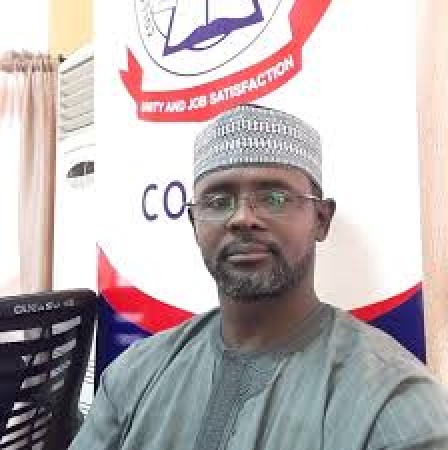
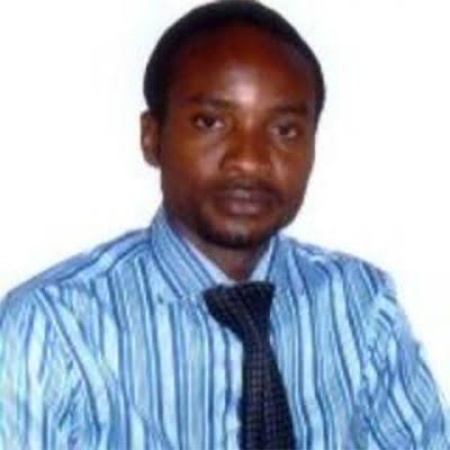
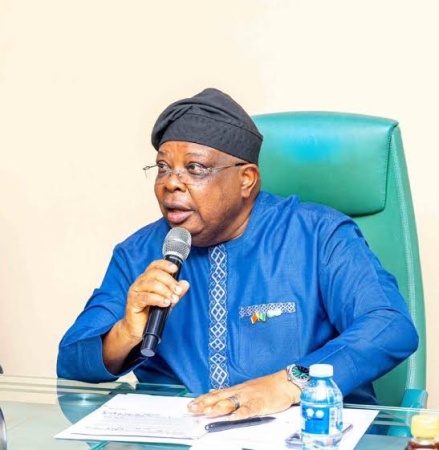
COEASU President, Dr Lawan Bazza
The president of the Colleges of Education Academic Staff Union (COEASU), Dr. Lawan Bazza has raised concerns over a new education policy, stating that key stakeholders were not adequately consulted before its introduction.
Speaking in an interview with ARISE NEWS on Wednesday, Dr. Bazza explained that while COEASU is not outrightly opposed to the policy, the union is worried about the lack of engagement with educators who directly handle student learning and assessment.
“We first heard about it at the JAMB policy meeting. As a union, we aren’t saying we are outright against it, but we are concerned. In policy formulation, you must discuss with critical stakeholders who are the end-users. A policy like this requires informing the nation about other supporting measures to help achieve the government’s goals,” he said.
Raising concerns about declining interest in key academic fields, Dr. Bazza said teacher education challenges extend beyond Colleges of Education, as universities are also affected. He noted that Education and Agriculture remain among the least subscribed courses in Nigeria for nearly a decade.
“The issue with teacher education in Nigeria isn’t limited to Colleges of Education; even universities face similar challenges. Education and Agriculture are currently the least subscribed courses in Nigeria, a trend spanning nearly a decade. We need to ask why young Nigerians aren’t interested in these fields,”he urged.
Bazza also criticised current admission benchmarks, arguing that low JAMB cut-off marks do not reflect adequate academic standards, and stressed the need for stronger reliance on WAEC and NECO results.
“Regarding JAMB, the minimum cutoff score for colleges and polytechnics is often 100 out of 400, which is only 25%. In any standard exam, 25% is a fail. Even the university cutoff of 150 is only 37.5%, still a failing grade. Is this the quality we need for Nigeria? No. The West African Examinations Council (WAEC) and the National Examinations Council (NECO) are the primary exams that should determine admission quality. If these exams aren’t properly conducted and malpractice isn’t eliminated, we will keep facing these issues,” he warned.
He further called for stricter examination practices to curb malpractice and ensure that students admitted into tertiary institutions meet proper academic requirements.
He argued that the Unified Tertiary Matriculation Examination, (UTME) serves as an important selection tool for filtering candidates based on institutional requirements.
“We are missing the point. An exam like the UTME is a selection tool used to sieve candidates based on institutional requirements.”
He expressed concern that removing it could further increase enrolment challenges in teacher education, noting that the sector already struggles with low student subscription.
“Can we do without it for teachers? Removing it will likely increase enrollment because the issue we face is attrition; students simply aren’t subscribing to teacher education.,” he lamented.
Addressing the decline in enrolment into teacher education programmes, Dr. Bazza said the profession has long been marginalised in Nigeria, a perception he traced back to the era of Teacher Training Colleges.
“As a nation, we have relegated teacher education to the background. Before the current college system, we had Teacher Training Colleges. Society often felt that those who couldn’t make it into secondary school should be sent to teacher training. This mindset has persisted. Even in universities, education is often the last resort for students after all other course allocations are finished,” he shared.
On how COEASU plans on changing the situation, Bazza disclosed that COEASU is currently engaging relevant education authorities, including the National Commission for Colleges of Education and the Ministry of Education, on reforms aimed at repositioning the sector.
“We are now working with the National Commission for Colleges of Education, the Committee of Provosts, and the Ministry of Education to overhaul the curriculum.
“We are also looking at the workload. Currently, a student in a College of Education might take 18 to 20 courses per semester. That is more than double what a university student takes in two or three semesters combined. We are placing a massive load on the students we label as the ‘lowest class.’
“Finally, there is the issue of remuneration and rewards. We need to make the profession attractive here on earth, not just ‘in heaven'”, he highlighted. (AriseNews TV, excluding headline)