ADAD
ADAD
Updating your news feed...
NEWS EXPRESS is Nigeria’s leading online newspaper. Published by Africa’s international award-winning journalist, Mr. Isaac Umunna, NEWS EXPRESS is Nigeria’s first truly professional online daily newspaper. It is published from Lagos, Nigeria’s economic and media hub, and has a provision for occasional special print editions. Thanks to our vast network of sources and dedicated team of professional journalists and contributors spread across Nigeria and overseas, NEWS EXPRESS has become synonymous with newsbreaks and exclusive stories from around the world.










Loading banners
Loading banners...

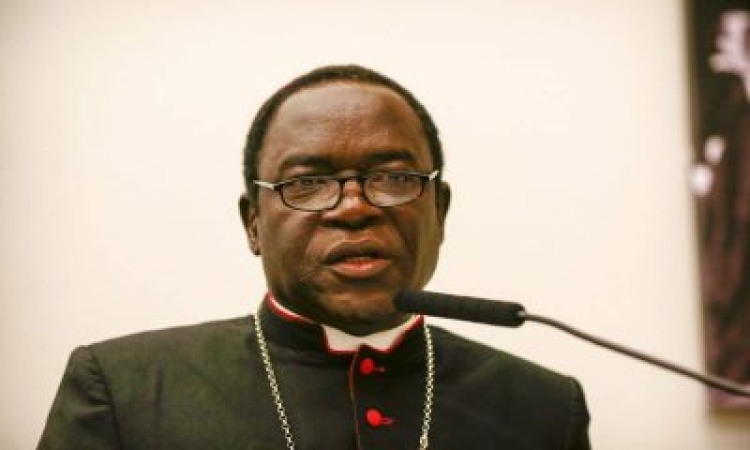
Bishop Kukah
By BONIFACE AKARAH
The International Society for Civil Liberties and Rule of Law has rejected the appointment of Matthew Hassan Kukah as Chancellor of Chukwuemeka Odumegwu-Ojukwu University (COOU), raising concerns over his record and stance on issues affecting Christians in Nigeria.
In a statement issued Tuesday in Onitsha and signed by its Board Chairman, Emeka Umeagbalasi, alongside other principal officials, the group said the appointment was “strongly rejected and condemned,” insisting that it raises “serious concerns about the criteria for such high-profile institutional roles.”
“We hold no grudges against Bishop Kukah,” the group stated, “but our gathered statistics… indicate that he did not do enough, especially by failing to use his vast links… to get authorities to act decisively to protect persecuted Christians.”
Intersociety further quoted critics as saying Kukah “abandoned his fellow Catholic faithful and other Christians when he was needed most,” adding that his recent appointments to strategic academic positions have drawn increasing scrutiny.
“Father Kukah is also found to be the only Catholic Bishop… appointed Pro-Chancellor and Chairman of a federal university and now Chancellor of a state university within a short period,” the statement said.
The group alleged that the development suggests political considerations, stating that Kukah was “rewarded… for being one of those denying Christian persecution or genocide in Nigeria.”
It added that “a development of this nature raises fundamental questions about accountability, representation, and the protection of vulnerable communities.”
The rights body maintained that universities must reflect public confidence and neutrality, warning that “appointments perceived as controversial risk eroding trust in academic institutions and their governing structures.”
It called on relevant authorities to review the decision, insisting that “institutional integrity must not be compromised by political or sectional considerations.”