ADAD
ADAD
Updating your news feed...
NEWS EXPRESS is Nigeria’s leading online newspaper. Published by Africa’s international award-winning journalist, Mr. Isaac Umunna, NEWS EXPRESS is Nigeria’s first truly professional online daily newspaper. It is published from Lagos, Nigeria’s economic and media hub, and has a provision for occasional special print editions. Thanks to our vast network of sources and dedicated team of professional journalists and contributors spread across Nigeria and overseas, NEWS EXPRESS has become synonymous with newsbreaks and exclusive stories from around the world.














Loading banners
Loading banners...

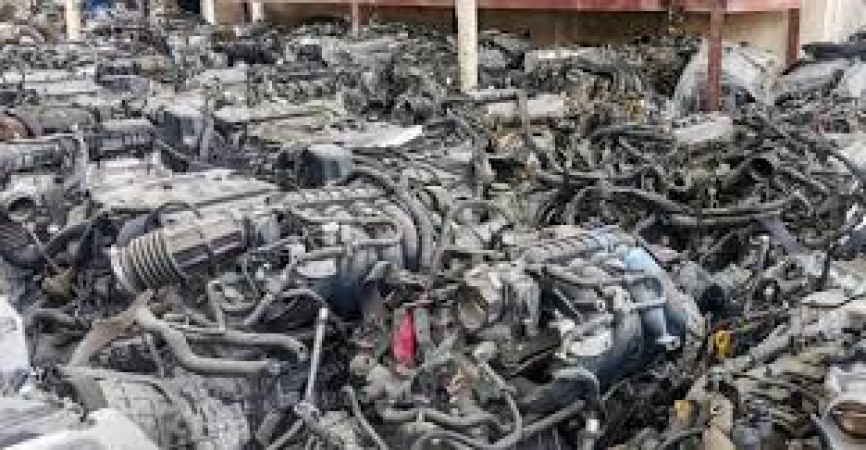
The Owode-Onirin Motor Spare Parts Market
Grief hung thick in the air at Ikorodu General Hospital, Lagos in the morning of Wednesday April 1, as families, friends and fellow traders gathered in quiet anguish to receive the bodies of six motor spare parts dealers killed in a police shooting that has continued to haunt Lagos months after it occurred.
The atmosphere was heavy with sorrow. Clusters of mourners dressed in black and muted traditional attire stood in silence, their faces etched with pain and disbelief.
Even before the coffins arrived, the wailing had begun low, piercing cries rising and falling like waves, echoing through the hospital environment.
For many present, this was not just a burial; it was the reopening of a wound that had refused to heal since August 27, 2025, a day now seared into memory as “Black Wednesday” by traders of the Owode-Onirin Motor Spare Parts Market in Agboyi Ketu Local Council Development Area (LCDA), Lagos State.
According to the traders, what began as resistance against the demolition of over 500 shops spiralled into chaos on that fateful day.
Traders recalled how the familiar rhythm of business, metal clanging, engines revving, bargaining voices was abruptly shattered by gunfire.
In their various account of the incident of that day, men abandoned goods in mid-transaction, as customers and traders alike ran for cover.
Some hid behind vehicles; others fled blindly through narrow paths between stalls. Amid the confusion, gunshots rang out repeatedly.
By the time calm returned, six young men lay dead. They were not strangers. They were known faces; sons, fathers, breadwinners, men who had built their lives within the sprawling commercial hub in Agboyi Ketu LCDA.
The victims were identified as Seyi Akinboye, 39; Adeoye Taiwo, 29; Dare Mufutau, 32; Aderemi Hakeem, 27; Abraham Temoola, 33; and Wale Adebayo, 29.
Months later, their photographs still circulate in WhatsApp groups, hanging quietly in shops across the market, grim reminders of a day traders insist should never have happened.
Owode-Onirin is more than just a marketplace. For over four decades, it has served as a vital commercial artery connecting Lagos to other parts of Nigeria and West Africa.
From sunrise, the market pulses with life. Mechanics, traders and customers converge in search of spare parts, scrap metal and tools. Deals are struck in quick exchanges and livelihoods are built through daily struggles.
According to the traders, the market was originally allocated to them by the state government during the administration of a former military leader, with documentation backing their claim.
The market itself is divided into three sections: Iron Metal, Spare Parts and Agbajowo Scrap, each functioning as an ecosystem within the larger commercial network.
“Our section has no issue with land grabbers. Unfortunately, they encroached on our land, and that dragged us into the matter,” said market chairman Abiodun Ahmed.
At the heart of the crisis is a disputed demolition exercise that traders allege was enforced by a suspected land grabber, identified as Akeem (other names withheld).
According to multiple accounts, he allegedly stormed parts of the market with armed thugs and police officers to carry out what traders described as an illegal demolition.
Witnesses and civil society groups claim the confrontation that followed led to indiscriminate shooting.
The Lagos State Police Command, however, has maintained that the demolition was not carried out by the state government but by a land grabber who unlawfully enlisted police officers from outside the state, an act said to violate directives from the Inspector-General of Police.
Despite these explanations, questions linger.
For the traders, the central issue remains unanswered: Who authorised the use of deadly force?
Legal proceedings have since begun, albeit slowly.
The Lagos Magistrates’ Court sitting in Ebute Metta had ordered the remand of four police officers accused of involvement in the killings.
The officers – Manu Bala, Jibrin Samaila, Ibrahim Garuba and Ibrahim Kashimu are facing a seven-count charge bordering on conspiracy and murder.
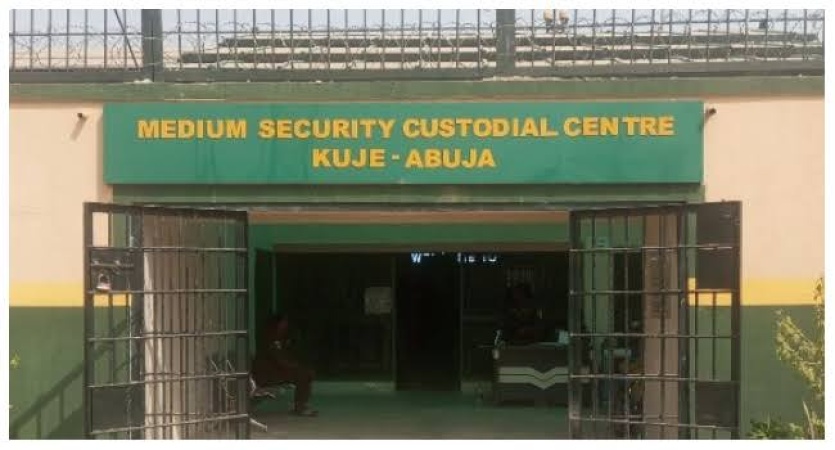
They are currently being held at the Kirikiri Custodial Centre pending legal advice from the Director of Public Prosecutions.
According to the charge sheet, the officers, alongside others still at large, allegedly used AK-47 rifles to shoot several traders to death.
However, the alleged mastermind of the operation remains uncharged, a development that continues to fuel anger among victims’ families and colleagues.
Human rights organisations, including the Centre for Human and Socio-economic Rights (CHSR), have described the incident as a “national shame” and called for an independent investigation.
“These were not statistics. They were victims of what appears to be a brutal alliance between land grabbers and compromised security operatives,” said CHSR President Alex Omotehinse.
The group has demanded full prosecution of all those involved, compensation for affected families and stricter laws against land grabbing.
Similarly, the Coalition Against Demolition, Forced Evictions, Land Grabbing and Displacements has urged police authorities to carry out a broader investigation into alleged abuses linked to demolition activities across Lagos.
Lawyer to the traders and the family of the victims, Mr Femi Falana, SAN, said that “charging of the police officers is a pointer to the fact that the Lagos State Police Command is ready and willing to do justice to the memory of the victims who were murdered in cold blood.”
According to him, the souls of the deceased traders are yearning for justice and it is believed that the court will do justice to the case the moment the case is brought to the court.
Falana said as they await the outcome of the DPP’s advice, saying their belief is that the deceased traders will not die in vain.
Back at Ikorodu General Hospital, the grief was raw and immediate. Children clung to grieving adults, their eyes searching for answers no one could provide.
Some were too young to understand the permanence of death; others wept openly, overwhelmed by loss.
One boy, not older than nine, stood quietly beside a vehicle bearing a coffin, staring blankly. The man inside, once his father, was now beyond reach.
Nearby, a woman leaned over one of the vehicles carrying the bodies, her voice breaking as she called her husband’s name.
“He only went to open the shop. He said he would be back,” she cried.
Around her, men who had shared years of labour and friendship wept without restraint. They had endured long days under the same sun, chasing modest profits and bigger dreams.
Now, they stood helpless, watching six of their own being taken away forever.
The procession moved from Ikorodu to Igbogbo, where the victims were laid to rest.
At the burial ground, emotions overflowed.
One widow, barely able to stand, cried uncontrollably as she spoke of her husband, who had left home that morning in search of daily bread but never returned.
Nearby, children watched in confusion as their world quietly unravelled.
“These were not criminals,” a fellow trader said, his voice trembling. “They were hustling to survive. Now six families have been destroyed in one day.”
The market chairman Abiodun Ahmed, who led a peaceful procession to the burial site, reiterated calls for justice and compensation for the victims’ families.
His demands were echoed by relatives of the deceased.
Morufat Oyedeji, sister to one of the victims, described her brother as a responsible father of two.
“He was not a criminal. He was just trying to make a living,” she said.
The mother of Adeoye Taiwo wept bitterly as she spoke of the pain the incident had brought upon her family.
“My son was the breadwinner. He had two children. What will happen to them now,” she asked no one in particular.
Bamidele Arewa, a widow and mother of two, pleaded with the government not to let her husband’s death be in vain.
“I need help to take care of these children,” she said quietly.
Other relatives and guardians joined in the call for justice, their voices forming a chorus of grief and demand.
Beyond the immediate tragedy, the Owode-Onirin incident has reignited the debate over land disputes, urban redevelopment and the use of force in civil matters in Lagos.
Allegations of forced demolitions linked to land grabbing have surfaced repeatedly in recent years, affecting multiple communities.
For rights groups, the issue extends far beyond one market. It touches on systemic concerns accountability within the police force, the role of private interests in public enforcement and the vulnerability of ordinary citizens caught in such conflicts.
As the sun set on the burial ground, mourners slowly began to disperse.
But for many, closure remains elusive.
The empty spaces in the market stalls once occupied by the deceased serve as daily reminders of what was lost.
Mothers continue to mourn. Children continue to ask questions. Colleagues pause, remembering the laughter and conversations that once filled those spaces.
For the traders of Owode-Onirin, justice is no longer just a chant during protests.
It is a quiet, persistent hope.
A hope that one day, someone will be held accountable.
A hope that the blood spilled on their market floor will not be forgotten.
A hope that “Black Wednesday” will not become just another tragic footnote in the long history of unresolved injustices.
Until then, the grief remains—deep, unyielding, and shared by a community still struggling to come to terms with its loss. (The Sun)