Updating your news feed...
NEWS EXPRESS is Nigeria’s leading online newspaper. Published by Africa’s international award-winning journalist, Mr. Isaac Umunna, NEWS EXPRESS is Nigeria’s first truly professional online daily newspaper. It is published from Lagos, Nigeria’s economic and media hub, and has a provision for occasional special print editions. Thanks to our vast network of sources and dedicated team of professional journalists and contributors spread across Nigeria and overseas, NEWS EXPRESS has become synonymous with newsbreaks and exclusive stories from around the world.



















Loading banners
Loading banners...

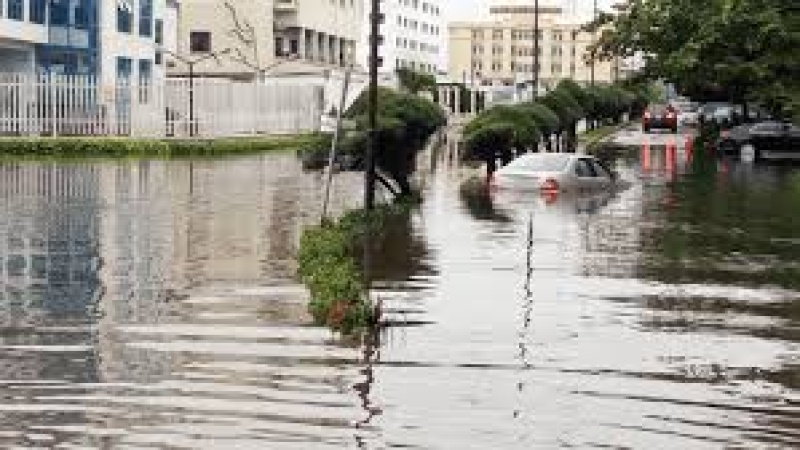
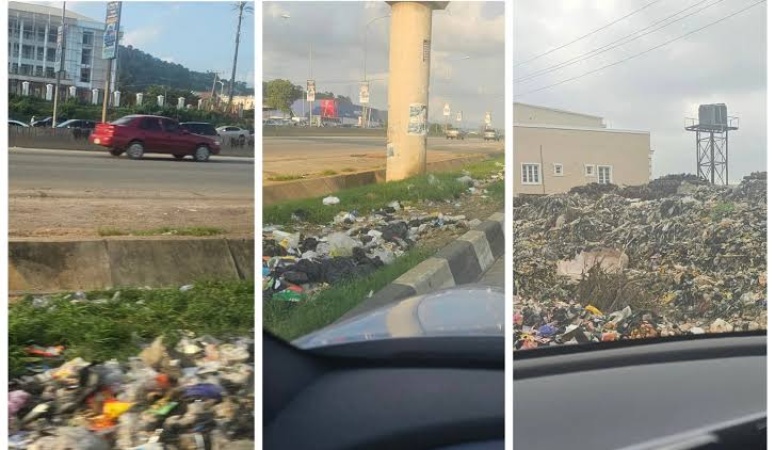
Different flooded areas
There are growing concerns among residents of states, as many parts of the country await massive flooding this year.
In the Nigerian Meteorological Agency (NIMET) 2026 Seasonal Climate Prediction report, NIMET listed states that will experience a rainy season that will be longer than normal. The states include Lagos, Benue, Enugu, Ebonyi, Ogun, Oyo, Nasarawa, Anambra, Kwara, Kebbi, Kaduna, Gombe, and Taraba while parts of Borno, Yobe, and Niger States may experience a shorter-than-normal season.
The agency also said normal annual rainfall amounts will be witnessed across most parts of the country, with above-normal rainfall expected in Borno, Sokoto, Kebbi, Kaduna, Enugu, Cross River, Abia, Ebonyi, Akwa Ibom States and the Federal Capital Territory. Below-normal rainfall is anticipated in parts of Katsina, Zamfara, Kwara, Oyo, and Ogun States. In both cases, NIMET predictions indicate that there will be serious flooding in states across the country.
Below, correspondents in states present situation reports on the contingency plans and state of preparedness of the state governments to mitigate the effects of the anticipated flooding. Residents also speak on their concerns, fears and frustrations.
Anambra:
Apprehension has set in around flood-prone areas in Anambra State following the unveiling of the 2026 Seasonal Climate Prediction (SCP) by the Nigerian Meteorological Agency (NiMet).
In the prediction report, Anambra was mentioned copiously among states where a longer-than-normal rainy season is expected this year. The state falls in the same category with Lagos, Benue, Enugu, Ebonyi, Ogun, Oyo, Nasarawa, Anambra, Kwara, Kebbi, Kaduna, Gombe, and Taraba states.
Anambra is not new to the menace of flooding, as the disaster has been a recurring incident almost on yearly basis. Ten of the 21 local governments in the state had always borne the brunt of flood disasters in the state resulting in several casualties, loss of human lives, farm produces and various household property. The local government areas include Anambra East, Anambra West, Awka North, Ayamelum, Ekwusigo, Idemili South, Ihiala, Ogbaru, Onitsha North, and Onitsha South LGAs.
Residents of these local government areas live with suppressed anxiety every year as the rainy season sets in, uncertain whether they should run for their lives when flooding sets in or whether the situation will be under control within the year.
As it stands now, farmers in Ogwuikpele, Umunankwo, Odekpe and Ochuche all in Ogbaru Local Government area are planting with bated breath, very much uncertain on what this year holds on the issue of flooding.
Nzeli Emmanuel, one of the farmers who spoke to our reporter, said that most of them are still owing their creditors, having harvested their crops prematurely last year to avert the then impeding flood disaster.
“We sold our farm produce at give-away prices, incurring losses. We entered this year with lots of hope that we are going to recover, only to start hearing that another flooding is predicted for this year again. We are already tired of the whole situation because government is not helping us. We are practically on our own because when the flood comes, all we see is government telling us to relocate to holding camps. But no one cares how we can recover from the huge losses we encounter every time,” he lamented.
Another resident, Felicia Nwankwo told the reporter to plead with government at the local, state and federal level to do all within their power to avert this year’s flood prediction.
“Our lives have been messed up at every onset of flooding. The situation is damaging all our plans. We can’t plan our savings and family life at a stretch because of uncertainties of impeding flooding. Government should just find a way to stop this permanently because we are tired of every year displacement” she appealed.
Anambra State Deputy Governor, Dr Onyeka Ibezim, who is the coordinating head of the state flood control programme, who spoke to our reporter in a chance encounter in Awka, said the state has developed a Flood Resilience Plan which can contain any untoward happening in matters of flooding in Anambra.
“The state government, through the Ministry of Budget and Economic Planning has developed a comprehensive Flood Resilience Plan. This strategic effort aligns with global goals like the Sustainable Development Goals (SDGs) — particularly SDG 13 (Climate Action) and SDG 11 (Sustainable Cities and Communities) — and also supports the economic stability of flood-prone communities in the state.”
He said the government has set up key agencies to tackle flooding challenge head-on which includes the Anambra State Clear Drainage and Inland Flood Management Agency (ASCDIFMA), responsible for keeping drainage systems functional all year round and ensuring public compliance with waste disposal policies.
“There is also the Anambra State Erosion, Watershed, and Climate Change Agency (ANSEWCCA) working to protect the environment by managing erosion-prone areas, creating forest reserves, and training communities on prevention methods.”
The deputy governor disclosed that the state has also taken flood sensitisation seriously. He said in collaboration with the National Emergency Management Agency (NEMA), public awareness campaigns have been held in areas like Ogbaru and Anambra West, where residents are educated on early warning signs, evacuation routes, and the importance of keeping drainages clear.
“To complement these efforts, massive infrastructure projects have been approved by the State Executive Council. Areas like Oko and Ekwulobia are currently benefiting from newly awarded contracts focused on erosion control and drainage system development — key steps toward reducing flood impact and protecting property”
“Importantly, Anambra State is also partnering with national and international bodies. Through collaboration with the Nigerian Meteorological Agency (NiMet), the state now receives seasonal climate predictions that inform early response strategies. In addition, Japan has supported the state with advanced flood-warning GPS equipment, further boosting our capacity for real-time monitoring and early intervention,” he said.
The Executive Secretary, of Anambra State Emergency Management Agency, SEMA, Chief Paul Odenigbo, said the state is maintaining 27 holding centres to accommodate and take care of the needs of persons that might be displaced in case of eventual flooding in addition to other precautionary efforts to mitigate the impact of potential flooding across both riverine and upland communities.
“We are fully prepared to ensure the safety of our people. Our warnings are updated weekly, and we are emphasising public awareness to guide residents through the season,” Odenigbo said.
Abia:
In Abia State, massive flooding has always occurred in the state during heavy rainfalls and going by data from NiMet, this year would not be different.
Some of the flood-endemic local government areas in the state include Aba North, Aba South, Osisioma Ngwa, Isiala Ngwa North, Isiala Ngwa South, Ugwunagbo, Ukwa East, Ukwa West, Umuahia North, Umuahia South, and Umunneochi.
People of the state are apprehensive over this year’s flooding, moreover when heavy rains have started to fall earlier than normal, particularly around those flood-endemic areas.
Some of the people living in areas prone to flooding have been suggesting to government what could be done to avert flooding in the state this year.
John Okoronkwo from Aba South Local Government Area said apart from the construction of good drainages, government should send its officials to flood-prone areas to educate people on what to do to checkmate flooding in their areas.
Okoronkwo said the essence of such sensitisation exercise would be to expose people to measures that will mitigate the devastating impacts of flood incidents.
Mrs Beatrice Nwoke wants government to shift focus towards downscaling its flood early warning strategies to the grassroots level for effective coverage. She added that government should empower local communities with the knowledge and resources they need to take early actions and protect themselves from the destructive impacts of flooding.
The state government on its part said it has embarked on proactive measures to guide against the anticipated flooding through flood advisories received from the relevant government agencies and bodies. Such measures, according to an official of the Ministry of Environment, who wouldn’t want his name in print, include the Seasonal Climate Prediction (SCP) and Annual Flood Outlook (AFO) of the Nigerian Meteorological Agency and Nigeria Hydrological Services Agency (NIHSA), respectively.
He said the state has put into effective use the programme of downscaling and sensitisation of the 2026 flood early warning strategies for effective early actions to save lives and livelihoods should there be any flooding.
“Government has taken other measures that were aimed at reducing drastically whatever impact this year’s flooding would have on the state.
He mentioned the construction of drainages in endemic areas and the desiltting of blocked ones as other measures the state government has taken to checkmate flooding in the state this year and beyond.
Benue:
In Benue, residents say flooding has become a recurring environmental and humanitarian challenge particularly, in Makurdi, the Benue State capital. Located along the banks of River Benue, the city is highly vulnerable to seasonal flooding, especially during periods of intense rainfall.
For many residents living in low-lying and flood-prone areas, the disaster is an annual ordeal that disrupts livelihoods, displaces families, and exposes gaps in governance and infrastructure.
With the recent NIMET flood prediction, residents are, again, expressing concerns over their fate when the flood comes while for many others, they are confident that flood in their area is a thing of the past following the numerous road and drainage construction embarked upon by the state government.
A resident, Mr Terhemba Sar, a farmer living close to the riverbanks, described flooding as a perennial crisis. According to him, each rainy season brings anxiety as rising water levels threaten his crops and income. He told our reporter that farming is his main source of livelihood, lamenting that “repeated flooding has led to significant financial losses over the years. Most times we lose not only crops but household items also.”
He expressed frustration at what he described as government’s persistent focus on temporary relief measures instead of long-term solutions. He urged the government to put a permanent stop to the flooding by carrying out sustainable interventions such as dredging the River Benue, constructing dams around the river, and improving water management systems. Doing this, he noted, would help reduce the impact of flooding.
He noted that there was a need for compensation schemes or agricultural insurance to support farmers affected by natural disasters such as floods.
In another part of Makurdi, a trader, Mrs Grace Abeh, who mills rice in the Wadata area, recalled her experience of repeated displacement. She explained that whenever floodwater overruns her area, her family and neighbours are forced to evacuate, often seeking shelter in temporary camps or with relatives.
“We also lose our goods, milled and unmilled rice. Then, we return after the waters recede because we have no viable alternative housing. Even the camps are not conducive.”
Mrs Abeh, who acknowledged that the government issues warnings and evacuation notices, argued that such measures are insufficient without practical support systems, especially with inadequate resettlement plans.
She emphasised the need for affordable housing in safer locations, better-equipped IDP camps, and financial assistance to families and small business owners whose livelihoods are affected by flooding.
Another resident, Gabriel Gbande, an artisan within Makurdi town, attributed the severity of flooding not only to natural causes but also to human actions and institutional failures, blaming it on poor urban planning, blocked drainage systems, and indiscriminate waste disposal among others.
He said: “The government opens new layouts without relevant infrastructure: no roads, no drainage. People build indiscriminately with many buildings constructed on natural waterways, thereby obstructing free flow of water and increasing flood risks.”
While he acknowledged some government efforts at drainage construction and public awareness campaigns, he noted that after construction, the facilities are not properly maintained.
“In Wurukum market and other markets, traders sweep their shops straight into the gutters. We have sanitation days every last Saturday of the month but on those days, you see people moving about their other businesses without cleaning their surroundings.”
He called on the state government to ensure stricter enforcement of urban planning regulations, citizens participation in sanitation activities, regular clearing of refuse dumps, regular maintenance of drainage infrastructure, and the establishment of effective early warning and early emergency response systems to mitigate the effects of the flood.
Meanwhile, the Benue State government said they are already taking some proactive steps to safeguard lives, livelihoods and critical infrastructure in the state.
Commissioner for Water Resources Environment and Climate Change, Odoh Ugwu, who spoke to our correspondent in Makurdi, said the issue of flash floods in Benue State is not new to the state. According to him, the government is intensifying clearing of drainages across urban centres to ensure free flow of water.
He said: “As governments, we cannot just fold our hands and be looking. We are already taking some proactive steps to safeguard lives and livelihoods and critical infrastructure in the state. Our priority is to move from reaction to preparedness now.”
Ugwu also noted that the ongoing road construction embarked upon by Governor Hyacinth Alia comes with a modern drainage system that ensures free flow of water when it rains and collects water from most of the flash point areas.
He further mentioned the construction of the Idye Basin Canal from Zone 4 to Konshisha Street by Governor Alia saying, “The construction is completed. That is one of the major areas that experiences flash floods in Makurdi. With the construction of that canal, the issue of flash flood within those areas has already been taken care of.
“We are not relenting. We are also engaging in the desilting of our drainages. Then in those communities living along the flood plain, particularly around the River Benue and its tributaries, we are sensitising them and advising them to relocate when there is need for that, and the state is also making alternative arrangements for them to move to a higher ground, where they can be safe.
“We are also strengthening our collaboration with relevant agencies, including Benue State Emergency Management Agency, SEMA and NEMA at the federal government; in case of any emergency response and readiness, to enable us to have a coordinated action to checkmate anything.
The Commissioner said the state government remains fully committed to protecting lives and property of the people and ensuring resilience in the face of climate variability, urging a collective action to checkmate the effects and to prepare and be ready for emergencies. At the state Ministry of Agriculture and Food Security, the Director of Agric Services, Mr Solomon Abu, said the ministry has made a proposal to the State Executive Council to ratify and approve the procurement and distribution of improved varieties of assorted seeds to farmers in the state.
He named seeds like Faro 66 and Faro 67 and all those that can withstand floods, saying once it’s approved and funds released, the ministry would ensure the farmers have the improved varieties to plant.
Cross River:
Last year, farmers, particularly those in the Northern part of Cross River State, bore the brunt of the flood disaster as several farmlands were destroyed.
Communities like Adum, Ogba, Izibollo, Mfuma, Mbora, Aladim, Aliforkpa and many others were severely impacted by the floods, which largely resulted from the release of water from Cameroon.
Similarly, flooding also affected communities in the central senatorial district as well as the southern district. In the south, the case of flooding mainly had to do with heavy rainfall which caused rivers to overflow into the Calabar River. The communities close to it were impacted. The worst affected communities were in Odukpani which included low land villages like Isong Inyang, Okpor, Ito, Ukwa, Idung Ndom, Obiokpor, Mkpara, and Calabar River.
Another major cause of the flooding in the south had to do with the incomplete channelization of main drainages within the metropolis which causes residents living around them to bear the burnt.
For instance in Atakpa, a section of the drainage failed which made flood water to flow into homes.
“When it rains heavily, we become afraid for our lives,” Usen Amos, a resident said.
“The drainage channel was not completely done and as you can see, the water flows into our houses and destroys our property.
“We don’t have the financial capacity to move elsewhere and we just have to bear and endure the menace of flood water,” he said.
Another major flood-prone area is along Ekeya community, where a road project was abandoned years ago without proper drainage, which predisposes the area to flooding.
Residents literally abandon their homes as floodwater disperses into houses during rainy seasons. Lives have been lost and several property also destroyed.
Speaking on efforts to mitigate the impact of the floods, Erasmus Ekpang, the State Commissioner for Information said government is embarking on massive sensitization of the residents.
He also disclosed that the government has empowered the Ministry of Environment for emergency intervention. On channelization of floodwater, he said the process has commenced at the Parliamentary Road area of the state capital. He equally said communities severely impacted by the flood can also route their complaints through the Public Complaints Department so the government can properly work on it.
In his response, Anthgha Gill, the Director General of the State Emergency Management Agency (SEMA) said sensitisation campaigns will commence across the state within days.
He said the campaign will cover the three senatorial zones of the state and communities in 15 local government areas have been identified as flash points.
The DG also disclosed that the governor has graciously approved the de-silting of drainages across the state. He added that though the agency does not envisage relocating communities impacted by flooding, it has contingency plans to do so if the need arises.
Enugu:
In Enugu, residents shared their experiences and steps being taken to mitigate future flooding. The government has also noted that though Enugu isn’t generally prone to flooding, it remains fully prepared to tackle any occurrence A resident of Nsukka, Chinedu Idenyi recalled that poor drainage contributed to flooding in his area.
“During heavy rains last year, water flooded parts of the road and nearby houses. It was mainly due to blocked and poorly constructed drainage channels,” he said. Okafor noted that residents have since taken proactive measures.
“We now clear our drainage systems regularly and avoid dumping refuse in waterways. Many of us are also raising the foundations of our buildings and putting sandbags around vulnerable areas.”
Similarly, a farmer in Aninri, Ngozi Ogbuka, said flooding had previously affected farmlands in her community.
“The floods destroyed some of our crops two years ago, especially those close to riverbanks. It affected our harvest and income,” she said.
She added that farmers are adjusting their strategies in response.
Now, we plant earlier and avoid flood-prone areas. Some of us are also creating local drainage paths to redirect water away from our farms.”
In Uzo-Uwani Local Government Area, where communities are closer to riverine zones, residents expressed heightened concern but said they are better prepared.
Ejiofor Eze, a trader in the area, said seasonal flooding has been a recurring challenge.
“Each rainy season, we experience rising water levels, especially in low-lying communities. Sometimes, roads become impassable and movement is restricted,” he said.
Eze noted that residents are now taking precautions ahead of the rains.
“We are clearing drainage channels and relocating valuables to safer places. Some families have also identified higher grounds where they can move temporarily if the flooding becomes severe.”
Also speaking, a community leader, Ifeoma Odoh, said awareness has improved in recent years.
“Before now, many people ignored early warnings, but that has changed. We now pay attention to weather updates and government advisories,” she said.
According to her, community efforts are also being strengthened.
“We organise periodic sanitation and ensure that waterways are not blocked. We are also engaging local authorities to support us with more drainage infrastructure.”
On its part, government said it’s ready to deal with the situation if and when it arises.
Commissioner of Environment, Prof Samuel Ugwu, while reacting to the NiMet predictions said: “Enugu is not particularly prone to flooding, but that is not to say it does not happen. We have experienced minimal flooding in recent years, including in Aninri Local Government Area and parts of Nsukka. The situation in Nsukka, especially around the university town, is largely due to improper channelling of water.”
He, however, assured residents that the state government is well-equipped to manage any flooding or erosion challenges.
“In the first place, we have the State Emergency Management Agency (SEMA), which is the state equivalent of the federal emergency agency. The agency is well-prepared and ready to respond whenever the need arises.
“Enugu State utilises a joint framework involving SEMA and the Ministry of Environment to mitigate environmental damage and address climate-related challenges. We work collaboratively to control and manage any potential risks.”
He noted that the government has provided necessary equipment to enhance response capacity.
“We have utility vehicles and other equipment to tackle flooding and environmental issues. In addition, we have support from development partners, including NEWMAP which is backed by the European Development Bank, which are in place to handle any eventualities.”
Lagos
Lagos State Government and the residents are bracing up for flooding that may result from the 2026 rainy season, which NIMET predicted will be above normal annual rainfall. The Lagos State Commissioner for the Environment and Water Resources, Tokunbo Wahab, who addressed journalists on the Seasonal Climate Predictions (SCP) and socio-economic implications stated that the average annual rainfall amount for the year will be between 1650mm and 3030mm.
He revealed that the rainy season is expected to commence as early as the last week in March while the end of the season is expected to be in the first week of December 2026.
In a statement obtained from the state’s Ministry of Environment and Water Resources and signed by the Director, Public Affairs, Kunle Adeshina, the ministry urged residents to note that high amounts of rainfall can sometimes lead to flash flooding in some parts of the state as strong winds are expected during the onset and the end of each rainy season. This he noted could put lives and property at risk.
The statement highlighted efforts being made by the state government to forestall flooding in the state. These include activating its network of weather stations as well as river gauge stations to monitor the weather and river levels in the state as well as step up the preparedness for weather and flood-related issues.
The statement further revealed that the state would continue with its all-year-round drainage maintenance programme while all emergency response agencies, traffic management agencies and other emergency-related organisations in the state have been put on alert for full preparedness to help lessen the detrimental effects of thunderstorms associated with heavy rainfall in the state.
The statement read in part: “To effectively contain flash flooding, the government will continue the long-established synergy with the Ogun-Osun River Basin Authority (OORBDA), which has ensured control and monitoring of the steady and systemic release of water from Oyan Dam to prevent flooding of the downstream reaches of the Ogun River.
“Therefore, the low-lying areas of Agiliti, Agboyi, Itowolo and Ajegunle communities in Lagos State will be closely monitored with respect to the likelihood of Ogun River flooding as well as all other river basins in the state.”
It disclosed further that the government would continue to step up the enlightenment efforts to sensitise and advise communities in coastal and low-lying wetland areas of the state, to move upland when the need arises in order to avoid needless loss of lives and property. The state government advised motorists to observe prescribed speed limits on the road to avoid preventable loss of lives and property during the rainy season this year.
“To our people, we sincerely appeal that they refrain from deliberate acts that can lead to flash flooding. They should stop the indiscriminate dumping of refuse in unauthorised places, clogging drains with silt or construction materials, erecting building structures within and around drainage Right of Ways and setbacks,” the government warned in the statement.
Oyo:
NIMET’s prediction that Oyo State will experience serious flooding in parts of the state has made residents become anxious and generally frustrated. While some areas are expected to experience prolonged rainfall, others may face short but intense downpours, heightening the risk of devastation in flood-prone communities.
Areas most at risk include Ibadan locations such as IITA, Ibadan Airport, University of Ibadan, Ojoo, Akobo, Basorun, Gate, Challenge, and Ring Road, as well as communities in Akinyele, Oluyole, Lagelu, Egbeda, and along the Ibadan-Ife Road.
Oladipupo Akanni, a trader in Ajibode, said, “We have seen this before. When the rain comes heavily, everywhere is flooded. We are afraid it may be worse this time.”
Laide Fakorede, a fish farmer in Omi Adio, lamented: “I invested over N10 million in my fish ponds, and the last flood took everything. If this forecast is accurate, we are all at risk again.”
Shola Phillips, a community leader in Lagelu, added, “Several houses have already been submerged by water; unless urgent intervention comes to the area, more buildings may be affected.”
Recalling the experience he had last year, Ajani Tiamiyu, a trader in Olodo, said: “Everything was gone, my goods, my savings. We don’t want to experience that again. We need serious action from the government.”
In an apparent effort to reassure the residents of the state, the state government said that it has intensified measures to prevent flooding, including dredging rivers, clearing waterways, and working with the Ibadan Urban Flood Management Project to manage long-term flood risks. Early warning systems have also been strengthened, and alternative routes and temporary relocation options are being planned.
Despite these measures, residents continue to demand more proactive action. “There is a need for sustained preventive action, not just emergency response after damage has been done,” Shola Phillips emphasised.
Authorities have advised residents in flood-prone areas to consider relocating to safer grounds, though many are constrained by financial limitations. Oladipupo Akanni said, “We understand the advice, but where will we go? Most of us cannot afford to move, so we remain at risk.”
Borno, Yobe:
Borno and Yobe States are expected to experience a late onset of the rainy season this year though with more volume of rains for a shorter period of time according to the Nigeria Meteorological Agency (NiMet). The rainy season is predicted to start in the two northeast states by the middle of June and end by August with more rainfall above normal.
Residents fear the change in rain pattern may affect agriculture yields in areas known for high production of groundnuts, beans, and grains. especially millet, maize and wheat.
Alhaji Usman Kidda, a grain farmer, expressed concern over the increase in the volume of water, saying that the shorter rainy season may spell doom for beans farming this year.
“We usually plant beans in early August. Some do so late July and this is when NIMET predicted that rains will stop in Borno and Yobe. Beans need rain for up to four to six times to do well and then survive with dew or showers. Production will be poor without sufficient rains in the early weeks of planting,” he told Sunday Sun in Maiduguri.
Malam Musa Njadvara, a geographer and Maiduguri-based journalist, urged bean farmers to plant on time. “It’s better they plant by the middle of July,” he advised.
He also said the increase in water volume may lead to flooding in communities around rivers in the two states, urging people to vacate such areas before the end of June.
“In Borno State, the Alau Dam project should be completed by the Federal Government with dredging of Rivers Yedzaram and Ngadda that criss-cross Maiduguri metropolis and Jere Local Government Areas,” he advised.
He urged Borno and Yobe state governments to persuade residents living on banks of rivers to relocate to upland communities.
Some residents, however, want the government to handle the relocation like the resettlement of displaced victims of insurgency. Malam Yunusa Ali, a public affairs commentator in Yobe is one of such residents.
He maintained that relocating those living in areas prone to flooding will mitigate disaster.
“It is high time the government started sensitisation for people around river banks in Borno and Yobe states. Governments should develop a relocation programme that will take care of basic needs of such people. We must also find a permanent solution to the annual challenge. We should not wait for disaster to strike before we react,” he stressed.
The reporter could not reach the Borno State Commissioner for Environment for comment on the state’s preparedness to respond to the NIMET forecast. An official in the ministry, however, told Sunday Sun on condition of anonymity that government plans to clear all drainages, especially in Maiduguri and its environs before the onset of rains while local government authorities are expected to carry out similar exercise in their council areas.
The official also said the ministry, in conjunction with other ministries and agencies, plans to embark on sensitisation of residents living around river banks.
Sokoto:
In Sokoto State, yearly but devastating floods have continued to wreak havoc across communities in some local government areas, submerging thousands of farmlands, and destroying livelihoods of the residents.
Residents interviewed said the development and disturbing events evoke great concerns in residents for their personal safety, livestock and livelihoods.
Sani Lambara, a resident of Shagari town who lost his seven-year-old child during a flood disaster, in August last year, said the fear of another rainy season is a major concern across the community.
“Flooding is a big concern in our community because when it comes, farmlands, houses, and livelihoods are badly hit and destroyed. Even our safety is not guaranteed,” Lambara said.
He appealed for urgent intervention from both the state and federal governments. Also speaking, Garba Tukur, a community leader in Tamaje area of Sokoto metropolis where incessant floods have destroyed farmland said the NIMET prediction in the state is real and could become another catastrophe.
However, a joint assessment team from the Sokoto State Emergency Management Agency and the National Emergency Management Agency’s Sokoto Operations Office visited some of the affected communities to ascertain the extent of the damage.
The delegation described the situation as devastating but assured communities that their findings would be forwarded to relevant authorities to ensure prompt humanitarian response.
SEMA’s Director of Relief and Rehabilitation, Malam Mustapha Umar, in an interview with the reporter said the state government has begun proactive measures to mitigate the impact of anticipated flooding ahead of the next rainy season.
Umar explained that the government is making adequate arrangements to reduce the risks associated with flooding, particularly in vulnerable communities identified through early warning systems and environmental assessments.
According to him, awareness and sensitisation campaigns are already ongoing across the state, especially targeting residents living in flood-prone areas. He noted that these efforts are aimed at educating communities on preventive measures, early evacuation, and the dangers of ignoring flood warnings.
“We are engaging with critical stakeholders, including emergency response agencies, local government authorities, and community leaders, to strengthen coordination and ensure a timely and effective response”
He added that while the government is intensifying efforts to prevent flooding, contingency plans have also been put in place to manage situations where flooding may be unavoidable.
“On whether flooding may still occur despite preventive measures, we have made adequate arrangements to support affected victims, including the provision of temporary shelters, relief materials, and medical assistance.”
Umar, however, urged residents living in high-risk areas to relocate to safer grounds before the peak of the rainy season, stressing that early evacuation remains one of the most effective ways to save lives and property. He also disclosed that farmers are being advised and trained on climate-smart agricultural practices and flood-resilient farming techniques to minimise losses during the season.
“These include proper drainage management, selection of flood-tolerant crops, and adjusting planting schedules in line with weather forecasts.”
Also speaking, the State Commissioner for Environment, Hon. Nura Shehu Tangaza, said the government has partnered with UNICEF to establish a technical committee on climate change and environmental issues affecting the state. (The Sun)