
ADVERTISEMENT

ADVERTISEMENT

ADVERTISEMENT

ADVERTISEMENT













Loading banners


NEWS EXPRESS is Nigeria’s leading online newspaper. Published by Africa’s international award-winning journalist, Mr. Isaac Umunna, NEWS EXPRESS is Nigeria’s first truly professional online daily newspaper. It is published from Lagos, Nigeria’s economic and media hub, and has a provision for occasional special print editions. Thanks to our vast network of sources and dedicated team of professional journalists and contributors spread across Nigeria and overseas, NEWS EXPRESS has become synonymous with newsbreaks and exclusive stories from around the world.
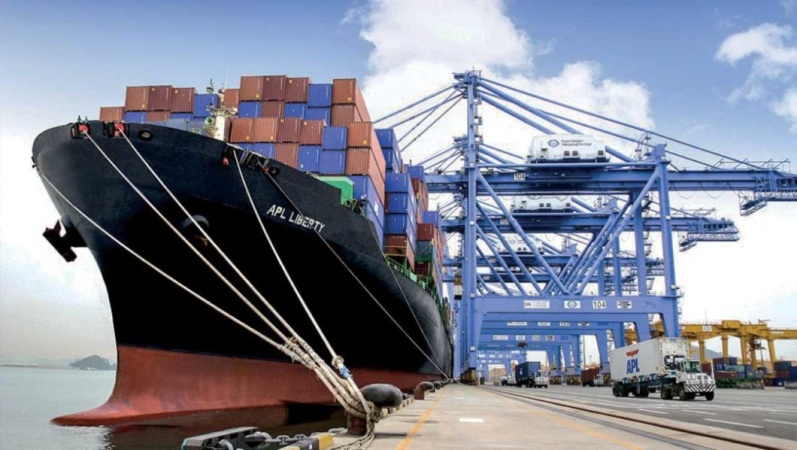
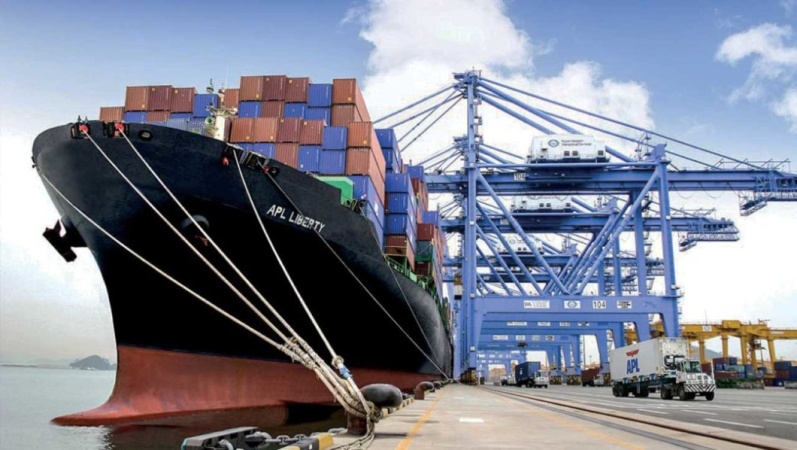
Muhammad Gummi, chief executive officer of G-baneen Nigeria, is living on a Ramadan prayer that his shipments will successfully arrive in the Gulf. His sesame seeds and cashew left the Apapa port in Lagos on February 26 aboard a Maersk vessel headed for the Strait of Hormuz to Jebel Ali port in the United Arab Emirates (UAE).
Two days later, missiles rained in the region as the United States and Israel launched joint attacks on Iran that turned catastrophic in only days. Gummi’s shipments are now trapped at sea with maritime activity paralysed.
Shipping giants like the Mediterranean Shipping Company (MSC), Hapag-Lloyd and Maersk responded by suspending bookings to and from major Gulf ports, including Saudi Arabia, the UAE, Kuwait, Iran, Iraq, Qatar, Bahrain, Oman, and Jordan. Gummi now has nowhere to take his goods.
“They’re just there in our warehouse sitting idle, and it is costing us,” he told BusinessDay. “We are supposed to ship two containers, but some of them are perishable, so we might need to sell them at a lower cost and accept the loss.”
Gummi is not the only one losing. The geopolitical conflicts in the Middle East have triggered a shipping crisis that threatens to further deflate Nigeria’s non-oil export earnings, which dropped 8.12 percent in the final quarter of 2025 compared to the previous year.
Data from the United Nations Commodity Trade Statistics Database show that Nigeria’s combined export earnings from Saudi Arabia, the UAE, Kuwait, Qatar, Oman and Bahrain totalled about $443 million in 2024, spanning commodities such as consumer goods, fuels, vegetable products, raw materials and intermediate goods.
About $290 million worth of Nigerian consumer goods went to Kuwait in the same year, with the UAE and Saudi Arabia receiving other fuels, vegetables, raw materials and metals worth $148m and $3.9m respectively.
Container shipping lines are now imposing extraordinary surcharges and suspending operations at these ports, forcing Nigerian exporters to use more costly and time-consuming shipping routes or risk forfeiting their shipments altogether.
This week, the Mediterranean Shipping Company (MSC), the world’s biggest carrier told shippers it is introducing a $2,000-per-container “WAR Surcharge” on routes from Nigeria’s Tincan Island port to Saudi Arabia, Jordan, Yemen and Egypt, while both Hapag-Lloyd and CMA CGM announced “Emergency Fuel Surcharges” (EFS) ranging from $75 to $350 per TEU across multiple trade routes due to oil price swings.
Hapg LLoyd further introduced a “Contingency Surcharge’ of $1,500 per standard container on shipments through the Red Sea, Nigeria’s primary route to Asian markets, while CMA CGM’s newly announced “Peak Season Surcharge” of $500 per TEU applies specifically to cargo moving from Southeast Asia to Nigeria and the rest of West Africa, a route critical for Nigeria’s manufacturing sectors.
Otunba Oladunjoye, chairperson of the Cocoa Processors Association of Nigeria, told BusinessDay that some shipping lines had declared force majeure on active contracts for Nigerian exports of sesame seeds, ginger, and gum Arabic, which legally protects them from liability in the event of an inability to complete delivery.
MSC, in a recent advisory, told customers that all shipments currently en route to the Arabian Gulf will be “diverted to the next safe port of discharge” for local delivery and recovery, adding that a “mandatory surcharge of $800 per container will apply to all affected shipments, without exception, to cover deviation costs.”
Gummi said his client in the Gulf declined to reroute for fear of extra costs for both parties but Oladunjoye said not every exporter will be as fortunate. “The penalty for contract delay or default is on the exporters. If your shipment was in February, because of the war, you have to renegotiate on reroutes, and the importer will charge for delay. If you can’t meet the new deadline, you default on the contract and that’s a massive penalty,” he said.
Yet he claims that no matter the contract terms, the exporter gets squeezed. “Whether it’s Free on Board (FOB) or Cost Insurance Freight (CIF) terms, the exporter will pay the cost. With FOB, the importer technically pays freight, but that extra cost will be passed on to you as a transaction cost. With CIF, you pay directly. Either way, the extra charges get spread across the product,” the COPAN president said.
Recent developments stymie much of Nigeria’s efforts to diversify its export partners. In January, the country with high hopes signed a Comprehensive Economic Partnership Agreement with the UAE to eliminate tariffs on over 7,000 export goods.
There were early results. BUA Group, owned by Nigerian billionaire AbdulSamad Rabiu, signed a memorandum of understanding (MoU) with Abu Dhabi’s AD Ports Group and local investment firm MAIR Group to supply sugar to the Khalifa Port in the country.
These plans could now struggle to see the light of day, robbing Nigeria of crucial foreign exchange earnings.
“I fear that our money, which we were supposed to repatriate, is at stake,” Gummi said. “The client won’t send in money unless he gets his goods. Also, they might increase risk insurance.” He said the current situation will “disrupt foreign exchange supply to Nigeria” because “they send in the dollars.” (BusinessDay)


