Updating your news feed...
NEWS EXPRESS is Nigeria’s leading online newspaper. Published by Africa’s international award-winning journalist, Mr. Isaac Umunna, NEWS EXPRESS is Nigeria’s first truly professional online daily newspaper. It is published from Lagos, Nigeria’s economic and media hub, and has a provision for occasional special print editions. Thanks to our vast network of sources and dedicated team of professional journalists and contributors spread across Nigeria and overseas, NEWS EXPRESS has become synonymous with newsbreaks and exclusive stories from around the world.













Loading banners
Loading banners...

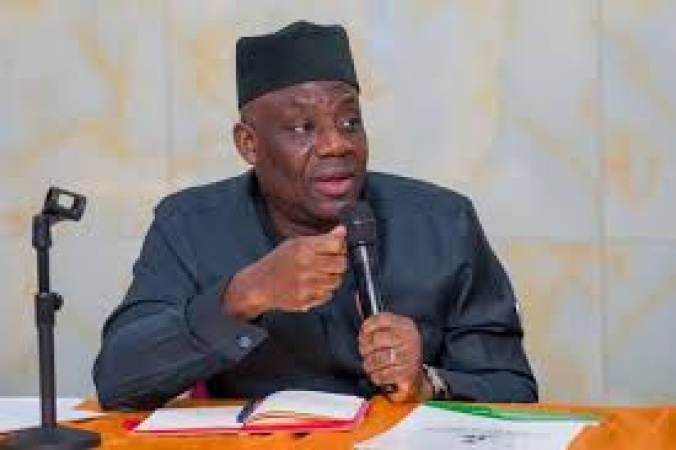
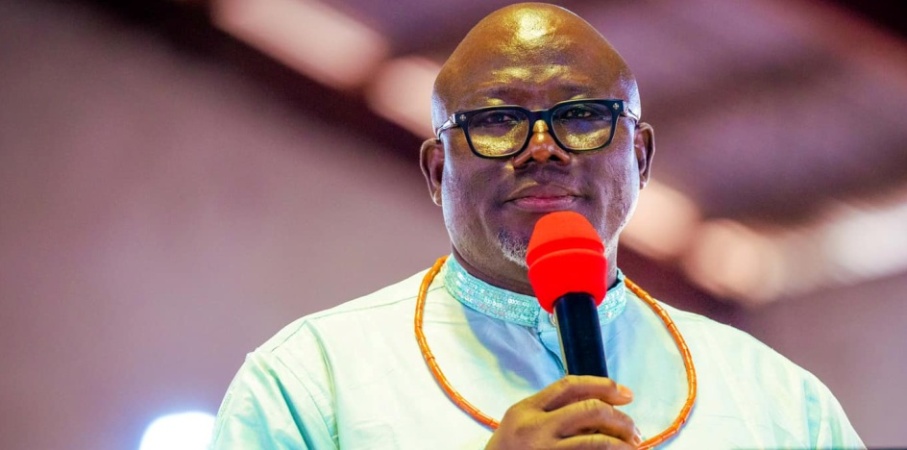
Minister of Education, Dr Alausa
The relative peace being enjoyed in public universities across the country may soon be over if the renegotiated agreement between the Federal Government and Academic Staff Union of Universities (ASUU) is not fully implemented by the end of this month, The Guardian can exclusively report.
However, the Federal Government has passed a damning verdict on heads of tertiary institutions across the country, accusing them of operating the institutions like their personal fiefdoms.
Investigations revealed that there is growing disquiet and palpable tension in federal universities across the country, as the implementation of the renegotiated agreement has yet to commence, two months after it was signed and publicly presented.
The landmark accord, which stakeholders say would end the 16-year impasse over the 2009 pact, was set for implementation on January 1, 2026. The deal featured a 40 per cent salary increase for lecturers, improved pension benefits, and revamped duty-based Earned Academic Allowances to foster university stability and reduce strikes.
But two months down the line, full implementation has remained a mirage as some universities have implemented their components of the agreement, while the Federal Government has yet to do so, blaming the delay on the 2026 budget currently with both chambers of the National Assembly.
The development has also left state universities in limbo, as many state governments are waiting for the Federal Government to commence full implementation of the agreement before taking similar steps. This uncertainty has created anxiety among lecturers in state-owned institutions, who fear that delays at the federal level could further stall the adoption of the new salary structure and other benefits.
Already, the University of Lagos (UNILAG) chapter of ASUU has directed its members to embark on an indefinite strike over ‘amputated’ salaries received from the university management in January and February 2026.
Also, lecturers in the University of Abuja (UNIABUJA), University of Calabar (UNICAL), Federal University of Petroleum Resources, Effurun (FUPRE), Federal University of Otuoke, Federal University of Lafia (FULAFIA), Nigerian Maritime University, Okerenkoko (NMU), Federal University of Medical and Health Sciences, Kwale (FUK), Federal University of Technology Minna, Alvan Ikoku Federal University of Education, among several others are yet to receive the 40 per cent increase.
President of ASUU, Prof. Chris Piwuna, told The Guardian yesterday that the union would convene to decide its next course of action if the budget is not passed by the end of March.
The ASUU President admitted that there were challenges confronting full implementation of salary component of the agreement.
“One of the reasons why the challenges keep rearing their heads in different branches is because of the budget. The budget has not been passed,” he added, even as he lauded some Vice-Chancellors for ‘mopping up funds within the system’ to pay their component of salaries.
Meanwhile, ASUU has vowed to scrutinise the activities of Vice-Chancellors more closely, accusing them of lacking accountability.
Speaking in Abuja yesterday at the public presentation of 72 TETFund-sponsored published academic textbooks and additional 10 titles of academic textbooks secured by the Fund, Minister of Education, Dr Tunji Alausa, called on unions within tertiary institutions to play a more active role in ensuring accountability among the heads of their institutions.
Alausa stressed that academic unions should not shy away from scrutinising the actions and decisions of Vice-Chancellors and other institutional leaders, urging them to demand transparency and responsible leadership in the management of universities and other higher institutions across the country.
He said: “The government is really not the problem, but you need to help us as a government, direct those searchlights to the heads of your institutions: the Vice-Chancellors, the Rectors and the Provosts.
“Many of them are running those institutions like an empire. We need your help in ensuring that fiducial responsibilities are met and they are held accountable. Every single money we deploy to those institutions should be used the way they are meant to be used. We would work with you to ensure that is done”.
Also speaking at the event, Piwuna pledged that the union would intensify its scrutiny of the activities of Vice-Chancellors across Nigerian universities.
Checks on the website of the National Universities Commission (NUC) reveal that there are 309 universities in Nigeria, consisting of 74 federal, 67 state and 168 private. (The Guardian)