Updating your news feed...
NEWS EXPRESS is Nigeria’s leading online newspaper. Published by Africa’s international award-winning journalist, Mr. Isaac Umunna, NEWS EXPRESS is Nigeria’s first truly professional online daily newspaper. It is published from Lagos, Nigeria’s economic and media hub, and has a provision for occasional special print editions. Thanks to our vast network of sources and dedicated team of professional journalists and contributors spread across Nigeria and overseas, NEWS EXPRESS has become synonymous with newsbreaks and exclusive stories from around the world.











Loading banners
Loading banners...

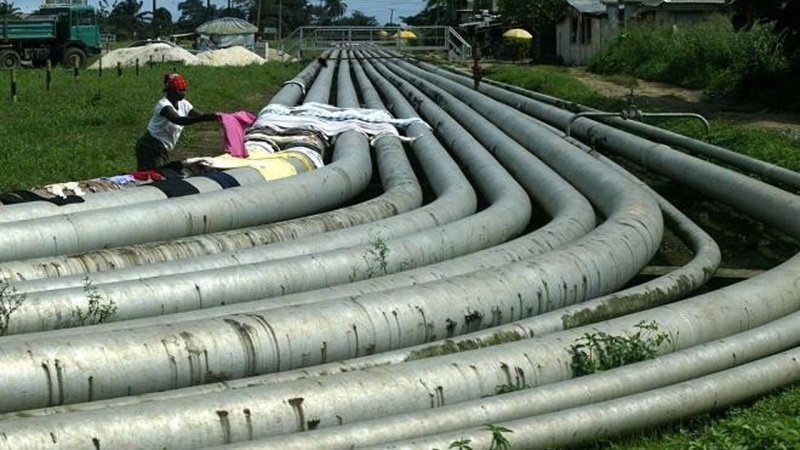
pipelines in the Niger Delta
Niger Delta leaders under the umbrella of the Coalition of Niger Delta Ethnic Nationalities, have urged President Bola Tinubu to decentralise pipeline protection contracts instead of concentrating them in a few persons.
The group warned that failure to decentralise the contracts could trigger renewed unrest, noting the signs were evident and could negatively affect the nation’s economy.
In a statement by officials representing diverse nationalities, it said the protection contracts should be given to major stakeholders in Niger Delta.
The statement was signed by Alaye Theophilus, president of Ijaw Youth Council Worldwide; Oghenekaro Edor, president of Coalition of Isoko Youth Groups; Emmanuel Bieh, president of Ogoni Federated Youth; Lord Marmin Knight, president of Ibom Youth Council; and Ibiso Harry, chair of Ijaw Youth Council, Eastern Zone, to demonstrate broad representation.
“The coalition wishes to draw President Bola Tinubu’s attention to concerns surrounding concentration of pipeline protection contracts in Niger Delta among a limited number of individuals.
“It is important to clarify that no Niger Delta person is calling for revocation of pipeline surveillance contracts. Rather, concerned stakeholders are advocating decentralisation to ensure accountability, equal representation and fairness for all stakeholders in the region.
“Niger Delta is the economic backbone of Nigeria. The daily extraction of crude oil and gas from our lands and waters sustains the nation and funds government operations. However, the region’s unique terrain and history of armed struggle that previously disrupted oil and gas infrastructure and activities cannot be overlooked.
“Many community leaders and stakeholders naturally seek involvement in protecting assets in their domains. Therefore, it is important these concerns are addressed to prevent tensions that could threaten peace in the region.’’
“It will be counterproductive if the protection of such critical national assets remains concentrated in a few hands while the majority of stakeholders and host communities bearing the environmental and social burden of oil exploration are sidelined,” the group warned.
The coalition contended that pipeline protection in the region should not be the exclusive preserve of a few individuals, noting that such an arrangement could fuel resentment among various ethnic nationalities in the Niger Delta.
They insisted: “As representatives of the diverse ethnic nationalities of the Niger Delta, we strongly demand that pipeline protection contracts be decentralised and fairly distributed among credible stakeholders within each Niger Delta state.
“Every oil-producing state in the region should have the opportunity to participate through recognised stakeholders, community structures and indigenous security networks who understand their terrain and have a direct stake in protecting national assets.
“By decentralising pipeline protection contracts and allowing stakeholders in each Niger Delta state to take responsibility for protecting pipelines within their territories, the Federal Government will reduce potential security risks and achieve several important outcomes.”
These, they said, include improved grassroots intelligence and surveillance, as local communities understand their environment better than external actors; and reduced crude oil theft and pipeline vandalism, as host communities will feel a sense of ownership in protecting the infrastructure.
Others are strengthened peace and stability in the Niger Delta by addressing perceptions that certain individuals are favoured over others; economic empowerment and employment opportunities for thousands of Niger Delta youths, thereby reducing restiveness in the region and greater transparency, and accountability in the management of pipeline protection operations.”
According to the coalition, many respected elders and long-standing stakeholders across the Niger Delta are dissatisfied with the current arrangement but have chosen to exercise restraint in the interest of peace and national stability.
They said many younger leaders and stakeholders are closely watching developments, warning that growing frustration over perceived exclusion could heighten tensions if not addressed through fairness and inclusivity.
“There is a palpable sense of discontent that, if not addressed quickly, could lead to unintended consequences.
“Some leaders who are reportedly working with existing contractors have privately expressed concerns about their level of involvement and the manner in which engagements have been handled.
“Many of them are cooperating mainly to preserve peace and prevent external elements from exploiting the situation, which could lead to instability in the region.”
The coalition added that it does not believe the situation reflects the intention of President Bola Ahmed Tinubu.
“From all indications, the current arrangement may have emerged from administrative decisions taken during the tenure of the former Group Chief Executive Officer of the Nigerian National Petroleum Company Limited (NNPCL), Mele Kyari, in collaboration with certain stakeholders in the region.
“The coalition believes the President may not have been fully briefed on the broader implications of concentrating such sensitive contracts in the hands of a limited number of individuals while excluding other ethnic nationalities and host communities whose lands host the pipelines,” the statement said. (The Nation)