ADAD
ADADUpdating your news feed...

NEWS EXPRESS is Nigeria’s leading online newspaper. Published by Africa’s international award-winning journalist, Mr. Isaac Umunna, NEWS EXPRESS is Nigeria’s first truly professional online daily newspaper. It is published from Lagos, Nigeria’s economic and media hub, and has a provision for occasional special print editions. Thanks to our vast network of sources and dedicated team of professional journalists and contributors spread across Nigeria and overseas, NEWS EXPRESS has become synonymous with newsbreaks and exclusive stories from around the world.



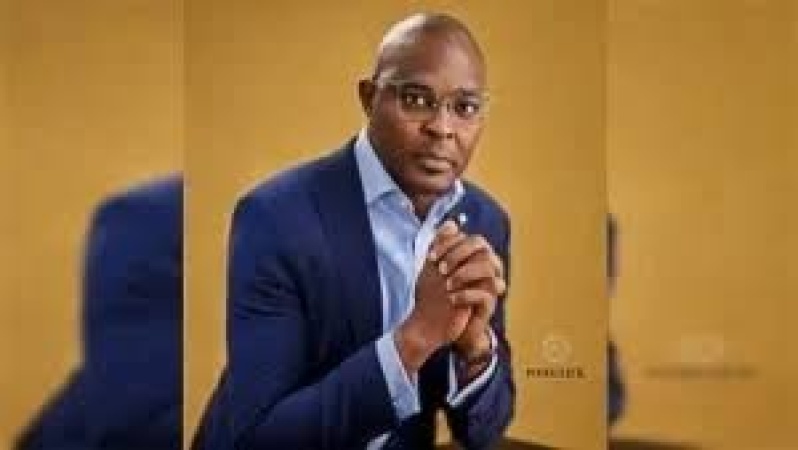
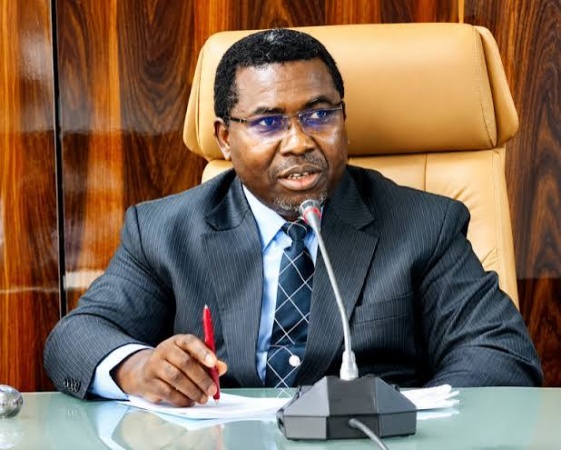
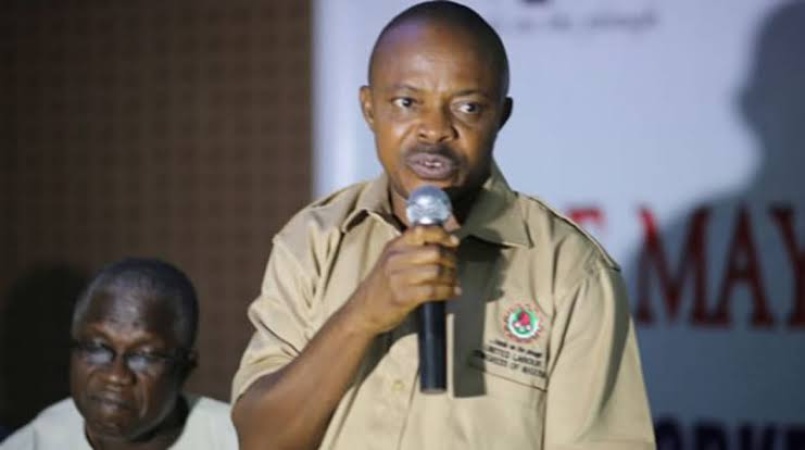
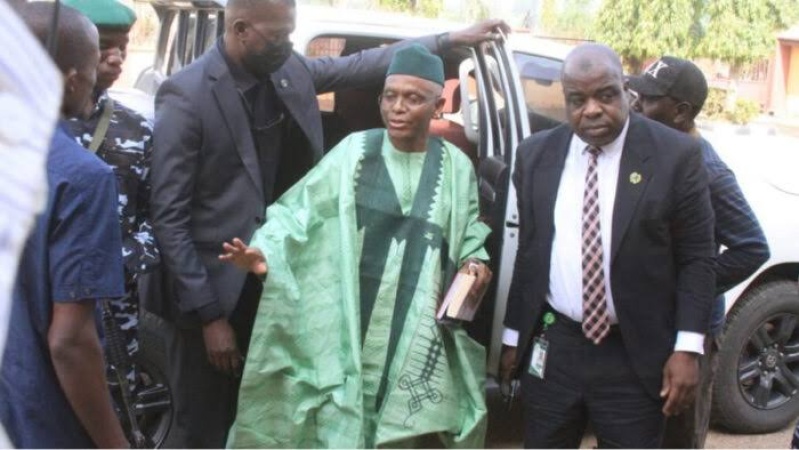

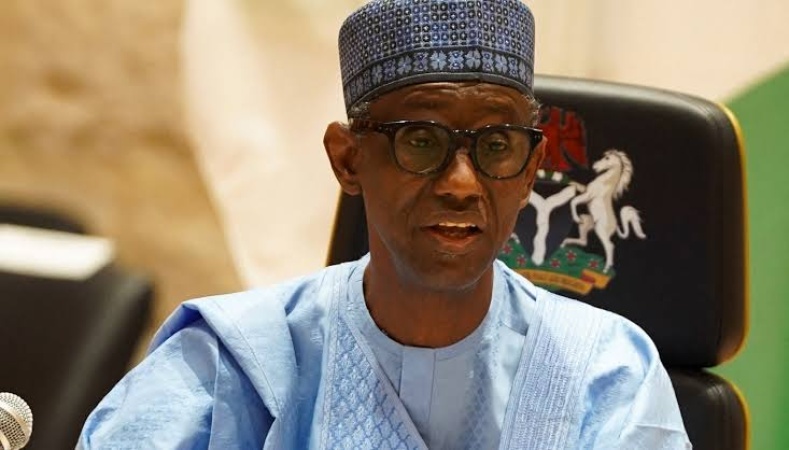
El-Rufai and Ribadu
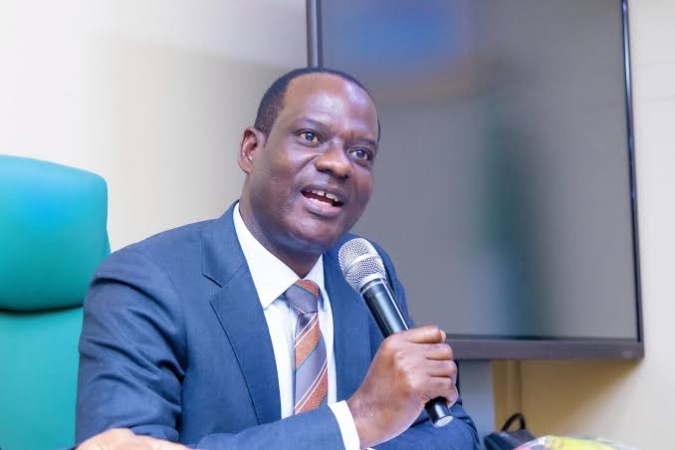
Mr Akin Osuntokun, former Political Adviser to President Olusegun Obasanjo and former Director-General of the 2023 Labour Party Campaign Council, in this interview first aired on Arise News PRIMETIME, speaks on the bitter rift between two former friends, former Kaduna State governor, Malam Nasir El-Rufai, and the National Security Adviser, NSA, Malam Nuhu Ribadu. Osuntokun, who served with the pair under the Obasanjo administration, narrates how the rift began after then-former governor of Lagos State, Senator Bola Tinubu (now President), conducted a secret public opinion poll that gave Ribadu an edge over El-Rufai to emerge as the presidential candidate of the defunct Action Congress of Nigeria, CAN, in the 2011 general elections.
He further speaks on the meeting in 2006 that led to Obasanjo’s preference for Umaru Musa Yar’Adua emerging as the presidential candidate of the Peoples Democratic Party, PDP, and later President of Nigeria over El-Rufai. Excerpts:
Take us back to 2006. How this caucus was convened, and what exactly was its mandate?
Individually, we were close to the President (Obasanjo); we all had something of a patriarchal relationship with him and we held appointments that were quite strategic. I was Political Adviser, El-Rufai was Minister of the Federal Capital Territory, Nuhu Ribadu was the anti-corruption czar, Frank Nweke was the Minister of Information, the chairman, Bayo Ojo, was the Attorney General, Fani-Kayode was the Minister of Aviation, Ojo Maduekwe was the General Secretary of the PDP, Uba Sani was Special Assistant on Public Affairs, Remi Oyo was Press Secretary to the President and Osita Chidoka was Adviser to Ojo Maduekwe.
We got along very well socially and of course politically. So when he (Obasanjo) decided to put together an exit strategy, he then convened us into a formal caucus, nine of us. It was chaired by the Attorney General and Minister of Justice at that time, Bayo Ojo. We were enjoined to kind of guide the process, make corrections and adjustments where necessary, to grapple with the local and international media, to bear emissaries to public opinion leaders, the international community and the diplomatic corps. And also to speculate on who should be the successor. He referenced two or three groups as the pool to fish from. They were the groups of the governors and Ministers.
I remember in the Ministers’ category, he favoured Adamu Bello who was Minister of Agriculture. But later, you know, the governors were a very powerful caucus, and key to the success of the PDP at the polls. So the governors, you know, prevailed on him that he should take one of them as successor. So he had no problem resolving on who that should be. The North-South Rotation Convention had excluded the South, so it had to come from the North. And among the governors from the North, you know, Umaru Yar’Adua was relatively more credible.
He had Integrity, he hardly socialised. If you went to visit him any time after 10 p.m, you were not likely to see him. He would have made preparations for your visit, for where you will board. He was, of course, a very intelligent, educated person. And of course, he had relationship; the President had relationship with the Yar’Adua family. And Obasanjo always recalled that when he was going to run in the presidential primary race in 1999, he was worried about his chances. But Umaru sort of assured him that to begin with, he could count on the full support of Katsina State. And that meant a lot to him
But that came later on. I mean, when your group presented El-Rufai as a preferred presidential option, how serious was that proposal? Was it exploratory or was it a coordinated push on you guys? And we’re also curious to know how Nuhu Ribadu, who was part of that group, reacted to it.
He (Obasanjo) was avoiding further discussions with us on who should be his successor, once he suspected we were going to propose El-Rufai, whom he didn’t want. He thereafter started avoiding any discussion of the proposal
Was that a consensus?
It was almost a consensus. We also suspected that he may have another person in mind but, nonetheless, we said we should push on with the recommendation of our choices.
Did Nuhu Ribadu consent to that?
Oh yes, I mean, they were quite, quite close. He and El-Rufai were very close and, of course, being from the North (from where his successor would emerge), they had a very high public profile. Both of them were very efficient and effective public officers. Nasir’s records in the FCT and Nuhu as Chairman of EFCC spoke eloquently for them. It was a done deal as far as we were concerned. But apparently, the President had his agenda.
And, ultimately, he chose Umaru Musa Yar’Adua instead and that decision, from your assessment, was driven more by loyalty or by calculation to control the person?
No, no. I didn’t figure that it was borne of a desire to control his successor. If you were to pick from the pool of governors from the North, you know, Umaru had almost the best credentials. And he was a highly disciplined person. As I said, you know, relative integrity, credibility. Well, of course, his brother is, you know, I think that the image of Shehu Yar’Adua was always on Obasanjo’s mind.
But now that you look back with hindsight, given all the things that have happened, do you think the suggestion of your caucus of El-Rufai was politically naïve or, as Obasanjo reportedly said, because Obasanjo, I understand, said he was politically naïve of you, or was it strategically bold on your part?
Like he told us, he said he knew El-Rufai more than us. So we should, you know. I mean, we saw the way he referred to El-Rufai later on in his book, which was not very complimentary. Exactly. He didn’t want to be too harsh on him, on Nasir, and not consider him. So, he just kind of said, “Look, you guys, you don’t know what I know about him”. And that in any case, the governors’ caucus was very powerful, you know, and he needed them, you know, to mobilise support for Umaru.
So that again worked against El-Rufai.
And what was El-Rufai’s reaction to all of that? Do you recall?
He didn’t get the vibes that Obasanjo was going to accept him. I think he had that…
But I mean, that 2006 episode, because you said that he and Nuhu Ribadu at the time were very close, and Nuhu Ribadu was pushing his candidature. So there was no sense at all In your assessment that that might have marked the beginning of the personal and political rupture between El-Rufai and Ribadu.
Not at all.
So, when did that rupture occur?
What happened was that we felt Umaru, as President, was going to adopt us, that we would be with him as President. So it was easy to, okay, say there was somebody we could work with. So that sense of his moral presence as part of the family and so on, it wasn’t difficult. It wasn’t a difficult outcome, you know, decision as far as we were concerned.
But what I’m curious to know is when did the political rupture between El-Rufai and Nuhu Ribadu occur? Was it something Bola Tinubu had to do with it?
Yes. You know I was making reference to Umaru. Umaru didn’t want us near him. He wasn’t well disposed towards us, especially towards El-Rufai and Nuhu. That, you know, destabilised the group, so to say. And then, the matter, of course, it went on to become some kind of victimising, you know, rejecting Nuhu and El-Rufai. So they had to leave the country and go into exile. But, you know, I don’t want to use the word ‘backfire’, but it led to a rise in their political profile, you know, both of them, you know, because of the way they were treated.
Yes, I remember some of that because, you know, there were a lot of probes and things.
Exactly. So, Bola Tinubu then, well, he was a kingmaker. He had left as governor of Lagos State in 2007. He wanted (in 2011) to support or sponsor somebody since it was viewed as the turn of the North. He wanted to support a member of the younger generation from the North, whom he could support, you know, put his West-South/West support behind. And then, he did a public opinion survey. Nobody knew. I’m sure El-Rufai didn’t know. So, the result of the opinion clearly favoured Nuhu. While the opinion for Nuhu got 45 percent, El-Rufai got seven percent, and so on and so forth. So, it was on that basis that Tinubu reached out to Nuhu and adopted him as a (presidential) candidate. But I think that was when the bad blood set in, you know, with Nasir and Nuhu, and that kind of elevated Nuhu above him. And I think he never really got out of that disappointment.
But then he subsequently became the governor of Kaduna State and all the rest of it. I mean, two-term governor.
No, he didn’t get over it. And, of course, you know, if you compare the two of them, he had an upper hand by becoming the governor of Kaduna State for eight years while Nuhu was languishing in political wilderness, so to say. And then 2023 came, Nuhu solidified his relationship with Tinubu. He had become his confidant, you know, all through that period. Of course, you remember the saga of the ministerial nomination? Yes. Tinubu had already appointed Nuhu as NSA, which was a very powerful position, you know, and then El-Rufai thought he was going to be the main minister. And Nuhu had become a powerful official, and then something happened. You know, I think that was a struggle.
And El-Rufai basically felt that Mr Ribadu had something to do with it?
Yeah. It then began having what, to me, seemed like an obsession. You know, with Nuhu Ribadu, almost every time finding a way to link him with whatever problems that he had. You know, I thought, as a matter of fact, I don’t like talking about some of these things that we have done together. But I think that things have gone too far. (Sunday Vanguard)