Updating your news feed...
NEWS EXPRESS is Nigeria’s leading online newspaper. Published by Africa’s international award-winning journalist, Mr. Isaac Umunna, NEWS EXPRESS is Nigeria’s first truly professional online daily newspaper. It is published from Lagos, Nigeria’s economic and media hub, and has a provision for occasional special print editions. Thanks to our vast network of sources and dedicated team of professional journalists and contributors spread across Nigeria and overseas, NEWS EXPRESS has become synonymous with newsbreaks and exclusive stories from around the world.


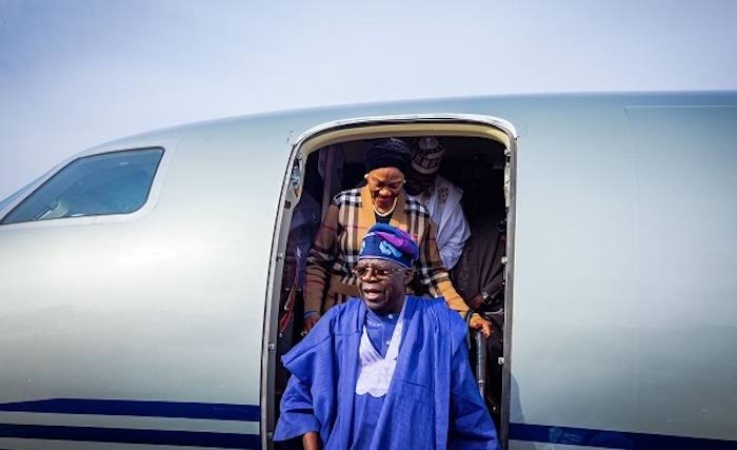



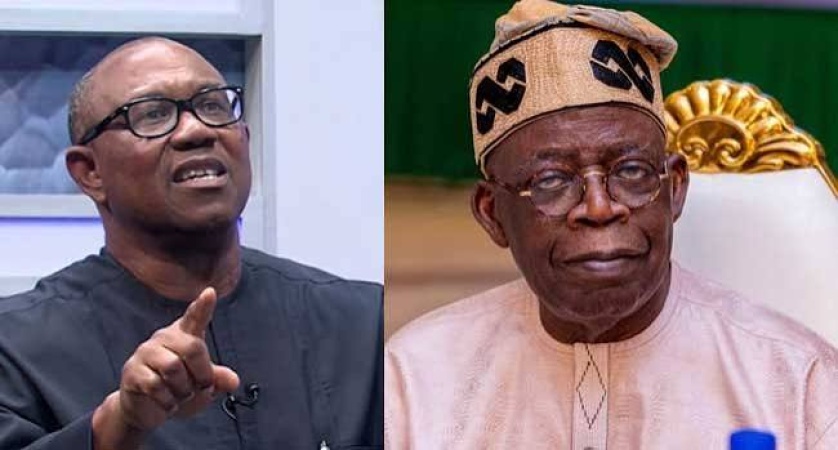



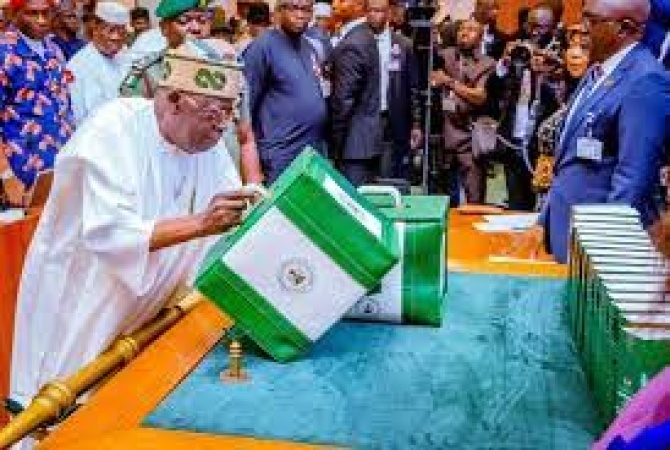
File photo: President Bola Tinubu presents the National budget at the National Assembly
When President Bola Tinubu unveiled an ambitious N58.18 trillion 2026 Appropriation Bill, it was framed as a bold fiscal blueprint, one designed to secure the country, stabilise the economy and consolidate reform gains.
But in recent weeks, a different narrative has taken hold in Abuja: one of anxiety, frustration and disbelief.
Across ministries, at Senate hearings and within the wider public, a troubling question is being asked; if previous budgets were barely implemented, what confidence should Nigerians have in another record-breaking proposal?
A pattern of underperformance
The anxiety intensified after members of the President’s Economic Team reportedly admitted that budget implementation since 2023 has been severely constrained.
That admission struck at the heart of the matter. For three consecutive fiscal cycles: 2023, 2024 and 2025, implementation gaps have widened, with some ministries operating concurrent budgets due to delayed releases.
The Federal Ministry of Health and Social Welfare provides one of the starkest examples. Mohammed Ali Pate, the minister, disclosed that out of N218 billion appropriated for capital projects in 2025, only N36 million was released. In practical terms, that represents near-zero execution in a sector already strained by infrastructure deficits, workforce migration and rising public health demands.
At the Ministry of Transportation, Saidu Ahmed Alkal, the minister, revealed that just 1 percent of his ministry’s N256.73 billion 2025 allocation was released, roughly N2.57 billion. Major rail, road and marine projects have consequently slowed or stalled.
The Ministry of Interior, led by Olubunmi Tunji-Ojo, recorded zero percent capital releases in both 2024 and 2025. The implication: two full years without capital funding for critical infrastructure tied to immigration services, correctional facilities and internal security systems.
At the Ministry of Women Affairs, frustration is equally pronounced. Ireti Kingibe, the FCT senator who chairs the Senate Committee on Women Affairs, publicly criticised what she described as abysmal releases. Imaan Sulaiman-Ibrahim, the minister, had earlier lamented both low allocations and poor disbursement patterns.
For many Nigerians, these disclosures confirm what they experience daily: budgets are passed, announcements made, but projects remain uncompleted.
Senators push back
The concerns climaxed during a five-hour Senate Committee on Appropriations session chaired by Solomon Olamilekan Adeola, representing Ogun West.
Lawmakers interrogated the government’s economic team over the realism of revenue benchmarks, sustainability of debt and capital funding status. With Nigeria’s debt stock hovering around N152 trillion, the fiscal arithmetic has become politically combustible.
Adams Oshiomhole, representing Edo North, raised a fundamental question: if the federal government continues to borrow heavily, why are capital projects not reflecting those inflows?
The line of questioning underscores a growing legislative discomfort: is the problem revenue underperformance, debt servicing pressure, or structural inefficiencies in fund release?
Government’s defence
Wale Edun, finance minister, defended the fiscal strategy, describing the 1.84 million barrels per day oil production benchmark as a “stretch target” meant to push output higher rather than settle for conservative assumptions. He argued that Nigeria remains within safe limits provided fiscal discipline is maintained.
He also emphasised that security spending remains a top priority, with emergency foreign payments expedited for critical equipment.
Doris Uzoka-Anite, minister of state, sought to calm nerves by announcing that payments for outstanding 2024 capital projects had commenced, with full processing of 2024 and 2025 capital components targeted for completion by March 31, 2026. MDAs, she said, have been directed to upload cash plans to trigger payments.
In a post on X (formerly Twitter) on Friday, Sunday Dare, one of the president’s spokesmen, echoed that assurance publicly, emphasising that capital payments are now underway and inherited debts are being settled.
The revenue paradox
The controversy is sharpened by Tinubu’s earlier assertion that Nigeria met its revenue target in 2025 ahead of schedule and was not borrowing.
The statement, delivered confidently before a delegation in September, now appears at odds with the complaints from ministries and continued borrowing activity.
This divergence has fueled public speculation: if revenue targets were achieved, where did the funds go? Were they absorbed by debt servicing, subsidies’ residual obligations, security expenditures, or settlement of legacy liabilities?
Reduce or proceed?
The debate has crystallised around a policy choice articulated by the Senate appropriations committee: reduce the N58 trillion 2026 budget to a more realistic size, or proceed and adjust midstream.
Proponents of reduction argue that fiscal credibility depends on realistic revenue projections, disciplined capital releases and transparent debt management. A leaner, fully implementable budget could restore confidence in the appropriation process.
Those favouring continuity argue that shrinking the budget may signal retreat at a time when security challenges, infrastructure deficits and social demands require expansive investment.
Despite implementation setbacks, the administration points to revenue reforms, removal of fuel subsidies, foreign exchange unification and enhanced tax collection as structural gains. It also highlights security spending acceleration and external debt management advocacy through international platforms.
However, the lived reality of stalled projects, unpaid contractors and delayed capital releases suggests that fiscal transmission mechanisms remain fragile.
The stakes for Nigerians
For ordinary Nigerians, the budget debate is not abstract. It determines whether hospitals are equipped, rail lines completed, correctional facilities modernised, and social programmes funded.
The emerging fear Is not merely about debt sustainability; it is about governance credibility. If budgets are increasingly aspirational documents rather than executable frameworks, public trust erodes.
As the debates for 2026 Appropriation Bill advances, lawmakers and the executive face a defining test: reconcile ambition with realism, or risk deepening skepticism about the federal budgeting process.
In the end, the question confronting Abuja is not simply whether to reduce the budget or proceed, it is whether Nigeria can close the widening gap between what it plans and what it actually delivers. (BusinessDay)