ADAD
ADADUpdating your news feed...

NEWS EXPRESS is Nigeria’s leading online newspaper. Published by Africa’s international award-winning journalist, Mr. Isaac Umunna, NEWS EXPRESS is Nigeria’s first truly professional online daily newspaper. It is published from Lagos, Nigeria’s economic and media hub, and has a provision for occasional special print editions. Thanks to our vast network of sources and dedicated team of professional journalists and contributors spread across Nigeria and overseas, NEWS EXPRESS has become synonymous with newsbreaks and exclusive stories from around the world.










Loading banners
Loading banners...

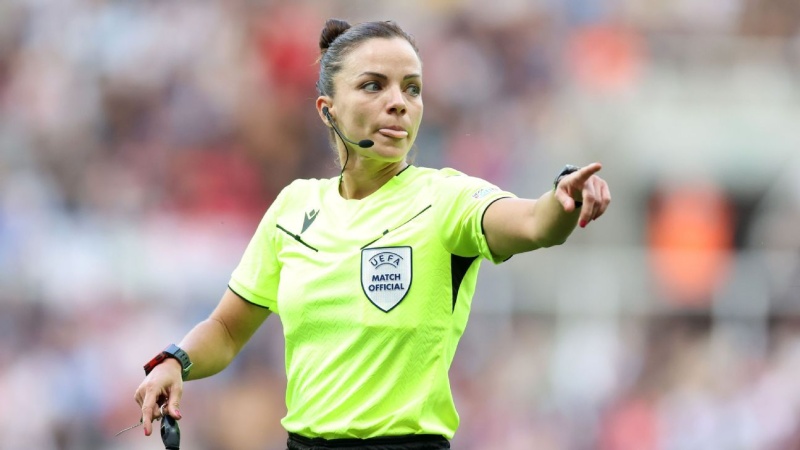
For many years, football refereeing in Nigeria was dominated almost entirely by men, with few opportunities for women to rise through the ranks. That landscape has changed significantly over the last decade.
Today, Nigerian female referees are officiating at elite domestic competitions, major African tournaments and even global events, while others are shaping refereeing policy and development from administrative positions. Their journeys reflect persistence, competence and a gradual but steady institutional shift toward inclusion. Weekend Trust spotlights some top-rated Nigerian female referees blazing the trail in the game of football.
Jamila Buhari
Jamila Bello Buhari is a trailblazer in Nigerian football officiating. Born and raised in Kano, she holds the distinction of being Nigeria’s first female football referee and the first woman to serve as a Board Member of the Nigeria Football Federation (NFF).
Jamila also made history as the first female Match Commissioner in Nigeria, officiating in that capacity during an international friendly between the Super Falcons of Nigeria and Banyana Banyana of South Africa in Lagos.
In addition, she was the first Nigerian woman to earn a FIFA referee badge, further cementing her legacy as a pioneer who paved the way for greater female participation in football officiating at both national and international levels.
Patience Ndidi Madu
Patience Ndidi Madu stands as the most recognisable face of Nigerian female refereeing on the international stage. Born on August 19, 1988, she became a FIFA-listed referee in 2018 and has since built an outstanding portfolio of high-level assignments. Her career reached a historic milestone when she officiated at the Tokyo 2020 Olympic Games, a rare achievement for Nigerian referees regardless of gender.
Madu also made history at the 2022 Women’s Africa Cup of Nations (WAFCON) by becoming the first Nigerian female referee to work with the Video Assistant Referee (VAR) system at the tournament. In addition, she has handled matches in the CAF Women’s Champions League and various continental qualifiers. Beyond officiating, she contributes to referee development as a training officer with the Enugu State Referees Council, helping to groom younger officials. Her career symbolises Nigeria’s growing credibility in elite football officiating.
Mimisen Iyorhe Calvin-Onwuka
Mimisen Iyorhe is widely regarded as a pioneer who expanded the boundaries of what female referees could achieve in Africa. Born on March 2, 1984, she rose to become a FIFA-listed assistant referee and earned respect for her consistency and composure. Her international breakthrough came at the 2018 Women’s Africa Cup of Nations in Ghana.
In 2021, Iyorhe etched her name into history as one of the first African women to officiate at a major men’s tournament when she was appointed to the CAF African Nations Championship (CHAN) in Cameroon. She further cemented her reputation by serving as Assistant Referee One during the final of the 2022 WAFCON between South Africa and Morocco. Iyorhe retired from active refereeing in 2023, leaving behind a legacy of courage and trailblazing achievements that opened doors for women in men’s football.
Yemisi Eunice Akintoye
Yemisi Eunice Akintoye represents the new wave of Nigerian female referees making their mark on the continental stage. A FIFA-badged official, Akintoye has steadily earned recognition through her performances at domestic and African competitions. Her selection by the Confederation of African Football (CAF) for major women’s tournaments, including the Women’s Africa Cup of Nations and the CAF Women’s Champions League, highlights her rising profile.
Akintoye’s progress reflects the benefits of improved referee development pathways and greater exposure for female officials. As she continues to gain experience, she is seen as one of the referees likely to sustain Nigeria’s presence in elite African officiating for years to come.
Hannah Elaigwu
Hannah Elaigwu has become a respected figure within Nigeria’s domestic football scene. A FIFA-listed referee, she has officiated several high-profile matches, including Women’s Federation Cup fixtures and other major national assignments. Her consistent appointments to crucial games demonstrate the confidence reposed in her by the Nigeria Football Federation.
Elaigwu’s role is particularly important in normalising the presence of women in pressure-filled domestic fixtures. By delivering reliable performances on big occasions, she has helped dispel long-held assumptions about women’s suitability for top-level refereeing within Nigeria.
Faith Irabor
Faith Irabor’s influence on Nigerian football extends beyond the pitch. A retired FIFA referee and certified CAF referee instructor, she has played a vital role In shaping officiating standards in the country. In 2023, Irabor made history when she was appointed chairman of the Nigeria Football Federation (NFF) Referees Committee, becoming the first woman to occupy the position.
She has also served as vice president of the Nigeria Referees Association, contributing to referee education, assessment and discipline nationwide. Irabor’s leadership represents a significant shift, placing women in strategic decision-making roles that directly impact the future of refereeing in Nigeria.
Abibatu Adunni Yusuf
Abibatu Adunni Yusuf is a seasoned FIFA assistant referee who combines her officiating career with service as a Police Inspector. Active in the NPFL, she is recognised for her sharp decision-making and physical fitness, essential traits for assistant referees at elite level.
Her dual career In law enforcement and football officiating underscores discipline and professionalism, making her a role model for aspiring female referees balancing multiple responsibilities.
Beauty Kabenda
Based in the Federal Capital Territory (FCT), Beauty Kabenda has been a FIFA referee officiating in the NPFL since 2021. Her steady progression through domestic football has seen her earn regular appointments in Nigeria’s top-flight league.
Kabenda’s rise reflects the widening geographical spread of female referees across the country and the increasing acceptance of women in high-pressure men’s competitions.
Esther Tolu Ajirotutu
Esther Tolu Ajirotutu is a Grade 1 referee with extensive experience in the NWFL Premiership. Over the years, she has officiated numerous top-level women’s league matches, gaining recognition for consistency and technical accuracy.
Her experience at the highest level of women’s domestic football makes her a vital part of Nigeria’s officiating structure, particularly in nurturing younger referees within the women’s game.
Emerging officials
Alongside established names, a growing number of emerging female referees are gradually building their profiles. Officials such as Oluwatosin Omotoye, Olufunmilayo Abigael Alaba amongst others have appeared on recent FIFA and national referees lists, officiating in domestic leagues and regional competitions.
Although many are still in the early stages of their elite careers, their inclusion signals a deliberate effort to broaden the talent base and ensure continuity. These referees benefit from increased visibility, structured training programmes and mentorship from senior officials who have already navigated the path.
The collective Impact of these women has transformed refereeing in Nigerian football. From Olympic appearances and continental finals to domestic showpieces and administrative leadership, female referees are no longer exceptions but key contributors to the game’s integrity and professionalism.
While challenges remain, particularly in terms of societal perceptions and limited grassroots access, the progress achieved so far is significant. With pioneers, administrators and emerging talents working across all levels, Nigerian football now has a sustainable pipeline of female referees whose influence will shape the sport for generations to come. (Weekend Trust)