
Updating your news feed...
NEWS EXPRESS is Nigeria’s leading online newspaper. Published by Africa’s international award-winning journalist, Mr. Isaac Umunna, NEWS EXPRESS is Nigeria’s first truly professional online daily newspaper. It is published from Lagos, Nigeria’s economic and media hub, and has a provision for occasional special print editions. Thanks to our vast network of sources and dedicated team of professional journalists and contributors spread across Nigeria and overseas, NEWS EXPRESS has become synonymous with newsbreaks and exclusive stories from around the world.




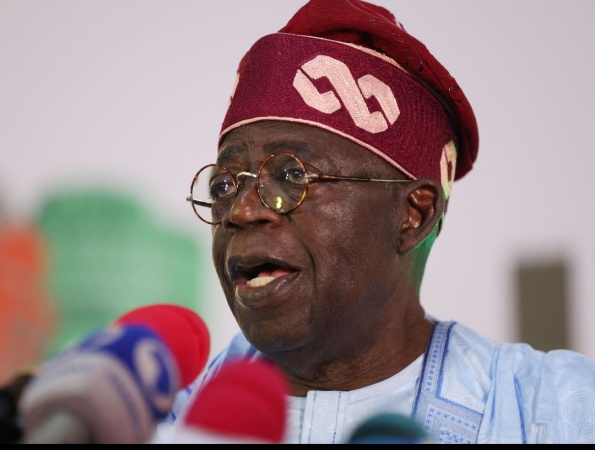


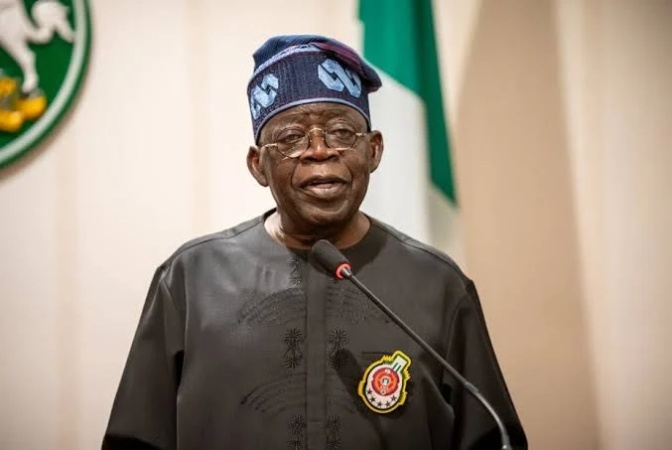
President Tinubu
President Bola Ahmed Tinubu has called for the reactivation of the regional standby force that would leverage the National Counter Terrorism Centre (NCTC) in Abuja, which serves as an intelligence and kinetic fusion unit.
This was contained in Nigeria’s official statement delivered on his behalf by the Minister of State for Foreign Affairs, Ambassador Bianca Odumegwu-Ojukwu, at the conference on the security situation, operational challenges and future risk trajectories in West Africa and the Sahel, held in Accra, Ghana, January 29-30, 2026.
The President reaffirmed the country’s unwavering commitment towards safeguarding the peace, security and stability of West Africa and the Sahel region.
He emphasised that Nigeria was favourably disposed to more collaborative and multilateral approaches aimed at dealing with the security crisis in the Sahel.
According to him, Nigeria has continued to monitor and disrupt latent terrorist operations in the region through various distinct and collaborative efforts with regional institutional structures such as the Regional and Intelligence Fusion Unit (RIFU), Liaison Fusion Unit (UFL), Eastern African Fusion Unit, and Committee of Intelligence and Security Services of Africa (CISSA), among others.
The NCTC had in 2025 signed an MoU with the African Union (AU) on collaborative counterterrorism efforts to combat terrorism and violent extremism across Africa.
“The centre is therefore well positioned to support regional mechanisms and serve as an intelligence coordinating centre in our unified counter-terrorism efforts,” he stated.
He noted that the exploitative and disruptive use of cyberspace for misinformation and disinformation campaigns by terrorist groups has remained a significant challenge, undermining the ongoing efforts at fostering security and stability in the region.
Following the momentous gains by the Nigerian government in curbing this menace through the National Cyber Security Centre in Abuja, in the areas of cyber space monitoring, surveillance and intelligence gathering capacities, he then urged the region to also leverage Nigeria’s existing infrastructure to establish regional mechanisms to curb the menace.
Tinubu said, “Security cooperation remains central to Nigeria’s national interest and regional stability.
Through joint initiatives, intelligence sharing, and coordinated operations, Nigeria seeks to enhance our collective ability to combat terrorism, transnational organised crimes and other forms of insecurity that undermine our individual and collective development. We therefore welcome partnerships that respect our sovereignty and uphold international law, as well as promote mutual trust.
“We recognise that the security situation in large parts of West Africa remains volatile, as the number of victims and casualties of violence, including women and children, continues to rise.
“We also recognise that central to this turmoil is the lack of a single counter terrorism focal point, as well as thinly spread defence formations from border environs to urban areas developments that have resulted in power vacuums outside State capitals, which militant groups have increasingly exploited.
“These power vacuums have afforded Sahel-based terrorists the freedom to expand their activities from central Sahel to littoral West Africa, with Nigeria, Benin, Togo and Ghana, among others, bearing the brunt.
“The implication of this development is worrying, as it affords these groups the latitude to create corridors linking Sahel-based terrorist groups with organised criminal networks traversing the region’s porous borders.”
“Coming amidst the United States (US) government’s intensified anti-narcotics campaign in South America, there are concerns that drug cartels may have already begun relocating their operations to weaker jurisdictions in West Africa, where enforcement capacity appears to be lower.
“This development is worrying as it could bring financially solvent drug cartels into closer proximity with insurgents operating in the region, as the latter could provide logistics and secured smuggling routes in exchange for cash from the former.
“Aside from other aspects undermining Counter Terrorism efforts in West Africa in recent times, overreliance on foreign support, unwillingness of States to sub-ordinate their defence decision to a supranational authority, and political division across what many have described as “an emerging ECOWAS – AES divide,” have become our foremost challenges.
“Thus, in a bid to address longstanding and emerging misapprehensions among member states, there is a need to separate political proclivities from security collaborative initiatives, to pave the way for sustainable security partnerships.
“For purposes of emphasis, Nigeria is favourably disposed to more collaborative and multilateral approaches aimed at dealing with the security crisis in the Sahel.
“Beyond concerns over political and diplomatic challenges, it is noteworthy that States in the region often neglect root causes of instability, such as poverty, governance deficits, marginalisation, and over-militarisation of CT strategies.
“This is evidenced by the skewness of annual budgets, which often prioritise debt servicing, recurrent expenditure, development in state capitals, as well as defence spending, despite several macroeconomic indices signalling the need for urgent government interventions in vulnerable jurisdictions.
“As such, ECOWAS and the AES states must find ways to de-escalate tensions and re-establish an all-inclusive framework that equally reflects shared security and economic interests, which are mutually beneficial for all parties,” he said.
He expressed the optimism that the deliberations of the intelligence chiefs and strategic stakeholders in the regional intelligence community will provide a sustainable framework towards establishing an all-inclusive regional counter terrorism strategy. (Saturday Tribune)