ADAD
ADAD
Updating your news feed...
NEWS EXPRESS is Nigeria’s leading online newspaper. Published by Africa’s international award-winning journalist, Mr. Isaac Umunna, NEWS EXPRESS is Nigeria’s first truly professional online daily newspaper. It is published from Lagos, Nigeria’s economic and media hub, and has a provision for occasional special print editions. Thanks to our vast network of sources and dedicated team of professional journalists and contributors spread across Nigeria and overseas, NEWS EXPRESS has become synonymous with newsbreaks and exclusive stories from around the world.





Loading banners
Loading banners...

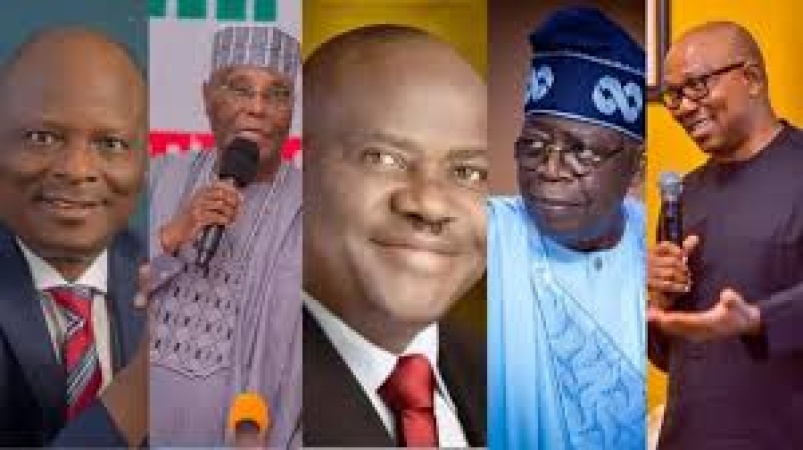
Kwankwaso, Atiku, Wike, Tinubu, Obi
Next year, which is barely four days away, Nigeria will be in the fever pitch of pre-election manoeuvring. With the 2027 general elections on the horizon, 2026 is the year where alliances are solidified, war chests are filled, and the political map is redrawn. Based on the current permutations, all eyes will be on the under listed political gladiators in the New Year.
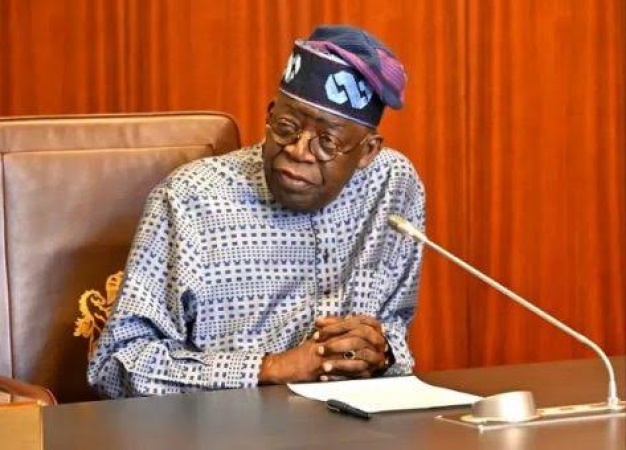
Bola Ahmed Tinubu
Having secured the automatic ticket of his party, the All Progressives Congress (APC), to run for a second term, 2026 will be a make or break year for President Bola Ahmed Tinubu. His first tenure has been characterised by aggressive economic reforms like the naira float and subsidy removal which have caused a lot of hardship in the economy. People will like to watch how he manages the fallout from these audacious but painful policies. By early 2026, the economic hardship being experienced will be the most potent political weapon in the country. Traditionally, Nigerians vote based on tribal identity and regional interest, but 2026 may likely mark a shift toward stomach infrastructure and performance-based voting. The economic reality will rewrite the political playbook.
El-Rufai
While the Tinubu administration points to macroeconomic recovery, projected GDP growth of 4.2 percent and stabilising the Naira at ₦1,400–₦1,500 per dollar by 2026, the reality on the ground appears to be different.
In 2026, if the Renewed Hope gains don’t translate into lower prices for staple food like local rice and beans, the APC may face a massive protest vote. Already, opposition leaders are framing the economic situation as a survival moment. This economic frustration is the primary fuel for the Atiku-Obi-El-Rufai coalition talks. Their message in 2026 will centre on their so-called rescue mission.
WIKE
In vulnerable Northern states like Adamawa, Bauchi and Borno, Plateau, and Benue, the escalating trend of banditry, kidnapping and ransom-taking prevents farmers from reaching their fields. In 2026, voters will judge the President not on the Naira’s value, but on whether they can safely plant crops. Beyond economy and security, Tinubu’s ability to keep the APC united against internal fractures will be a major determining factor for his re-election.
While the South-West is largely seen as the President’s home turf, North West and South-South regions are where the gladiators will fight for the swing votes.
Kashim Shettima
Vice President Kashim Shettima is a vital bridge to the North. In 2026, his role will be to consolidate support in the 19 Northern states, where there has been vocal pushback against some of the Tinubu administration’s policies. Given the speculation surrounding his potential retention as running mate, Shettima’s relevance in the new dispensation will be closely watched. Some analysts believe his loyalty and subservience make him a valuable asset to Tinubu’s campaign. However, others suggest that replacing him could be a strategic move to appeal to different voter demographics.
Though APC has already endorsed Tinubu for re-election, there’s uncertainty about whether this endorsement automatically covers Shettima. The party’s decision on Shettima’s role will likely impact Tinubu’s chances in the North, particularly in the North East, where he has significant influence.
Godswill Akpabio
As the 10th National Assembly moves into the final stage of the 2025 legislative calendar, Senate President Godswill Akpabio finds himself at the centre of a historic constitutional review. Ahead of 2026, several high-stakes issues are currently on the floor. The most crucial of them is the creation of State Police to address the escalating security situation in the country. The Senate is actively pushing for a constitutional amendment to allow states to establish their own police forces. This aims to give powers to governors and local government chairmen to act as the true Chief Security Officers of their domains. Closely related to this is the demand for new states. Already, the agitation has reached a peak with dozens of proposals submitted to the Constitutional Review Committee. The Senate is reportedly considering over 30 formal requests for new states.
Just recently, Akpabio raised fresh hopes for the creation of Ibadan State, describing it as a popular demand during a visit to the Olubadan of Ibadanland. Historically, state creation is notoriously difficult, requiring a two-thirds majority in both the National Assembly and the 36 State Houses of Assembly. Concerned stakeholders will be eager to see how these dynamics will eventually play out in 2026.
As for the transition process, a major overhaul of the electoral system is underway to address loopholes observed in the 2023 elections. To achieve credibility of the process, there is a proposal to conduct presidential and governorship elections as early as November 2026 for the 2027 cycle. A key reform being debated is to mandate that all election petitions and court cases to be resolved before a winner is sworn into office.
Additionally, the new Electoral Act 2025 aims to make the electronic transmission of results from polling units mandatory, removing the discretionary powers currently held by INEC. The Constitutional Review Committee, chaired by Deputy Senate President Barau Jibrin, plans to conclude the current batch of amendments by the end of December 2025. Once passed by the Senate and House, these bills must be sent to the 36 State Houses of Assembly, where at least 24 states must approve them. The task of navigating these complex issues rests on Akpabio’s shoulder as the Chairman of National Assembly. His role in managing this difficult legislative responsibility will be closely watched.
As the head of the National Assembly, Akpabio is perceived as the legislative shield for the presidency. His influence in the South-South and his ability to ensure the legislative agenda remains favourable to Tinubu makes him a top-tier power broker in 2026.
Atiku Abubakar
The political landscape has shifted dramatically in the last few months, moving from vague talks of a mega party to a formal, unified structure. Atiku Abubakar has played a critical role in leading a new opposition alliance. In a move that mirrors the formation of the APC in 2013, the African Democratic Congress (ADC) has emerged as the chosen vehicle for the opposition merger. On November 24, 2025, Atiku Abubakar officially resigned from the Peoples Democratic Party (PDP) and collected his memb’rship card for the ADC in Yola, Adamawa.
At 79 years old, turning 80 in 2026, Atiku’s continued ambition remains the most debated topic within the new coalition. He has proposed a deal where he serves a single four-year term to stabilise the country before handing over to a younger successor, likely Peter Obi.
While Atiku’s supporters argue his experience and Northern network are indispensable, a faction within the ADC—particularly younger supporters of Peter Obi—remains vocal that the ticket should be flipped, with Obi at the top.
Atiku has publicly stated that he will support whoever wins a fair and transparent primary within the new party, though his active campaigning suggests he intends for that person to be him.The merger’s primary goal is to avoid the split-vote scenario of 2023, where Atiku and Obi’s combined 13 million votes easily surpassed Tinubu’s 8.7 million.
As the nation heads into the New Year, the honeymoon phase of the merger will end, and the real battle for the ADC Presidential Ticket will begin.
Peter Obi
While Peter Obi has publicly identified with the African Democratic Congress (ADC) as a unified opposition platform, his actual strategy for 2027 is being played very close to his chest. He remains a member of multiple worlds, keeping several doors open to ensure he isn’t boxed into a corner by the political elite. Unlike Atiku Abubakar, who formally resigned from the PDP and collected an ADC card in a highly publicized event, Obi’s departure from the Labour Party (LP) has been more nuanced. His top advisors, including Yunusa Tanko, have hinted that Obi could switch platforms within a minute if necessary.
By not completely severing ties with the LP structure, despite its internal leadership crisis, he retains the Obidient movement’s original home while using the ADC as a bridge to form a broader Northern-Southern alliance.The biggest puzzle is whether Obi has truly agreed to be Atiku’s running mate. He has stated he will only run if he is at the top of a ticket, yet he continues to sit at the same table as Atiku in ADC strategy sessions.There is speculation that Obi is waiting for the results of the Constitutional Amendment, specifically the new election timetable and the Electoral Act 2025, before committing. If the rules favour a transparent electronic transmission, he may feel confident enough to lead his own ticket again. Obi has been unusually quiet about his frequent visits to the North, engaging in consultative meetings with figures like Rabiu Kwankwaso and even disgruntled members of the APC. His camp Is reportedly building a silent structure in the North to counter the narrative that he is only popular in the South, but they are keeping these networks private to protect them from political sabotage.In a rare moment of clarity in mid-2025, Obi mentioned he would be willing to serve a single four-year term to reset the nation. However, he has not clarified if this offer is part of a deal to gain Atiku’s support or if it’s a standalone promise to the electorate. The true unveiling of Obi’s plan will likely happen during the ADC National Convention expected in early 2026. If he insists on a primary against Atiku, it signals a high-stakes gamble; if he accepts a consensus arrangement, the secrecy will finally end.
Rabiu Kwankwaso
Rabiu Kwankwaso remains fluid in pursuit of his political ambition, playing a high-stakes game of political chess that makes him perhaps the most unpredictable factor in the 2027 race. While Atiku and Obi have moved toward the ADC coalition, Kwankwaso has kept the New Nigeria People’s Party (NNPP) as a fortified island, refusing to fully submerge into any merger.
Last week, precisely on December 20, 2025, he held a massive NNPP National Convention in Abuja where he boasted that the NNPP is the “most disciplined and organized” party in Nigeria, contrasting it with the internal crises of the APC and PDP. He reiterated that his goal is to win the 2027 presidency, showing no public signs of stepping down to be a vice-presidential candidate for Atiku or anyone else.
Despite his criticism of the Tinubu administration’s lack of political will on security, however, he has kept a back door open to the ruling party. Reports suggest he has held meetings about a potential return to the APC. But his terms are said to be non-negotiable, likely involving the removal of his rival, Abdullahi Ganduje, from party leadership and a guaranteed path to a high-ranking role. If he doesn’t join the opposition merger (ADC) and doesn’t join the APC, he remains the Third Force spoiler who can deprive either side of the critical Northern votes needed to win.
Whatever he aims to gain from his standalone politics, Kwankwaso’s political fluidity cannot last forever. By mid-2026, he will have to decide whether to remain a Kano King in a mid-sized party, or join a larger coalition.
Nasir el-rufai
After being sidelined early in the Tinubu administration, the former Kaduna Governor has become a focal point for disgruntled northern elites. For now, the former governor of Kaduna State is at its most delicate crossroads. His relationship with Governor Uba Sani has shifted from Godfather and Protégé to open political warfare. Out of the new power game, Sani has emerged as President Tinubu’s most reliable ally in the North-West. By positioning himself as a calm, inclusive leader compared to El-Rufai’s toxic and divisive reputation, he has effectively hijacked El-Rufai’s grassroots structure in Kaduna. Once the undisputed Lion of Kaduna, El-Rufai is now facing a pincer movement from a President who denied him a ministerial slot and a successor who has systematically dismantled his legacy.
In 2026, El-rufai must either reinvent himself or risk political eclipse. While the ADC is the primary vehicle for Atiku and Obi, El-Rufai made a definitive—though quieter—move earlier this year by joining the Social Democratic Party (SDP). By choosing the SDP over the more crowded ADC, El-Rufai is positioning himself as a power broker who can bring a disciplined Northern structure to the broader opposition coalition without being overshadowed by Atiku.The upcoming local polls in 2026 will be the first real test of whether his loyalists are still with him in the SDP or migrated to Uba Sani’s APC for patronage.
With the Kaduna State House of Assembly report hanging over him, 2026 could see El-Rufai facing formal charges.
Rotimi Amaechi
Amaechi has spent the last few months of 2025 attempting a high-stakes re-entry into national politics by aligning with the coalition forces. In July 2025, he officially aligned with the African Democratic Congress (ADC) and vowed to confront President Tinubu head-on in 2027. Currently, he is positioning himself as a Third Force candidate within the ADC coalition. Lately, his posters have appeared in Northern cities like Kaduna, branding him as the only man for the job. However, this appears like a huge joke to many analysts because without a solid home-base support in Rivers to bring to the table, his bargaining power with Atiku and Obi will be significantly diminished. If the August 30, 2025 local government election result is anything to go by, Amaechi’s grassroots influence is at its lowest ebb since 1999. His relevance now depends almost entirely on the success of the national opposition merger.
Most of his former commissioners and local government chairmen have reportedly either defected to Wike’s camp or aligned with Governor Siminalayi Fubara. Without the machinery of a major party at home, Amaechi is effectively a general without an army in his own state.
How far he can go with his presidential ambition will be an interesting scenario to watch in 2026.
Nyesom Wike
The Minister of the FCT, Nyesom Wike, is the ultimate political gladiator. Despite serving in Tinubu’s cabinet, he maintains control over a significant faction of the PDP. In 2026, his dual-role—serving the President while keeping a foot in the opposition’s door—will be one of the most complex balancing acts to watch.
Ademola Adeleke
The Governor of Osun State, Ademola Adeleke’s path to a second term has been fundamentally altered by a political earthquake. In a move that has stunned the South-West, Adeleke is no longer a member of the Peoples Democratic Party (PDP). His re-election bid now faces three major hurdles that could redefine his political future. One of these is the adoption of Accord Party as a platform for the August 2026 governorship election. While Adeleke’s personal popularity is high, he has traded a massive national party structure for a relatively small platform. He now has to rebuild a state-wide grassroots organisation under a new logo in less than eight months. Several lawmakers and two senators from Osun have refused to follow him to the Accord Party, instead tilting toward the APC or remaining in a fractured PDP. Secondly, the tactical alliance Adeleke enjoyed with Rauf Aregbesola’s Osun Caucus which helped him defeat Oyetola in 2022 has cooled. The APC is now making aggressive moves to reconcile its internal factions to ensure they confront the election as a united front in 2026. As a standalone poll, the APC may likely leverage federal influence. Adeleke’s camp is already expressing concern that without the protection of a major national party like the PDP, he may be more vulnerable to state-level pressures.
In all of these, Adeleke faces an imminent battle ahead which will be an interesting spectre to watch in the New Year.
Siminalayi Fubara
Siminalayi Fubara is no longer just fighting for survival; he has executed a bold great escape that has fundamentally shifted the power balance in Rivers State. His decision to move to the All Progressives Congress (APC) is seen as a masterstroke designed to neutralize Nyesom Wike’s influence by seeking presidential protection. On December 18, 2025, the APC National Caucus reaffirmed his role as the leader of the party in Rivers State. This effectively strips Wike of his owner status within the state APC and forces his loyalists like Tony Okocha to either submit to Fubara’s leadership or remain in political limbo.
Fubara is successfully gutting the PDP structure he once shared with Wike. Ultimately, his survival in 2026 hinges on his relationship with the Presidency. In a major win for Fubara, the APC National Secretary, Ajibola Basiru, recently hinted that the party was already looking toward 2027 with Fubara as their candidate.The Big Question is: Will the Rivers State local government structure currently still heavily influenced by Wike finally flip to Fubara? This will be the primary battlefield in early 2026.
Rauf Aregbesola
Rauf Aregbesola is navigating the most precarious chapter of his political life. Having been formally expelled from the APC earlier this year, the man once known as the undisputed alter ego of Bola Tinubu has officially burned his bridges with the ruling establishment to lead a Third Force movement. His survival and national relevance now rest on a high-stakes gamble in Osun and his new role in the opposition coalition. With the break from the Bourdillon Dynasty, the final eclipse of Aregbesola’s 25-year relationship with President Tinubu is now official. As the Interim National Secretary of the African Democratic Congress (ADC), he is now at the forefront of the opposition.Aregbesola’s relevance is tied entirely to whether he can still deliver Osun. He is currently fighting a two-front war. One, the tactical alliance Aregbesola had with Governor Ademola Adeleke in 2022 has collapsed. Adeleke—who recently moved to the Accord Party—has labelled Aregbesola’s tenure as the worst in Osun’s history. This leaves Aregbesola isolated from both the incumbent governor and the main opposition (APC). Evidence suggests Aregbesola’s grassroots grip is slipping. Already, a significant number of his Omoluabi caucus members—including founding figures like former SSG Moshood Adeoti—have defected back to the mainstream APC. They cited the need to return home rather than wander in the political wilderness of the ADC. If the ADC fails to perform strongly in the 2026 Osun governorship election, Aregbesola’s bargaining power at the national level will effectively vanish. He would enter 2027 as a leader without a regional stronghold.
Abiodun Oyebanji
Current developments suggest Abiodun Oyebanji has successfully built a fortress that makes his position much stronger than his predecessors at this same stage. Traditionally, Ekiti has a famous history of one-term-and-out for its governors. On October 27, 2025, Oyebanji was officially affirmed as the APC’s sole governorship candidate for the June 20, 2026 election. Unlike past cycles where internal APC rancour led to losses, Oyebanji has secured the total backing of former Governor Kayode Fayemi, who recently described him as his greatest achievement.
Besides that, Oyebanji’s greatest political feat in 2025 has been the systematic absorption of the opposition’s “Generals.” In a move that has gutted the PDP’s chances, the structure of former Governor Ayodele Fayose is now openly supporting Oyebanji. Segun Oni, who came second in 2022 under the SDP, has also aligned with the APC machinery for 2026. By bringing these rival structures under one umbrella, Oyebanji has effectively neutralized the litmus test by ensuring there is no viable, unified opposition left to challenge him in the state.
For President Tinubu, Ekiti in 2026 is the strategic defensive line. The APC national leadership has signalled that Ekiti 2026 will receive total federal focus to ensure a landslide victory, which they hope will demoralize the coalition forces-Atiku, Obi, and others ahead of 2027.
Uba Sani
It is clear that the political landscape in Kaduna has shifted dramatically. While Governor Uba Sani was once seen as the hand-picked successor and continuity candidate for Nasir El-Rufai, the relationship between the two has moved from a close alliance to a state of open political warfare. Sani has systematically reversed key El-Rufai policies, such as the Riot Damage Deductions in Southern Kaduna and the sale of institutional lands, framing these moves as healing and inclusive compared to his predecessor’s divisive approach.
In so doing, he is bypassing traditional power brokers to build direct loyalty with grassroots voters. The year 2026 is shaping up to be a year of consolidation for Uba Sani. By framing his administration as the corrective to El-Rufai’s legacy, he is not just distancing himself—he is actively dismantling the political structures that once supported his predecessor.
Dave Umahi
In the political build-up toward the 2027 elections, Minister of Works, David Umahi, has emerged as a central figure in President Bola Tinubu’s Renewed Hope narrative. By positioning the Lagos-Calabar Coastal Highway as the administration’s First Legacy Project, Umahi is transforming a massive infrastructure project into a powerful political tool for re-election. He has shifted the conversation from abstract promises to physical milestones.
In a major PR victory, Umahi performed a temporary opening of Phase 1, Section 1 from Ahmadu Bello Junction to Eleko Village Junction in December 2025. This allows voters to physically experience the concrete technology durability that the administration has promised. By opening sections of the road before the election cycle fully begins, Umahi is providing the Tinubu campaign with visual proof of performance to counter critics who focus on the country’s economic hardships.
Umahi’s role is as much about diplomacy as it is about engineering. In May 2025, he announced that all South-East governors—regardless of party—support President Tinubu. He even called for a regional summit to formally endorse Tinubu for 2027, specifically citing the new wave of federal attention through road projects. By extending the coastal highway into Edo State and launching construction in Akwa Ibom and Cross River, Umahi is using the road to pull traditionally opposition-leaning zones into the APC’s orbit. By delivering visible, high-impact infrastructure, he provides the Tinubu administration with a tangible rebuttal to economic grievances, making the coastal road the centrepiece of the re-election argument.
Prof Joash Amupitan
For Professor Joash Amupitan (SAN), the Chairman of the Independent National Electoral Commission (INEC), the 2026 off-cycle elections in Ekiti and Osun have become the proving grounds for his leadership. As a seasoned scholar, Amupitan enters the role with a mandate to rebuild public trust following the controversies of the 2023 general elections. The 2026 elections in Osun and Ekiti are the first major standalone tests before the 2027 general elections. The focus will be on the seamless deployment of technology and the neutrality of security agencies.Historically a flashpoint state, the Osun election will test the commission’s ability to manage high-tension environments and resolve result disputes in real-time. He has pledged to fix the glitches associated with the IReV, INEC Result Viewing Portal, and BVAS (Bimodal Voter Accreditation System). Voters in Osun and Ekiti will be watching to see if results are uploaded instantly and transparently. If Professor Amupitan fails to deliver a flawless process in these two states, the scepticism currently surrounding the 2027 general elections will likely solidify. Conversely, a transparent process in Ekiti and Osun would validate his appointment as a corrective leader and provide him with the political capital needed to oversee the national polls. (The Sun)