ADAD
ADAD
Updating your news feed...
NEWS EXPRESS is Nigeria’s leading online newspaper. Published by Africa’s international award-winning journalist, Mr. Isaac Umunna, NEWS EXPRESS is Nigeria’s first truly professional online daily newspaper. It is published from Lagos, Nigeria’s economic and media hub, and has a provision for occasional special print editions. Thanks to our vast network of sources and dedicated team of professional journalists and contributors spread across Nigeria and overseas, NEWS EXPRESS has become synonymous with newsbreaks and exclusive stories from around the world.










Loading banners
Loading banners...

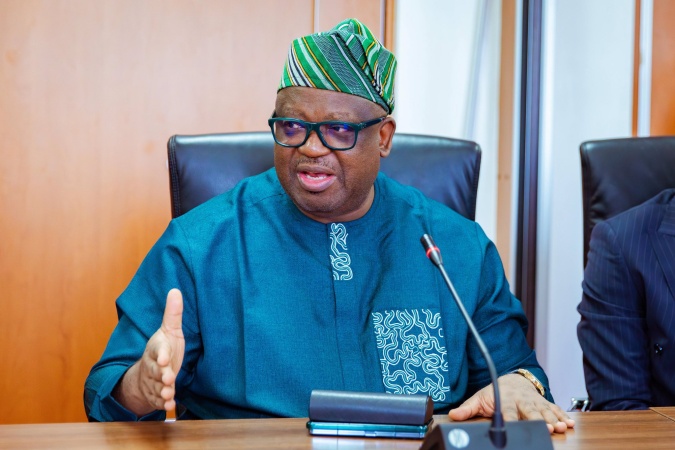
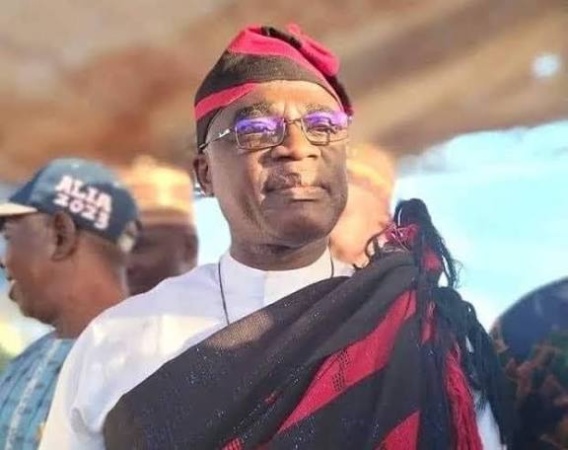
Governor Mutfwang
“Above all, never in the recent political history of Plateau State have political gladiators, long entrenched in opposing camps, been brought together under one roof with a common purpose the way Governor Mutfwang has done”.
Let us be very clear, dispassionate and unsentimental about this: those opposed to Governor Caleb Mutfwang’s move from the Peoples Democratic Party (PDP) to the All Progressives Congress (APC) are simply living in denial. They are still basking in the euphoria of the glorious past of the once vibrant, dynamic and truly people-centric PDP. That PDP, however, has today been torn apart by a multitude of conflicts, most of them deliberately woven by internal interests and forces determined to bring the party to its knees.
For the people of Plateau State, who clung religiously to the PDP from 1999 (with a brief interruption in 2003 when it was factionalised), the bitterness of the party’s internal wranglings is all too familiar. The pain from those battles has not faded.
Unfortunately, it still lingers, especially from the judicial tsunami of the so-called “no structures” wave that swept away the PDP’s gains at the polls, with Governor Mutfwang escaping by the whiskers. That episode was not a mere legal drama; it was traumatic. Its aftershocks are still being felt across the state to this very day.
As the governor himself conceded on that historic day he was warmly accepted into the APC fold—and as he had stated earlier on other platforms—the political acrimony that engulfed Plateau State after the 2023 general elections was as traumatic as it was deeply divisive. It affected not just him, but other key political players and stakeholders across party lines. The tensions were palpable. Suspicion was rife.
The very fabric of the state’s well-knit social, economic, ethnic and religious cohesion was under immense threat.
Indeed, the divisions ran so deep that certain ethnic groups came to see one another as sworn enemies. Each side believed political actors from the other had either illegally seized hard-earned electoral victories or deliberately denied them access to what they had earned through due electoral process.
What is the essence of this background narrative, you may ask? Simple. It is to paint, clearly and honestly, the tense and combustible atmosphere the 2023 elections created. More importantly, it is to show Nigerians—especially the good people of Plateau State—that it is precisely to avoid walking that same treacherous path again that Governor Mutfwang took the wise and patriotic decision to decamp from the PDP to the APC.
Many of those who vehemently oppose that move are, with due respect, still living under the effects of delusions of grandeur. They cling stubbornly to what they see as the Plateau spirit: holding on to political traditions and a rigid sense of political morality. Ironically, it is these same ideals—rooted in Plateau State’s rich political antecedents—that have pushed Governor Mutfwang into pitching his tent with the APC. But he is under no illusion that these ethos are fast shifting, and the best way to survive this inevitable drift is to change along with the times.
Beyond partisan calculations, the governor’s bold and sagacious move to the APC is widely seen by political analysts, both within and outside the state, as a decisive step towards reuniting a people long divided along political fault lines.
The general consensus is that by rallying political gladiators from the two dominant parties in the state onto one platform, Governor Mutfwang has achieved what many leaders failed to do for decades. It is also widely believed that the outcomes of this convergence will be extraordinary, awesome, not only for Plateau State but for the wider Middle Belt.
The governor’s decision must, therefore, be viewed from the prism of repositioning Plateau State on the wider Nigerian political space. It is about making the state a key player and beneficiary in the unfolding political developments across the country, especially in the Middle Belt.
This is a region that has suffered immensely from insecurity for decades and is only now beginning, cautiously, to see the light at the end of the tunnel due to the policies of the Tinubu administration—the most recent being the attacks on ISIS targets in Sokoto State. Who had thought that this would be possible in contemporary Nigeria, where Islamist terrorists, Fulani militia, armed bandits and sundry criminal elements had been accorded more respect and rights than law-abiding citizens? We in Plateau State should know better.
But more fundamentally, at the root of Governor Mutfwang’s decampment lies a strategic concern. At the centre of it are the unprecedented political, social, regional and constitutional shifts that the Tinubu administration is already unleashing—and is prepared to unleash further—on the national landscape. These revolutionary changes promise long-sought reforms that could significantly benefit Nigeria’s minorities, particularly those of us from the Middle Belt.
Against this backdrop, a simple question arises: of what socio-political benefit is it to continue clinging to a PDP that is steadily sinking? This is especially so when almost all other Middle Belt states are already firmly within the APC sphere of influence, positioning themselves to benefit from the ongoing political re-engineering of the national polity.
As a respected Middle Belt pace-setter, Plateau should be leading this new charge, not lagging behind. Therefore, we should not be held hostage by obsolete political thinking in a fast-shifting and highly dynamic political environment where the interests of states, their peoples and the region must come first. In short, it is only when you look at the larger picture, rather than the miniature frame, that you would truly understand and appreciate the governor’s stand.
Undoubtedly, what is currently unfolding in Ekiti State further offers a clear and timely validation of Governor Mutfwang’s decision. Some days back, INEC refused to include the name of the PDP governorship candidate, Dr Wole Oluyede, in the list of candidates for the June 20, 2026, Ekiti State election.
This was despite the fact that his emergence followed a primary election supervised by INEC itself. Oluyede has since insisted there is no court order barring him and that INEC lacks the authority to determine a party’s nominee. The episode once again exposes the deep legitimacy crisis tearing the PDP apart.
Does this ring a bell in Plateau State? Of course it does, particularly for those who suffered—and are still hurting—from the “no structures” ruse after the 2023 elections. For Plateau people who have not deliberately buried their heads in the sand for reasons of political expedience, what is happening in Ekiti is not an isolated incident. It is a prelude. It foreshadows what lies ahead for the PDP as the 2027 general elections approach.
Only the politically naïve will fail to read the handwriting on the wall. Governor Mutfwang is no such leader. He will not lead the good people of Plateau State down that same treacherous, divisive and politically volatile road again. No.
Anyone who attended the January 2, 2026 events during which the governor was formally ushered into the APC will testify to one thing: never before have Plateau politicians of different persuasions been brought under one roof with such a clear intention to work together. The camaraderie was unmistakable. The conviviality was real. The shared commitment to the political, social and overall progress of the state was thick in the air.
Above all, never in the recent political history of Plateau State have political gladiators, long entrenched in opposing camps, been brought together under one roof with a common purpose the way Governor Mutfwang has done.
And, thank God, this is just the beginning; the first steps towards the pursuit (and achievement) of the overall interests of the peoples of the state by a much wider, united leadership that is representative of all.
Like we said the last time, the discussion continues.
•Gyang is the General Manager, Plateau Publishing Corporation (PPC), publishers of THE NIGERIA STANDARD Newspapers, Jos, Plateau State.