ADVERTISEMENT

ADVERTISEMENT















Loading banners


NEWS EXPRESS is Nigeria’s leading online newspaper. Published by Africa’s international award-winning journalist, Mr. Isaac Umunna, NEWS EXPRESS is Nigeria’s first truly professional online daily newspaper. It is published from Lagos, Nigeria’s economic and media hub, and has a provision for occasional special print editions. Thanks to our vast network of sources and dedicated team of professional journalists and contributors spread across Nigeria and overseas, NEWS EXPRESS has become synonymous with newsbreaks and exclusive stories from around the world.
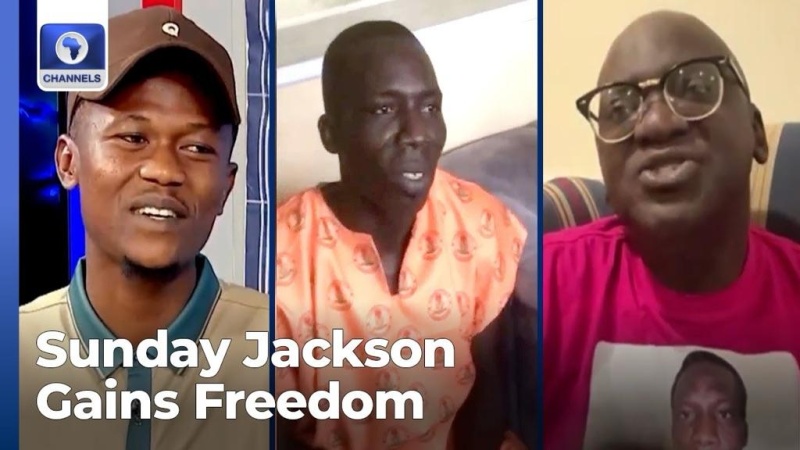
Sunday Jackson, before and now, Lawyer Ogebe
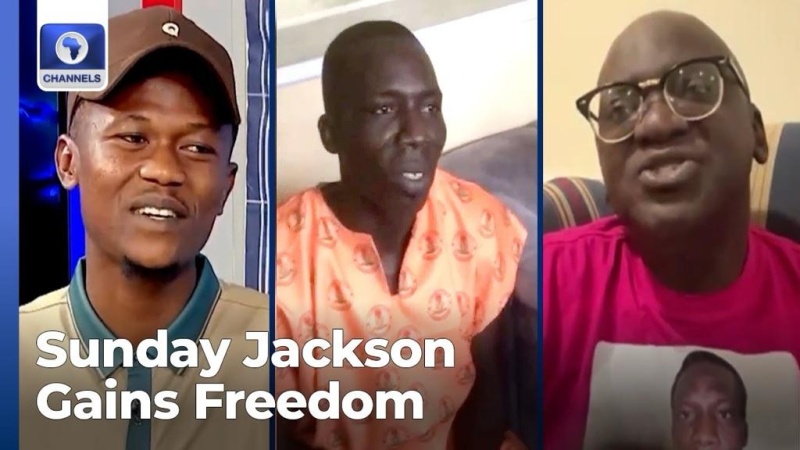
In a recent appearance on Channels Television’s INSIDE SOURCES, Sunday Jackson’s Lawyer Emmanuel Ogebe narrated how pardon was secured after the Supreme Court verdict upholding the death sentence on the Adamawa farmer who killed a herdsman in self defence.
“Jackson can’t afford me. Jackson’s case taught me that being poor is a crime in Nigeria.
I’m blest to have brought two people back from death row for two christmases in two years,” the international human rights lawyer said. Please read details of the interview conducted by programme host Laolu Akande, with Ogebe and Ibrahim Wali as guests.
Laolu Akande: Welcome back to Inside Sources. What a great day to be a Nigerian. Sunday Jackson is free, like we have advocated for several times on this show.
And so I’m opening this show with a very important conversation with Mr. Emmanuel Ogebe, who has worked for several years on this matter, joining us all the way from Washington, D.C. Mr. Ogebe, congratulations on the freedom of Sunday Jackson. Merry Christmas.
Emmanuel Ogebe: Aluta continua, Victoria ascerta. Merry Christmas
Laolu Akande: And also here in the studio, somebody who has been quite vocal on this case, an Abuja-based lawyer, Mr. Ibrahim Wali. Welcome back to Inside Sources.
Ibrahim Wali: Thank you, Mr. Laolu. Congratulations once more to Mr. Emmanuel, to your good self, and to Nigerians. Congratulations to conscience, to justice, and to public interest. It’s very amazing to join you for this celebratory session.
Laolu Akande: Exactly. It’s very important. Let’s start from Ogebe. Ogebe, I want you to tell us, in a very concise way, the story of how you got involved and of course what’s your initial take on his freedom.
Emmanuel Ogebe: Yes. In 2021, I was visiting Nigeria when I read about a young man who had been sentenced to death for defending himself. What was most egregious about that story was that he was stabbed on his farm by the assailant, he managed to recover the knife from the assailant and stabbed him back. There was no doubt that it was classic self-defense.
So, I went up to the prison in Yola to visit him. And I must give thanks to the Nigerian Prison Service. It was during COVID and they were kind enough, despite the lockdown, to grant me access as counsel to meet with him.
And so began our odyssey in 2021, which led up to the breaking news of yesterday, where despite the Supreme Court confirming his death sentence, the Governor of Adamawa State has now granted him a full pardon. It’s a very exciting time and it couldn’t have happened at a better time than at Christmas.
Laolu Akande: I’m telling you. Emmanuel, at this point I’m going to show the video of your meeting last week with Mr. Sunday Jackson whom you had met in his confinement. Can you tell us the story of that your recent meeting and when?
Emmanuel Ogebe: Yes. I was in Nigeria last week and again I want to thank the Federal Government who facilitated me access to see him for the first time in almost five years. They brought him from Yobe to Abuja, and I was able to meet with him in prison. He was in very high spirits and he was very thankful to everyone who has supported him at home and abroad.
And I think the video you’re seeing is actually a world exclusive. You’re the first person to see and share that video with the world.
Laolu Akande: Thank you. Before I bring it to Mr. Wali, what do you think the role of Supreme Court Justice Helen Ogunwumiju in making all of this happen?
Emmanuel Ogebe: Clearly her Lordship’s dissenting judgment resonated with the vast majority of Nigerian people and with the overwhelming majority of humanity because self-defense is literally the first law of human nature, which is self-preservation. The judgment of the other justices did not make any sense.
Her Lordship, Justice Ogunwumiju, saying in her dissenting judgment, this is a proper candidate for clemency by His Excellency the Governor made the case overwhelmingly. But we mustn’t discount the fact that the father of the deceased wrote to the Governor and said, “Forgive this man and let it go. We have no interest in his execution.”
So these were two very salient voices. And then when you add the Nigerian voices. I’d like to say that, the Nigerian people cannot go to Yelwata and defend innocent people from being slaughtered. But in this case, the Nigerian people spoke out and they were able to defend Jackson from being slaughtered by his own government.
Laolu Akande: Interesting. I’m coming back to you to talk about when you are going to see Sunday Jackson next and all of that. But I wanted to bring in Mr. Ibrahim Wali a leading Abuja lawyer who has also spoken on this to give us his take. How do you read what it is that has happened you have spoken in support of this prerogative of mercy and you’ve reviewed the case previous times here on INSIDE SOURCES.
Ibrahim Wali: Thank you once more. It’s a holiday season so really it couldn’t have come at a better time. So, congratulations to Mr. Sunday Jackson himself and to his family. It was a long battle, a decade old battle. Ten good years. But I also want to give props to the judiciary not Justice Helen Ogunwunmiji her lordship whose dissenting judgment was brilliant rich in jurisprudence and humanity and conscience and which would have made the decision for governor Fintiri and his team very easy to make. But even Justice Fatima from Yola although she convicted him and sentenced him to death she indeed advised the governor to also consider clemency even at that stage and it’s very important to say. Even the court of appeal and the Supreme Court.
Laolu Akande: That was the high court . . .
Ibrahim Wali: The initial trial yes at the end she said that the option left for him is outside of appeal obviously is for the governor to grant him pardon and clemency. So, I think that should count as well. I think even the court of appeal and the Supreme Court they made mention of the fact that that window was open and they nudged the government to go on. So I believe this ….
Laolu Akande: They still sentenced him to death though.
Ibrahim Wali: Yes. But I guess this is this is why the jurisprudence of prerogative of mercy itself exists because to be fair to the judiciary now outside of this particular case you only work with what is brought before you; what is presented before you. So the the window for clemency is open when probably the judicial outcome is probably not the moral outcome or it’s not in line with public interest or public policy and then there’s a window for the executive the fact that it can be and it is often abused but there’s a window for the executive to rewrite that wrong if if any. So yes it’s the interface between the judiciary and the other other powers in the constitution but I believe that we have scrutinized the judiciary enough on this case.
Laolu Akande: Thank you so much. Let’s take it back to Emmanuel who is having his Christmas time interrupted by this good news from Abuja so have you spoken to Sunday Jackson or what are your plans to connect with him. Do we know where he is and some of that.
Emmanuel Ogebe: Okay. So, yesterday because I had been given a heads up that this might be happening, I had him on standby so that I would call him and break the news to him. Unfortunately, after I was contacted by the FGN and I requested for confirmation in writing, by the time I reviewed the pardon order from the governor and I called, the prison had closed for the day. So I was not able to speak to him. But I’m sure that he has heard because even in my case when I was imprisoned by General Abacha 29 years ago. Late that night I heard some police officers calling me Free Mandela Free Mandela and I said you know what happened and they said oh Abacha sent a letter that you should be released. So yeah, I know that I heard it unofficially from the guards before I was formally informed the following day and so I believe that by now he has been informed about this and I’m going to call him today to congratulate him.
Laolu Akande: Okay. So based on your previous meeting with him especially this your meeting last week how will you describe his spirits and what do you think is going to be his next plan?
Emmanuel Ogebe: So, you know, before I comment on that, I wanted to quickly respond to my colleague who was giving props to the judiciary and I just want to say that this was a case, a classic case of system failure on all levels. I cannot give Justice Fati any credit because it was my learned colleague who even pointed out to us on this show that he was charged with two stabs and she convicted him of three stabs. This is a judge who invented an extra charge, a stab that resulted in this man being almost hanged. So, I’m sorry. That was a perversion of justice for a poor man. And I’m not in a hurry to acquit her of liability for that. In fact, I’m still going to file a petition against her with the NJC. But to go back to your other question, he was in good spirits. He recorded a message to his family where he said relief is coming. He said it twice. Relief is coming. Keep praying. And I’m happy to say that that relief has come. And when we asked Jackson, I said look, if God works it out that you are out, what would you like to do? What he told me shocked me. He said that I have learnt a lot from my experience and I hope that I can serve my country in some way.
Laolu Akande: Wow.
Emmanuel Ogebe: And when we left the prison, myself and my case officer for Jackson, I said this this man’s country ruined his life, stole 10 years of his life, and yet he says he wants to serve his country. That’s very gracious. And that just speaks to the kind of person he is. Very humble guy. Remember this happened when he was in his 20s. So he was very young and he’s he spent 11 years. This this month is 10 years 10 months since he’s been in prison.
Laolu Akande: Wow.
Emmanuel Ogebe: So, he’s lost a lot of his, youthful age and yet he wants to serve his country.
Laolu Akande: Interesting. Interesting. Okay. So, I’m going to come back to you. You tell us about his family. I remember that you have spoken about his daughter who is 5 years old and who he has never met. But I’m going to come back right to you. Let’s bring it to Wali. Do you want to make any comments or you want to talk about what is the implication of what the governor has done in terms of what I think is a decent activation of the prerogative of mercy
Ibrahim Wali: I understand his sentiments I’m not going to disagree or challenge that but I just felt it’s worth putting out there that she was the first to refer the matter to the prerogative of mercy routine. But yes, the implication is that he’s a free man, but more so that the right to self-defense, the right to life has been protected, at least has been guaranteed and enforced by this decision. And this decision just shows that when the citizens care enough, when the people care enough to put pressure on the system, the system is going to eventually give in. Kudos to the governor. He could have decided not to.
Laolu Akande: He could have ignored it.
Ibrahim Wali: Yes. And he could have just ignored it and not made mention of anything. So, I think that especially with the way Nigeria is currently, so many insecurity situations and cases. So, I think that a classic case of self-defense of this nature helps literally everybody. It strengthens the system. It strengthens the trust in the system. Even if you distrust the system for example the dissenting judgment of Justice Helen is also part of the system so it just shows that with consistent and persistent interaction just like the likes of Mr. Emmanuel did. Real props to them because day and night to push it and to follow due process as well appeal the matter they went to the Court of Appeal and then they went to the Supreme Court even at that they knew, had the knowledge of the fact that there was a prerogative of mercy window and they started activating it as well; sending letters and requests and advocacies and all the conversations that we were having. So it just shows that when you interact with the system persistently and intelligently and in an informed manner then there might just be a light at the end of the tunnel. So I think this victory is for our conscience for everybody; for all Nigerians. And I believe that there’s a lot to learn for everybody here. Prison sometimes is a good experience and I’m sure that is why Mr. Jackson felt the need to, maybe in his mind to give back in a way because Nigerians stood for him, and I’m sure that even in the correctional facility, his fellow inmates and probably the guards because I have a good relationship, a good knowledge of how our prison system operates. I’m sure that they were in support of him. So, he must have seen that support and felt like, well, Nigeria, we can’t give up on Nigeria. We can’t afford to. So I’m glad that he has that mentality and he’s ready to give back to serve or rather give forth because a lot of people would argue that it’s the country that should give back to him after taking Yes.
Laolu Akande: And he will give forth to the country.
Ibrahim Wali: Exactly. Yes.
Laolu Akande: Mr. Ogebe I see that you laughing already getting on it.
Emmanuel Ogebe: So I want to say that you know in as much as we’re joyful at what has transpired. The fact remains that it is Jackson who has been freed but the Nigerian population has not been freed. Why? This was a political resolution. This was not a judicial resolution which means that judgment that perverse judgment is still a precedent that says that Nigerian citizens cannot defend themselves that they must limit themselves if they are stabbed twice. They must limit themselves to stabbing the other person back twice or that they should run away. So the battle is won but the war is not over which is why we will consult with Mr. Jackson and we decide whether we will still go back to court and continue this process because that judgment is not in the best interest of Nigerians who are suffering massive terrorism. The president has just declared that these groups that abduct our children and attack us from forest are terrorists. So why would a Nigerian citizen in that context not be empowered to protect himself when even the DSS has said look protect yourselves. We don’t have the capacity to protect everyone in every village at every time. So we do need to address that. I do also want to quickly mention that Governor Fintiri is now the most famous and the most loved governor in Nigeria in the last 24 hours. People who did not know him before, today they know his name because he did the right thing. It is amazing the goodwill that that single gesture has created. I’ve been receiving calls and contacts from people all over the place who despite the hardship in Nigeria right now are saying this was their best Christmas gift. And I have to tell you I’m very touched by the way Nigerians responded to this issue because they all saw in themselves their own humanity. They all saw in Jackson their own humanity and that’s why I appreciate my colleague Barrister Wali for his insight because let’s be very frank it was on this show that he pointed out the two stabs discrepancy in the judgment of the Supreme Court. Now let me make something very clear here – this experience has shown me why it is a crime to be poor in Nigeria because you will die if you go into the legal system. Do you know that Jackson could not afford my services? There’s no way. Do you know what a ticket to from the US to Nigeria in dollars cost? If I was not doing this for free, that man would fry. He would literally rot there. And this experience also showed me why the rich buy justice because even though the facts and the law were on his side, he still lost in the Supreme Court. So this is a cautionary tale and we have to fix the system. The system is broken. It’s not working.
Laolu Akande: I’m going to ask Barrister Wali to tell us what are the legal possibilities open or options open to Jackson just like you said but I wanted to ask you first to tell us two things. You address the issue of the family tell us about the family Mr. Jackson’s family his daughter that he hasn’t met yet or just knew about in 5 years ago and then after that I want you to tell us the efforts that you engaged in that produced Baba Arduo, the father, to support the clemency because that’s also a very big element of that. So two things tell us about his family, his children and all of that and then the mediation that produced the father supporting the clemency.
Emmanuel Ogebe: Yes. So Jackson has a daughter who is aged about this period of time that he’s been in prison. So she was born shortly after he was arrested and imprisoned. So he’s been in prison 10 years 10 months. So she’s, you know, about 10 years plus at this point now. Sadly, I was the one who broke the news to him in prison when I visited him in Yola and I said, “Oh, I met your daughters.” And he said, “No, I only have a daughter.” And then I said, “Actually, you have two daughters. I just saw your second daughter.” And I had to call his uncle to get the name of his daughter and give him the name. So you see he has never seen her and she has never seen him. And I think the family did that as intentionally because they thought, ‘look, the man is going to die anyway. Why bother telling him that he has an extra orphan he’s leaving behind?’ And they probably told the daughter that the father was dead. So coming into his case brought hope to both of them and I have to tell you when I went to visit his family in Yola in August I was wearing this t-shirt that you are seeing now and I saw his daughter pointing at the t-shirt and talking among themselves in their language. So I asked the uncle to translate and he said oh she was pointing and she said see daddy’s picture see daddy’s picture and that just really touched me that we made her father alive for her to the extent that she could recognize him and that this is the only picture of Jackson that existed in the world. We took it after the judgment was given so she didn’t even know what he looked like.
Laolu Akande: Wow.
Emmanuel Ogebe: So you know it’s a very emotional case. Now with regard to your second question about Arduo Bawuro. Again, that’s another human element of this case that is very touching.
Laolu Akande: Yeah.
Emmanuel Ogebe: That was facilitated by the Hama Bachama the royal father of the Bachama tribe and he was the one who reached out to the father. He traced him. He invited him to the palace. They met and the father disclosed to him that he was shocked to hear that Jackson was sentenced to death that he thought the case was all over. So when we researched we found out that he was listed as a prosecution witness and that he never testified. So he assumed that the case had been dropped. Remember that Jackson was held for 5 years in prison awaiting trial. So none of them even knew that a trial held. He was never called as a witness. And then Channels Television went there, investigated and found the local chief who said when this thing happened, they sat down as a community. They pleaded for forgiveness from from the fan and they forgave and resolved issues. So all of this now opened fresh wounds in the community. And so when I flew there, I met with the father himself and he confirmed to me and he signed a letter for pardon in my presence. And I took it and delivered it to the attorney general of Adamawa State. So this was the process that took place in the community to preserve the peace. And if this man had not been pardoned there would have been a fracture in that delicate peace.
Laolu Akande: Excellent point you know and Ogebe it’s important to also say that you’re your own hard work and your resolve. I remember that you even brought Reverend Devlin was on the show from the US. I think that is also a very big component of all of this and and that is why Barrister Wali was very correct when he actually said congratulations to Mr. Ogebe. Congratulations to you. As we begin to wrap up, and I’m going to give you the last word. I want to bring it to Wali. Two things, you know. Mr. Ogebe said that, he’s probably going to have a discussion, on what options are open, what remedial options are open to Jackson. I wanted you to talk about that. You practice law here in Nigeria every day. Is there a window? And then he said that Jackson was awaiting trial for 5 years. Mr. Wali, how many people more do we imagine are in this kind of situation where they are awaiting trial for such long years and then do you really think that the poor people get justice in Nigeria?
Ibrahim Wali: Ah thank you.
Laolu Akande: So it’s a lot for you.
Ibrahim Wali: It’s quite a lot but I can summarize them. First of all I the matter has gone to the Supreme Court. The Supreme Court has decided, right? So it means that there’s no other court you can go to and there’s no other body that can superintend over the Supreme Court.
Maybe the window that’s open is to go back to the Supreme Court for review. But the last time some lawyers tried to go back to the Supreme Court, these were very senior lawyers in Nigeria. It didn’t end well.
Laolu Akande: What about the merit of the case?
Ibrahim Wali: It didn’t end well. So frankly I do not see any legal routes that allows for … that opens up the merit of the case itself. I can understand his initial … to say that he wants to go against the judge directly and yes maybe … but that has to do with what the judge did or didn’t do; not necessarily the substance of the case but with regards to the merit of the case, he is my senior colleague maybe. We learn every day maybe that there’s a window out there that but I personally don’t think that there’s any legal window after the Supreme Court. On your second question I’ll begin by saying even let’s say 60 to 70% of the criminal trials that I handle myself personally have lingered for more than 3 years. In fact rarely do you see a contested criminal case get completed within a year or two years I think. Five years for a case of this nature is quite expeditious to be very frank. When you look at the system as it is we have more awaiting trial inmates than we have convicted inmates. Awaiting trial inmates are literally the bulk of… So we have more people awaiting trial who are not even in the system awaiting trial yet they are still with the law enforcement agencies. They are probably more than the people awaiting trial who are now more than the people. So it’s like there’s a row of people being fed into the system and you know the system
Laolu Akande: We have an urgent need for justice sector reforms
Ibrahim Wali: Yes we hope that the attorney general of the federation who is very experienced learning about this, is going to put something forth in the nearest future with regards to … There’s a third question about whether…
Laolu Akande: Justice for poor people.
Ibrahim Wali: The reality is it’s very difficult for you to get justice without a vigilant attorney. Now, for you to have a vigilant attorney, it’s not always cheap. That’s just the reality. So, it’s not about justice per se. It’s about the fact that you have a prosecutor on one side. You have the court who can only work with what is presented before it. And then you need a defense counsel, who is going to ensure that everything is done properly and to put up a defense.
So where a case lingers for 1 2 3 4 5 years for example even you as a defense counsel maybe standing in pro bono it begins to wear you down because you still have to finance the filing, the logistic, the transportation.
Laolu Akande: But the state has an obligation to provide legal counsel for people who cannot afford it.
Ibrahim Wali: Yes, but if you look at the legal aid council for example, even they are, you know, they’re really that funded. I worked with them; not worked with them; I volunteered with them. Most of the time they can’t even pay you. You have to because they’re not that properly funded. But the law itself says that when someone doesn’t have representation that the state must provide representation for that person. But the reality is I don’t think that the state has really taken care of that aspect of its duty. So I don’t think we have state public defendants who are funded by the state. We have a legal aid council but I don’t think … and this is also where the attorney general of the federation comes because the council I think is under the ministry. So there’s a lot that can be done frankly. It’s unfortunate frankly. For indigents, it’s very difficult to really defend yourself no matter how innocent you are. And like you said, if they didn’t interfere, that would have been it because even the appeal process, for example, just to compile records, because when you file an appeal from the trial court to the Court of Appeal, you have to compile the record of everything that happened at the trial court and you have to make, copies for all the justices of the … about 20 plus copies. That process alone you have to spend 600 … 700 … 700,000 Naira to 1 million Naira before you now talk about the Supreme Courts. And it gets so … before you prosecute a criminal defense case from trial to the Supreme Court you would have to spend millions of naira and how many Nigerians can afford millions, especially when you are even awaiting trial? You are locked up. You are in detention so you can’t make money. You find that most of their families … they … after showing their best for some time for a while 4they retire because it’s not as if it’s that better outside anyway.
Laolu Akande: Wow.
Ibrahim Wali: So there’s no justice for the poor in Nigeria as currently constituted.
Laolu Akande: Lord have mercy. Mr. Ogebe, can you have the final word please as we as we close?
Emmanuel Ogebe: I think I am one of the most blessed human beings on earth. This time two years ago I landed in Abuja airport with a man that I got off death row in Indonesia after 20 years. And I have to say that very few people are that fortunate in their careers to be able to bring back two people from death row – post appeal. In other words, they were awaiting execution.
Supreme Court had given their judgments before we were able to get them off. So I return glory to God for giving me that opportunity knowing that I myself was once a prisoner.
And so I want to call on people of goodwill you know to be sensitive to the suffering in our community.
There are so many people that have no one to speak up for them and that’s why they are languishing. So in this Christmas season let us open up our hearts and look for people that we can intervene. Sometimes all someone needs is a voice to speak up on their behalf. So that’s one of the things I wanted to say. I want to of course quickly thank you Laolu for your consistency. You’ve been one of the consistent voices on this matter.
You took it very professionally and very consistently and our thanks definitely go to you and Channels TV who traveled all the way to Adamawa to interview his relatives. Of course Wali I can’t thank you enough for the insights that you bring to this issue.
Again if we had people like you … One of my friends in America when she watched your interview she said if you were his original lawyer he would never have been convicted. I mean your brilliance; your sincerity and so we need more of that.
Ibrahim Wali: Thank you.
Laolu Akande: Thank you so much, Mr. Ogebe. Thank you for your comments and thank you so much, Mr. Wali. We must say that the Channels TV is a platform for truth and it is the reason why I’m also here. So we have to be grateful to the chairman and the management of Channels for creating the platform where we can push some of these very important issues and we are thankful to God that we are getting results. Thank you so much. I hope that on the issue of the legal aid council that attorney generals in the states don’t wait for the attorney general in the federal government before they can fix the store. Because I know very well that Professor Yemi Osinbajo as attorney general in Lagos was able to do dramatic reforms just by himself as attorney general of a state. So….
Ibrahim Wali: They have the same power anyway the AGF and…
Laolu Akande: Exactly so don’t let the attorney generals in the state wait for attorney general Lateef Fagbemi who I believe is also very capable and who we hope will do the needful. We we have a very severe need for justice sector reforms and we’re going to come back to that issue at some later times. Thank you so much Mr. Ogebe. Thank you so much Mr. Wali. Thank you for your voices.
Emmanuel Ogebe: Thank you to Riley Moore and the NSA and other officials of the Nigerian government who worked to make this happen.
Laolu Akande: Exactly. Very important because Riley Moore, thank you for bringing it up. Riley Moore actually spoke quite a lot even about Sunday Jackson. Thank you so much Mr. Ogebe. Thank you so much, Mr. Wali. Thank you for your voices.
Emmanuel Ogebe: Thank you to Riley Moore and the NSA and other officials of the Nigerian government who worked to make this happen.
Laolu Akande: Exactly. Very important because Riley Moore, thank you for bringing it up. Riley Moore actually spoke quite a lot even about Sunday Jackson when I was in the … we were together Emmanuel … at that US congressional hearing in November.
Even though he didn’t have anything he brought in the case of Sunday Jackson and made that call and we’re thankful that with everything together this has happened.
Thank you, again, Mr. Ogebe, for you’re a voice. Thank you, Mr. Wali. Thank you for coming to INSIDE SOURCES.