
Updating your news feed...
NEWS EXPRESS is Nigeria’s leading online newspaper. Published by Africa’s international award-winning journalist, Mr. Isaac Umunna, NEWS EXPRESS is Nigeria’s first truly professional online daily newspaper. It is published from Lagos, Nigeria’s economic and media hub, and has a provision for occasional special print editions. Thanks to our vast network of sources and dedicated team of professional journalists and contributors spread across Nigeria and overseas, NEWS EXPRESS has become synonymous with newsbreaks and exclusive stories from around the world.

























Loading banners
Loading banners...

Humanoid Robots
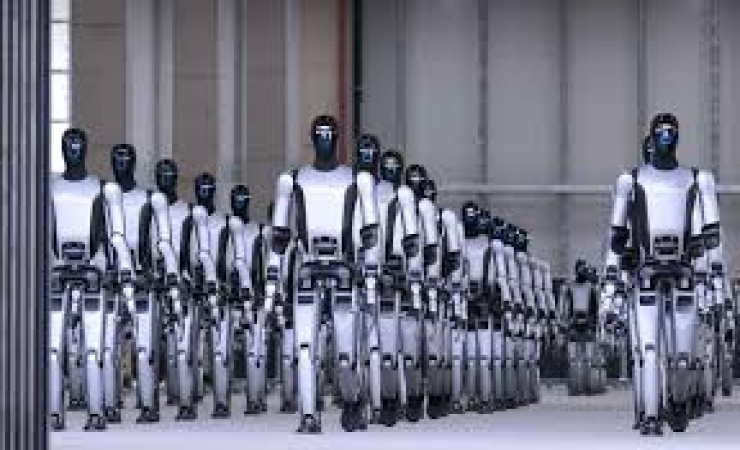
China is set to deploy humanoid robots for border patrol and inspection duties along its busy frontier with Vietnam, marking a significant step in the real world use of artificial intelligence driven machines in public security.
Shenzhen based UBTECH Robotics Corp. has secured a $37 million contract to deploy its Walker S2 humanoid robots at the Fangchenggang border crossing in Guangxi, a coastal region near Vietnam. Deployment is expected to begin this month.
The border crossing Is a major transit point where cargo trucks, buses and day travellers move continuously, creating a demanding environment with little tolerance for delays. Chinese planners view the site as an ideal stress test for humanoid robots because inspections must run on tight schedules without disruption.
Walker S2 is a full size humanoid robot with jointed legs, arms and torso, designed to navigate spaces built for humans. The robots use autonomous battery swapping, allowing them to replace battery packs without human assistance and operate with minimal downtime.
To maintain balance and avoid collisions, the robots combine cameras, depth sensors and force feedback in their joints to monitor surrounding movement. This integration of hardware and software positions Walker S2 as a general purpose worker rather than a single task industrial machine.
At Fangchenggang, the robots will assist border officials by guiding passenger queues, directing vehicles and answering basic traveller questions. Some units will patrol corridors and waiting areas, monitoring blocked exits or crowd patterns that may require intervention by human officers.
Other robots will operate within cargo lanes, supporting logistics teams by checking container identification numbers, confirming seals and relaying status updates to dispatch centres. Beyond the border, parts of the fleet are expected to inspect steel, copper and aluminium facilities, walking predefined routes through high temperature industrial sites.
The Fangchenggang project builds on UBTECH’s earlier humanoid robot deployments in factories and data centres across China in 2025. Commenting on recent deals, company scientists wrote, “This isn’t just a number; it’s proof of real-world value and the accelerating commercialization of humanoid robots globally!”
Including previous procurement agreements and domestic projects, UBTECH says total 2025 orders for the Walker S2 series now stand at around $157 billion. Despite rising revenue, the company remains loss making and faces pressure to demonstrate that growing demand can translate into sustainable profitability.
The border trial aligns with China’s broader policy push on humanoid robotics. In 2023, the Ministry of Industry and Information Technology issued guidance calling for a national innovation system for humanoid robots by 2025. In 2024, the ministry opened consultations on a standardisation technical committee to draft industry rules.
Chinese authorities consider humanoid robots a strategic sector and have involved company executives in shaping national standards that will govern deployments like Fangchenggang. Regulators are expected to closely monitor safety, reliability and accountability throughout the trial.
To support development, Beijing has also established a humanoid robot data training centre in Shijingshan District. Covering about 3,000 square metres, the facility already hosts more than 100 humanoid robots practising tasks in simulated workplaces to generate training data for future deployments. (AriseNews TV, excluding headline)



