Updating your news feed...

NEWS EXPRESS is Nigeria’s leading online newspaper. Published by Africa’s international award-winning journalist, Mr. Isaac Umunna, NEWS EXPRESS is Nigeria’s first truly professional online daily newspaper. It is published from Lagos, Nigeria’s economic and media hub, and has a provision for occasional special print editions. Thanks to our vast network of sources and dedicated team of professional journalists and contributors spread across Nigeria and overseas, NEWS EXPRESS has become synonymous with newsbreaks and exclusive stories from around the world.










Loading banners
Loading banners...

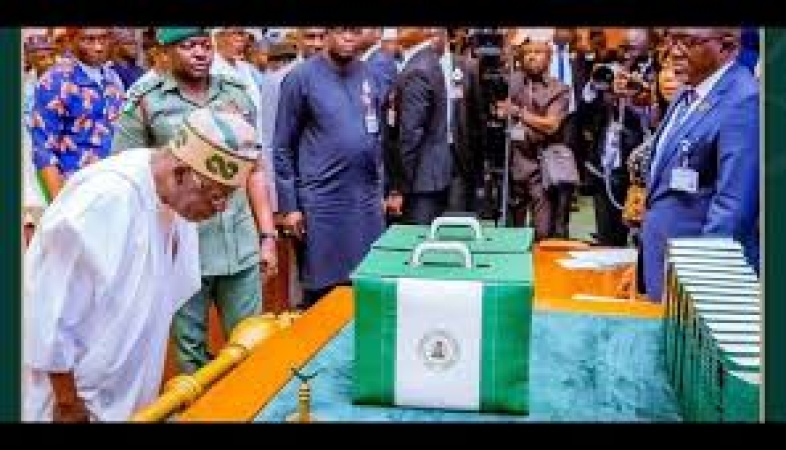
President Tinubu on Friday presented the 2026 budget to the National Assembly with a N2385 trillio
President Bola Tinubu on Friday presented the 2026 budget, christened the “Budget of Consolidation, Renewed Resilience and Shared Prosperity,” to the National Assembly.
The budget is both a fiscal statement and a political signal. Coming after two-and-a-half years of far-reaching reforms that triggered sharp economic pain, the N58 trillion spending plan is presented as the bridge between stabilisation and improved welfare. Whether it succeeds depends less on ambition than on execution, credibility, and the lived experience of Nigerians who are still adjusting to a bruising transition.
“I am encouraged that our reform efforts are already yielding measurable results,” Tinubu declared.
At its core, the 2026 budget is a consolidation budget. The administration argues, credibly, that macroeconomic conditions have begun to stabilise. Inflation has slowed markedly from its 2024 peak, external reserves have climbed to a seven-year high, oil production has improved, and non-oil revenues are rising on the back of better tax administration rather than higher rates. In political-economy terms, this signals a shift from crisis management to the entrenchment of reform gains. The government is betting that stability itself will now become a growth input.
Yet consolidation comes at a cost. With projected expenditure of about N58.18 trillion against expected revenues of N34.33 trillion, the deficit of N23.85 trillion remains large by Nigeria’s historical standards. Debt servicing alone consumes N15.52 trillion, underscoring the structural bind of Nigeria’s public finance: growth is being pursued under heavy fiscal encumbrance.
For Nigerians, this means that while the state is spending more, much of that spending does not translate directly into new services or infrastructure, but into maintaining solvency.
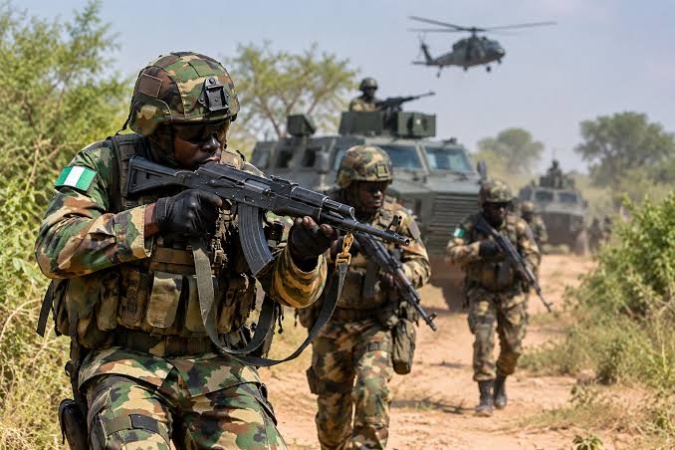
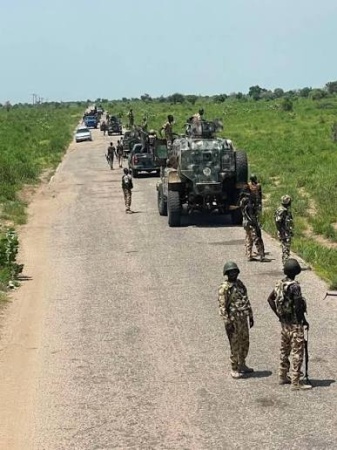
The budget’s political economy is most evident in its allocation choices. Security tops the list with N5.41 trillion, reflecting both the scale of Nigeria’s insecurity and the administration’s recalibrated doctrine that designates all armed non-state actors as terrorists. Politically, this is an assertion of state authority; economically, it is a recognition that without security, investment, agriculture, and productivity will remain constrained. The risk, however, lies in outcomes. Nigerians have seen security budgets rise before with limited improvement. The administration’s emphasis on accountability and results will be tested quickly in conflict-affected regions.
Education (N3.52 trillion) and health (N2.48 trillion) allocations point to an attempt to rebalance spending towards human capital, a chronic weakness in Nigeria’s growth model. The expansion of the Nigerian Education Loan Fund, which has reportedly supported over 418,000 students, reflects a shift from blanket subsidies to targeted social investment. If sustained, this could ease access constraints and build long-term productivity. However, the political risk is intergenerational impatience: human capital spending yields results slowly, while public frustration is immediate.
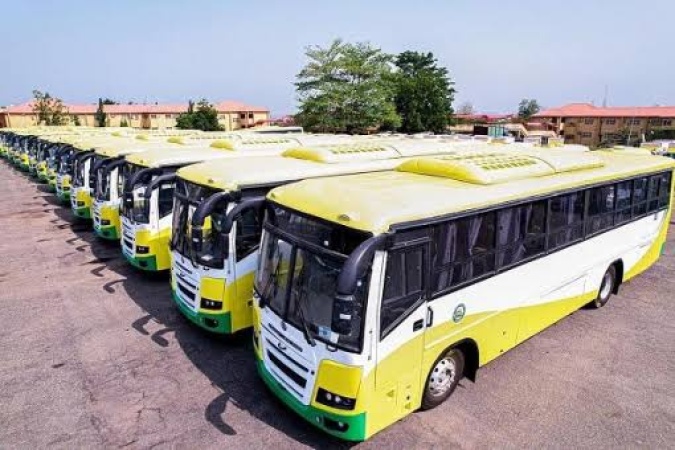
Infrastructure spending of N3.56 trillion continues the Renewed Hope Agenda’s emphasis on transport, energy, and logistics as enablers of private-sector-led growth. In theory, this aligns with Nigeria’s development needs. In practice, the binding constraint is execution.
The president’s candid admission that only 17.7% of the 2025 capital budget had been released by Q3 highlights a credibility gap. Nigerians are less concerned with announcements than with completed roads, power supply, and functional ports.
One notable shift in the 2026 budget is the hard line on Government-Owned Enterprises (GOEs). By tying revenue performance to digitisation, real-time monitoring, and institutional scorecards, the government is attempting to tackle a long-standing source of fiscal leakage. If enforced, this could strengthen the state’s extractive capacity without increasing the tax burden on households already under strain. The fear, however, is selective enforcement, where discipline applies unevenly depending on political proximity.
From a macroeconomic perspective, the assumptions underpinning the budget, oil at $64.85 per barrel, production of 1.84 million barrels per day, and an exchange rate of N1,400/$, are cautiously optimistic but not reckless. They reflect a desire to avoid the credibility erosion that comes with over-ambitious benchmarks. Still, Nigeria remains vulnerable to external shocks, from oil price volatility to geopolitical disruptions, which could quickly destabilise projections.
For ordinary Nigerians, the central question is whether this budget can change the economic narrative from endurance to relief. The prospects exist: easing inflation, improved food supply through agricultural investments, and gradual restoration of investor confidence could translate into better purchasing power over time. But the fears are equally real. High deficits, heavy debt servicing, and weak implementation capacity could blunt the budget’s impact. Moreover, the social contract remains fragile; many households have yet to feel tangible benefits from reforms whose costs they absorbed early.
Politically, the 2026 budget is an inflection point. It seeks to persuade Nigerians that the worst of the adjustment is over and that dividends are imminent. Its success will depend on whether consolidation leads to visible improvements in security, food prices, jobs, and basic services. If it does, the administration can plausibly claim that pain yielded progress. If not, the budget risks being seen as another technocratic exercise disconnected from everyday realities.
In sum, the N58 trillion-plus budget is less about expansion than about proof. Proof that reforms can deliver, that institutions can enforce discipline, and that growth can become inclusive. For Nigerians, hope now rests not in the numbers, but in the state’s ability to turn them into outcomes. (BusinessDay)