Updating your news feed...

NEWS EXPRESS is Nigeria’s leading online newspaper. Published by Africa’s international award-winning journalist, Mr. Isaac Umunna, NEWS EXPRESS is Nigeria’s first truly professional online daily newspaper. It is published from Lagos, Nigeria’s economic and media hub, and has a provision for occasional special print editions. Thanks to our vast network of sources and dedicated team of professional journalists and contributors spread across Nigeria and overseas, NEWS EXPRESS has become synonymous with newsbreaks and exclusive stories from around the world.



















Loading banners
Loading banners...

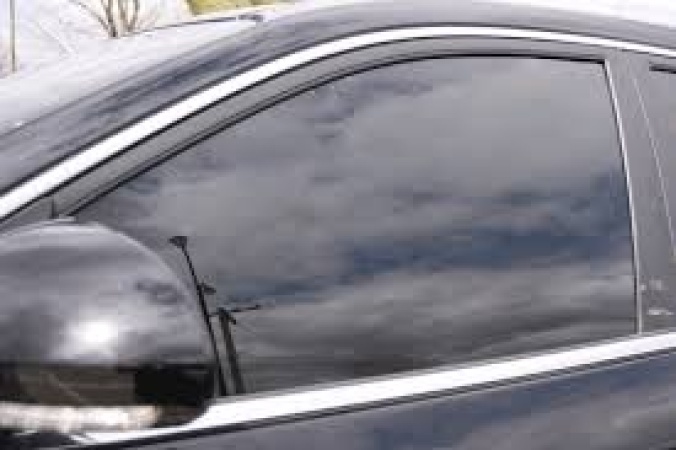
Tinted car glass
An announcement by the Nigeria Police Force to reactivate the enforcement of tinted glass permits, effective January 2, 2026, has thrown up a fresh controversy.
The Force Public Relations Officer, CSP Benjamin Hundeyin, signalled the intention of the police to commence the enforcement of the controversial policy via a press statement dated 15th December, 2025, two months after the take-off date for the policy was suspended.
The decision to suspend its enforcement, it was gathered, was reached last October at the end of a meeting convened by the Inspector-General of Police, Kayode Egbetokun.
The meeting, which was reported to have the Police Management Team, including the IGP, Deputy Inspectors General of Police, AIG Legal, the police counsel, Chief Ayotunde Ogunleye, SAN, and the representatives of the NBA in attendance, was sequel to an interlocutory injunction issued by the Federal High Court, Warri Division, directing parties involved to maintain the status quo in Suit No: FHC/WR/CS/103/2025 between John Aikpokpo-Martins v. Inspector General of Police, thereby restraining the Police from enforcing the policy pending the determination of a Motion for Interlocutory Injunction.
The Inspector General of Police had in April 2025 announced the introduction of the policy mandating that citizens to annually obtain motor vehicle tinted glass permits through an online platform ( HYPERLINK http://possap.gov.ng/ \t “_blank” possap.gov.ng), with enforcement initially scheduled to begin June 1, 2025, and later postponed to October 2 after reports of harassment, extortion, and civil rights violations became widespread.
The Issuance of tinted glass permits was discontinued some years ago by a former Inspector-General of Police, Usman Alkali Baba, following a revelation that some individuals were fraudulently acquiring them and SPY number plates, which are specifically for the official use of some categories of corporate bodies.
Back in April, the statement, which announced the reactivation of the policy and was signed by the immediate past police spokesman, Muyiwa Adejobi, had stated that the initiative was a reflection of the need for a clear, transparent and accountable process for regularising factory-fitted tinted glass on vehicles.
“With modern automobiles increasingly manufactured with tinted windows, it has become essential to provide a standardised system that accommodates legitimate use while ensuring public safety.
“Vehicles (with tinted windows) have often been exploited for criminal purposes, including kidnapping, armed robbery, ‘one-chance’ scams, and other forms of banditry.
“Their use hampers police visibility and impedes effective law enforcement, thereby contributing to public insecurity,” it stated, and concluded that the reactivation of the permit system was a strategic move to identify lawful users, such as individuals with medical requirements or members of the security community, while preventing misuse for criminal activities.
But the proposal would later be enmeshed in controversy, with the IGP and the police force coming under heavy knocks. While the motoring public was agitated that the policy would further worsen its intimidation and harassment at the hands of police officers, security experts were less convinced by the excuse that the policy would help in fighting insecurity in the country.
A security expert, Lawal Sadiq, likened the move to an attempt of attending to treat ringworm infection while leprosy festers.
Although Lawal conceded that there was a need to regulate the use of tinted-glass vehicles in the country in order to guard against its abuse, he noted that the war against criminality in the country would continue to suffer defeats unless the nation invests more in intelligence gathering to be able to effectively combat crimes.
“During random stop and search by the security agents on our highways, the chances of stopping vehicles with tinted-glasses by the police are higher than those of vehicles with transparent glasses.
“So, this reality has made the use of vehicles with tinted glasses in perpetrating glass less attractive. And more importantly, in Nigeria today, most of the major attacks by criminals are no longer carried out on the highways or roads where motorists using tinted windows would pass.
“What this therefore means is that our security operatives should focus more on intelligence gathering in addressing insecurity in the country.”
On its own part, the Nigerian Bar Association queried the legality of the policy. The NBA argued that the policy raised “serious concerns of threats to and violation of citizens’ fundamental rights, including the dignity of human person, right to privacy, right to freedom of movement and the right to own movable property as guaranteed by the Constitution of the Federal Republic of Nigeria 1999, as amended.”
Subsequently, the association instituted a suit challenging its legality. The decision to challenge the policy, according to a statement by the Chairman of the association’s Section on Public Interest and Development Law (SPIDEL), Professor Paul Ananaba, SAN, follows one of the key resolutions of the National Executive Council of the NBA at its pre-conference NEC meeting held on the 23rd day of August 2025 in Enugu.
The statement announcing NBA’s stance on the policy faults it on two major prongs bordering on transparency and its consistence with the constitution of the country: “We are being informed that the portal and the policy are to be managed by a private vendor and there is no indication that the funds generated from the enforcement of the purported policy will go into the Federation Account.”
On September 2, 2025, the Nigerian Bar Association, through its Section on Public Interest and Development Law (NBA-SPIDEL), instituted an action before the Federal High Court, Abuja, in Suit No: FHC/ABJ/CS/1821/2025 between Incorporated Trustees of the Nigerian Bar Association v. Inspector General of Police & Anor, challenging the legality of the Tinted Glass Permit Policy.
According to a statement released by the association, the suit questioned, among other things, the lack of constitutional or statutory authority vested in the Nigeria Police Force to levy fees or impose financial obligations on citizens under the guise of enforcing the policy.
A new statement signed by the President of the association, Mazi Afam Osigwe (SAN), last week, described the policy as unconstitutional, obnoxious, illegal, extortionate, and a threat to citizens’ rights and economic well-being.
He maintained, “The Motor Tinted Glass (Prohibition) Act of 1991, under which the policy is premised, is a military-era decree that no longer meets the democratic thresholds of justification under Section 45 and other relevant sections of the 1999 Constitution;
“The National Assembly does not have the legislative competence to enact the law; therefore, the same cannot rightly be deemed a law properly made by the National Assembly.
“The enforcement of the unlawful policy will initiate disorder and extortion, given the Nigeria Police’s long and sordid history of extortion, bribery, harassment, intimidation, and extra-judicial killings.
“The policy is a brazen revenue-generating drive by the Nigeria Police Force, which by law is not a revenue-generating organisation. This is particularly worrisome as the fees are paid into the account of a private company.
“The imposed levy for obtaining and renewal of the permit adds to Nigeria’s ever-increasing layers of taxation, thereby portraying Nigeria as a difficult place to do business. The levy imposed financial burden and hardship on Nigerians struggling with economic hardship.
“The permit policy undermines Nigeria’s tax reforms, which will come into effect in January 2026, in that it will add to the multiplicity of taxes and taxing agencies in Nigeria, as well as the high corporate tax burden on businesses.
“Nigeria imports cars from abroad, and modern vehicles come with factory-fitted tinted glasses, yet the police discountenance this in the drive to generate revenue for themselves and a few individuals.
“The payment proceeds into a private bank account (PARKWAY PROJECTS, Account No: 4001017918) instead of the Treasury Single Account raises serious concerns of transparency and corruption.
“The policy brazenly nullifies already issued permits, and the purported requirement for renewal of the permits has no legal basis,” it stated.
The statement further revealed that on 3rd October 2025, the Federal High Court, Warri Division, in Suit No: FHC/WR/CS/103/2025 between John Aikpokpo-Martins v. Inspector General of Police, issued an order directing parties to maintain the status quo, thereby restraining the police from enforcing the policy pending the determination of a Motion for Interlocutory Injunction.
Sunday Sun gathered that following the order and the public outrage that trailed the attempted continuation of the enforcement, a high-level meeting involving the police and the NBA was convened at the instance of the IGP, where an agreement to suspend the controversial policy was reached pending the outcome of matters in court.
“Suit No: FHC/ABJ/CS/1821/2025 came up for hearing on Friday, 12th December 2025, before Hon. Justice M. S. Liman of the Federal High Court, Abuja. During proceedings, Chief Ayotunde Ogunleye, SAN, informed the court of the agreement reached between the NBA and the IGP suspending enforcement of the policy.
“On the strength of that representation, which the court accepted as a solemn assurance, the motion for interlocutory injunction was struck out.
“It is therefore deeply disturbing that barely one working day after the court relied on the undertaking of the defendants’ counsel, a contradictory statement emerged from the Nigeria Police Force announcing a reactivation of enforcement.
“This volte-face represents a reckless overreach, a contemptuous disregard for the authority of the court, and a serious assault on institutional integrity.
“It portrays the Nigerian Police Force as having scant regard for the rule of law and as a body insistent on imposing financial hardship on Nigerians for the financial gains of private business owners/interests,” NBA stated.
While noting that Suit No: FHC/ABJ/CS/1821/2025 has been fully heard and judgment reserved, NBA pointed out that the IGP has a constitutional obligation to respect the judicial process and refrain from any action capable of pre-empting or undermining the Court’s decision.
The association therefore called on the police boss to withdraw the statement issued by CSP Benjamin Hundeyin and halt all attempts to reactivate the enforcement of the tinted glass permit policy pending the final determination of all related court actions.
“Should the Inspector General of Police fail or refuse to heed this lawful admonition, the Nigerian Bar Association will commence committal proceedings against the Inspector General of Police, Kayode Egbetokun, and the Force Public Relations Officer, CSP Benjamin Hundeyin, until they purge themselves of contempt. Appropriate professional proceedings will also be initiated against any counsel found to have misled the court.
“The statement made in open court by Chief Ayotunde Ogunleye, SAN, constituted a judicial undertaking binding on the Defendants. Any contrary executive action amounts to overreaching the Court and undermines the rule of law, as firmly settled by the Supreme Court in Governor of Lagos State v. Ojukwu (1986) 1 NWLR (Pt. 18) 621, “ the NBA statement read.
In response to the NBA’s position against the reactivation of the enforcement of the tinted glass permit, the police, in another statement dated 16th of December 2025, said its earlier release was intended to guide internal planning and enhance public understanding.
“It did not direct immediate enforcement actions, nor did it authorise conduct inconsistent with any subsisting court process,” the police said in the release signed by the Force Public Relations Officer on behalf of the IGP.
But while this may appear soothing to some individuals, not a few concerned Nigerians are sceptical about the true position of the police going by the wording of its latest statement, which many considered to be ambiguous.
For instance, the explanation by the force “that the existence of pending litigation does not, in itself, extinguish the lawful responsibilities of the Police, except where a court has expressly and finally directed otherwise,” is viewed by many as one reason for cautious optimism.
More troubling is the assertion, where the statement declares that: “As of today, there is no final judicial pronouncement declaring the Motor Vehicle Tinted Glass Permit Policy unlawful, nor is there any subsisting order permanently restraining the Nigeria Police Force from performing its statutory duties in relation to the regulation of tinted vehicle glasses.
“Accordingly, the policy remains part of the existing regulatory framework for road safety, crime prevention, and national security, subject at all times to the authority and supervisory role of the courts.
“The Nigeria Police Force will continue to act lawfully, independently, and responsibly in the discharge of its constitutional mandate. It will comply fully with all valid court orders and will equally safeguard its lawful authority from erosion through premature conclusions or undue public pressure”
Another court stops enforcement
But while the certainty of the position of the police on the enforcement of the policy remained a major source of concern, whatever the intention the police had was dealt a fatal blow as a Delta State High Court sitting in Orerokpe, on Wednesday issued an ex-parte injunction stopping and barring the Inspector General of Police, IGP, the Nigeria Police Force, NPF, and Commissioner of Police, Delta State Police Command, respondents in the matter from resuming the enforcement of the tinted glass permit policy.
The trial judge, Justice Joe Egwu, made the orders in an ex parte application brought by a Nigerian, Israel Joe, in suit HOR/FHR/M.3/2025
Lawyers kick, urge AGF to call IGP to order
Besides the NBA, which has severely condemned the planned move by the police, several lawyers have also criticised the police plan.
Former Chairman of the Nigerian Bar Association (NBA), Ikeja Branch, Dave Ajetomobi, called on the Attorney General of the Federation (AGF) and Minister of Justice, Lateef Fagbemi (SAN), to intervene in the controversy surrounding the planned enforcement of the tinted glass permit policy by the Nigeria Police Force.
Ajetomobi urged the AGF to call the Inspector General of Police (IGP), Kayode Egbetokun, to order, describing the police’s insistence on enforcing the policy as unlawful while the matter is still pending before a court of competent jurisdiction.
The senior lawyer stated that it is settled law that once an issue is before the court, all parties involved are required to maintain the status quo until the court reaches a determination on the matter.
He stressed that the IGP is not above the law and must act within the bounds of legal propriety. According to him, the justification offered by the police that there is no specific court order restraining them from enforcing the policy is legally flawed.
Ajetomobi described the argument as a fallacy, noting that the absence of an express restraining order does not confer the right to proceed with actions that could undermine judicial authority.
He warned that an attempt to enforce the tinted glass permit policy under such circumstances could amount to contempt of court and erode public confidence in the rule of law, urging the AGF to take urgent steps to ensure due process is respected.
Rights activist and lawyer, Abdulah Wahab Olawale, said the police were overreaching the court by attempting to resume vehicle inspections while the matter remained pending.
He expressed concern that the police might be acting under pressure from private contractors involved in the online registration system for tinted glass permits, arguing that such interests should not influence law enforcement decisions during an ongoing legal challenge.
Olawale also questioned claims that suspension of the tinted glass permit policy contributed to insecurity, insisting that public safety could not be reduced to the issuance of permits alone and must be pursued in line with the rule of law.
Another lawyer, Maduka Onwukeme, described the planned enforcement as a clear affront to the authority of the court and a dangerous precedent for Nigeria’s democracy.
According to Onwukeme, the police, having submitted themselves to the jurisdiction of the court by defending the suit, cannot announce enforcement of the policy before judgment is delivered without undermining the judiciary and the constitution.
He urged the Inspector General of Police to withdraw the statement, warning that its implications were grave and could prejudice the outcome of the pending case. (The Sun)





