Updating your news feed...

NEWS EXPRESS is Nigeria’s leading online newspaper. Published by Africa’s international award-winning journalist, Mr. Isaac Umunna, NEWS EXPRESS is Nigeria’s first truly professional online daily newspaper. It is published from Lagos, Nigeria’s economic and media hub, and has a provision for occasional special print editions. Thanks to our vast network of sources and dedicated team of professional journalists and contributors spread across Nigeria and overseas, NEWS EXPRESS has become synonymous with newsbreaks and exclusive stories from around the world.















Loading banners
Loading banners...

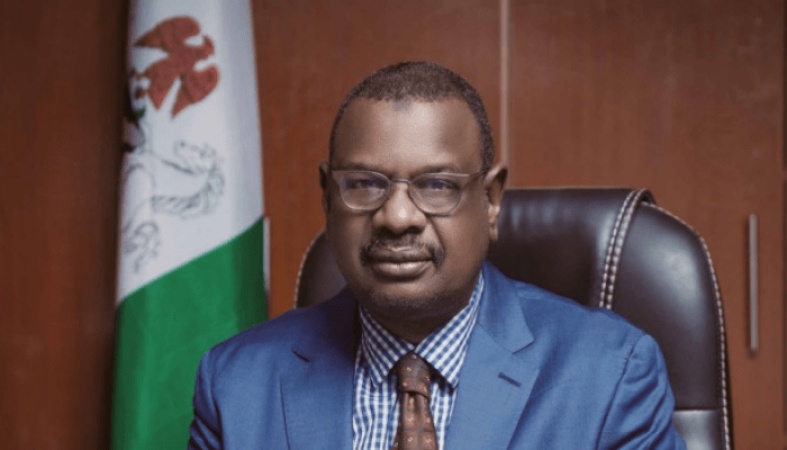
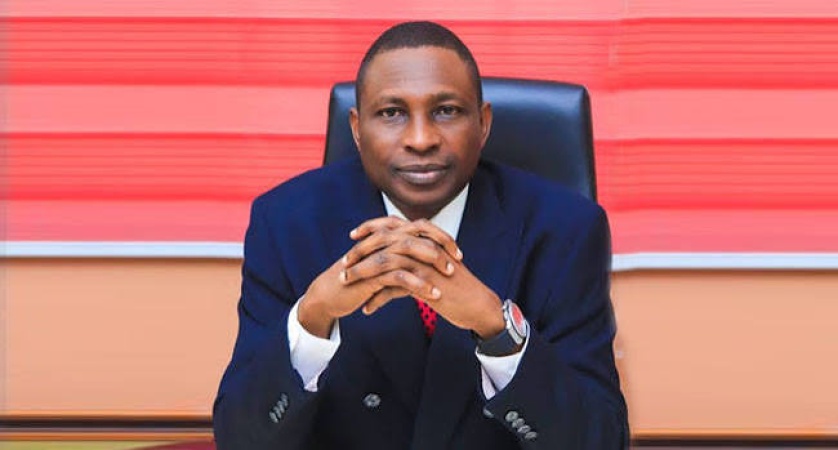
Sule Ahmad Abdulaziz, Managing Director, TCN
The House of Representatives Ad-Hoc Committee investigating multi-billion-naira power sector reforms on Tuesday interrogated officials of the Transmission Company of Nigeria (TCN), exposing fresh gaps between Nigeria’s installed power capacity and the electricity actually delivered to homes and industries.
Appearing before the committee chaired by Hon. Ibrahim Aliyu, TCN Managing Director, Dr. Sule Ahmad Abdulaziz, dismissed widely circulated claims that Nigeria currently generates 13,000 megawatts of electricity. He stressed that the figure reflects installed capacity—not what the national grid has ever produced.
“The highest ever generated this year was 5,801MW,” Abdulaziz said. “Nigeria has never produced 13,000MW on the national grid. That number is installed capacity, not generated capacity.”
He explained that until April 2024, the National Control Centre responsible for daily generation and dispatch records was under TCN’s direct supervision, giving the company access to “accurate and verifiable” data.
Responding to scrutiny from committee member Hon. Abubakar Fulata, who questioned why only about 6,000MW is typically wheeled despite supposedly higher available generation, Abdulaziz insisted TCN had never failed in transmission.
“Our transmission capacity today is 8,600MW,” he stated. “At no time has power been generated that TCN could not evacuate. Anyone claiming otherwise should produce the data.”
On the company’s financial health, TCN’s Executive Director of Finance told lawmakers the company is weighed down by massive debts owed by electricity distribution companies (DisCos), revealing: N217 billion in electricity subsidy debt (Jan 2015–Dec 2020) taken over by the Federal Government, and N450 billion owed by DisCos from Jan 2021 to date.
The committee demanded documentary evidence backing the figures.
Clarifying controversies around grid instability, a senior TCN system operations official said the company recorded 11 grid collapses, contrary to the 22–23 often quoted.
Giving a breakdown of causes, he explained that six collapses were caused by generation issues, including gas shortages, four linked to vandalism of transmission towers, leading to sudden loss of load, one triggered by distribution network failures, often due to rainfall-induced feeder trips.
He emphasised that all three segments generation, transmission and distribution can trigger system collapse, adding that the Nigerian Electricity Regulatory Commission (NERC), with Central Bank support, had implemented Service Level Agreement (SLA) interventions to address systemic bottlenecks.
TCN officials further disclosed the company has over 100 ongoing transmission projects, many of which are 65%–90% complete but stalled for lack of funding.
“Power infrastructure cannot be energised at 99%. It must be 100% complete,” an official noted.
“If outstanding debts are paid, we can finish priority projects and strengthen the grid.”
He added that TCN aims to expand wheeling capacity to 10,000MW by March next year through network upgrades and simulation-based grid optimisation.
Committee chairman Hon. Ibrahim Aliyu said the presentations had clarified earlier misconceptions about TCN’s role in the sector’s failures but expressed concern over the slow expansion of critical infrastructure, pledging the parliament intervention to address the anomaly in due course. (The Guardian)