
Updating your news feed...
NEWS EXPRESS is Nigeria’s leading online newspaper. Published by Africa’s international award-winning journalist, Mr. Isaac Umunna, NEWS EXPRESS is Nigeria’s first truly professional online daily newspaper. It is published from Lagos, Nigeria’s economic and media hub, and has a provision for occasional special print editions. Thanks to our vast network of sources and dedicated team of professional journalists and contributors spread across Nigeria and overseas, NEWS EXPRESS has become synonymous with newsbreaks and exclusive stories from around the world.


Loading banners
Loading banners...


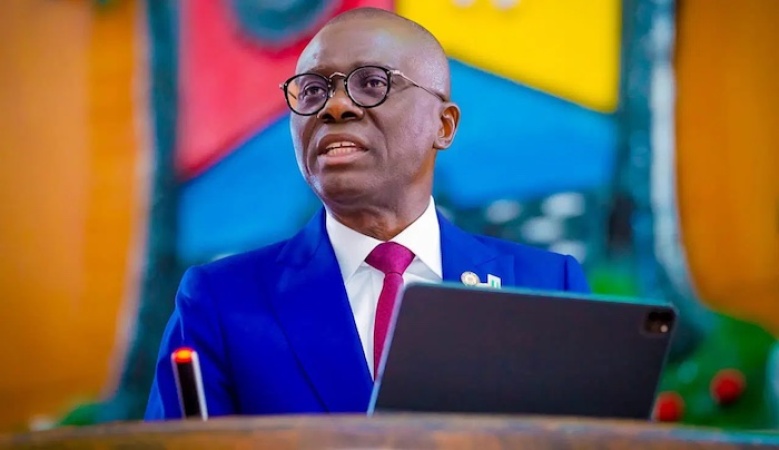
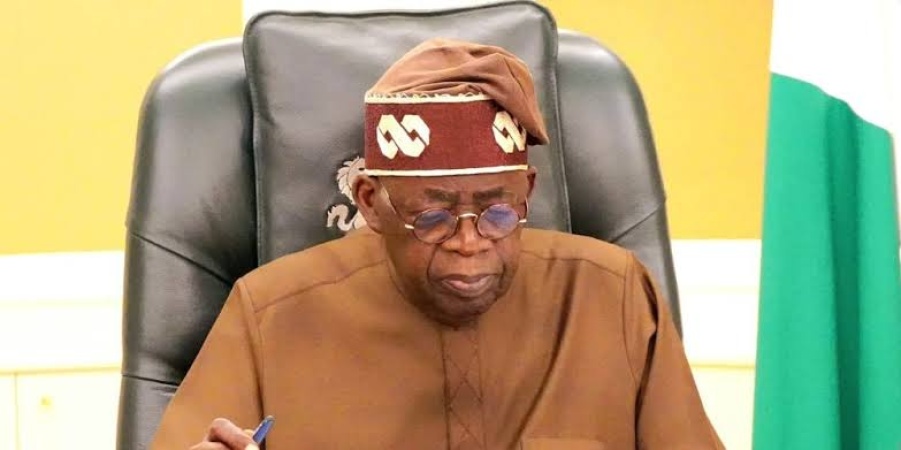
Tinubu and Edun
Perhapsmore than any other time in the history of Nigeria, Nigeria is desperate for miracle workers in government –those who have what it takes to transform the bleak fortunes of Nigeria, a country that has been on a downward economic, political and security slide in recent times.
Barely a week after President Tinubu’s ministers were sworn in, Nigerians, especially experts in the various sectorshave expressed their views on the calibre of people appointed by the president and the hurdles before them.
Given the sorry state of the Nigerian economy, the task before the new Ministers of Finance, petroleum and gas are onerous. They cannot but immediately design strategies to subdue Nigeria’s surging inflation currently pegged at 22.79 per cent, address the frightening N77 trillion sovereign debt amid poor revenue generation and halt the tumbling naira.There are also concerns around weak non-oil export, unprecedented level of oil theft, abysmal slump in food production, sub-optimal crude oil production, institutionalised corruption and profligacy.
According to economic watchers, rescue operations must be swift, collaborative, tactical and intentional. This has been amplified by President Bola Ahmed Tinubu, who mandated his cabinet members to collaborate with him and each other to fulfil the aspirations of Nigerians, majority of whom are wallowing in multidimensional poverty. Experts reckon that the Nigerian economy is overstretched and lacks a strongly-diversified base to deflect the global and local headwinds.
They insist that Nigeria, as a petrostate, must be cured of the Dutch disease, where the government has developed an unhealthy dependence on oil resource exports to the detriment of other non-oil sectors. This aggravates inflation, being the greatest challenge confronting macroeconomic stability in Nigeria. As an import-dependent economy, the recent floating of naira and subsidy removal have dealt a hard blow on the citizens, because the prices of foods, other goods and transportation have quadrupled. This is added to local challenges like insecurity in major food-producing localities; rising energy cost; decrepit public infrastructure and more. All this continues to drive the rise in food and core inflation.
Prof Uche Uwaleke, Nigeria’s first Professor of the Capital Markets, while setting an agenda for the Finance Minister and Coordinating Minister for the Economy, Mr Wale Edun, tasked him to ensure fiscal balance, spending efficiency and debt sustainability
“He should ensure increase in revenue to GDP ratio and ensure closer collaboration with the monetary authority to drive export base diversification. He should champion the implementation of the Capital Market Master Plan,” Uwaleke advised. He added that Edun must work closely with his counterparts, especially Sen. Heineken Lokpobiri, Minister of State (Oil) Petroleum Resources and Ekperipe Ekpo, Minister of State (Gas), Petroleum Resources as the economy of Nigeria survives largely on oil and gas receipts,” he stated.
In his submission, the Director General, Centre for the Promotion of Private Enterprise (CPPE), Dr Muda Yusuf, urged the new Finance Minister to establish quality economic governance consistent with tested economic principles and empirical evidence, and contextualized within socio-economic peculiarities.
“We need an economy where there is a level playing field for all players with a transparent economic policy formulation process; competitive economic environment with minimum monopoly dominance and avoidance of state capture. “There should be a robust monitoring and evaluation framework to regularly review the effectiveness and impact of economic policies and regulatory practices.
“Prioritise macroeconomic stability with emphasis on moderating inflationary pressures. Stabilizing the exchange rate and boosting economic growth.Reform tax regime to ensure efficiency in tax administration, reduce tax evasion and tax avoidance and eliminate multiple taxation,” he said.
Dr Yusuf also wants the incumbent administration to commit to budget reforms to ensure fiscal discipline, curb budget padding, curb duplication of projects and review the service wide votes to ensure transparency.
“Ensure value for money in government expenditure and procurement and commit to reduction in the cost of governance,” he added.
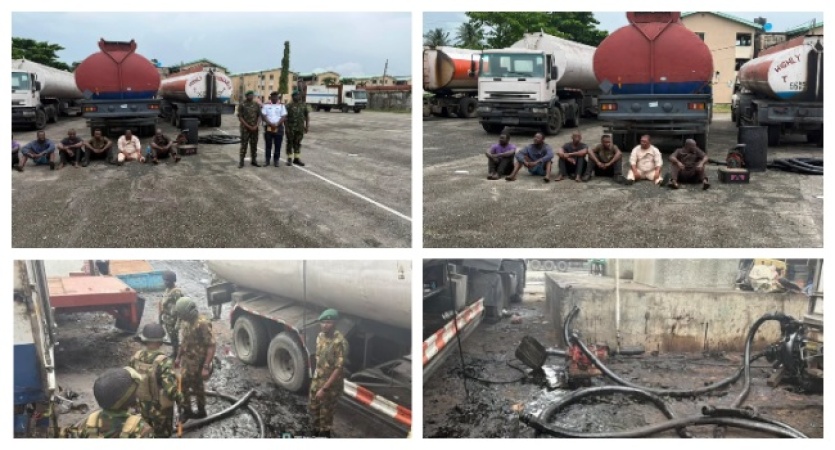
For the oil and gas ministers, stakeholders want them to tackle the lingering issue of crude oil theft headlong.A recent industry report from the Nigerian Upstream Petroleum Regulatory Commission and Oil Producers Trade Section, and the Independent Petroleum Producers Group, showed that from January 2021 to February 2022, Nigeria lost $3.2 billion to crude oil theft.
While the Nigerian National Petroleum Company Limited (NNPCL) has partnered private security firms to arrest some of the culprits of crude oil theft, industry watchers want a deeper stakeholder collaboration to grow production.
Private sector players, like Tony Elumelu, the Chairman of Heirs Holdings, also raised the flag that the frightening level of oil theft was convincing evidence that Nigeria can never meet its Organisation of Petroleum Exporting Countries (OPEC) production quota since a good portion of the produced crude is usually stolen.
For an economy already bogged down with corruption, opacity and environmental vandalism associated with its oil industry, leaving the issue untackled, experts note, is akin to economic suicide, considering that the oil industry generates about two-thirds of Nigeria’s revenue.
Experts also harped on the need for the oil and gas ministers under the petroleum resources ministry to secure offshore investments for the sector in order to solve the energy poverty imbroglio by aggressively developing the gas sub-sector which is a cheaper and cleaner energy source. There are also concerns to quickly get crude oil production from its current 1.3 million barrels per day to 2 mpb, especially now that the NNPCL secured a $3 billion emergency loan to redeem the naira which is to be paid back with crude oil.
Experts want the oil and gas ministers to grow in-country capacity and cut back on huge spending on offshore expertise.
In a similar vein, experts have tasked the new Communications Minister, Bosun Tijani, to ensure full IT adoption, hardware production in Nigeria.As Tijani assumes duty as Nigeria’s new Minister of Communications, Innovation and Digital Economy, Industry players have urged him to pay more attention to developing the country’s Information Technology hardware manufacturing industry by supporting local start-ups. Tijani has also been tasked with ensuring the full adoption of Information Communication Technology (ICT) across all sectors of the country to attain a fully digital economy.
The ICT experts further advised him to prioritise effective data management and engagement with stakeholders, especially young people and women in the sector.
Dr (Mrs) Wunmi Hassan, President/CEO of High-Tech Centre for Nigerian Women and Youth, said the minister needed to be very pragmatic with technology development skills.
She said the country spent so much on importing hardware components of the computer, and stressed the need to begin investing in local production.
“He should understand how to develop start ups and to grow tech businesses. I would advise him to ensure that young people and women come on board and then, as much as possible, support policies that would ensure that young people with technology knowledge and skills will be encouraged,” she said.
“The past administration did a whole lot in the aspect of digital literacy, but it was just as if they were just making it political. But I feel if we are developing technology software engineers, we need to get engineers for software that will really be solving the local problem.
“More importantly, he should focus on hardware development. We cannot continue to import technology. So if we don’t get expert skilled development in hardware production, we are still going to be joking.
“So, we need a lot of embedded system knowledge. We need to go into hardware manufacturing so that the industry for technology would expand and open up and our people can begin to produce. If we are using several mobile phones and laptops and we cannot even produce a casing in Nigeria, that means every part is being imported.
“Even the small pins that are used in coupling computers are imported. We are not producing anything here. That is a huge market. If you go to the Otigba market and other markets in Lagos, they would tell you how much money leaves Nigeria everyday in importation of different parts of the computer and phones.
“All the people that call themselves tech experts in Nigeria are concerned with only software, and the problem is that government institutions are not even buying the software that they are producing. Everybody is buying from Microsoft and other big international brands. So they need to come back to the local content and encourage local production.
“Again, in the tech industry, we have had too many of these old people collecting contracts. He needs to demystify that. He needs to make sure that we are looking at result-based projects that would develop the economy rather than contracts that will not yield anything.” She also said he should consolidate on every organisation that has been in the tech sector struggling to make an impact.She pointed out: “We are making waves but we are struggling to do it as individuals. He needs to pull us together as stakeholders. At this point, he needs to do what is called stakeholders mapping –who is what in the industry. Map us together. If some people are good at software, put them together and let them develop technological solutions to problems in the country. Also, do the same with the hardware savvy individuals. Let us come up with solutions.
“He should set goals that in the next one year, this is what I want to achieve as a country and then call everybody from primary to tertiary to industry experts to let everybody come together and make it happen. I want to see him use all his youthful grace and prowess to make a difference,” he added
Professor Adesina Sodiya, past president of Nigeria Computer Society (NCS), said: “We would be expecting a minister that would also show interest in ensuring that we move towards implementation of full e-governance in Nigeria.
“There are so many activities and operations of the government that are still manual. We need to move away from lip service when it comes to digital transformation. We want to see action. We want to see full adoption of digital platforms in so many areas.
“For example, when you look at the rail lines, people still have to go to the train stations to queue and buy tickets when they should be able to do it from the comfort of their homes.
“About three years ago, even the head of service wrote a circular that all government institutions should ensure that they start converting their activities into digital. How far has the government done in this regard? We don’t know.
“So, the Minister should not be concerned about his own ministry alone. IT is relevant in all ministries, and all MDAs. So we have to ensure that we promote the use and adoption of IT everywhere. When you do that, that is when you can say that we are moving forward in the area of IT and digital transformation in Nigeria,” he insited.
According to Rogba Adeoye, executive secretary, Information Technology Systems and Security Professionals (ITSSP) and former chairman of NCS, Lagos chapter, the minister must focus on efficient administration of the nation’s enormous data since it is essential to developing a fully digital economy.
He said: “The new minister is welcome to the seat and the president has named a youth by all standards. So we expect him to be very agile and active on the job. But what the minister needs first, besides the KPI that the president might have set for him, is to as a matter of urgency, call all the stakeholders together. Invite them to a lunch in an informal setting and interact with them because he is not familiar with all the stakeholders.
“The digital economy is a very sensitive ministry. During the campaigns, the president said he wanted to bring back the credit system to the economy, and you can only run a credit system effectively when you have adequate data. So the credit system means that there is a need for proper identification.
“The credit system cannot be separated from the digital economy and digital economy means that you want to drive your economy by serious emphasis on information technology, and the backbone of information technology today is data management. The magic of Amazon, Google, Internet and all is that the data they are using is effectively organised and point on delivery.
” Likewise, stakeholders in the solid mineral sector have tasked the newly appointed Minister of Solid Mineral, Mr Dele Alake, to do something different during his tenure.
President of the Miners Association of Nigeria,(MAN) , Dele Ayanleke, said, “If the minister wants to reposition the economy of the country through the solid minerals sector as he pledged, he must streamline the regulations of the sector.”
He suggested that Alake should ensure that the stakeholders and the government at all levels align themselves with the established protocol for the mining sector.
“The government should leverage on the existing policies and regulations to ensure collaboration in the sector. If he wants to make money in this solid minerals sector, of course, the issues of regulations have to be taken care of. There are multiple regulations in the sector which are affecting our economic growth.
“He cannot manage the system on this kind of regulatory confusion. It must be streamlined, and I expect that the minister will take a step further by making sure that all stakeholders, the government at all levels align themselves with the established protocol for mining. I think, with this, we can go a long way to actually bring about more development and to get that kind of money.
“ He also suggested that the minister should profile artisanal miners and cooperatives. Also, specific focus should be made on the small-scale mining lease holders so that they can absorb some of them into their workforce because this is the easiest way to tackle what is loosely called illegal mining which is poverty-driven and encourages exploitation of the minerals.
“The word ‘illegal mining’ to us is being loosely used because there’s illegality in every sector, and most of these people they called illegal miners are artisanal miners; they are unskilled people making a living out of what they could get to do within their locality, though we have some that travel to different localities.
“But the issue is that artisanal mining is poverty driven, and that is the reason the artisanal and small scale department of the ministry is trying to formalise them into corporative, but, beyond that, some of these people they called illegal miners are actually artisanal miners, and it’s from this group of miners, the small-scale miners and the mining lease holders that we draw our workforce.” He stressed the need for the government to build on the foundation laid by the immediate past minister by establishing cluster centres in the six geographical regions, making sure that all mining sites are being operational.
“When we have all the structure in place, there will be development along the value chain by creating jobs for the youths to reduce the idle population and stem the issues of illegality in the mining sector,” he said.
Ayanleke noted that more financial allocation should be made to the Nigerian Geological Survey Agency (NGSA) to improve on their exploration, adding that mining is all about the accuracy and quality of geoscience data. The miners’ president stressed that the solid mineral sector had expertise in NGSA, and all that was needed was for exploration to get the country working again in more funding to the agency.He said it was the quality of geo-science data available in a country that could attract both local and international investors which was what Nigeria needed at this very point.
“I think the Government is already doing a lot through the NGSA. There is a programme on the National Integrated Mineral Exploration Project that is generating and having data. I think what the government can do in that regard is to increase the funding of that agency so that they would be able to acquire more equipment that would make the Data Generation to be more intent and deeper than what is obtainable presently.
“I think what the government can do is just to fund that agency, more so that they can do the needful. I think they have the expertise, and what’s needed is more funding to acquire the necessary equipment to be able to do the exploration in a way that will be advantageous,” he insisted.
Similarly, High Chief Peter Ameh, the Former Chairman Inter-party Advisory Council IPAC, and an economist, urged the minister to harness all the mineral resources in the country.
He said Nigeria was so blessed that, if the mineral resources in the country were properly harnessed, there would be nothing like poverty in the country. “If the new minister of solid minerals can properly harness the minerals resources and address every form of irregularities in the sector Nigeria will be a better place,” he added.
With what Nigeria has suffered recently in the hands of terrorists, bandits and criminal gunmen, the choice of minister overseeing the country’s security apparatus has divided Nigerians.For instance, the Publicity Secretary of Arewa Consultative Forum (ACF), Professor Tukur Muhammad Baba, has raised a big question mark on the capacity and credence of the Ministers of Defence and the Minister of State for Defence, Mohammed Badaru and Bello Matawalle respectively, following their recent appointments into President Tinubu’s cabinet.
In a chat, Prof. Baba said from the antecedents of the former Governor Badaru of Jigawa State and former Governor of Zamfara, Matawalle showed they didn’t impress many by controlling insecurity in their respective states while they held sway as Chief Security Officers. The ACF scribe noted that having military background or not by the ministers was inconsequential if only they were prepared and fit for the ministerial and security job.
He said: “The idea is not whether the two ministers are military combatant or have military background, the idea is whether they are going for substance. Now, there is a big question mark on the Minister of State for Defence, and there is a big question mark on the minister himself. Let’s see what they will be able to do.”
He said also those in previous governments with military backgrounds did not make any difference: “In fact, you can say that it was during their reign as ministers that the banditry situations got worse;; the security situation did not improve.” Emphasising on experience and pedigrees, he said the new Minister of State for Defence, for example, spent four years as the Governor of Zamfara State, but during his spell “security was an unmitigated disaster. “The situation got worse, and he couldn’t do anything. He tried all kinds of fire brigade approaches, abusing the bandits, but that did not work. He tried working with them for a ceasefire, but that did not work. He finally gave up and left Zamfara in a worse security situation than it was.
“So whether he has a military background or not is not the issue. It is about leadership; it is about direction, it is about focus; it is about the ability of a leader to marshall human and natural resources at his disposal to deal with issues at hand.” He is disappointed with the recent calamity in Niger State where scores of soldiers were killed by bandits: “Our security personnel should not die in the hands of miscreants and bandits just like that. I mean, the armed forces have all the power to deal with the situation. Whether the Ministry of Defence is involved or not, it doesn’t matter. At any rate, what is the ministry doing, and the service chiefs?
Maybe we should scrap the Ministry of Defence and the President and Commander-in Chief should deal directly with the service chiefs, give them specific targets and report achievements to them, and he should take action when targets are not met. So let’s stop beating shadows and go for substance,” he lamented.
In the same vein, the President of the Middle Belt Forum (MBF), Dr. Bitrus Pogu, has said that the appointments of the Minister of Defence, Mohammed Badaru, and the Minister of State for Defence, Bello Matawalle, were wrong fits, alleging that, since they negotiated with bandits while they were governors of their respective states, they are were longer fit to hold such positions.
Speaking toSaturday Sun,Dr. Pogu argued that the appointment of the two Northern ministers was an indication that President Bola Tinubu kowtowed to pressures from Northern stakeholders to pick Muslims as the Defence Minister, obviously to counter the appointment of Chief of Defence Staff (CDS) who is of Christian extraction from the Middle Belt.
However, a Northern group, Northwest Progressive Forum (NPF), has thrown its weight behind the choice of former Jigawa State Governor, Mohammed Badaru, as Nigeria’s Minister of Defence, describing him as a round peg in a round hole. The leader of the group, Adamu Isa, told Saturday Sun that, notwithstanding the mixed reactions that followed Badaru’s choice as Defence Minister, President Tinubu deserved commendation, given the new minister’s noble antecedents. But Dr. Pogu of the Middle Belt Forum countered that “President Bola Tinubu may be reacting to the complaints of the far North, especially the Muslim clerics, about the appointment of a Kataf man as the Chief of Defence Staff (CDS), who was appointed based on his competence rather than any other consideration.
“But they were all complaining. He must have read a lot of comments from Muslim clerics from the North. Maybe, in reaction, he decided to give them the Minister of Defence and Minister of State for Defence. He has forgotten that these people presided over the most treacherous insurgents, bandits and terrorists actions in their states and to the centre. It is unfortunate, however.
“But, to me, the people who really matter in security architecture are the three: the Chief of Army Staff, the Chief of Air Staff and the Chief of Naval Staff. These are the people who have the command. The Minister of Defence is of infraction. The soldiers on ground take orders from the Chief of Army Staff, the Chief of Air Staff and the Chief of Naval Staff. So the President knows what he is doing.”
He said, however, the president should have appointed one from the North and another one from another zone of the country, and not two from the North.
He emphasised: “I think it is not right to do that. They cannot be round pegs in round holes. Look at how Badaru and Matawalle treated insurgents in their states. They were trying to negotiate with insurgents. You cannot say such people are round pegs in round holes. They are misfits. Some people who have clean records on such positions should have been appointed.
“The president himself would want to override what they may say, and send it back to the soldiers. Probably somebody on top of an insurgency with known records should have been appointed, not people who have been negotiating with bandits like the two of them.”
According to Isa of NPF: “As the then Governor of Jigawa State, Badaru received security reports every morning as the first item on his official menu. This was more so because he was the Chief Security Officer of Jigawa State. He cannot, therefore, be said to be a novice in modern governance and related issues of safety and security of citizens. Jigawa State, today, is one of the most peaceful states in Nigeria,” the group argued. Reacting to the narrative that the new minister might find the job difficult without being trained as a soldier, the group declared: “Those who are suddenly peddling the narrative that the minister has no military training are merely out to distract attention, because a Nigerian minister’s role is coordination of the activities of core professionals under his supervision.
“We recall that another former governor from the North-West, Rabiu Musa Kwankwaso, held the same portfolio of Defence Minister and performed effectively and efficiently. This was more so because being a minister is no rocket science.”
Former Chairman of the Nigeria Bar Association (NBA), Ikeja Branch, Dave Ajetumobi has tasked the new Attorney General of the Federation and Minister of Justice, Prince Lateef Fagbemi ( SAN) on the urgent need to overhaul the judiciary. Ajetumobi urged the minister to immediately look into the issue of judges’ appointment, which he described as the foundation of corruption in the judicial system.The ex NBA boss said issue of corruption in judicial system has made many people to lose faith in the system, adding that something urgent must be done, including knowing the kind of character being appointed to the bench.
He also tasked the new AGF on the creation of zonal Supreme Court and Court of Appeal, in order to reduce the pressure on the apex court and the Federal Court of Appeal.
Ajetumobi said the issue of decongesting the two appellate courts must be seen as priority by the AGF.
Former Chairman of Nigeria Legal Aid Council, Chief Bolaji Ayorinde urged the new AGF to bring a practical approach to the myriad of problem he will be inheriting, particularly cases that have implications for human rights and the economy.(The Sun)