ADAD

Updating your news feed...
NEWS EXPRESS is Nigeria’s leading online newspaper. Published by Africa’s international award-winning journalist, Mr. Isaac Umunna, NEWS EXPRESS is Nigeria’s first truly professional online daily newspaper. It is published from Lagos, Nigeria’s economic and media hub, and has a provision for occasional special print editions. Thanks to our vast network of sources and dedicated team of professional journalists and contributors spread across Nigeria and overseas, NEWS EXPRESS has become synonymous with newsbreaks and exclusive stories from around the world.











Loading banners
Loading banners...

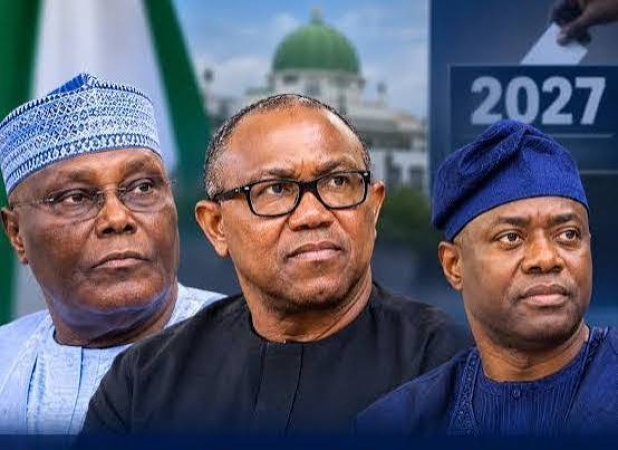
Atiku, Obi, Makinde
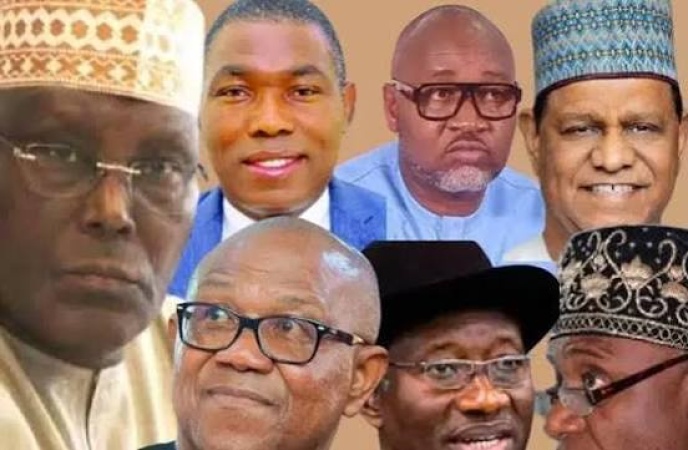
The opposition’s battle for a common presidential candidate ahead of the 2027 general election is entering a decisive phase, with November 30 emerging as a crucial date in the unfolding political manoeuvres. As Atiku Abubakar, Peter Obi and Seyi Makinde prepare to navigate the delicate negotiations for a united opposition platform, the biggest question remains: who is prepared to step down for another? Each contender has compelling political reasons to sustain his ambition, but the growing pressure for a single candidate is forcing opposition leaders to confront the difficult choice between personal aspiration and collective political survival. Assistant Editor EMMANUEL BADEJO examines the calculations of the major contenders, the obstacles to consensus, the possible compromises and what the November 30 summit could mean for the future of opposition politics and the 2027 presidential race.
The opposition’s battle for a common presidential candidate ahead of the 2027 general election is entering a critical phase, with November 30 emerging as an important date in the unfolding political manoeuvres. As former Vice-President Atiku Abubakar, former Anambra State Governor Peter Obi and Oyo State Governor Seyi Makinde navigate negotiations for a united opposition platform, the biggest question remains: who is prepared to step down for another?
Each contender has compelling political reasons to sustain his ambition. But the growing pressure for a common candidate is forcing opposition leaders to confront the difficult choice between personal aspiration and collective political interests.
The second summit of the Coalition for Democracy, scheduled for November 30 at the NAF Conference Centre, Abuja, is expected to bring together representatives of six opposition parties and factions seeking a common framework for cooperation ahead of the 2027 elections.
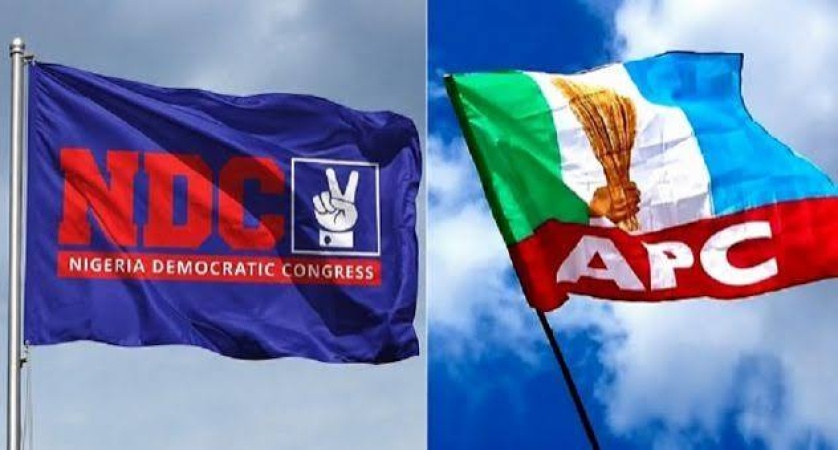
The coalition comprises the African Democratic Congress (ADC), Allied Peoples Movement (APM), Nigeria Democratic Congress (NDC), Social Democratic Party (SDP), Peoples Redemption Party (PRP) and a faction of the Peoples Democratic Party (PDP).
The summit Is expected to consider three foundational documents: the National Covenant for Democratic Renewal, the Framework for Opposition Unity and the National Reform Programme.
Although the immediate objective is to formalise cooperation among the participating parties, the more difficult question is whether they can move beyond signing agreements to agree on a common presidential candidate capable of challenging President Bola Tinubu.
The November 30 meeting, therefore, presents the opposition with an opportunity to demonstrate that its leaders can place collective interests above individual ambitions. But with presidential tickets already secured by the leading contenders, the negotiations promise to be difficult.
Three ambitions, one presidency
Atiku, Obi and Makinde represent three distinct political interests within the opposition arrangement. Each has a different political constituency, electoral experience and calculation about the presidency.
For Atiku, it is about another opportunity to pursue an ambition that has defined much of his political career. For Obi, it is about consolidating the political movement that emerged from his 2023 presidential campaign. For Makinde, it is about expanding his political influence and presenting himself as a possible southern alternative.
The challenge Is how to convince any of them that withdrawing from the presidential contest would serve a greater political purpose.
Atiku: Why the former Vice-President may resist stepping down
Atiku’s political experience and national network make him a central figure in the opposition negotiations. Having served as Vice-President between 1999 and 2007 and contested the presidency several times, he has invested considerable political capital in the pursuit of the country’s highest office.
His supporters can argue that his understanding of national politics, federal administration and established political connections make him a serious contender.
Atiku also has to consider the interests of the ADC, which adopted him as its presidential candidate. His supporters may question why he should surrender a ticket secured through the party’s nomination process in favour of another contender.
The former Vice-President’s determination to remain in the race has been evident. In a statement on November 23, Atiku dismissed reports of his withdrawal, declaring: “I do not need anyone to step down for me, and I am stepping down for no one.”
This position illustrates the difficulty facing those seeking to persuade him to abandon his ambition.
There is also the question of political experience. Atiku’s supporters may contend that his repeated participation in presidential contests has given him an understanding of the country’s political dynamics that should not be disregarded.
However, those advocating a southern candidate may argue that the presidency should remain in the South after Tinubu’s tenure. They may also raise questions about generational change and the need to present a different political proposition to Nigerians.
Another complication is the legal dispute surrounding his ADC nomination. A Federal High Court judgment of November 4 nullified the processes that produced the party’s leadership and Atiku’s nomination. The ADC and Atiku have challenged the decision, leaving the matter subject to further judicial determination.
Consequently, the question of Atiku’s candidacy involves not only political negotiations but also the unresolved legal challenge to his nomination.
Obi: The 2023 political movement and the question of sacrifice
For Obi, the argument against stepping down is closely connected to the political momentum generated by his 2023 presidential campaign.
Running on the Labour Party platform, Obi secured 6,101,533 votes in the 2023 presidential election, according to INEC’s declared results. His performance established him as a major opposition figure and gave the Obidient movement a distinct national identity.
His supporters believe another presidential contest would provide an opportunity to consolidate that political movement and pursue the changes they have consistently advocated.
Obi’s appeal has been associated with political renewal, accountability, economic management and the mobilisation of younger Nigerians. Asking him to withdraw could therefore generate questions about whether the opposition is prepared to accommodate the aspirations of this constituency.
His emergence on the Nigeria Democratic Congress platform, alongside Rabiu Kwankwaso, has further complicated the negotiations. The NDC already has a presidential ticket, and any proposal for a different common candidate would have to address the interests of the party and its supporters.
There is also the geographical dimension. Some of Obi’s supporters believe the South should retain the presidency after Tinubu’s tenure. Such an argument could make it difficult for them to accept an arrangement that produces a northern presidential candidate.
However, Obi must equally consider whether maintaining a separate candidacy serves the wider objective of opposition cooperation.
The former Anambra governor’s challenge is to demonstrate that his political ambition can accommodate a broader alliance without undermining the movement that has sustained his presidential aspirations.
For him, stepping down would not simply mean withdrawing from an election. It could mean asking a political movement built around his candidacy to transfer its loyalty to another politician.
Makinde: The southern alternative
Makinde presents a different dimension of the negotiations. Unlike Atiku and Obi, whose presidential ambitions have been tested in previous general elections, the Oyo governor is entering the presidential contest with the experience of an incumbent state governor.
His political calculations are influenced by his position in the Southwest, his relationships with political stakeholders across party lines and his desire to establish a broader national profile.
Makinde has publicly confirmed that discussions with Atiku and Obi are ongoing. In an interview with ARISE News on November 13, he said the opposition leaders were actively discussing possible cooperation.
He also indicated that the selection of a candidate should be based on objective considerations, including manifestos, previous performance and public sentiment, rather than personal preferences.
His position suggests that he is not opposed to an alliance but wants the process to be based on agreed criteria.
Makinde’s possible resistance to stepping down is also connected to the argument for southern presidential continuity.
Some APM leaders have promoted him as a possible consensus candidate, citing his age, political experience and regional appeal. The party’s position is that its presidential candidate remains committed to the contest.
The governor also has to consider what he stands to gain from withdrawing. If he steps down for Atiku, he could face questions about why a southern politician should surrender his ambition to a northern contender. If he withdraws for Obi, he would be supporting another southern politician with an established political movement.
Reports of a possible arrangement involving Makinde and Atiku, including an alleged offer of the Secretary to the Government of the Federation position, have also circulated. However, neither politician has publicly confirmed such an agreement, while the APM has maintained that Makinde remains in the race.
For the governor, the challenge is to participate in the negotiations without weakening his political standing or creating the impression that his presidential ambition is merely a bargaining instrument.
Who has the right to decide?
Beyond the personalities, the opposition must agree on a credible method of selecting its candidate.
Three possibilities could shape the negotiations.
The first is consensus. The parties could agree to support one candidate based on political considerations, regional balance, national appeal and an assessment of what each contender brings to the table.
The second Is a competitive selection process. The coalition could establish an agreed mechanism through which the participating parties assess the candidates. Such a process would require clear criteria and a binding commitment to respect the outcome.
The third is power-sharing. The parties could negotiate an arrangement involving the presidency, vice-presidency, key government appointments and legislative leadership positions.
However, power-sharing could create further controversy if it becomes a substitute for a transparent selection process. A candidate who withdraws would need convincing assurances that his political constituency would not be marginalised after the election.
The coalition must also determine whether its proposed alliance is merely an electoral arrangement or the beginning of a more permanent political movement.
This is particularly important because the participating parties have different structures, histories and political interests. An agreement signed by their leaders may not automatically command the support of their members, state chapters and grassroots organisations.
The legal complication
One major obstacle is the electoral timetable.
The 2027 presidential election is scheduled for January 16, according to INEC’s published election calendar.
Under the Electoral Act 2026, the ordinary statutory deadline for a candidate to withdraw from an election is 90 days before polling. For the January 16 election, that deadline fell on October 18.
This means the opposition cannot simply assume that a political agreement reached on November 30 will enable a candidate to withdraw through the ordinary statutory process and have his name removed from the ballot.
The distinction between political endorsement and legally effective withdrawal is important.
The participating parties may still coordinate their campaigns, endorse a common candidate and collaborate on protecting votes while retaining their individual political identities. But such cooperation would not automatically remove the other candidates from INEC’s list.
This could fundamentally change the character of the November 30 negotiations.
Rather than producing one candidate whose name alone appears on the ballot, the coalition may have to explore how to coordinate its political activities around an agreed candidate while dealing with the separate nominations already submitted to INEC.
The possibility of several opposition candidates remaining on the ballot despite an agreement to support one contender presents a major test of political discipline.
What happens to the other candidates?
The opposition’s difficulty is not limited to Atiku, Obi and Makinde.
Donald Duke of the PRP and Adewole Adebayo of the SDP also have political interests to protect. The PDP faction led by Tanimu Turaki, whose presidential candidate is Sandy Onor, equally has to determine how its interests will be accommodated.
For the smaller parties, the question is whether they will enjoy meaningful participation in selecting the common candidate or simply provide their structures and supporters for the benefit of the bigger parties.
If they feel excluded, the proposed coalition could struggle to secure the cooperation it needs.
There is also the possibility of further political realignments involving politicians outside the six-party arrangement.
The existence of competing political alliances demonstrates that the opposition’s negotiations are taking place against the background of different political calculations, not simply a contest between three presidential aspirants.
The APC’s calculation
While opposition leaders negotiate, the APC will be watching how the discussions develop.
For the ruling party, the existence of several opposition candidates could have implications for the distribution of votes across the country’s political constituencies.
However, the opposition’s ability to cooperate, coordinate campaigns and agree on common priorities will determine the practical value of its proposed alliance.
The APC has expressed confidence in Tinubu’s re-election prospects, maintaining that political meetings and declarations of unity do not automatically translate into electoral strength.
The ruling party will also be interested in whether the opposition can resolve its internal disagreements without creating new political divisions.
An alliance that produces a common programme but fails to establish a credible electoral strategy may have limited practical effect. Conversely, cooperation extending to grassroots mobilisation, voter engagement and protection of votes would represent a more substantial political development.
November 30: What should Nigerians expect?
The immediate expectation should be measured against what the coalition has officially announced.
The three documents scheduled for consideration are designed to establish common ground on democratic renewal, opposition cooperation and national reforms. They do not, in themselves, constitute an announced procedure for selecting a presidential candidate.
The summit could therefore produce a unity agreement without resolving the question of who should lead the opposition’s presidential campaign.
Four issues deserve attention: whether the parties will commit themselves to a common political programme; whether they will establish a credible mechanism for choosing a candidate; whether they will agree on power-sharing; and whether they can develop a practical arrangement for coordinating their campaigns.
The outcome could provide a framework for subsequent negotiations rather than an immediate announcement of a consensus candidate.
Ultimately, the future of the opposition candidates will depend on whether their parties are prepared to subordinate individual electoral ambitions to a common political arrangement.
For Atiku, the issue is whether his experience and political network can be accommodated within an alliance seeking to reflect younger political aspirations and southern interests.
For Obi, it is whether the political movement associated with his 2023 campaign can embrace a broader arrangement without interpreting his withdrawal as a betrayal of its expectations.
For Makinde, the challenge is whether he can retain his political relevance and southern constituency while participating in negotiations that could produce another candidate.
There is also the possibility that no candidate will formally withdraw, even if the opposition reaches an understanding to support one person. In that situation, the coalition’s success will depend on how effectively it translates its agreement into coordinated political action.
The November 30 summit is therefore more than another gathering of opposition politicians. It is an opportunity to demonstrate whether the parties can transform their shared opposition to the ruling party into a workable political arrangement.
Signing a unity pact may be relatively easy. Getting presidential candidates, their parties and their supporters to accept a common choice will be the real test.
The question confronting the opposition is no longer simply who wants to become president in 2027. It is who is prepared to make the political sacrifice necessary for an alliance to work, and what guarantees will persuade the others that such a sacrifice is worthwhile. (The Nation)